Genesis 16
Awara Baibel · Tap a verse to see its cross-references.
Hagartä Abramde wawaxu Ismael dukngikut
1Sarai, Abramde mängälu, engangu dondukngikut. Tiwändeyä mängälä täpätu Isip nanä puyä äminäle yiwikulu umanä Hagar. 2Ge Saraitä Abram inikut. “Yawetä bänipna umumbän, engangu dondukngit. Ge kuyo. Tiwän puyä äminaxät däpmunu pesimäläk. Dasingga? Itä enganga äpmembä betangamik?” yang inikut.
Iniwän Abramu täke natäpgut, Saraitä yawänun. 3Abramu Kenan täku krismasu 10 yiwikut. Tiwänä, Saraitä puyä äminä Hagaru Abramde imikut.
4Tiwän Hagarxät yiwät, tängene käyä tikut. Tiwän kake, Hagaru inäle natäpänu axopgut. Tiwän towikngä Saraile natäpänu aepgut. 5Tiwänä Saraitä Abramu using inikut. “Gätä tahawi, nä meyä pänggat. Puyä ämina uläpä nina gäle kätaxune tekum. Tiwändeyä Hagaru tängene käyä tiwän kake, itä nandupänu, kwakwakngä tinggak. Ge Yawetä gäxät näxälu äpme uhinggiwik,” yang inikut, Saraitä Abramun.
6Yawän yäkwäle Abramdä using inikut. “Täke. Gika puyä ämin. Gika dasingga tahawiläkge natäläxu, gika tängäne yiwixak,” yang inikut. Yawänä Saraitä mähemähe kaxäwik tahanggawän, Hagaru datäkukut.
7Yawele angelätä kepgän gomune, Hagaru yanggä akondokayingune kakut. Yanggä akondokayingu unggwäxu Surde kähit kwayimune yiwixak. 8Tiwän ängelatä using inikut. “Hagar, Saraile puyä ämin, sänetä apuläkngä, säne kunggaläk?” yang inikut.
Iniwän “Nä towiknga Saraile naxälake datängapunggat,” yang inikut.
9Iniwän Yawele ängelatä inikut. “Hipdu päku towikga Saraile gepbine yiwiyo,” yang inikengä, 10unetäkänu using inikut. “Nätä tahawa, ayika sakngälawä meyä tiwän, kendetnangäsä doliwik. 11Gä äpmanu tängakane käyä. Ge engangu wäwi täpä dukngiwiläk. Tikengä umanä Ismael yang iniyo, inale kwänämu tiläxu, Yawetä anatäk. 12Wawakga uläpä donggi tuk bimä däkngake, äminbamde iwalnä däkngawik. Däkngawän yäkwäle iwalnä däkngawä, tahake yiwitning. Tikengä notnämbamkälu gupsängu doyiwitning,” yang inikut.
13Yawetä Hagaru wam inikutde, “Ananduxak Täpä axat,” yake, umanä täkngatu using inikut. “Anätu Ananduxaläk Täpänin” yang inikut. 14Ile tiwän yanggä akondokayingu unggwäxu umanä “Käluk Yiwäxäwik Nanduxak Täpäle Yanggä” yang inikin. Yanggä akondokayingu unggwäxu Kadeskät Beretkätde bänäkängän yiwäxak.
15Tiwänä Hagardä Abramde wawak dukngiwän, Abramdä umanä Ismael yang inikut. 16Abramu krismasnä 86 yiwixawän, Hagardä Ismaelu une dukngikut.
Did you know?
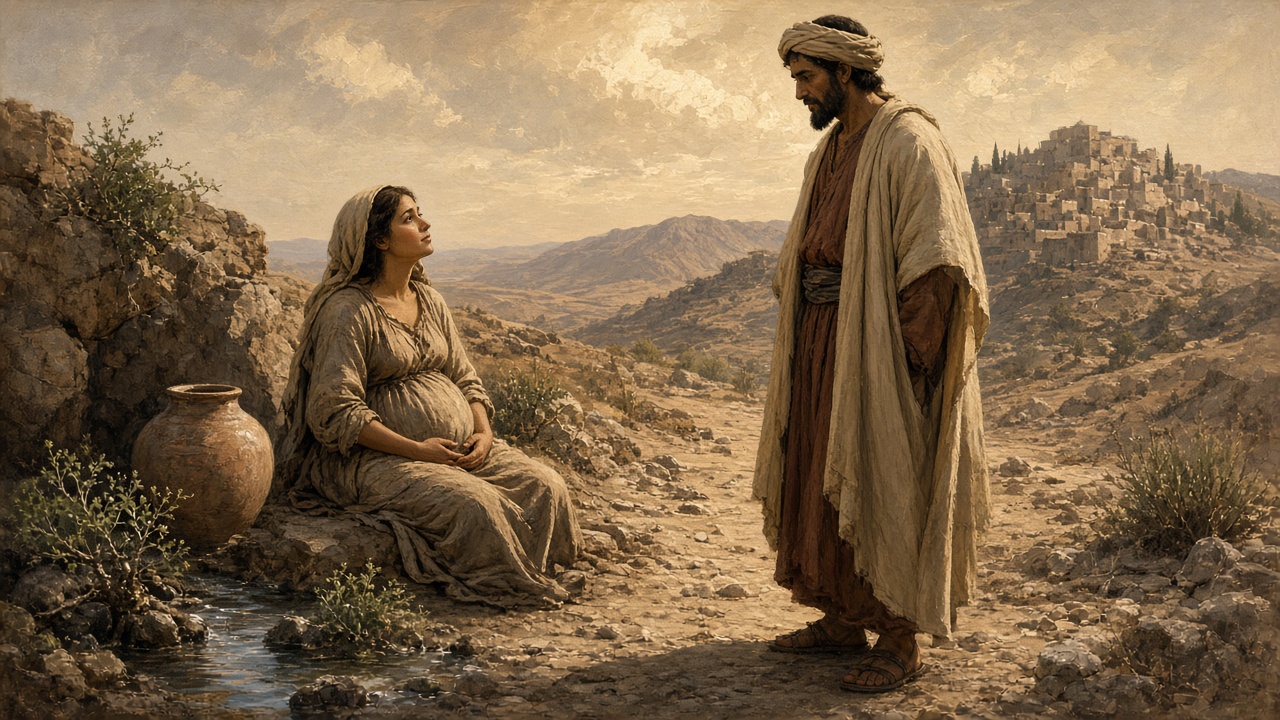
Hagar’s Flight and the Birth of Ishmael
- Hagar, an Egyptian maidservant of Sarai, bears a name understood to mean “flight,” or, according to others, “stranger.” After Abram had lived in Canaan for ten years, Sarai gave her to him as a secondary wife, hoping to build a family through her.Sources: Hagar · the Bible text itself
- When Sarai treated her harshly, Hagar fled along the road to Shur, through the desert that lay between her and Egypt, apparently intending to return to her relatives. The angel of the LORD found her by a spring of water there. Shur, meaning “wall,” was a wilderness on Egypt’s north-eastern border, probably named for frontier fortifications running from Pelusium to Heliopolis.Sources: the Bible text itself · Hagar · Shur
- Hagar called the LORD who spoke to her “the God who sees me,” and the well was named Beer-lahai-roi, “the well of the visible God,” between Kadesh and Bered, a town in the south of Palestine in the desert of Shur. She returned to Abram’s tent, and his eldest son, Ishmael, was born at Mamre when Abram was eighty-six; Abram gave him the name the angel had announced, because the LORD had heard her affliction.Sources: the Bible text itself · Hagar · Bered · Ishmael (Son of Hagar)
Notes written with AI assistance from open sources (Theographic Bible Metadata, CC BY-SA 4.0; Easton’s Bible Dictionary, public domain) and reviewed before publishing.
Places in this chapter
- Canaan · 32.767, 35.333 · verse 3
Only places identified with high confidence are shown (90% or more according to the scholarly sources compiled by OpenBible). Period map: DARE (Digital Atlas of the Roman Empire), CC BY 4.0; modern map: © OpenStreetMap contributors; places: OpenBible.info (CC BY 4.0).
Credits and license for this translation
Awara Baibel
Genesis, Ruth, and Jonah in the Awara Language of Papua New Guinea
Buk Stat, Rut, na Jona long tokples Awara long Niugini
copyright © 2011 Wycliffe Bible Translators, Inc.
Language: Awara
Translation by: Wycliffe Bible Translators
This translation is made available to you under the terms of the
Creative Commons Attribution-Noncommercial-No Derivatives license 4.0.
You may share and redistribute this Bible translation or extracts from it in any format, provided that:
You include the above copyright and source information.
You do not sell this work for a profit.
You do not change any of the words or punctuation of the Scriptures.
Pictures included with Scriptures and other documents on this site are licensed just for use with those Scriptures and documents.
For other uses, please contact the respective copyright owners.
2025-04-26
Source: http://png.bible/awx/ · eBible.org