Genesis 14
Awara Baibel · Tap a verse to see its cross-references.
Abramdä Lot gatängämikut
1Täpduxu uwomune kingu malä nanä täpäyaläxät täpäyaläxätdä amäk äminä päpä, Kenan apä, amgin. Elamde king Kedorlaomer, Babiloniale king Amrapel, Elasarde king Ariok, äwä Goimde king Tidal, yanggä apä, kingu Kenan nanäxät amgin. 2Kingu Kenan nanä using: Sodomde king Bera, Gomorale king Birsa, Atmale king Sinab, Seboimde king Semeber, äwä Belale king. Bela äpmanu Soar yang inikaying. 3Kenande kingu uläkwäxu amäk äminä päke, Sidim Kupi kukin, Sol Yanggä Gwende kwayimune.
4Using tupä Kenan nanä Kedolaomerde gepbine yiwixawä, krismasu 12 apuxuwän, krismasu 13 täpäne mähe natäke, wamnä donggwälamikin. 5Ile tiwän krismasu 14 täpäne Kedolaomerxät king notnäxät amäk äminä päpä, Astoret Karnaim apu Repa nanä sipmäke, Ham apu Sus nanä sipmäke, Sawe Kiriataim apu Em nanä sipmäke, 6Seir täwal däkändäkäne apu Hor nanä sipmäke, Elparan nanä apu sipgin. Elparanu kepdän däkäle inälängändän. 7Unetä täpä täkwämbän, Enmispat, äpmanu Kades yang inikayingune ku, Amalek nanä sipmäke, kepnä unda päke, Amori nanä Hasason Tamar yiwäxakinkäyä sipmäke, kepnä unda päkin.
8Unin sipä, kingu Sodom nanä, Gomora nanä, Atma nanä, Seboim nanä äwä Bela nanä yanggä amäk äminä päpä, Sidim kupine päku ämningge tändäkngakin. 9Elamde King Kedolaomer, Babiloniale King Amrapel, Elasarde King Ariok, äwä Goimde king Tidal, yanggä apä, ixät amgin. Amäk äminu 4 täkwäkgänetä apä, amäk äminu 5 täkwäkgänexät amgin.
10Sidim Kupi Gwenune, gänangä däkändäkä koltatäne käyä. Tiwän amänggawä täke doliwän, Sodomde amäk äminäxät Gomorale amäk äminäxät andatäkuningge tahake, notnä kolta gäpmane päpu sipän, notnä täwal däkändäkäne datäkukin. 11Datäkuwä iwalnätä päku, Sodomdäne Gomoratäne yang hängälapänä nakngä yang päkin. 12Tixawän Abramde notnäle wawaxu Lot Sodom yiwäxakutde, amäk ämindä hängä täpänä Lot yang päke kukin.
13Tiwänä äminu andatäkukinu täpätutä apu, Abram Hibru uläpä inikut. Äminu Amor nanä täpätu umanä Mamre, panä takwän däkändäkä käyä. Tiwän Abrahamu pa undäkändäkäle kwayimune yiwixakut. Eskol, Aner yangu Mamrele epänepän notnä. Tupä Abram, Mamre, Eskol, Aner yang gatäkgatäk tahaningge wamu aläkakut. 14Abramu wawakngä täkinde natäke, amäk äminä Abramde yolune alakinu 318 ämin yangyäwämbän, päku iwalnä yäwatäke kuhika, Dan yot gäpangune kukin. 15Kupiläne Abramdä amäk äminä uhike pewän, iwälnä sipä datäkuxawä, yäwatäke kuhika, Hoba kukin, Damaskusde not käwutkätan. 16Kuke hängäläpä iwalnätä päkinu, wawakngä Lot, Lotdäne hängäläpä äwä wäwi mängälä yang päkapgin.
Melkisedekgä Abramu wam gwaläng inikut
17Abramdä King Kedolaomerxät king notnäxät sipmäke, hipdunä Sawe Kupi bä Kingge Kupi yang inikayingune apuxawän, Sodomde kingu Abramkät yiwik yähimäläkge apgut.
18Tiwänä Melkisedexu Salemde kingkäyä Abramde apgut. Täkapu bretkät wainkät imikut. Melkisedexu Anätu Enetängä Nanä Täpäle prisde yiwikut. 19Itä apu wam gwalängu using imikut. “Abram, Anätu Enetängä Nanä kepkät yekäpkät pahakut täpätä, gäle bänip kwikwixu äpme gamik. 20Tiwän Anätu Enetängä Nanä Täpäle uman yatängenatnim, inale itä iwalda kätakgane pewän sipguläk,” yang inikut. Iniwän Abramdä hängäläpä upuke, 9-u inäle pexäwik, 1-u Melkisedekge imikut.
21Tiwänä Sodomde kingu Beratä Abramu using inikut. “Hängä täpä gikale pexäwik, äminakän namiyo,” yang inikut.
22Tiwändeyä Abramdä using inikut. “Kätaknga tängenake, Yawe, Anätu Enetängä Nanä, kepkät yekäpkät pahakut täpäle umande wamu hiyäkän hikngä yänggat. 23Hängä täpätu gätäne dohikngä täpit. Täwikge tret bä bälängyayikge kätak yangu mätekngä. Tiwändeyä dowäpit. Using päpitnä, gätä ‘Nätä tahawa, Abramu hängänämbamgän tikin,’ yang yeyä. 24Hängä täpätu ninale doläpit. Tike hängä amäk äminatä anayingu unin. Tike Aner, Eskol, Mamre yangu näxat kukumäng. Ge hängä mätekngä itäkän päning,” yang inikut.
Did you know?
The Campaign of the Four Kings
- Easton's Bible Dictionary (1897) identifies the four invading kings with names on ancient inscriptions: Chedorlaomer with Khudur-Lagamar of Elam, Amraphel with Khammu-rabi of Shinar (southern Chaldea), Arioch, king of Ellasar, with Eri-Aku of Larsa, and Tidal with Tudkhula. It explains Eri-Aku as an Elamite name meaning “servant of the moon-god,” later changed to Rimsin, and takes Goiim—“nations”—as Gutium, east of the Tigris and north of Elam.Sources: Chedorlaomer · Amraphel · Arioch (king of Ellasar) · Tidal
- The five local kings drew up for battle in the Valley of Siddim, which this chapter equates with the Salt Sea, and the valley was full of tar pits into which some of the fleeing men fell. Easton's Bible Dictionary places that valley at the south end of the Dead Sea, between Engedi and the cities of the plain, and calls the pits bitumen pits.Sources: the Bible text itself · Vale of Siddim
- Abram lived near the oaks of Mamre the Amorite, a brother of Eshcol and Aner, and the three were bound by treaty to him. Easton's Bible Dictionary calls Mamre and Eshcol Amorite chiefs and Aner a Canaanite chief, and notes that they joined Abram in pursuing Chedorlaomer and recovering Lot.Sources: the Bible text itself · Mamre · Eshcol · Aner
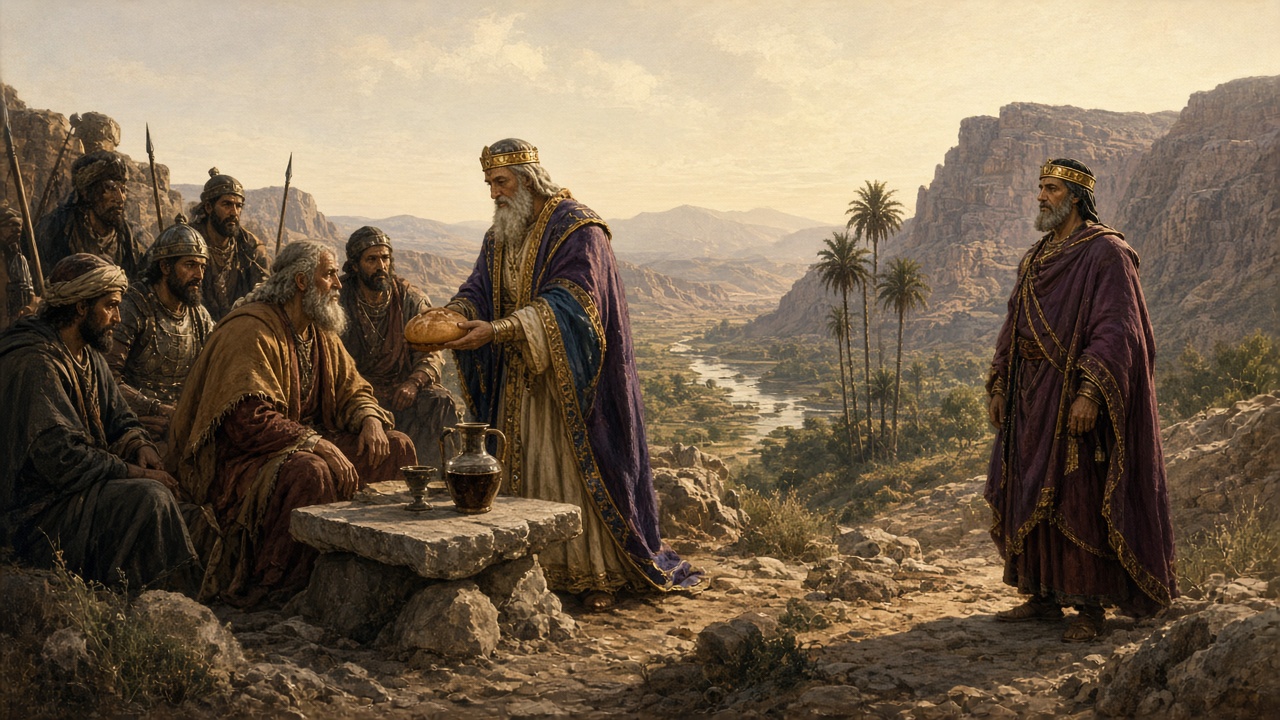
Notes written with AI assistance from open sources (Theographic Bible Metadata, CC BY-SA 4.0; Easton’s Bible Dictionary, public domain) and reviewed before publishing.
Places in this chapter
- Elam · 32.189, 48.258 · verses 1, 9
- Shinar · Today: Babylonia · 32.543, 44.422 · verses 1, 9
- Salt Sea · Today: Dead Sea · 31.500, 35.500 · verse 3
- Shaveh-kiriathaim · Today: within 1 km of Al Qurayyat · 31.541, 35.686 · verse 5
- Dan · Today: Tel Dan · 33.249, 35.652 · verse 14
- Damascus · 33.511, 36.306 · verse 15
- Valley of Shaveh · Today: intersection of Kidron Valley and Valley of Hinnom · 31.767, 35.236 · verse 17
- Salem · Today: Jerusalem · 31.777, 35.234 · verse 18
Only places identified with high confidence are shown (90% or more according to the scholarly sources compiled by OpenBible). Period map: DARE (Digital Atlas of the Roman Empire), CC BY 4.0; modern map: © OpenStreetMap contributors; places: OpenBible.info (CC BY 4.0).
Credits and license for this translation
Awara Baibel
Genesis, Ruth, and Jonah in the Awara Language of Papua New Guinea
Buk Stat, Rut, na Jona long tokples Awara long Niugini
copyright © 2011 Wycliffe Bible Translators, Inc.
Language: Awara
Translation by: Wycliffe Bible Translators
This translation is made available to you under the terms of the
Creative Commons Attribution-Noncommercial-No Derivatives license 4.0.
You may share and redistribute this Bible translation or extracts from it in any format, provided that:
You include the above copyright and source information.
You do not sell this work for a profit.
You do not change any of the words or punctuation of the Scriptures.
Pictures included with Scriptures and other documents on this site are licensed just for use with those Scriptures and documents.
For other uses, please contact the respective copyright owners.
2025-04-26
Source: http://png.bible/awx/ · eBible.org