Acts 20
Manikáne O Ehwehne · Tap a verse to see its cross-references.
Poraga Másérónía marákórápéq pokú ehwehne.
1Momiwíurabeqte éhwéh parabagútaq Poraga Sísa tagaríáh ké síáhrabéna, Ínéba sero úwara suwe. Suwana sirupipeq kaweq iwíáh aritanieéna Poraga ehweh teriuwe. Teriena mehweh aritena mitaq suena Másérónía marákórápéq pokúwe. 2Poraga Másérónía marákórápéq pokue mó mapéq mó mapérue Sísa tagaríáh kégá págegeue kéranéhe íwíáhigeheéna ehweh teriuwe. Teriena Másérónía marákórápéq suena Káríki marákórápéq pokúwe. 3Káríki marákórápéq kiena apahtáró íó mitaq ména sípi kéwewena Síría marákórápéq pokinaútaq Asiu kegá, Pora suboneheqmúne uwe. Uwana Poraga mó iwíáhéna, Másérónía marákórápéq kouwekinie úwe.
4Másérónía marákórápéq kouwekinie úwara mó kegá, Are kéranéhe íwíáhuwe. Pírúsine ahninkáwá Péría suwahpeqte ánínéna wenáwíq Sópátae. Tésárónáíka suwahpeqte áníté sensíwíq Árísátákireq Sékúntareq míóye. Tébi suwahpeqte ání wenáwíq Káíúsi míéhre. Esia marákórápéqté áníté sensíwíq Tíkíkúsireq Tárópímareq míóye. Moke mi kereq Tímótireqka 5Tóása suwahpeq pokue mitaq itensabé íwénunuwe. 6Íre muoráhi parétí né tanahráq parabagútaq íné Árúkareq Porareqka Pírípái suwahpeq sueta sípi kéweweta pokowaye. Itaréitaréráq sípiipéq méta moberíáhtáq Tóása suwahpeq íwénunu kebá sewaye. Seba séta abapete téhtaréráq mitaq míahwaye.
Pukú mahbí oga úkú ehwehne.
7Mó wikí ebeqte wéhékáh itega táhutahuq keqme moráráq naneheéq momiwíue míahwane. Mi tanáhráq Poraga ehweh teriuwe. Ahbiah pokinie íwíáhéna inokáhnabubu wene ehweh íre parabarusa peh irarúwe. 8Abobóráhpeqte náhúpéq momiwíue míahwanana áhnte aráhmúgá mitaq téhrówe. 9Peh morá máhbí wenáwíq Íyútíkae. Wega abobóráhpeqte náh áwáhnkúráq tútuue míowe. Poraga íre wahto ehwéh teriu púana mi mahbí sugekúwe. Sugekú púana máhpeq inahnsubuwara tueyokue tagowe. Tagéra tuiriatómé putiowe.
10Putiowana Poraga moq tueyokue tagéna tutaebewe mi mahbí saiqnawe káhkoue míoye. Poraga míó keyabé, Íre ibisahro. We amahnága oga míéhre úwe. 11Poraga tuekue kiutaq itega táhutahuq keqme moráráq nahwane. Poraga áhnte mó ehwéh teriena tuekutaq ahbiahipeq mitaq suena pokúwe. 12Oga úkú mahbíné awahrahga we meqmera awaho ani mío púara sirupipeq eyoyóéra sene nahtapeq pokuwe.
Poraga Tóása suwahpeq suena Mírétúsi suwahpeq pokú ehwehne.
13Poraga pokinaútaq itensabé, Ásósa suwahpeq íwénuninauge éna iuwena ahtapeq pokúwe. Pokúwaq itega sípi kéweweq Ásósa suwahpeq Pora sípiipéq koweraneheéq pokowane. 14Itega Ásósa suwahpeq Porareq piehgiowánaraq sípi kéweweq Mítíríni suwahpeq pokowane. 15Itega mitaq sueq sípi kéweweq mó wehekáh Kíósa suwahpeq marakó kowaq kótaikowane. Mó wehekáh Sámósa suwahpeq sewane. Mitaq sueq mó wehekáh Mírétúsi suwahpeq sewane.
16Asiu kené siahreraq ko tanahráq áwíq Péntíkósie. Poraga iwíáhéna, Péntíkósi tanahráq íné Sarúsarama suwahpeq méyabe nuwahbehre. Minayabe amahnága Esia marákórápéq suena sípi kéwewena apubúue Sarúsarama suwahpeq pokinieéna Épésa suwahpeq íre kowíanauge. Peh kótaikinie íwíáhúwe.
Épésa suwahpeqte kéyábé iroro arito ehwehne.
17Poraga Mírétúsi suwahpeq míotaq Épésa suwahpeq Sísa tagaríáh ábóáwáh wéh kiwerirankeheéna eqmarowe. 18Épésa suwahpeqte Sísa tagaríáh ábóáwáh wéhwé Poraba sutaq wega sensabé mahraréna, Íné Esia marákórápéq téh surautaqkákáq amahnágaákáq itereq mía míaugaq néne sánsá tagaríáhwe.
19Anotah aní méyabe nuwahriarairana peh Manikáne arambehriéyabe nuwahbarairana mira aruqaruruge. Ite tagaríáhmé Asiu kegá áhntetaq moraénue níwíoqnarutowana áhnte tanáhráq ibisarauge. 20Wehuke momiwíurotaqkákáq mó natáq mó natárue ite séhréhorahi ehwéh pahsuqme tei teinurauge. 21Asiu kereq Káríki kereqsabé, Itene ahbabáq sansa sueq Manikánsabe áhraboro. Itene Wahnah Sísa Karáhénsabe aiq pútare atáhro tei teinuraugaq tagaríáhwe úwe.
22Poraga mó mahraréna, Manikáne Awanka pokúno aintáráinsabé íné amahnága Sarúsarama suwahpeq pokinie. Mitaq sega nubiq suaneherabowamo. Árahoneherabowapómo. Íné íre tagaríóge. 23Peh morá íné niahtebome Sarúsarama suwahpeqte kégá níwíoqnéra karábúsiipéq móintagéhe. Mó mapéq mó mapérue séyéurautaq Manikáne Awanka mó ke iwíáh aritowara mira éhwéh teni teninowe.
24Sega nubiq súéhransabé íre áhreuge. Minayabe anetaníbo. Itene Wahnah Sísa Karáhéga teníátái arámbéhrí parabarueyabe nuwahbehre. Manikánka ite séhréh aitena kaweraitéh éhwéh teri terinéyabe nuwahbehre úwe.
25Poraga mó mahraréna, Manikánka wahnahni ehwéh ite míáhrabeq tei teinurauge. Íné tagaríómé amahnága pokonaraq mókake íné mó íre tagagehe. 26Ibora pahsuqme teiníboq írátíáhro. Iraipéq pokira kegá ínénsabe íre abiahnsa aintahráhowe. 27Íné íre túbáh agia Manikáne sansá moke pahsuqme íwáhnorurau puara íre abiahnsa aintahráhowe.
28Manikáne Awanka ite omaq itena, Wahnahnúno aitáráire. Wahnahnúno aitárái puaq sipisípiq wahnáhnká wene kamarí wahnahninserah itega moke Sísa tagaríáh ké moq kawerue wahnahnarítáhro. Kawerue wahnahnariteq Sísaga mi kené ahbabáqsabe wene korahqtaté paiqmataire íwíáhoro.
29Sísane sánsá íre tábúsoqme miraéra peh mó sansá miraigeheéra íné pokona tanáhráq mó kegá séra péhe éhwéh íwáhnorigehe. Úrinsi iánká sipisípiq subínserah sega ite morábí méra íre kaweraitagéhe. 30Sísa tagaríáh kégá wehukene sánsá miraigeheéra ite míáhrabeqte kégá moq péhe éhwéh íwáhnorigehe. 31Minayabe íwéh panatágínaq uqmatíáhro. Apahtáró ópéq wéhékáhnkakaq inokáhpeqkakáq itensabé nirutaboiréna kawerue íwáhno aruqaruruge. Minayabe iahreraq matíáhro úwe.
32Poraga mó mahraréna, Manikánka séhréh aitéh éhwéh anotah pagégé éhwéhne. Mi ehwéh íréhrataq itega kaweqtaq míahrahowe. Mi ehwéh íréhrataq itega kaweqtaq méq oga mía míaira kereq moráráq míagehe. Minayabe Manikáne ehweh kawerue ireq wene sánsá miraoro.
33Iteba míarau tanáhráq mó aníné korósiakáq móneakáqsábé íre nirutaboirurauge. 34Ínéreq séhréh aintáh kéreq táhutahuroneheéna ínénéga arambehriurauge. Minayabe tagaríáhwe. 35Itega mareqmarero ke séhréh aritaneheéq kawerue arambehrioro. Ínéga aiq mira aruqarurunserah arambehrioro. Itene Wahnah Sísaga mahraréna,
Mó anínká are náwí tánáhráq are iwíáh íwíáhóne. Arega mó aní náwena tanáhráq anotah iwíáh íwíáhóne
uraire. Mi ehwéhnsábé iahreraq matíáhro úwe.
36Poraga mi ehwéh aiq teriutaq wereq aboawah wehreqka sirehunseraráq méra púreruwe. 37Púreq ehwéh parabagútaq sega Pora káhkoue mehwehéra ibisowe. 38Poraga, Mókake íné mó íre tagagehe únsabe sirutaboiréra ibiséra we sípiipéq meqmera móauwera kowekuwe.
Did you know?
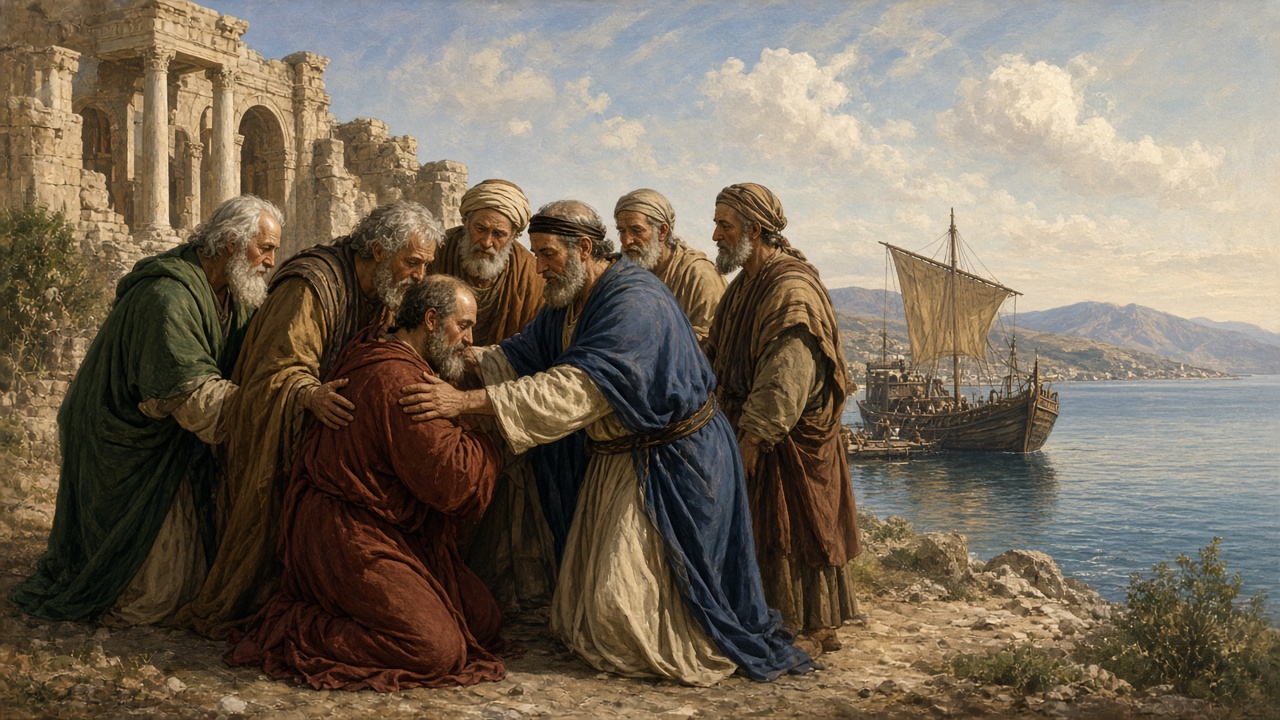
Farewell on the way to Jerusalem
- Leaving Troas, Paul sent his companions ahead by ship and walked to Assos along the Roman road. Assos was a seaport of Proconsular Asia in Mysia, on the north shore of the Gulf of Adramyttium; the walk was about 20 miles, the sea route about 30, and the island of Lesbos lay about 7 miles offshore.Sources: the Bible text itself · Assos
- Paul sailed past Ephesus to avoid spending time in the province of Asia—the Roman province in western Asia Minor, with Ephesus as its capital—because he hoped, if possible, to reach Jerusalem by the day of Pentecost. He stopped at Miletus, a seaport and the ancient capital of Ionia about 36 miles south of Ephesus, and summoned the elders of the Ephesian church.Sources: the Bible text itself · Asia · Miletus
- Seven men traveled with him: Sopater of Berea, Aristarchus and Secundus of Thessalonica, Gaius of Derbe, Timothy, and Tychicus and Trophimus from Asia. Aristarchus of Thessalonica later shared Paul’s imprisonment in Rome, and Trophimus, an Ephesian, accompanied him on this part of the journey and was with him in Jerusalem.Sources: the Bible text itself · Aristarchus · Trophimus
Notes written with AI assistance from open sources (Theographic Bible Metadata, CC BY-SA 4.0; Easton’s Bible Dictionary, public domain) and reviewed before publishing.
Places in this chapter
- Macedonia · 41.600, 22.540 · verses 1, 3, 6
- Greece · 37.972, 23.727 · verse 2
- Syria · Today: Syria 2 · 33.511, 36.306 · verse 3
- Asia · 38.400, 28.300 · verses 4, 16, 18
- Berea · Today: Veria · 40.518, 22.200 · verse 4
- Thessalonica · Today: Thessaloniki · 40.638, 22.946 · verse 4
- Troas · Today: Alexandria Troas · 39.752, 26.159 · verses 5, 6
- Philippi · 41.012, 24.285 · verse 6
- Assos · 39.491, 26.337 · verses 13, 14
- Mitylene · Today: ancient theater at Mitylene · 39.110, 26.547 · verse 14
- Chios · 38.373, 26.137 · verse 15
- Miletus · 37.531, 27.276 · verses 15, 17
- Samos · 37.750, 26.833 · verse 15
- Trogyllium · Today: Cape Mycale · 37.659, 27.003 · verse 15
- Ephesus · 37.939, 27.341 · verses 16, 17
- Jerusalem · 31.777, 35.234 · verses 16, 22
Only places identified with high confidence are shown (90% or more according to the scholarly sources compiled by OpenBible). Period map: DARE (Digital Atlas of the Roman Empire), CC BY 4.0; modern map: © OpenStreetMap contributors; places: OpenBible.info (CC BY 4.0).
Credits and license for this translation
Manikáne O Ehwehne
God's New Talk: The New Testament in the Awa Language of Papua New Guinea
Nupela Testamen long tokples Awa long Niugini
copyright © 1974, 1997 Wycliffe Bible Translators, Inc.
℗ Faith Comes by Hearing
Language: Awa
Translation by: Wycliffe Bible Translators
This translation is made available to you under the terms of the
Creative Commons Attribution-Noncommercial-No Derivatives license 4.0.
You may share and redistribute this Bible translation or extracts from it in any format, provided that:
You include the above copyright and source information.
You do not sell this work for a profit.
You do not change any of the words or punctuation of the Scriptures.
Pictures included with Scriptures and other documents on this site are licensed just for use with those Scriptures and documents.
For other uses, please contact the respective copyright owners.
2013-12-11
Source: http://png.bible/awb/ · eBible.org