Acts 19
Manikáne O Ehwehne · Tap a verse to see its cross-references.
Poraga Manikáne Awansabé Épésa ke teriu ehwehne.
1Ápóro Kórína marákórápéq míotaq Poraga sáwéhrapeq kótaikéna Épésa suwahpeq tuwara táhmaro Sísa tagaríáh ké míówe. 2Míówana Poraga sensabé, Itega Sísansabé aiq pútare atárótaq Manikáne Awanka itene irupipeq aiq tutairo ue kasenúwe. Kasenúwara sega wensabé, Ahqáho. Manikáne Awa éhweh íre írátáúne uwana 3Poraga sensabé, Aneq waní meroo ue kasenúwe. Kasenúwara sega wensabé, Sóniga wání meríátáinserah mó kegá mina tahnsa wání meraune uwe.
4Uwana Poraga sensabé, Sene ahbabáq sansa sutonsabé Sóniga wání meríátáire. Meriena mahraréna, Inehe sína anínsábé aiq pútare atáhro. Wenáwíq Sísae uraire úwe. Sóniga irarú ehweh Poraga teriuwe. 5Teriuwara írówana itene Wahnah Sísa áwírue wání náriuwe.
6Poraga sensinetaba wene ayahnkaratáté táhtorotaq Manikáne Awanka sene sirupipeq tuwara sega kambare ehwéh iraréra Manikáne Awanka iwíáh arito ehweh iraruwe. 7Mirau kewé airápété téhranítée.
8Poraga Asiu kené momiwí nahtápéq kibekéna Manikánka wahnah wahnahnirabeqte éhwéh págegeue teriuwe. Teriuwara Asiu kegá wene ehwehnsabé áhntetaq kasenéra iwíáhuwe. Iwíáhuwana apahtáró íótáq miraúwara 9táhmaro író kega wene ehwehnsabé íre aiq pútare atera saiyouwe.
Saiyoéra momiwíurabeq Sísane sánsánsábé íre kaweq ehwéh atówana Poraga se suena Sísansabé aiq pútare atáh ké meriqmena pokúwe. Sigarurapéqté wáhnáh ání wenáwíq Tíránásae. Poraga Sísansabé aiq pútare atáh ké meriqmena Tíránásane sigaru nahpípéq mó wehekáh mó wehekáhnue síwáhnoréna ehwehnúwe. 10Poraga téhtaré ópéq mi sigárúráq síwáhnorúwara moke Esia marákórápéqté Asiu kereq Káríki kereqka Manikáne ehweh írówe.
Owainawa íre kaqsuahráhu ehwéhne.
11Manikánka págegeue séhréh atowana Poraga anotah otáq sánsámárí miraúwe. 12Minayabe mó kegá Poraga táhtoro ambántámárí meyówe. Mi ambántámárí awahre kebá móríúwara sene suwahre kaweragúwara owainawamarínká se suera pokuwe.
13Táhmaro Asiu ahgórá kéwé nahnso suwahpeqtaq kégaeyaq tuegaeyaréu anímárí méra owainawa kaqsuq kaqsurowe. Mi kegá itene Wahnah Sísa áwírue owainawamarí kaqsuanéhe íwíáhéra Poraga kaqsuonserah itega moq kaqsuanéhe íwíáhuwe. Minayabe sega mahraréra, Owainawano, Poraga teri terini aní, Sísa áwírue wehukení auwe pokúno teawune uwe. 14Abapete téhtaré Asiu anímárínká owainawamarínsábé mina tahnsa éhwéhnuwe.
Manikáne ehweh mibeq mahbeq arítéh ání wenáwíq Síkéba sibowá míowe. Wene anahwaréhga mó wehékáh mi ehwéhnuwana 15owainawanka sensabé, Sísa aiq tagaríóge. Pora moq aiq tagaríóge. Itewe inseréhbo úwe. 16Úwana owainawa wene arupipeq mío anínká seba ahkuagéna sene korósi moke subansuena subiqmaq subiqmarúwara korahq tabagu tabaguúwara se pehrákora méra nahupeq suera máhpeq pehbeheráhnue pokuwe.
17Asiu kereq Káríki kereq peh moke Épésa suwahpeqte kéreqka mi ehwéh irera áhtenuwe. Minayabe mi kegá itene Wahnah Sísa áwíq pankerera iwíáh íwíáh atowe. 18Mi tanáhráq áhnte Sísa tagaríáh kégá sure sene ahbabáq sansa pahsuqme teríúwe. 19Ahgora tagaríó kega sene ahbabáq pukúwárí mewera ómi wehukega tagaríótaq ira paríówe. Sega mi irá paríó pukúwárí árahue kehramo éra sáhnsáhúwe. Sáhnsahera, Peh íregáritaq 50 táhúséni (50,000) moné tahnsa púkúwárí ira parione íwíáhuwe. 20Púku ira parearónsabe Manikáne ehwehnka áhnte kene sirupipeq pówara sega págege anímárí úkéra wene ehweh mitaq teri mahtaq terinuwana mi ehwéhnká abae agúwe.
Épésa kegá Pora ehweho ehwéhne.
21Anehe Poraga iwíáhéna, Másérónía marákórápéqkákáq Ákáía marákórápéqkákáq pokinie. Mibeq Sísa tagaríáh ké koragéna sótaikue Sarúsarama suwahpeq pokinie. Mibeq Sísa tagaríáh ké koragéna sótaikue Aroma suwahpeq pokinie íwíáhúwe. 22We kéróya aníté Tímótireq Érásátireq míóye. Poraga mi aníté Másérónía marákórápéq eqmaq suena we Esia marákórápéq pehgáriq tanáhráq míowe.
23Mi tanáhráq áhnte kegá Sísansabé aiq pútare atónsabe mó kegá áhnte abíáhnsánéra ehwehuwe. 24Wehukení wenáwíq Témítíúsie. Wene arambehriwe káhpah tahnsa náneqtaté pehgáriq píkísah tahnsá náneq mira aruqarurúwe. Mi ke suwahpeqte kéné péhepehe maníká wenáwíq Átémísie. Témítíúsireq mó kereqka Átémísine píkísah tahnsá náneq miraera paiqme áhnte moné meyówe.
25Témítíúsiga moke mi arámbéhrí mirau ke momiwí aritowe. Wega sensabé, Itega maniká tahnsa náneq miraonsabé áhnte moné meweúne. 26Itega Porane sansá aiq tagarawéq wene ehweh aiq írátíáhwe. Wehukega mirao naneq íre aiq pútaq Manikáne tei teinire. Minayabe áhnte kegá itega mirao naneqsabé anetaníbo íwíáhowe. Íre peh morá Épésa suwahpeqte kégá áhnte Esia marákórápéqté kéreqka moq mira íwíáhuwe. 27Minayabe anotah íre kawerire. Itene arambehri íre kaweragíneho. Mó kegá itene maniká Átémísine nahnsabe, Peh abehq náneq nahne íwíáhiyeho. Esia marákórápéqté kéreq mah kehiná kéhínánseqka amahnága Átémísinsabé, Ano iní míáhne éra iwíáh íwíáh atáhwe. Poraga wene ehweh síwáhnorinsabé mó kegá Átémísinsabé íre iwíáh íwíáh atera peh anetaníbo íwíáhiyeho úwe.
28Úwara moke arambehriu kega mi ehwéh írótaq anotah abíáhnsánéra ehwehnabauwe. Ehwehnabaéra, Átémísiwe Épésa suwahpeqte kéné maniká anotah iníne uwe. 29Minayabe mi kegá anotahtaq ehwehnéra kéyéuwe. Téhraníté Másérónía marákórápéqté áníté sensíwíq Káíúsireq Árísátákirere. Poraga ahpeq nogutaq sega we kéróye. Kéyéu kegá mi aníté táhtoqme koti matábúrápéq abariuera mórítówe.
30Poraga, Íné wehuke momiwíorabeq pokinie úwara Sísa tagaríáh kégá ahqáho atówe. 31Táhmaro Esia marákórápéqté wáhnáh kégá Porane iyahnabo anímárí míówe. Sega mó anínsábé, Pora ehweh koreawo. Mahraue koreawe, Wehuke momiwíorabeq pokínehboq mitaq míahno ato éra eqmarówana koreawuwe.
32Momiwíurabeqte kégá áhnte ehwéhnéra íre peh morá íwíáhuwe. Mó kegá mó ehwéhnuwara mó kegá mó ehwéhnuwe. Áhnte kegá iwíáhéra, Aneqsabé momiwíuno uwe.
33Wehukení wenáwíq Árékásántae. Asiu kegá we pagunera, Irigue ehweh terio uwana wega ehwéh terinieéna ayahnka saiqnówe. 34Saiqnówara sega we tagéra, We Asiu aní míre éra ehwehnabauwe. Sega íre wahto tanáhráq téhtaré áhwáh moráráq ehwehnue mahraréra, Átémísi ite Épésa suwahpeqte kéné maniká anotah iní míre uwe.
35Mibeqté kúsíkúsíqká momiwíurabeqte kéyábé ehweh saiqnaruowe. Saiqnaritena sensabé, Épésa suwahpeqte wého, áraho? Írátíáhro. Itene anotah maníká Átémísie. Itewe Épésa suwahpeqte kégá wensabé iwíáh íwíáh atona nahtápéq wahnah wahnahnúne. Wene íópeqté ébáh tahnsa píkísáh wahnah wahnahnúne. Minayabe ómi kehinánká aiq tagaríáh mino. 36Mó kegá péhenóne íre irarerahowe. Minayabe ahbabáriyehboq tabasíwe míáhro. 37Itega abariue mórítáh ánítégá Átémísiwe íre ahbabáratehye. Sega wensabé íre abehq éhwéh atehye.
38Témítíúsireq wene arambehrio kereqka ehweh kahnaraq sega koti orabeq koreriuwara mitaq kamahni kegá ehweh aritagéhe. 39Itega mó ehwéh kahnaraq wahba kégá koti orabeq koreríéro. Sega iwíáhue teigéhe. 40Anotah wahnáh kégá itensabé, Ibora aneqsabé tobeho kasenirataq itega aneq ehwéh terianéhnkono? Írakaumo. Ite ehweh íre kéhre. 41Minayabe pehwehrue pokéwáhro éna kúsíkúsiqka se kaqsuowe.
Did you know?
Paul, the Way, and Artemis in Ephesus
- Ephesus was the capital of proconsular Asia, the Roman province covering the western part of Asia Minor, and in Roman times it bore the title of the first and greatest metropolis of Asia. The city was distinguished for the temple of Artemis, whom the Romans called Diana, built outside the walls and reckoned one of the seven wonders of the ancient world. At its center stood an ancient image of the goddess, reputed to have fallen from the sky.Sources: Ephesus · Diana · Asia
- Demetrius, a silversmith at Ephesus, made silver shrines of Artemis, models of her temple or of her statue, which sold readily to visitors from all over Asia Minor. Acts says this trade was the craftsmen's source of prosperity, and that Demetrius warned them of danger to their business and to the honor of the temple of Artemis, the goddess he said was worshiped throughout the province of Asia and the whole world.Sources: Demetrius · the Bible text itself
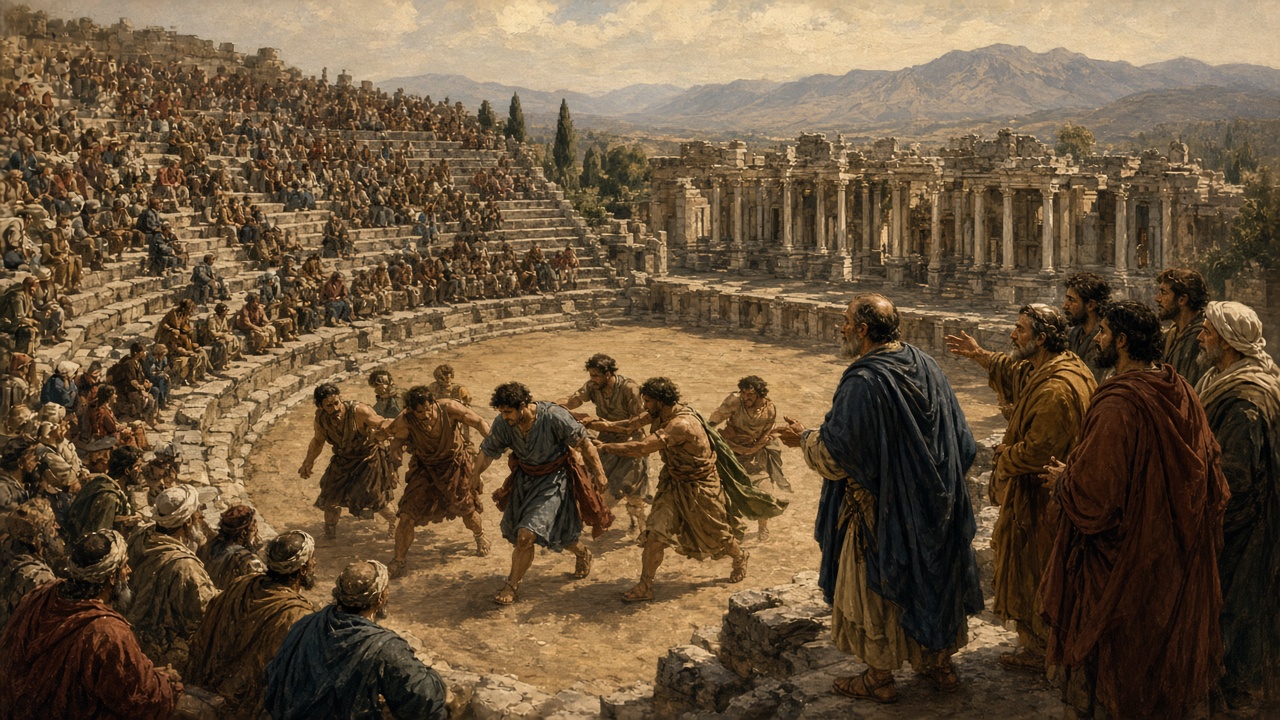
- The crowd rushed into the theatre of Ephesus, which Easton's Bible Dictionary (1897) describes as the largest in the world, open to the sky and able to hold 50,000 spectators. Friends of Paul among the chiefs of Asia, wealthy citizens elected each year to preside over the games and religious festivals of their cities, begged him not to go in. The city clerk then reminded the assembly that Ephesus was guardian of the temple of the great Artemis and of her image, said to have fallen from heaven.Sources: Ephesus · Asia · the Bible text itself
Notes written with AI assistance from open sources (Theographic Bible Metadata, CC BY-SA 4.0; Easton’s Bible Dictionary, public domain) and reviewed before publishing.
Places in this chapter
- Corinth · 37.906, 22.879 · verse 1
- Ephesus · 37.939, 27.341 · verses 1, 17, 23, 26, 35
- Asia · 38.400, 28.300 · verses 10, 22, 26, 27, 31
- Achaia · 38.720, 22.540 · verse 21
- Jerusalem · 31.777, 35.234 · verse 21
- Macedonia · 41.600, 22.540 · verses 21, 22, 29
- Rome · 41.892, 12.485 · verses 21, 40
Only places identified with high confidence are shown (90% or more according to the scholarly sources compiled by OpenBible). Period map: DARE (Digital Atlas of the Roman Empire), CC BY 4.0; modern map: © OpenStreetMap contributors; places: OpenBible.info (CC BY 4.0).
Credits and license for this translation
Manikáne O Ehwehne
God's New Talk: The New Testament in the Awa Language of Papua New Guinea
Nupela Testamen long tokples Awa long Niugini
copyright © 1974, 1997 Wycliffe Bible Translators, Inc.
℗ Faith Comes by Hearing
Language: Awa
Translation by: Wycliffe Bible Translators
This translation is made available to you under the terms of the
Creative Commons Attribution-Noncommercial-No Derivatives license 4.0.
You may share and redistribute this Bible translation or extracts from it in any format, provided that:
You include the above copyright and source information.
You do not sell this work for a profit.
You do not change any of the words or punctuation of the Scriptures.
Pictures included with Scriptures and other documents on this site are licensed just for use with those Scriptures and documents.
For other uses, please contact the respective copyright owners.
2013-12-11
Source: http://png.bible/awb/ · eBible.org