Genesis 1
Buk Baibel long Anuki · Tap a verse to see its cross-references.
About this book
About Genesis
- Among Jews the book is called Bereshith, meaning in the beginning, from its first word; Christians know it as Genesis, the Greek name used in the Septuagint, meaning creation or generation, because it tells of the origin of all things. It is the first of the five books that Jews call the Torah, the law, and that are collectively known as the Pentateuch, a Greek term for the five-fold book. Easton thinks the division into five books probably came from the Greek translators, and that the familiar book names are Greek.Sources: Easton: Genesis
- Easton's Bible Dictionary (1897) attributes Genesis to Moses and allows that he may have used older documents or traditions already current in his time. It gives no date of composition. By what Easton calls the usual computation, the narrative spans about 2,369 years.Sources: Easton: Genesis
- Easton divides Genesis into two principal parts. Chapters 1-11 give a general history of humankind down to the Dispersion; chapters 12-50 give the early history of Israel down to the death and burial of Joseph. Five figures organize the successive periods: Adam, Noah, Abraham, Isaac, and Jacob.Sources: Easton: Genesis
- Abram sojourned in Chaldea until he left Ur and traveled some three hundred miles north to Haran. Jacob later fled to Laban's house at Haran in Mesopotamia and married Laban's daughters, Leah and Rachel. The narrative then reaches Egypt: Easton takes Joseph's Pharaoh to be probably Apopi, the last Hyksos king, while some argue for the reign of Thothmes III.Sources: Abraham · Laban · Pharaoh (of Joseph)
- Easton notes that Sarah, Abraham's wife, died at one hundred and twenty-seven, the only woman's age recorded in Scripture, and that her death led Abraham to buy the cave of Machpelah as a family burial place.Sources: Sarah
Notes written with AI assistance from open sources (Theographic Bible Metadata, CC BY-SA 4.0; Easton’s Bible Dictionary, public domain) and reviewed before publishing.
Dagudaguna
1Ghuyoghuyone na, God abama da kubura ibera. 2Kubura na kanakita gegha torewiikayokayowanina bi kwebuna, wiididibara rarima wautapudi isowomumudi, bi God kanumina rarima wowodigha iyaghanoghanowa.
3Bi God iwona bo, “Yeghana nama inarumaghatara” da yeghana irumaghatara. 4God yeghana ikita da imiise; na yeghana da wiididibara ivibogabogaedi. 5God yeghana ikwatuveni Raghani bi wiididibara ikwatuveni Nubabasu. Ravidi inagho bi didibara ipiika - gabudara dagudaguna.
6Wasina bi God iwona bo, “Taraboga nama rarima basune da inibogabogaedi.” 7Bi God taraboga ibera da rarimina ivibogaedi da bata situbugha. Bi tarabogine ibera, da rarima rogune bi kiidamove. Na itubugha. 8Taraboga kiidamove ikwatuveni Abama. Ravidi inagho bi didibara ipiika - gabudara wiibatana.
9Noko murine God iwona bo, “Rarima abama rogune gawara tanagha initaghomi, bi tanawa kanakanana inarumaghatara,” na itubugha. 10Bi God tanawa kanakanana ikwatuveni Kubura bi rarima wiiwiitaghomidi ikwatuveni Yegii. Na God ikita da imiise. 11Bi noko murine God iwona bo, “Kubura sawara bogaebogae inigogodi, pei kiidi, da kiiuwa kiidi mma kubure sinagogo bi sinuwagha da ere peidi. Yadi tubugha nunudigha,” na itubugha. 12Wasina bi kubura kiiuwa bogaebogae ivigogodi, yadi tubugha nunudigha na God ikita da imiise. 13Ravidi inagho bi didibara ipiika - noko gabudara wiiarobina.
14Bi God iwona magha bo, “Yeghana abame sinarumaghatara bi raghani da nubabasu sinibogabogaedi, bi toudi sinimatakira da raghani meyani gabudara, bodu da kwamra sinadagu, 15bi abame sinakarata da kubura yeghana sinavereni,” na itubugha. 16Na God yeghana ghamadi bata iberadi - gabudara raghani inibadeni bi nawaravi nubabasu inibadeni, bi kate bada kewokewo iberadi. 17Na mmkodi abame itoredi na yeghana kubura sinavereni, 18da raghani bi nubabasu sinibadedi, na yeghana wiididibarama ivibogaeni. Bi God ikita da imiise. 19Ravidi inagho bi didibara ipiika - noko gabudara wiiruwamaruvina.
20Wasina bi God iwona bo, “Sawara yawayawiidi bogaebogae rarima sinibonuvi bi manu kiidamo sinibonuvi.” 21Na God yegii ighanidi ghamanakidi da gisigisidi mekodi rarime samakamake na iberadi, yadi tubugha nunudigha, bi kate bada manu roworowoyidi tupadi yadi tubugha nunudigha. Bi God ikita da imiise. 22Na ivimiiseyedi bi iwonedi bo, “Ighana kovituwa wiipeyara da yegii konibonuvi bi manu bada kovituwa wiipeyara kiidamove.” 23Na ravidi inagho bi didibara ipiika - noko gabudara wiiimiikovina.
24Wasina bada God iwona bo, “Kubura ribiribi bogaebogae initubuyidi, yadi tubugha nunudigha: ananamanidi da gegha ananamanidi, ghamanakidi da gisigisidi” na itubugha. 25Bi God awaki tupadi iberadi, na ikita da imiise.
26Wasina bi God iwona bo, “Bi katana wawaya tanabera mekeyudae, naboni touda mayimayiyida bi toudi kubura tupana sinibadeni da kate ighana, manu kiidamove, ribiribi tupadi, ananamanidi da gegha ananamanidi, ghamanakidi da gisigisidi, bi kate sawara mekodi tanave sasasadi.”
27Na God wawaya ibera tounamani mekeyune,
da touna naboni.
Tomogha da wasike iberadi.
28Wasina bi God ivimiiseyedi bi iwona wiiyoyowanedi bo, “Kovituwa da natunatumi sinakoroto, da kubura konibonuvi da konakoyayi, bi yegii ighanidi da manu kiidamove bi kate ribiribi tupadi mekodi tanave sasasadi konibadedi.”
29Bi God iwona bo, “Tagu kii tupadi ere peidi da kiiuwa ere peidi bogaebogae avereveremi da toudi tami kamikam, mmko kuburina debane, 30bi kubura ribiribidi tupadi da kiidamo manudi da kate sawara yawayawiidi tupadi mekodi tanave sasasadi - kiimatagha uwadi avereveredi kadikam,” da itubugha. 31Wasina bi God sawara tupadi ibera na ikita da imiise kirakii. Ravidi inagho bi didibara ipiika - noko gabudara kana wiisix.
Did you know?
The creation of heaven and earth
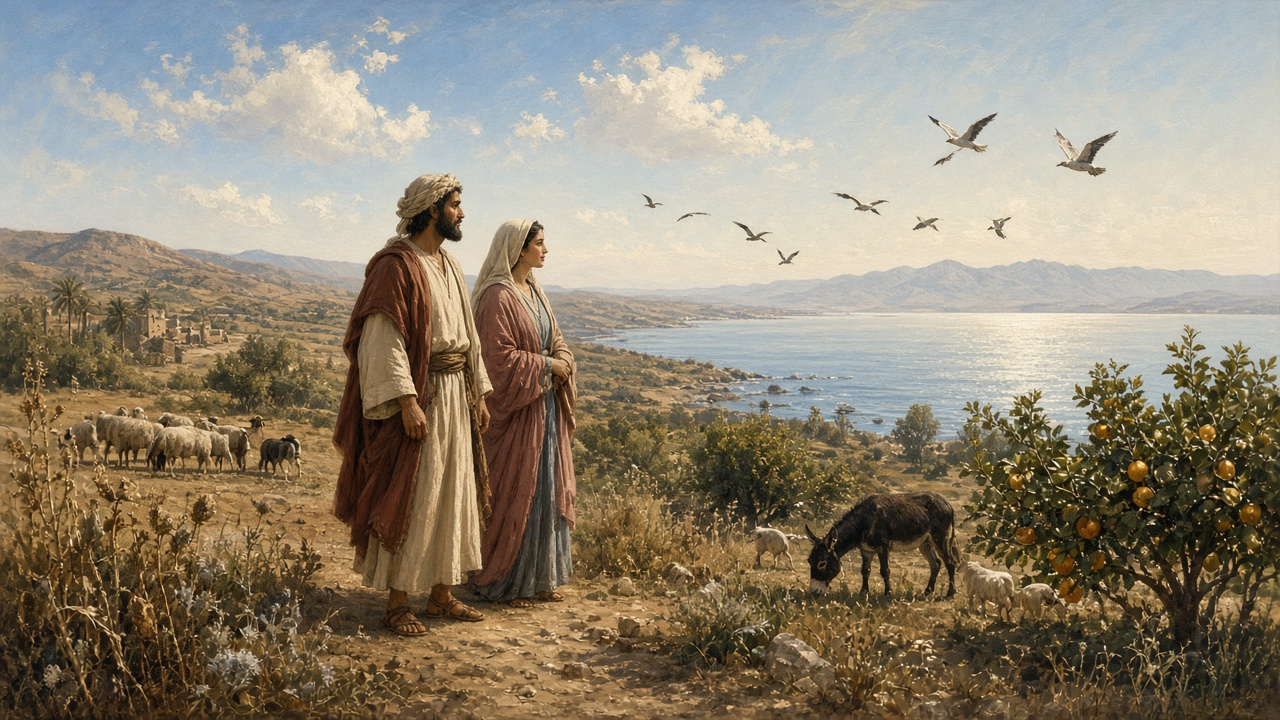
- The chapter tells the making of the heavens and the earth over six days, and each day closes with the same refrain: there was evening, and there was morning. Light is brought into being on the first day and named “day,” while the darkness is named “night.” Only on the fourth day are two great lights and the stars set in the expanse of the sky, to separate day from night and to mark seasons, days, and years.Sources: the Bible text itself
- The story opens on an earth that is formless and void, with darkness over the surface of the deep and the Spirit of God hovering over the waters. God makes an expanse and calls it “sky,” separating the waters above from the waters below. The waters under the sky are gathered into one place so that dry land, called “earth,” and the seas appear, and the earth brings forth seed-bearing plants and fruit trees.Sources: the Bible text itself
- On the sixth day livestock, land crawlers, and beasts of the earth are made, and human beings are created male and female in the image of God, blessed, and told to fill the earth and rule the other creatures. Seed-bearing plants and fruit trees are given to them for food, and every green plant to every creature that has the breath of life, and God looks at all that has been made and calls it very good. One event chronology places the start of the creation of all things in 4003 BC and gives it a duration of seven days.Sources: the Bible text itself · Creation of all things
Notes written with AI assistance from open sources (Theographic Bible Metadata, CC BY-SA 4.0; Easton’s Bible Dictionary, public domain) and reviewed before publishing.
Credits and license for this translation
Buk Baibel long Anuki
Portions of the Holy Bible in the Anuki language of Papua New Guinea
Buk Baibel long tokples Anuki long Niugini
copyright © 2010-2016 Wycliffe Bible Translators, Inc.
Language: Anuki
Translation by: Wycliffe Bible Translators
This translation is made available to you under the terms of the
Creative Commons Attribution-Noncommercial-No Derivatives license 4.0.
You may share and redistribute this Bible translation or extracts from it in any format, provided that:
You include the above copyright and source information.
You do not sell this work for a profit.
You do not change any of the words or punctuation of the Scriptures.
Pictures included with Scriptures and other documents on this site are licensed just for use with those Scriptures and documents.
For other uses, please contact the respective copyright owners.
2014-06-02
Source: http://png.bible/aui/ · eBible.org