Malachi 1
Cishingini Agwara Kambari [asg] · Tap a verse to see its cross-references.
About this book
About Malachi
- Easton's Bible Dictionary (1897) presents Malachi, a name meaning "messenger" or "angel," as the last of the minor prophets and the writer of the last book of the Old Testament canon. Nothing is known of him beyond what is contained in his book of prophecies.Sources: Easton: Malachi · Malachi
- Some have supposed that the name is simply a title for a messenger of Jehovah, not a proper name. Easton's Bible Dictionary (1897) concludes, however, that there is reason to regard Malachi as the prophet's ordinary name.Sources: Easton: Malachi · Malachi
- Easton's Bible Dictionary (1897) dates the prophecies to about 420 B.C., after Nehemiah's second return from Persia, or possibly before that return. Because Ezra does not mention him and he does not mention the restoration of the temple, the dictionary infers that he prophesied after Haggai and Zechariah.Sources: Easton: Malachi
- Easton's Bible Dictionary (1897) treats Malachi as a contemporary of Nehemiah, comparing Malachi 2:8 with Nehemiah 13:15 and Malachi 2:10-16 with Nehemiah 13:23. It also notes that the temple services were still in existence, citing Malachi 1:10, 3:1 and 3:10.Sources: Easton: Malachi
Notes written with AI assistance from open sources (Theographic Bible Metadata, CC BY-SA 4.0; Easton’s Bible Dictionary, public domain) and reviewed before publishing.
1Na ɗa akaka a Vuzavaguɗu a kubana wa aza a Isaraila a̱ ubuta̱ u keneki Malaci.
Ucigi u Vuzavaguɗu u Yakubu
2Vuzavaguɗu u danai,<<N ciga ɗa̱ ta̱ ra̱ka̱.>> Ama ɗa yu ushiki, i danai, <<Nini ɗai vu cigai tsu?>> Vuzavaguɗu wu ushuki, u danai, <<Isuwa n Yakubu ele ɗa vuza n vangu ba?>>N nannai dem <<Ɗa n cigai Yakubu, 3ama n iwain ta̱ Isuwa, m bonokoi uɓon wa nsansa n ni wo okpoi agali, n nekei ubuta̱ wu uka̱ni wo okpoi ubuta̱ wu ida̱shi yi nsheꞋe n kakamba.>> 4Ko a na wo okpoi aza a Edom, kumaci ku Isuwa, ku danai, <<A̱ fa̱da̱ ta̱ likuci i tsu cika-cika, ama ci ta̱ o kubono tsu gisa̱ka̱ ku maꞋasaka a gali a̱ tsu.>> Ama Vuzavaguɗu MalaꞋimili u danai. <<Mayun i ta̱ a ku maꞋasaka i ɗa, mpa kpamu mi ta̱ kudoku ku fa̱da̱, ali sai a dana le <Iɗika i gbani-gbani,> <Uma a na wupa u Vuzavaguɗu wi e ku geshe a aci e le.> >> 5Yi ta̱ e kene ili nampa ya n a̱shi a̱ ɗa̱, ka̱ta̱ i dana, <<Vuzavaguɗu vuza gbayin ɗa, tsugbayin ci ni kpamu tsu laza ta̱ kureꞋe ki iɗika yi Isaraila.>>
Alyuka a gbani-gbani
6<<Vuzavaguɗu MalaꞋimili u danai, maku ma tsu cikpa ta̱ esheku a̱ ni, ka̱ ta̱ kagbashi kpamu ka cikpa vuza kpaꞋa vu ni. To, mpa esheku ɗa ba ci, teɗai tsugbayin tsu va̱? Mpa kpamu vuza kpaꞋa ɗa baci teɗai ugaꞋin va̱? A̱ɗa̱ anan ganu, a̱ɗa̱ na i tsu goyo kula ku va̱. I danai, <Niniɗai tsu goyoi kula ku nu?> 7Yi e kuneke ilikulya yu unata gaɗi vu atalialyuka a̱ va̱. Ɗa kpamu i danai, <Niniɗai tsu la̱nga̱sa̱i katalikalyuka ka̱ nu?> To, mi ta̱ a kudana ɗa̱, uteku tsu na i goyoi katalikalyuka ka̱ va̱. 8Ayin a na baci i tuka̱i n ka̱yimba̱ ka manama adama ana i yaꞋanka alyuka, yi ta̱ e kene nannai va u gaꞋin u ɗa? Ko kpamu ayin a na baci i tuka̱i manama ma na ma̱ zumgba̱i ko kpamu ma na mi gbaga ba, nannai va u gaꞋan ta̱? Nekei vuza tsugono ɗa̱ i ɗa ye ene. Wi ta̱ a kuyaꞋan ma̱za̱nga̱? Ko yi ta̱ a̱ kuciya̱ kasingai ubuta̱ u ni? Mpa Vuzavaguɗu MalaꞋimili n dansai. 9Gogo na, sai i kondo kula̱nsa̱ Ka̱shile, u yotsongu tsu kasingai. N icuꞋu ya alyuka a na yi ekiye a̱ ɗa̱ ɗa u kupanaka ɗa̱? Vuzavaguɗu MalaꞋimili u dansai. 10I shi baci a̱ kuciya̱ vuza vu yoku a̱ ka̱tsuma̱ ka̱ɗa̱ vuza na wa ku gbagura utsutsu wa̱ A̱Ꞌisa̱ a nampa, adama a na ka̱ta̱ i dyaɓa akina a gaɗi vu katalikalyuka ka̱ va̱ gbani ba, mi a kupana uyoꞋo u ɗa̱ ba, kpamu mi a ku isa alyuka ekiye a̱ ɗa̱ ba. 11Ali a̱ wuti u kanna a kubana uyikpi u kanna kula ku va̱ ki ta̱ n tsugbayin a̱ ka̱tsuma̱ ku uduniyan. A̱ ubuta̱ ra̱ka̱, o tsu songu ta̱ ili i ma̱gula̱ni n kuneꞋe ku singai n kula ku va̱, adama a na kula ku va̱ ki ta̱ n tsugbayin a̱ ka̱tsuma̱ ku uduniyan, Vuzavaguɗu MalaꞋimili u dansai. 12Ama ɗa i bonokoi kula ku va̱ ukuna u gbani, ayin a na i danai katalikalyuka ka Vuzavaguɗu ili i ɗa ba, kpamu ilikulya i na a zuwai ɗe ili i kugoyi i ɗa. 13Ɗa kpamu i danai, <Tsu owo ta̱ n ili ya atakaci i nanlo ya,> Vuzavaguɗu MalaꞋimili. I tuka̱i n ili i na a isai n utsura ko i na yi ma̱kutsuma̱, ko i na yi gbaga ba, kpamu i ɗaɗa i tuka̱i tsu kuneꞋe ku ɗa̱. Yi ta̱ e kene mpa mi ta̱ a ku isa i ɗa ekiye a̱ ɗa̱? Mpa Vuzavaguɗu n dansai. 14Ili ya atakaci i ɗa, u vuza vu modoruko. Ɗanna wi ta̱ n ka̱giri ka na ki n uꞋiwin u Ka̱shile ba a ushiga u ni, kana u yaꞋin uzuwukpani an wa kuneke Vuzavaguɗu, ama ɗa kucikpa u nekei za vu usa̱n. Ko a na wo okpoi i yeve ta̱ mpa mogono magbayin maꞋa, ali uduniyan ra̱ka̱ a kupana wovon u kula ku va̱, mpa Vuzavaguɗu MalaꞋimili n dansai.
Did you know?
Honoring God and Defective Offerings
- The name Malachi means messenger or angel. While some have suggested it was a title rather than a proper name, scholars and traditions widely treat it as the prophet's personal name, placing his ministry during the period of Nehemiah, after Haggai and Zechariah.Sources: Malachi
- The opening dispute recalls the twin brothers Jacob and Esau, the ancestors of Israel and Edom. The text contrasts God's covenant love for Israel with the judgment and desolation coming upon the mountainous region of Edom.Sources: Esau (Edom) · Jacob (Israel) · Edom · the Bible text itself
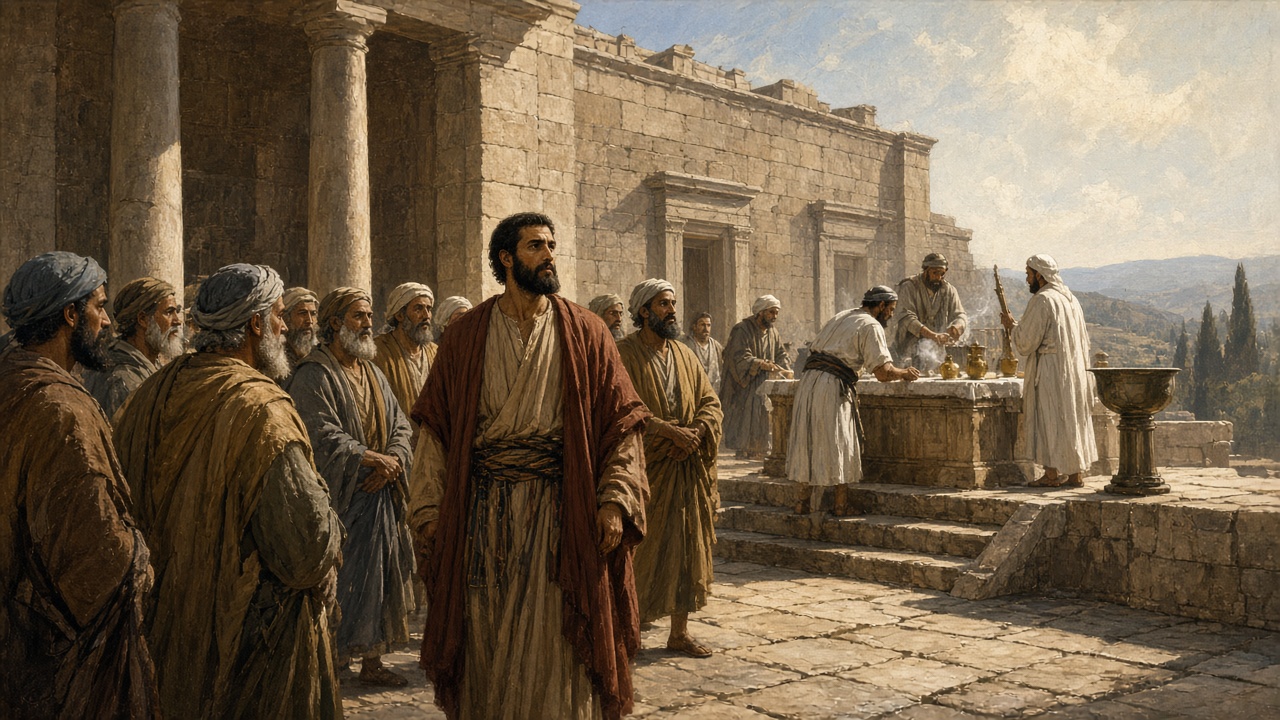
- The priests are rebuked for offering blind, lame, and diseased animals on the altar rather than unblemished livestock. Malachi exposes their disrespect by asking whether a civil governor would accept such inferior gifts.Sources: the Bible text itself
Notes written with AI assistance from open sources (Theographic Bible Metadata, CC BY-SA 4.0; Easton’s Bible Dictionary, public domain) and reviewed before publishing.
Places in this chapter
- Edom · 30.746, 35.604 · verse 4
Only places identified with high confidence are shown (90% or more according to the scholarly sources compiled by OpenBible). Period map: DARE (Digital Atlas of the Roman Empire), CC BY 4.0; modern map: © OpenStreetMap contributors; places: OpenBible.info (CC BY 4.0).
Credits and license for this translation
Cishingini Agwara Kambari [asg]
Cishingini: Cishingini Agwara Kambari [asg] (Bible)
copyright © 2025 Language Development and Translation Initiative (LDTI)
Language: (Cishingini)
Contributor: The Seed Company
This translation is made available to you under the terms of the
Creative Commons Attribution Share-Alike license 4.0.
You have permission to share and redistribute this Bible translation in any format and to make reasonable revisions and adaptations of this translation, provided that:
You include the above copyright and source information.
If you make any changes to the text, you must indicate that you did so in a way that makes it clear that the original licensor is not necessarily endorsing your changes.
If you redistribute this text, you must distribute your contributions under the same license as the original.
Pictures included with Scriptures and other documents on this site are licensed just for use with those Scriptures and documents.
For other uses, please contact the respective copyright owners.
Note that in addition to the rules above, revising and adapting God's Word involves a great responsibility to be true to God's Word. See Revelation 22:18-19.
2025-07-09
Source: http://ebible.org/asg/ · eBible.org