Haggai 2
Cishingini Agwara Kambari [asg] · Tap a verse to see its cross-references.
Tsugbayin tsa̱ A̱Ꞌisa̱ a gbayin a savu
1A kanna ka kamanga n kete ko wotoi u cindere, ɗa Vuzavaguɗu u yaꞋin kadanshi n keneki Hagai, u danai, 2<<YaꞋan kadanshi n Zerubabe kolobo ka Shiyatiyelu, gomuna vu Yahuda n Jesuwa kolobo ka Jehozadaku, ganu vu gbayin, koɓolo n uma a na a buwai dem, vu ece le, 3<Yayi a̱ ka̱tsuma̱ ka̱ ɗa̱ u buwai n wuma ali ɗa u ciya̱i we enei kpaꞋa ku Vuzavaguɗu n tsugbayin ci ni ci cau? Nini ɗai yi e kene ku ɗa gogo na? E kene ku ɗa̱ ili i yoku i ɗa ba? 4Ama gogo na tsurukpa, avu Zerubabe, tsurakpa, avu Jesuwa kolobo ka Jehozadaku, ganu vu gbayin. Tsurukpai a̱ɗa̱ uma a iɗika ya, Vuzavaguɗu u danai. YaꞋin ulinga, adama a na mpa Vuzavaguɗu MalaꞋimili mi ta̱ koɓolo n a̱ɗa̱. 5A ayin a na yi uta̱i a iɗika i Masar n yaꞋanka ɗa̱ ta̱ uzuwakpani n danai, ayinviki a̱ va̱ i ta̱ o kuyongo n a̱ɗa̱, ta kaꞋa ki nannai ali n anana, adama a nannai ka̱ta̱ i pana wovon ba.> 6Na ɗa ili i na Vuzavaguɗu MalaꞋimili u dansai, mi e kugeshe ba, mi ta̱ a̱ kugba̱ɗa̱ gaɗi n aduniyan m mala n iɗika i ɗekpu. 7Mi ta̱ kpamu a̱ kugba̱ɗa̱ uma aduniyan ra̱ka̱, ka̱ta̱ a̱ tuka̱ n uciyi u le ra̱ka̱ a kpaꞋa ku va̱. Mi ta̱ a kushatangu kpaꞋa ku nampa n tsugbayin. Vuzavaguɗu MalaꞋimili u dansai. 8Vuzavaguɗu MalaꞋimili u danai, azanariya n azurufa a̱ va̱ a ɗa. 9Tsugbayin tsu kpaꞋa ku savu ku nampa kulaꞋa ku cau, Vuzavaguɗu MalaꞋimili u danai. A̱ ubuta̱ u nampa mi ta̱ a̱ ku tuka̱ n una̱singai m ma̱ta̱na̱, Vuzavaguɗu MalaꞋimili u dansai.>>
Una̱singai adama aza a usuɓi
10A kanna ka kamanga n ka̱ na̱shi a̱ ka̱tsuma̱ ko wotoi u kuci, a̱ ka̱ya̱ ke ire ko tsugono tsu Dariyu, ɗa Vuzavaguɗu u yaꞋin kadanshi n keneki Hagai. 11<<Ili i na Vuzavaguɗu MalaꞋimili u danai i ɗanna, <Ecei anan ganu ili i na wila̱ u danai. 12Vuza yoku u ka̱ta̱la̱ baci inyama i na yi ciɗa o motogu ma̱ ni, ɗa motogu ma ma saꞋwai boroji, ko ili i kulyaꞋa ko ma̱kya̱n ko maniꞋin ko icuꞋu yi ilikulyaꞋa dem, na lo wi ta̱ a kuzuwa ili ya yi okpo ciɗa?> >>
Ɗa anan ganu a̱ ushuki a danai, <<A̱Ꞌa̱.>>
13Ɗa Hagai u danai, <<Vuza u natukpa baci ka̱ci ka̱ ni a̱ ubuta̱ u kusaꞋwa keven ki ikyamba, ali ɗa kpamu u saꞋwai ili i te a̱ ka̱tsuma̱ ki nampa ka, nanlo va wi ta̱ a kuzuwa ili i nanlo ya yi okpo n unata?>>
Ɗa anan ganu a danai, <<Ili ya yi ta̱ o ko okpo n unata.>> 14Ɗa Hagai wu ushuki le u danai, <<Vuzavaguɗu u dana ta̱, <Ta kaꞋa ki nannai u uma a nampa n uduniyan u na wi kelime ka̱ va̱, n ulinga we ekiye u le dem, n ili i na i e kuneke yi ta̱ n unata. 15Gogo na la̱na̱i kuyongo ku ɗa̱ ili i na i ɗikai na a kubana kelime. Kafu i kiyangu katali a gaɗi vu vutoku a kumaꞋa A̱Ꞌisa̱ a Vuzavaguɗu, niniɗai kuyongo ku ɗa̱ ki. 16I tsu bana ta̱ a̱ ubuta̱ u kotoro ki ili i kashina n i danai yi ta̱ a̱ ku kunzuku kagisamkpatsu kamanga, ama kucukpa i cina kagisamkpatsu kupa koci. I tsu bana ta̱ a̱ ubuta̱ u kupisha ma̱kya̱n n kusheshe ku na i kuciya̱ punu edele amangatawun a̱ ma̱diki, ama kucukpa i cina punu edele amangere koci. 17Vuzavaguɗu u danai, n tuka̱i ɗa̱ n wunla̱i wu usuɗukpi ɗa u zuwai ica̱Ꞌa̱shi ya ashina i ɗa̱ i lumbai n kerepu, m mini ma akpanga ma na ma̱ la̱nga̱sa̱i ashina a̱ ɗa̱, n nannai dem i bono wa̱ va̱ ba.> 18La̱na̱i, kuyongo ku ɗa̱ gogo na a kubana kelime, ili i na i ɗikai a kanna ka kamanga n ka̱ na̱shi ko wotoi kuci, kanna ka na a varai kumaꞋa ka̱ A̱Ꞌisa̱ a gbayin a Vuzavaguɗu. N ciga ta̱ i sheshe mayin a ukuna u keci ku nampa. 19I buwa n icuꞋu i kuca̱Ꞌa̱ o mpon n ɗa̱ ba, ili i na i ɗikai ayin a na i ca̱Ꞌi. Gogo na ashina a itacishi, nu nɗanga mu mbiri, nu nɗanga n zaitu n ɗa̱, i o kudoku kumatsa umaci u gbani-gbani kpamu ba. Ama ili i na i ɗikai a kanna ka nanlo ali a kubana n kelime, mayun mi ta̱ a kuzuwaka ɗa̱ una̱singai.>>
Vuzavaguɗu u yaꞋankai Zarubabelu uzuwakpani
20Vuzavaguɗu u yaꞋin kadanshi n keneki Hagai kakawa kure, a kanna ka kamanga n ka̱ na̱shi ko wotoi u kuci, u danai, 21<<Dana Zerubabelu gomuna vu Yahuda, mi ta̱ a̱ kugba̱ɗa̱ gaɗi n iɗika. 22Mi ta̱ a kutakpa tsugono ci iɗika kakau, mi ta̱ kpamu a̱ kula̱nga̱sa̱ ekeke o odoku mu una akumbi e le, odoku i ta̱ a̱ kuyikpa̱ akumbi e le kpamu i ta̱ a ku unanai n otokobi. 23Vuzavaguɗu MalaꞋimili u danai, a kanna ka nanlo, mpa mi ta̱ a kuɗika wu, Zerubabe kolobo ka Shiyatiyelu kagbashi ka̱ va̱, mi ta̱ o kubonoko wu tsu ka̱ta̱mba̱ri ka̱ va̱, tsu na mogono ma ci yaꞋan ulinga n ka̱ta̱mba̱ri ko tsugono ci ni, adama a na n zagba wu ta̱, Vuzavaguɗu MalaꞋimili u dansai.>>
Did you know?
The Promise of Future Glory
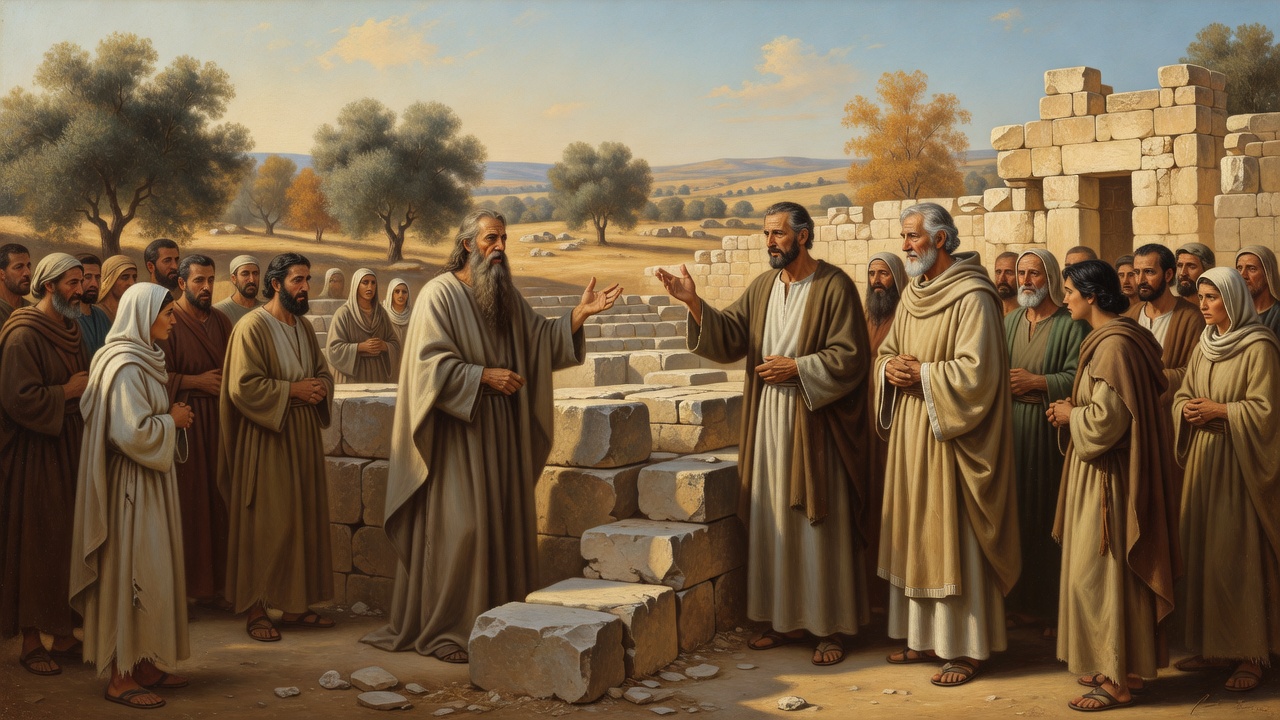
- When the foundation of the second temple was laid after the return from Babylon, older members of the community could still remember the magnificence of the original temple destroyed by Nebuchadnezzar. In response to their discouragement at the modest new structure, Haggai declared that the future glory of this house would surpass its former splendor.Sources: the Bible text itself · Zerubbabel · Haggai
- Haggai consulted the priests on questions of ritual law to illustrate a moral point. According to their rulings, holiness was not easily transmitted through indirect contact, whereas ceremonial defilement—such as from touching a corpse—spread immediately, mirroring how their past neglect had affected their offerings and harvests.Sources: the Bible text itself
- The restoration of the community was led by two key figures: Zerubbabel son of Shealtiel, who served as the civil governor, and Joshua son of Jehozadak, the high priest. At the end of the chapter, Haggai addresses Zerubbabel with the royal imagery of a signet ring, symbolizing divine authority and choice.Sources: the Bible text itself · Zerubbabel · Joshua
Notes written with AI assistance from open sources (Theographic Bible Metadata, CC BY-SA 4.0; Easton’s Bible Dictionary, public domain) and reviewed before publishing.
Places in this chapter
- Egypt · 30.129, 31.308 · verse 5
Only places identified with high confidence are shown (90% or more according to the scholarly sources compiled by OpenBible). Period map: DARE (Digital Atlas of the Roman Empire), CC BY 4.0; modern map: © OpenStreetMap contributors; places: OpenBible.info (CC BY 4.0).
Credits and license for this translation
Cishingini Agwara Kambari [asg]
Cishingini: Cishingini Agwara Kambari [asg] (Bible)
copyright © 2025 Language Development and Translation Initiative (LDTI)
Language: (Cishingini)
Contributor: The Seed Company
This translation is made available to you under the terms of the
Creative Commons Attribution Share-Alike license 4.0.
You have permission to share and redistribute this Bible translation in any format and to make reasonable revisions and adaptations of this translation, provided that:
You include the above copyright and source information.
If you make any changes to the text, you must indicate that you did so in a way that makes it clear that the original licensor is not necessarily endorsing your changes.
If you redistribute this text, you must distribute your contributions under the same license as the original.
Pictures included with Scriptures and other documents on this site are licensed just for use with those Scriptures and documents.
For other uses, please contact the respective copyright owners.
Note that in addition to the rules above, revising and adapting God's Word involves a great responsibility to be true to God's Word. See Revelation 22:18-19.
2025-07-09
Source: http://ebible.org/asg/ · eBible.org