Genesis 46
Cishingini Agwara Kambari [asg] · Tap a verse to see its cross-references.
Yakubu u banai a Masar
1Yakubu u ɗikai ili i na wi n i ɗa ra̱ka̱ ɗa u lazai a kubana Biyasheba, ɗa u yaꞋin alyuka a kubana u Ka̱shile ke esheku a̱ ni Ishaku.
2Ka̱shile ka yaꞋin kadanshi n Yakubu a̱ ka̱tsuma̱ ka alatani n kayin u danai, <<Yakubu, Yakubu>> Wushuki, <<Mpa ɗa na.>>
3Ɗa u danai ni, <<Mpa ɗa Ka̱shile, Ka̱shile ke eshevu, ka̱ta̱ vu pana wovon u kubana a Masar ba, adama a na mi ta̱ o kubonoko wu ɗe iɗika i gbayin. 4Mi ta̱ a kubana ɗe a Masar koɓolo n avu, ka̱ta̱ n tuka̱ wu kpamu. A ayin a̱ ukpa̱ u nu kpamu ekiye a̱ Isufu a ɗaɗa a kupala a̱shi a̱ ni.>>
5Ɗa Yakubu u ka̱sukpa̱i Biyasheba. Muku n ni n zuwai ni, m muku n wawaꞋa n le, n a̱ma̱ci e le e keke va anaka vu na mogono ma Masar ma̱ suki a ɗikaka yi. 6A ɗikai ilikuzuwa i le koɓolo n uciyi u na a̱ ciya̱i a ayin a na i a KanaꞋana, ɗa Yakubu n i limata i ni ra̱ka̱ a banai a Masar va. 7Muku n ni, m muku m muku n ni koɓolo n a̱yi, nkere n ni, ni nkere mi nkere n ni; limata i ni dem u banai n ele a Masar.
8Ele na ɗa ula a aza a Isaraila, Yakubu n limata i ni, aza a na a̱ ta̱wa̱i a Masar.
Ruben, maku ma iyain ma Yakubu.
9Muku mo olobo n Ruben:
Enoku, Palu, Hezuron, n Kami.
10Muku mo olobo n Simiyon ele ɗa:
Jemuwelu, Jamin, Ohadu, Jaki, Zoha, n Shawu, maku ma na mekere ma KanaꞋana ma matsai
11Muku mo olobo n Levi ele ɗa:
Geshon, Kohatu, m Merari.
12Muku mo olobo n Yahuda ele ɗa:
Eri, Ona, Shela, Pereza, n Zera. Ama Eri n Ona a̱ kuwa̱ ta̱ a iɗika i KanaꞋana.
Muku mo olobo n Pereza ele ɗa:
Hezuron n Hamulu.
13Muku mo olobo mi Isaka ele ɗa: Tola, Puwa, Jashubu, n Shimiron.
14Muku mo olobo n Zabalun ele ɗa:
Seredu, Elon, n Jalelu.
15Ele na ɗa muku n Liyatu n na u matsakai Yakubu a Fada-aram, koɓolo m mekere ma̱ ni Dina. Muku n ni ra̱ka̱ olobo ni nkere i ta̱ uma kamangankupa n aza a tatsu.
16Muku mo olobo n Gadu ele ɗa:
Zifiyon, Hagi, Shuni, Ezibon, Eri, Arodu, n Areli.
17Muku mo olobo n Ashera ele ɗa:
Imuna, Ishiva, Ishivi, m Beriya.
Taku vi le mekere a̱yi ɗa Shera. Muku mo olobo m Beriya ele ɗa:
Heberu m Malikiyelu.
18Ele na ɗa muku n na Zilifa u matsakai Yakubu. Zilifa a̱yi ɗa maku mu usuki ma na Laban u nekei mekere ma̱ ni Liyatu a ayin o yolo a̱ ni. Muku n ni ra̱ka̱ ele ɗa uma kupa n aza a̱ ta̱li.
19Muku n Rahila vuka vi Yakubu ele ɗa Isufu m Bayami. 20Muku n Isufu n na a matsakai ni a iɗika i Masar ele ɗa Manasa n Ifirayimu. A̱na̱ku e le a ɗa Asenatu mekere ma Potifera, ganu vu Onu.
21Muku mo olobo m Bayami ele ɗa: Bela, Beka, Ashibelu, Gera, NaꞋama, Ehi, Roshi, Mupim, Hupim, n Arudu.
22Muku kupa n aza a̱ na̱shi a nampa ntsukaya n Yakubu n ɗa n na Rahila u matsakai ni.
23Maku ma Dan a̱yi ɗa
Hushim.
24Muku mo olobo n Nafutali ele ɗa:
Jazilu, Guni, Jeza, n Shilema. 25Muku mo olobo m Biliha vu na Laban u nekei mekere ma̱ ni Rahila u matsakai Yakubu ele ɗa uma e cindere.
26Uma a Yakubu ra̱ka̱ a na a̱ ta̱wa̱i a Masar, aza a na i limata i ni, babu punu a̱ma̱ci a̱ muku n ni, ele ɗa uma amangatatsu n uma a̱ ta̱li. 27Muku n Isufu, n na a matsakai ni a Masar, n re n ɗa koci; uma a kpaꞋa ku Isufu a na a̱ ta̱wa̱i a Masar gbende i ta̱ uma amangatatsu n kupa.
Yakubu n Limata i ni a Masar
28Yakubu u suki Yahuda u walaka yi kelime ciya̱ u dana Isufu u cina le a Goshen. Ana a yawai, 29Isufu u kumbai keke va anaka a̱ ni ɗa u lazai a kubana Goshen adama a na u gasa n esheku. Ana a gasai ɗa Isufu wo oɓongi esheku n ekiye e kuɗeku, ɗa u shika̱i ali megeshe.
30Ɗa Yakubu u danai Isufu, <<Mi ta̱ a kufuɗa kukuwa̱ gogo na, a na me enei nu n wuma n a̱shi a̱ va̱.>>
31Isufu u danai vuza ni n aza a kpaꞋa ke esheku a̱ ni a na a buwai, <<Mi ta̱ a kubana ma dana FiriꞋauna, n dana yi, <Aza a̱ va̱ n aza a kpaꞋa ke esheku a̱ va̱, ele na i a iɗika i KanaꞋana, a̱ ta̱wa̱ ta̱ wa̱ va̱. 32Uma a nguɓi n ɗa, ele nguɓi n ɗa mi ilikuzuwa, a̱ ta̱wa̱ ta̱ n ushiga wu nlala koɓolo n wa anaka e le, n ili i na i n i ɗa dem.> 33Ayin a na baci FiriꞋauna u ɗekei ɗa̱ ɗa we ecei, <Yiɗa̱i ulinga u ɗa̱?> 34I dana, <Agbashi a̱ nu nguɓi mi ilikuzuwa i ɗa ali a̱ tsu biꞋi muku ali ta na gogo na, tsu na ikaya i nu i yaꞋansai.> Nannai ɗa u kuka̱sukpa̱ wu vi yongo a uɓon u Goshen, adama a na aza a Masar i ta̱ e kene nguɓi ili yi unata.>>
Did you know?
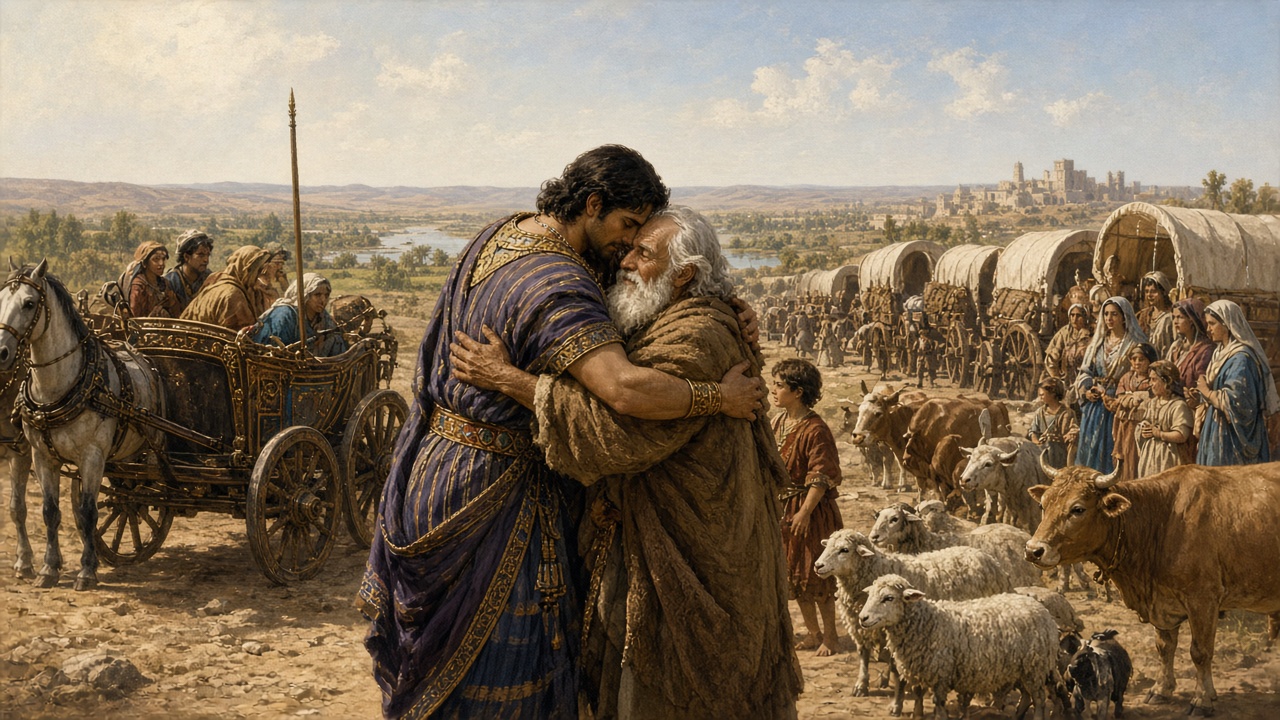
Israel Goes Down to Egypt
- As Israel set out for Egypt with all that he had, he stopped at Beersheba and offered sacrifices to the God of his father Isaac. Beersheba, meaning well of the oath or well of seven, was a well Abraham dug and named after a compact with Abimelech; when Isaac reopened it, he gave it the same name. It was a favorite dwelling of both patriarchs, and there that night God spoke to Jacob in a vision, telling him not to fear going down to Egypt, for he would make him a great nation there.Sources: the Bible text itself · Beersheba
- Jacob sent Judah ahead to Joseph for directions to Goshen, an Egyptian district east of the Nile, apparently near the royal residence, where the family remained until the Exodus. Easton's Bible Dictionary (1897) calls it the best of the land, now a desert, and also the land of Rameses. Joseph told his brothers to say they had raised livestock from youth, so they might settle there, because shepherds were detestable to the Egyptians; that dictionary suggests Pharaoh was probably Apopi, last of the Hyksos, who welcomed these Asiatic shepherds, while native Egyptians abhorred them, though some argue Joseph arrived later, under Thothmes III, after the Hyksos were expelled.Sources: the Bible text itself · Goshen · Pharaoh (of Joseph)
- The chapter counts sixty-six of Jacob's direct descendants who came to Egypt, not counting the wives of his sons, and seventy when Joseph's two sons already born in Egypt are included. Leah's sons and her daughter Dinah are named in that tally, although Easton's Bible Dictionary (1897) says Leah herself had died in Canaan before the journey and was buried in the cave of Machpelah; Rachel had died earlier giving birth to Benjamin and was buried on the way to Ephrath, that is, Bethlehem. Manasseh and Ephraim were born to Joseph in Egypt by Asenath, daughter of Potiphera, priest of On, a center of sun-worship that the Septuagint and Vulgate call Heliopolis.Sources: the Bible text itself · Leah · Rachel · On
Notes written with AI assistance from open sources (Theographic Bible Metadata, CC BY-SA 4.0; Easton’s Bible Dictionary, public domain) and reviewed before publishing.
Places in this chapter
- Egypt · 30.129, 31.308 · verses 1, 3, 4, 5, 6, 7, 8, 20, 26, 27
- Canaan · 32.767, 35.333 · verses 6, 12, 31
- Heliopolis · Today: Ain Shams · 30.129, 31.308 · verse 20
- Goshen · Today: Goshen 1 · 30.799, 31.834 · verses 28, 29, 34
Only places identified with high confidence are shown (90% or more according to the scholarly sources compiled by OpenBible). Period map: DARE (Digital Atlas of the Roman Empire), CC BY 4.0; modern map: © OpenStreetMap contributors; places: OpenBible.info (CC BY 4.0).
Credits and license for this translation
Cishingini Agwara Kambari [asg]
Cishingini: Cishingini Agwara Kambari [asg] (Bible)
copyright © 2025 Language Development and Translation Initiative (LDTI)
Language: (Cishingini)
Contributor: The Seed Company
This translation is made available to you under the terms of the
Creative Commons Attribution Share-Alike license 4.0.
You have permission to share and redistribute this Bible translation in any format and to make reasonable revisions and adaptations of this translation, provided that:
You include the above copyright and source information.
If you make any changes to the text, you must indicate that you did so in a way that makes it clear that the original licensor is not necessarily endorsing your changes.
If you redistribute this text, you must distribute your contributions under the same license as the original.
Pictures included with Scriptures and other documents on this site are licensed just for use with those Scriptures and documents.
For other uses, please contact the respective copyright owners.
Note that in addition to the rules above, revising and adapting God's Word involves a great responsibility to be true to God's Word. See Revelation 22:18-19.
2025-07-09
Source: http://ebible.org/asg/ · eBible.org