Genesis 44
Cishingini Agwara Kambari [asg] · Tap a verse to see its cross-references.
A̱ cinai mokoko ma azanariya a̱ ta̱nki vu Bayami
1Ɗa Isufu u danai kagbashi ka na ki a kinda kpaꞋa ku ni; <<Shatangu a̱ta̱nki e le tukpa-tukpa n utalu tsu na a kufuɗa kuɗika, ka̱ta̱ vu zuwaka yaba dem mokoko ma azanariya a̱ una̱ u ta̱nki u ni. 2Ka̱ta̱ vu zuwa mokoko ma azanariya a̱ ta̱nki vu vuza vu ukocishi vi le n ikebe ya punu.>> Ɗa u yaꞋin tsu na Isufu u danai ni.
3Kayin a kasa ɗa u uta̱ka̱i uma a ni njaki n le. 4Ana a lazai a bana daꞋin ka̱u ba, ɗa Isufu u danai kagbashi ka kpaꞋa ka̱ ni, <<YaꞋan gogoꞋo i tono uma a nanlo a, i cina le baci ka̱ta̱ ye ece le. <Yiɗa̱i i zuwai ɗa i tsupai kasingai n kawuya? 5Yiɗa̱i i zuwai ɗa i bokoi mokoko ma azanariya ma vuzagbayin vu va̱? Ma ɗa kpamu u ci yaꞋanka kutakpa ku uteku. Na va unushi u gbani-gbani u ɗa i yaꞋin.> >>
6Ana u cinai le ɗa u dansai derere tsu na a danai ni. 7Ɗa a̱ ushuki ni, <<Yiɗa̱i vi a kudana vuzagbayin? Ka̱shile ke jebeshe agbashi a̱ nu a yaꞋan ili tsu nanlo. 8Ikebe i na ci cinai a̱ a̱ta̱nki a̱ tsu tsu bonoko ta̱ i ɗa. Yiɗa̱i kpamu i kuzuwa ɗa tso kuboko mokoko ma azanariya ma vuzagbayin vu nu? 9Vuzagbayin, a cina baci vuza te a̱ ka̱tsuma̱ ka̱ tsu m mokoko ma nanlo yaꞋan a una yi a̱ tsu vu na tsu buwai tsu okpo agbashi a̱ ɗa̱.>>
10Ɗa vuma u danai, <<To u gaꞋan ta̱ wo okpo tsu na i danai ama vuza na a cinai mokoko ma wa̱ ni, a̱yi ɗa u kokpo kagbashi aza a na a buwai i ta̱ a kulaza.>> 11Ɗa ra̱ka̱ vi le a̱ cipa̱ka̱i n ucanuku wu njaki n le, ɗa a̱ ɓa̱yuwa̱sa̱i ucanuku u le. 12Ɗa u gita̱i u vuzagbayin a kubana u vuza kenu, ɗa a̱ ciya̱i mokoko ma a̱ ta̱nki vu Bayami. 13Ɗa nkoshi n ni dem a karai ntogu n le adama a una̱mgbi u ka̱tsuma̱, ɗa a̱ cipa̱ka̱i ucanuku wu njaki u le ɗa a lazai o kubono a̱ likuci.
14Ana Yahuda n aza a̱ ni a uwai a kpaꞋa ku Isufu ɗa a cinai ni punu, ɗa ra̱ka̱ vi le a̱ kuɗa̱ngi kelime ka̱ ni. 15Ɗa Isufu u danai, <<Yiɗa̱i i zuwai ɗa i yaꞋin nahannai? I yeve ta̱ mpa vuma tsu va̱ mi ta̱ a kufuɗa me ke ece ɗa̱ a ubuta̱ u tsuboci u va̱?>>
16<<Yiɗa̱i tsa kudana wu vuzagbayin?>> Tsu na Yahuda wu ushuki, <<Nini ɗai tsa kunana? Ka̱shile kuta̱ka̱ ta̱ unushi u tsu e keteshe. Ra̱ka̱ vu tsu gogo na agbashi a̱ nu a ɗa ci, a̱ tsu n vuza na a cinai mokoko ma azanariya wa̱ ni.>>
17Ɗa Isufu u danai, <<Ka̱shile ka takpaka mu n yaꞋan ili tsu nanlo! Vuza na a cinai mokoko ma wa̱ ni a̱yi ɗa u kokpo kagbashi ka̱ va̱. Aza a na a buwai i ta̱ a kufuɗa a laza i bana we esheku a̱ ɗa̱ m ma̱ta̱na̱.>>
18Ɗa Yahuda u banai u Isufu ɗa u danai, <<Vuzagbayin ka̱na̱ ka̱ɗu ka̱sukpa̱ mu n yaꞋan kadanshi n avu ba̱ri. YaꞋan wupa nu mpa ba; avu vi ta̱ tsu mogono a̱ ka̱ci ka̱ nu. 19Vuzagbayin ve ece tsu ta̱, <Yi ta̱ n vuza ɗa̱ ko esheku a̱ ɗa̱?> 20Ɗa tsu ushuki, <Tsu buwa ta̱ lo m mokoshi me esheku a̱ tsu n vangu vu tsu kpamu vu na a matsakai ni a̱yi wana ɗai u kutsa. vuza vu ukocishi va mokoshi ma̱ ni ma̱ kuwa̱ ta̱ ɗe a̱yi ɗa wo okpoi koci n wuma a̱ ka̱tsuma̱ ka̱ muku ma̱ a̱na̱ku, esheku kpamu i ta̱ a kuciga yi n a̱bunda̱i.>
21<<Vuzagbayin ɗa vu danai tsu <Ta̱wa̱ n a̱yi adama a na n yeve yi. 22Vuzagbayin tsu fuɗa ta̱ tsu dana wu maku ma ma kufuɗa wa̱ ka̱sukpa̱ esheku ba, u laza baci esheku a i ta̱ a̱ kukuwa̱.> 23Ɗa vu danai agbashi a̱ nu, <Sai i ta̱wa̱ n vuza vu ukocishi vu ɗa̱ ta baci nannai ba yi a̱ kuta̱wa̱ yo kudoku ye kene a̱shi a̱va̱ ba.> 24Ana tsu bonoi u kagbashi ka̱ nu esheku a̱ tsu ɗa tsu danai ni ili i na vu danai,
25<<Ɗa u suki tsu tsu doku tsu ta̱wa̱ tsu tsula utalu. 26Ama ɗa tsu danai, <Tsa kubana ba. Tsa kene a̱shi a̱ ni ba, sai tsu bana n vangu vu tsu.>
27<<Ɗa kagbashi ka̱ nu esheku a̱ tsu u danai, <I yeve ta̱ Rahila muku n re n ɗa u matsakai mu koci. 28Vuza te vi le kpamu u ka̱sukpa̱ mu ta̱ ɗe, ɗa n danai, <<Mi ta̱ a kindana nnama n kakamba n wejeleshe yi ta̱ ɗe.>> N doku m me ene yi ba, n ayin a na u lazai. 29I ɗika baci a̱yi na gogo na ɗa ili i yoku i ciya̱i ni, una̱mgbi u ka̱tsuma̱ u na i kuzuwaka mu wi ta̱ a kufuɗa wa kuna mu, tsu na mi n tsukutsa na.>
30<<Vuzagbayin, adama a nannai mi a kufuɗa mo bono a̱ ubuta̱ u kagbashi ka̱ nu esheku a̱ va̱ babu maku ma ba. Dada wi ta̱ a kuciga maku ma tsu wuma u ni, 31dada we ene mu baci babu maku ma, wi ta̱ a̱ kukuwa̱. A̱ tsu kpamu agbashi a̱ nu ci ta̱ o kusoku esheku a̱ tsu a kubana a̱ ubuta̱ wa̱ a̱kpisa̱ babu ma̱za̱nga̱. 32Nannai ɗa koci ba, mpa kagbashi ka̱ nu n kucinaka ta̱ dada n danai mi ta̱ a kindaka yi maku ma mayin. N danai ni, <M bono baci m maku ma ba, ka̱sukpa̱ mpasa n ni n tono mu ko wannai.>
33<<Adama a nannai mi ta̱ o kufolono wu vuzagbayin yaꞋan mo okpo kagbashi ka̱ nu una̱ u maku wa, ka̱ta̱ maku ma mo bono n aza a̱ ni. 34Nini ɗai n kubana u dada babu maku ma nanlo? Mi a kuciga me ene ili i gbani-gbani i na i kuciya̱ dada ba.>>
Did you know?
The Hidden Cup and Judah's Plea
- Judah, Jacob's fourth son by Leah, speaks for the brothers and offers to remain as a slave in the boy's place so that Benjamin may return with his brothers. Easton's Bible Dictionary (1897) notes that Judah had earlier intervened to spare Joseph's life, and that he took the lead in the family's affairs, including in the appeal recorded in this chapter.Sources: Judah (patriarch) · the Bible text itself
- Benjamin was the younger of Jacob's two sons by Rachel; she died giving birth to him and called him Ben-oni, "son of my pain," before his father named him Benjamin. The brothers tell Joseph that the boy is the only son of his mother still living, and that their father believes the other was torn to pieces. They say this to Joseph himself—Rachel's elder son, loved by Jacob as the child of his old age—while still speaking to him as a lord equal to Pharaoh.Sources: Benjamin (patriarch) · Joseph (son of Jacob) · the Bible text itself
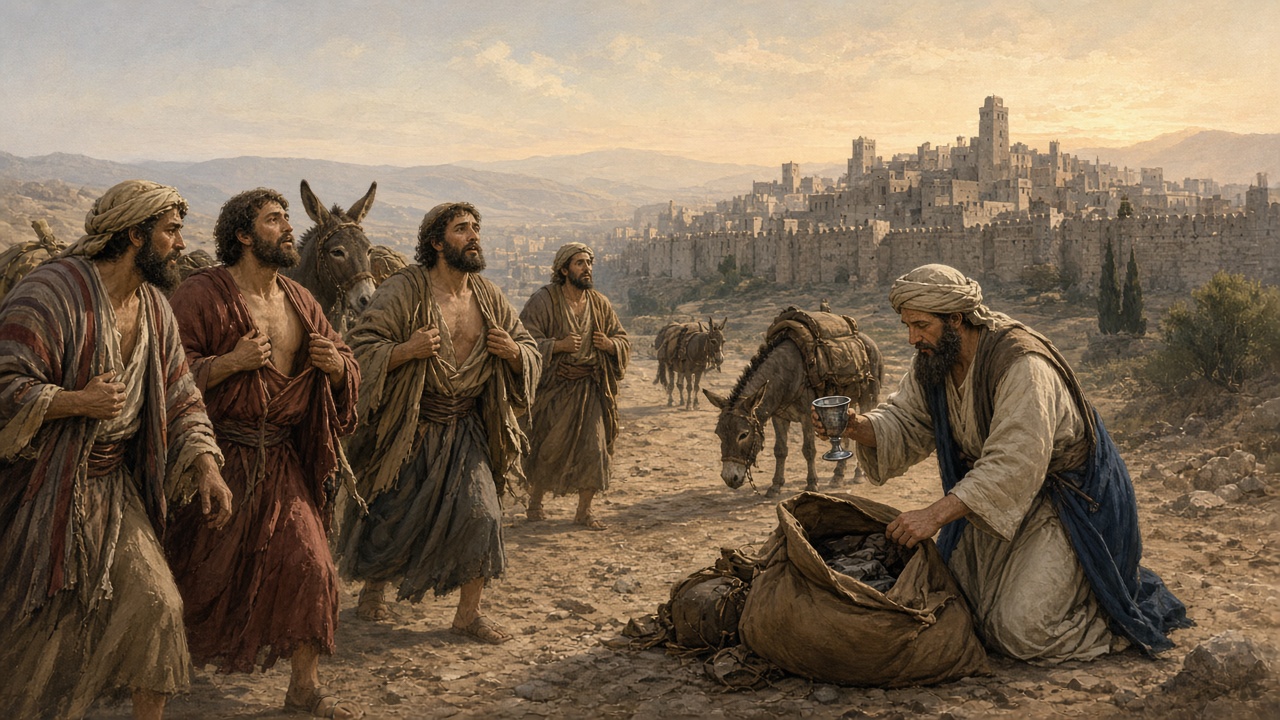
- On Joseph's orders, the steward hid Joseph's silver cup—the cup he drank from and used for divination—in Benjamin's sack, along with the silver paid for the grain. When it was found, the brothers tore their clothes and returned to the city. Joseph then asked whether they did not know that a man like him could divine the truth, although the narrative shows that he had arranged for the cup to be found.Sources: the Bible text itself
Notes written with AI assistance from open sources (Theographic Bible Metadata, CC BY-SA 4.0; Easton’s Bible Dictionary, public domain) and reviewed before publishing.
Places in this chapter
- Canaan · 32.767, 35.333 · verse 8
Only places identified with high confidence are shown (90% or more according to the scholarly sources compiled by OpenBible). Period map: DARE (Digital Atlas of the Roman Empire), CC BY 4.0; modern map: © OpenStreetMap contributors; places: OpenBible.info (CC BY 4.0).
Credits and license for this translation
Cishingini Agwara Kambari [asg]
Cishingini: Cishingini Agwara Kambari [asg] (Bible)
copyright © 2025 Language Development and Translation Initiative (LDTI)
Language: (Cishingini)
Contributor: The Seed Company
This translation is made available to you under the terms of the
Creative Commons Attribution Share-Alike license 4.0.
You have permission to share and redistribute this Bible translation in any format and to make reasonable revisions and adaptations of this translation, provided that:
You include the above copyright and source information.
If you make any changes to the text, you must indicate that you did so in a way that makes it clear that the original licensor is not necessarily endorsing your changes.
If you redistribute this text, you must distribute your contributions under the same license as the original.
Pictures included with Scriptures and other documents on this site are licensed just for use with those Scriptures and documents.
For other uses, please contact the respective copyright owners.
Note that in addition to the rules above, revising and adapting God's Word involves a great responsibility to be true to God's Word. See Revelation 22:18-19.
2025-07-09
Source: http://ebible.org/asg/ · eBible.org