Genesis 26
Cishingini Agwara Kambari [asg] · Tap a verse to see its cross-references.
Ishaku n Abimeleki
1Gogo na kambulu ka̱ yikpa̱ ta̱ a iɗika, ko yoku kpamu n ka na ka yaꞋin a ayin a Ibirahi. Ɗa Ishaku u banai u Abimeleki mogono ma Gera ma a Filisitiya. 2Ɗa Vuzavaguɗu u ta̱wa̱i wi Ishaku ɗa u danai, <<Ka̱ta̱ vu bana a Masar ba, shamgba a iɗika i na n danai nu vi yongo. 3Shamgba biꞋi a iɗika i nampa ayin kenu, mi ta̱ koɓolo n avu mi ta̱ kpamu a kuzuwaka wu una̱singai. Avu nu ntsukaya n nu n ɗa mi e kuneke iɗika i nampa ra̱ka̱ ka̱ta̱ n shatangu uzuwakpani n akucina a na n yaꞋin n eshevu Ibirahi. 4Mi ta̱ a kuzuwa ntsukaya n nu mo okpo n ka̱bunda̱i a na azangata a gaɗi, mi ta̱ kpamu e kuneke ntsukaya ma iɗika i nampa ra̱ka̱, uma aduniyan dem i ta̱ a̱ kuciya̱ una̱singai a̱ ubuta̱ u le, 5adama a na Ibirahi u tono ta̱ kadanshi ka̱ va̱ ɗa kpamu u ka̱na̱i i na n cigai koɓolo n uye u va̱ n wila̱ u va̱ feu.>>
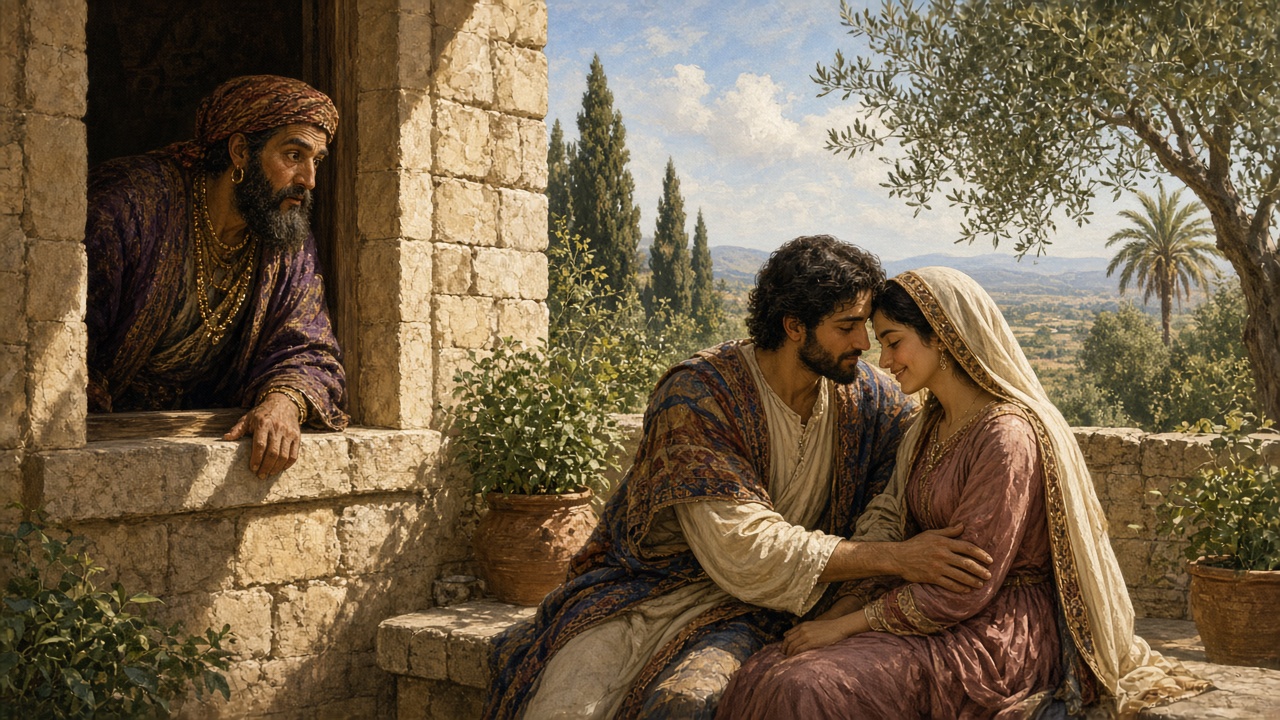
6Ɗa Ishaku u da̱sa̱ngi a Gera. 7Ana uma a nanlo e ecei ni ukuna u vuka vi ni, ɗa u danai le, <<Taku vu va̱ ɗa,>> adama a na wi ta̱ o wovon a na wa dana, <<Vuka vu va̱ ɗa,>> u sheshe ta̱, <<Uma a̱ ubuta̱ a a kuna mu ta̱ adama a Rebeka, adama a na wi ta̱ n tsuloboi n a̱bunda̱i.>>
8Ana Ishaku wi ɗe ali m megeshe ɗa mogono Abimeleki mogono ma aza a̱ a Filisitiya u la̱na̱i n katusu ɗa we enei Ishaku o ku oɓongusu Rebeka vuka vi ni. 9Ɗa Abimeleki u ɗekei Ishaku ɗa we ecei ni, <<Yiɗa̱i i zuwai ɗa vu kpa̱ɗa̱i kudana mu a̱yi vuka vu nu ɗa? Ama ɗa vu danai <Taku vu va̱ ɗa?> >>
Ɗa Ishaku u danai ni, <<Adama a na me ene ta̱ i ta̱ a kufuɗa a kuna mu adama a̱ ni.>>
10Ɗa Abimeleki u danai, <<Yiɗa̱i i zuwai ɗa vi yaꞋankai tsu nahannai? A̱ ka̱tsuma̱ ka̱ tsu vuza yoku wi ishi a kuvaku n vuka vu nu gbani ka̱ta̱ ta na u tuka̱ tsu n una̱ u wuya.>>
11Ɗa Abimeleki u dansukai uma dem ɗa u danai, <<Vuza na baci de dem u saꞋwai vuma vu nampa ko vuka vi ni i ta̱ a kuna yi.>>
12A̱ ka̱ya̱ ka nanlo Ishaku u yaꞋin vica̱Ꞌa̱ ɗa u kyaꞋi ili n a̱bunda̱i adama a na Vuzavaguɗu u zuwakai ta̱ una̱singai. 13Ɗa Ishaku wo okpoi vuza vu uciyi, ɗa uciyi u ni u ka̱na̱i kutatsa ali ɗa wo okpoi vuza vu uciyi ka̱u. 14Wi ta̱ n ushiga wu nlala ni nkyon n agbashi n a̱bunda̱i ali ɗa aza Filisitiya a̱ ka̱na̱i tsurala n a̱yi. 15Ɗa aza a Filisitiya a̱ ciɗa̱ngi ra̱ka̱ ayinva a na agbashi e esheku a̱ ni a̱ ga̱va̱i a ayin a Ibirahi wi ishi n wuma.
16Ɗa Abimeleki u danai Ishaku, <<Ɗenga̱ vu ka̱sukpa̱ka̱ tsu iɗika i tsu adama a na vu laꞋa ta̱ utsura u tsu.>> 17Ɗa Ishaku u ka̱sukpa̱i ubuta̱ wa ɗa u banai u zuwai ka̱pa̱m ka̱ ni a iɗika i Gera ɗa u yongoi ɗe. 18Ɗa Ishaku u doku ɗa u ga̱va̱sa̱ka̱i ayinva a na ishi uga̱vi a ayin a esheku a̱ ni Ibirahi, adama a na aza a̱ Filisitiya a̱ sa̱nka̱ le ta̱ ana esheku a̱ ni a̱ kuwa̱i, ɗa u neꞋi le kpamu ula a na esheku a̱ ni ishi e neꞋi le.
19Ɗa nguɓi mi Ishaku n ga̱va̱i kayinva a̱ ka̱ra̱Ꞌa̱ ɗa a̱ ciya̱i ka̱shi ka̱ mini ka singai. 20Ɗa nguɓi n Gera n yaꞋin kanananai nu nguɓi mi Ishaku ɗa a danai, <<Mini ma ma̱ tsu maꞋa>> Ɗa u ɗekei ubuta̱ wa Eseke, ɗaɗa <<Kanananai>> adama a na ta lo a yaꞋin kanananai. 21Ɗa a̱ ga̱va̱i kayinva ko yoku ɗa o doku a yaꞋin kanananai kpamu, Ɗa Ishaku u ɗekei kayinva ka Sitina, ɗaɗa Tsurala. 22Ɗa u ɗa̱nga̱i ɗa u banai u ga̱va̱i ko yoku, na lo o doku a yaꞋan kanananai ba, ɗa u ɗekei kayinva ka n kula Rehobotu. Ɗaɗa <<Gogo na Vuzavaguɗu u neke tsu ta̱ uba̱ruwi ka̱ta̱ tsu matsa ci yimkpa punu a iɗika ya.>>
23Lo a ubuta̱ wa ɗa Ishaku u lazai a kubana a Biyasheba. 24N kayin ka nanlo ɗa Vuzavaguɗu u yotsongi ka̱ ci ka̱ ni wa̱ ni ɗa u danai, <<Mpa ɗa Ka̱shile ke eshevu Ibirahi. Ka̱ta̱ vu pana wovon ba, adama a na mi ta̱ koɓolo n avu, mi ta̱ a kuzuwaka wu una̱singai ka̱ta̱ n zuwa ntsukaya n nu n yimkpa adama a kagbashi ka̱ va̱ Ibirahi.>>
25Ɗa Ishaku u maꞋi katalikalyuka lo a̱ ubuta̱ wa ɗa u cikpai Vuzavaguɗu. Ɗa feu u ka̱nza̱i lo ka̱pa̱m ka̱ ni, ɗa nguɓi i ni n ga̱va̱i lo kayinva.
26A̱yi mogono Abimeleki wu uta̱i Gera ɗa u ta̱wa̱i wa̱ ni koɓolo n Ahuzatu vuza na u ci neke yi odoki n Fikolu kovonshi vo osoji. 27Ɗa Ishaku we ecei le, <<Yiɗa̱i i zuwai ɗa i ta̱wa̱i wa̱ va̱, adama a na i iwan mu ta̱ n ayin a ɗe ɗa i lokoi mu wa̱ ɗa̱.>>
28Ɗa a̱ ushuki, <<Ce ene ta̱ hawun a na Vuzavaguɗu wi koɓolo n avu, i ɗaɗa i zuwai ɗa tsu danai yaꞋan ci yaꞋan uzuwakpani n avu ka̱ta̱ tsu kucinukpanai kpamu tsu dana, 29va kusaꞋwa vuma vi te a̱ ka̱tsuma̱ ka̱ tsu ba, tsu na a̱ tsu ci ci yongo a kuyaꞋanka wu kasingai ka̱ta̱ kpamu tsu loko wu a kulaza m ma̱ta̱na̱. Gogo na avu ɗa vuza na Vuzavaguɗu u zuwakai una̱singai.>>
30Ɗa Ishaku u foɓusokoi le ka̱ɗiva̱ ɗa a lyaꞋi ɗa o soꞋi. 31Ana kayin ka asai n usana ɗa dem vi le a yaꞋankpanai uzuwakpani n akucina. Ana o kotsoi ɗa Ishaku wu uta̱ka̱i le ɗa a̱ ka̱na̱i uye, ɗa e pecemgbenei m ma̱ta̱na̱.
32Kanna ka nanlo ka kpamu nguɓi mi Ishaku m banai ɗa n danai ni ukuna u kayinva u na a̱ ga̱va̱i va. A danai, <<Ci cinaka ta̱ mini!>> 33Ɗa Ishaku u ɗekei kayinva ka Sheba, adama a nannai kula ku likuci ka ku ɗaɗa Biyasheba ali a̱ kuta̱wa̱ anana.
Isuwa u zuwai vuka a umaci wa aza Hitiya
34Ana Isuwa u yawai a̱ya̱ amangere, ɗa u zuwai vuka kula ku ni ku ɗa Juditi mekere ma Beri vuza va aza Hitiya, m Basematu mekere me Elon vuza va aza Hitiya. 35Ɗa a zuwai Ishaku n vuka vi ni Rebeka a̱ kpa̱ɗa̱i kupananai uyoꞋo.
Did you know?
Isaac in Gerar
- During a famine, Isaac sought refuge with Abimelech, king of Gerar, an ancient town and district on the southern border of Palestine. Easton's Bible Dictionary (1897) notes that Isaac acted toward his wife Rebekah much as his father Abraham had acted toward Sarah there: he said she was his sister. Abimelech later rebuked him when the deception was discovered.Sources: Abimelech (King of Gerar) · Gerar · the Bible text itself
- The names of wells in the Valley of Gerar recall the disputes over them. Esek means “quarrel,” because the herdsmen of Gerar claimed the water, and Sitnah means “strife.” Isaac also reopened wells that his father Abraham’s servants had dug and that the Philistines had stopped up, and he gave them the same names his father had given them.Sources: Esek · Sitnah · the Bible text itself
- Beersheba means “well of the oath” or “well of seven.” According to Easton's Bible Dictionary (1897), Abraham dug a well there and named it after a compact with Abimelech, and Isaac gave it the same name when he reopened it. The dictionary also identifies Phicol—“great”—as chief captain of Abimelech’s army, and says he took part in Abraham’s alliance over that well.Sources: Beersheba · Phichol · the Bible text itself
Notes written with AI assistance from open sources (Theographic Bible Metadata, CC BY-SA 4.0; Easton’s Bible Dictionary, public domain) and reviewed before publishing.
Places in this chapter
- Egypt · 30.129, 31.308 · verse 2
- Valley of Gerar · Today: about 3 km around Tel Haror · 31.382, 34.606 · verses 17, 19
Only places identified with high confidence are shown (90% or more according to the scholarly sources compiled by OpenBible). Period map: DARE (Digital Atlas of the Roman Empire), CC BY 4.0; modern map: © OpenStreetMap contributors; places: OpenBible.info (CC BY 4.0).
Credits and license for this translation
Cishingini Agwara Kambari [asg]
Cishingini: Cishingini Agwara Kambari [asg] (Bible)
copyright © 2025 Language Development and Translation Initiative (LDTI)
Language: (Cishingini)
Contributor: The Seed Company
This translation is made available to you under the terms of the
Creative Commons Attribution Share-Alike license 4.0.
You have permission to share and redistribute this Bible translation in any format and to make reasonable revisions and adaptations of this translation, provided that:
You include the above copyright and source information.
If you make any changes to the text, you must indicate that you did so in a way that makes it clear that the original licensor is not necessarily endorsing your changes.
If you redistribute this text, you must distribute your contributions under the same license as the original.
Pictures included with Scriptures and other documents on this site are licensed just for use with those Scriptures and documents.
For other uses, please contact the respective copyright owners.
Note that in addition to the rules above, revising and adapting God's Word involves a great responsibility to be true to God's Word. See Revelation 22:18-19.
2025-07-09
Source: http://ebible.org/asg/ · eBible.org