Exodus 5
Cishingini Agwara Kambari [asg] · Tap a verse to see its cross-references.
Musa n Haruna e kelime ka FiriꞋauna
1Ana o kotsoi kudansa nu nkoshi ma aza Isaraila, ɗa Musa n Haruna a banai u FiriꞋauna ɗa a danai ni, <<Ili i na Vuzavaguɗu Ka̱shile ka aza a Isaraila u danai i ɗa na, <Ka̱sukpa̱ uma a̱ va̱ a bana a yaꞋanka mu ka̱ɗiva̱ ɗe e meremune.> >>
2Ɗa FiriꞋauna we ecei <<Yayi Vuzavaguɗu vu nanlo, vuza na n kupana kadanshi ka̱ ni ali ka̱ta̱ n ka̱sukpa̱ aza a Isaraila a laza? Mpa n yeve Vuzavaguɗu vu nanlo ba. Ma̱ a̱ kuka̱sukpa̱ ɗa̱ i laza ba.>>
3Ama ɗa Musa n Haruna a̱ ushuki a danai, <<Ka̱shile ka aza Ibirahi u yotsongu ta̱ ka̱ci ka̱ ni wa̱ tsu. Tsu folono wu ta̱ yaꞋan ci yaꞋan nwalu ali ayin a tatsu a kakamba adama a na tsu bana ci yaꞋanka Ka̱shile Vuzavaguɗu vu tsu alyuka. Ci yaꞋan baci nannai ba, wi ta̱ a kuna tsu m ma̱dukpa̱ ko n kotokobi.>>
4Ama ɗa mogono ma Masar me ecei Musa n Haruna, <<Adama a̱ yiɗa̱i yi a̱ kusa̱nka̱ uma kuyaꞋan ulinga u le? Kai! Bonoi ubuta̱ wu ulinga!>> 5Ɗa FiriꞋauna u lyaꞋi kelime n kadanshi, <<Gogo na aza a Isaraila a yimkpa ta̱ ali a laꞋi aza a Masar n ka̱bunda̱i, ɗa yi a kuciga kusa̱nka̱ le ulinga.>>
6A kanna ka nanlo ka, ɗa FiriꞋauna u danai aza e kelime a kinda agbashi a Masar, n aza kinda ulinga u tsugbashi wi Isaraila. 7<<Ka̱sukpa̱i kuneke uma a nampa ciꞋiwa̱ adama a na a yaꞋanka iputa̱ tsu na a kiwanai. Ka̱sukpa̱i le a bana a̱ la̱nsa̱ n ka̱ci ke le. 8Zuwai le a yaꞋan ka̱bunda̱i ki iputa̱ ka tsu na a kiwanai, ka̱ta̱ i jebeke le ka̱bunda̱i ki iputa̱ ka ba. Wonvoli u ɗa le, i ɗaɗa i zuwai ɗa i a kuyaꞋanka mu ma̱shi n ka̱sukpa̱ le a bana a kakamba a yaꞋanka Ka̱shile ke le alyuka. 9Nekei le ulinga wa atakaci ka̱ta̱ a lyaꞋa kelime n kuyaꞋan, nannai wi ta̱ a kuzuwa le a̱ kpa̱ɗa̱ kuciya̱ kofon ka na a kupana aꞋuwa a nampa.>>
10Ɗa aza a kinda ulinga u tsugbashi n aza a kinda agbashi a banai ɗa a danai uma ili i na FiriꞋauna u danai. <<Mi o kudoku me neke ɗa̱ ciꞋiwa̱ ba. 11Banai i la̱nsa̱ tsu ɗa n ka̱ci ka̱ ɗa̱ a̱ ubuta̱ u na baci de dem i kuciya̱ tsu ɗa. Ama i lyaꞋa kelime n kuyaꞋan ka̱bunda̱i ki iputa̱ tsu na cau yi ishi a kuyaꞋansa.>> 12Ɗa uma a a wacuwai a kubana a̱ ubuta̱ dem punu a iɗika i Masar a̱ kula̱nsa̱ ili i na a ci yaꞋanka ciꞋiwa̱. 13Ama aza a kinda ulinga u tsugbashi wa o doku a gbarai le ka̱u, ɗa a̱ ka̱na̱i kudana le. <<Kanna de dem i yaꞋan iputa̱ tsu ka̱bunda̱i ka na yi ishi i ci yaꞋansa tsu ayin a na e ci neke ɗa̱ ciꞋiwa̱.>> 14Ɗa aza e kelime a kinda agbashi a Masar a fabai aza Isaraila aza a na i a kinda aza ulinga u tsugbashi wa, ɗa e ecei. <<Yiɗa̱i i zuwai ɗa i kpa̱ɗa̱i kuzuwa agbashi a a yaꞋan iputa̱ na̱yin ko anana a shatangu tsu na ishi a kuyaꞋansa?>>
15Ɗa aza a kinda ulinga u tsugbashi a Isaraila a banai u FiriꞋauna ɗa a̱ sa̱la̱ka̱i ni. <<Yiɗa̱i i zuwai ɗa vi yaꞋankai agbashi a̱ nu nannai? 16Babu vuza na u nekei tsu ciꞋiwa̱, ɗa kpamu a danai tsu <YaꞋin iputa̱ tsu na cau yi ishi a kuyaꞋansa.> A̱ ka̱na̱i kulapasa tsu gbani na lo ta na unushi u tsu u ɗa ba, unushi u uma a̱ nu a ɗa.>>
17Ɗa FiriꞋauna wu ushuki, <<Na lo dem i yoku i ɗa ba, wonvoli u ɗa. Ɗaɗa yi a kudanasa, <YaꞋan tsu bana ci yaꞋanka Vuzavaguɗu alyuka.> 18Walai i bono a̱ ubuta̱ wu ulinga. Babu vuza na u kuneke ɗa̱ ciꞋiwa̱, ama mayun ɗa sai i yaꞋan ka̱bunda̱i ki iputa̱ tsu na yi ishi i ci yaꞋansa.>>
19Aza a kinda aza ugbashi a Isaraila e yeve ta̱ gogo na a uwa ta̱ a̱ ka̱tsuma̱ ka atakaci a gbayin, ana a danai le, <<Ka̱ta̱ i jebe ka̱bunda̱i ki iputa̱, i kpa̱ɗa̱ kuyawa tsu na cau yi ishi i ci yaꞋansa a kanna dem ba.>> 20Ana a̱ uta̱i a̱ ka̱sukpa̱i FiriꞋauna, ɗa a gasai m Musa n Haruna aza a na ishi ɗe a kuvana le. 21Ɗa a danai Musa n Haruna va, <<YaꞋan Vuzavaguɗu we ene ili i na i yaꞋin ka̱ta̱ u yaꞋanka ɗa̱ afada. I zuwai tso okpoi nu mpasa m gbani-gbani u FiriꞋauna nu nkoshi m gba̱ra̱-gba̱ra̱ n ni feu. Gogo na i ɗikai kotokobi ɗa i nekei le e ekiye adama a na a una tsu.>>
Uzuwakpani u wishi
22Ɗa Musa u bonoi u Vuzavaguɗu ɗa u danai, <<Vuzavaguɗu, yiɗa̱i i zuwai ɗa vi nekei uma a̱ nu atakakaci nannai? Yiɗa̱i i zuwai ɗa vu suki mu? 23Ali n ayin a na m banai u FiriꞋauna n kula ku nu adama a na n yaꞋanka yi kadanshi, u doku ta̱ u zuwaka uma a̱ nu atakaci n a̱bunda̱i. Ko ili vi keɓece adama a na vi isa le ba.>>
Did you know?
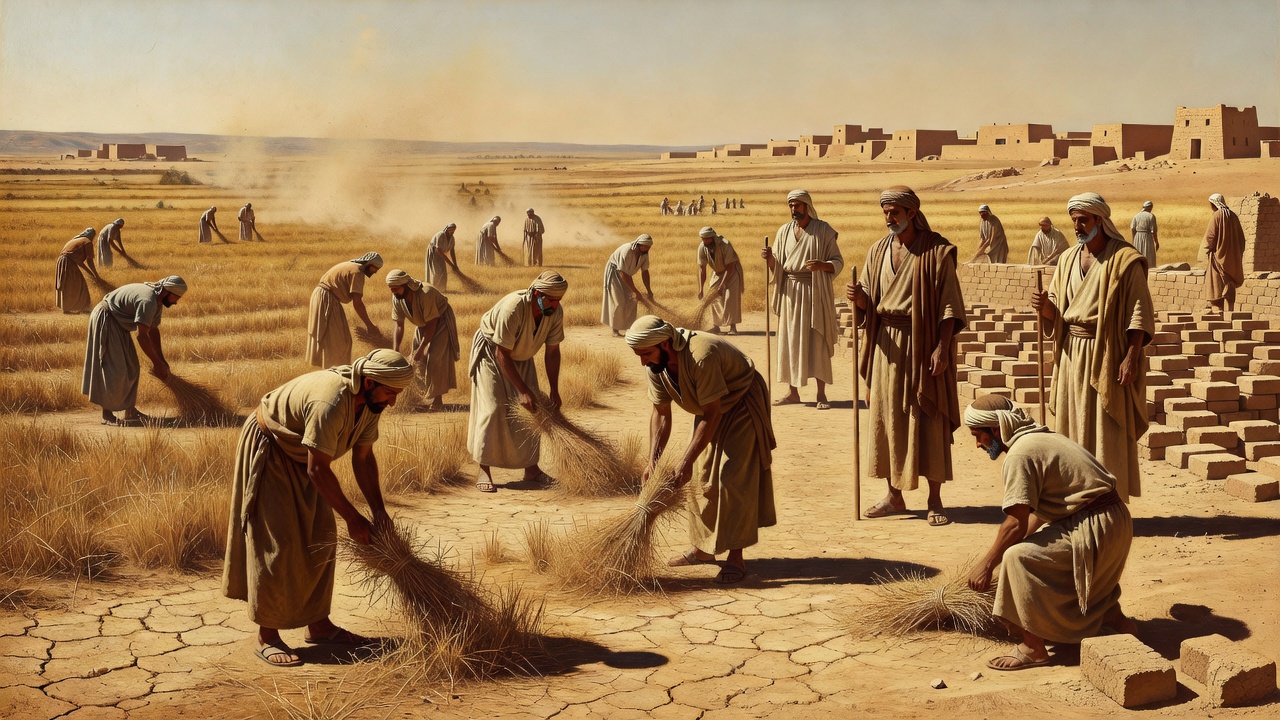
Harder Work After Pharaoh's Refusal
- Easton's Bible Dictionary (1897) says the Pharaoh of the Exodus was probably Menephtah I, the fourteenth and eldest surviving son of Rameses II, but it treats the identification as still an open question: some scholars, it notes, favor Seti II, whose reign it describes as beginning peacefully and ending in sudden disaster. The entry says he resided at Zoan, where he received Moses and Aaron in the interviews recorded in Exodus.Sources: Pharaoh (of the Exodus) · the Bible text itself
- Easton's Bible Dictionary (1897) places Jacob's arrival in Egypt probably about 350 years before Moses was born. It says a Hyksos king, from a pastoral Semitic people of Asia and called a shepherd king, received the family favorably and assigned them Goshen, the best of the land; in this chapter Pharaoh treats the people of Israel, now numerous, as laborers he will not let go.Sources: Moses · the Bible text itself
- Pharaoh answers the request to hold a feast in the wilderness by no longer supplying straw for the bricks, while still requiring the same daily quota. The people scatter through the land of Egypt to gather stubble, and the Israelite foremen whom Pharaoh's taskmasters had set over them are beaten when that quota is not met.Sources: the Bible text itself
Notes written with AI assistance from open sources (Theographic Bible Metadata, CC BY-SA 4.0; Easton’s Bible Dictionary, public domain) and reviewed before publishing.
Places in this chapter
Only places identified with high confidence are shown (90% or more according to the scholarly sources compiled by OpenBible). Period map: DARE (Digital Atlas of the Roman Empire), CC BY 4.0; modern map: © OpenStreetMap contributors; places: OpenBible.info (CC BY 4.0).
Credits and license for this translation
Cishingini Agwara Kambari [asg]
Cishingini: Cishingini Agwara Kambari [asg] (Bible)
copyright © 2025 Language Development and Translation Initiative (LDTI)
Language: (Cishingini)
Contributor: The Seed Company
This translation is made available to you under the terms of the
Creative Commons Attribution Share-Alike license 4.0.
You have permission to share and redistribute this Bible translation in any format and to make reasonable revisions and adaptations of this translation, provided that:
You include the above copyright and source information.
If you make any changes to the text, you must indicate that you did so in a way that makes it clear that the original licensor is not necessarily endorsing your changes.
If you redistribute this text, you must distribute your contributions under the same license as the original.
Pictures included with Scriptures and other documents on this site are licensed just for use with those Scriptures and documents.
For other uses, please contact the respective copyright owners.
Note that in addition to the rules above, revising and adapting God's Word involves a great responsibility to be true to God's Word. See Revelation 22:18-19.
2025-07-09
Source: http://ebible.org/asg/ · eBible.org