Exodus 4
Cishingini Agwara Kambari [asg] · Tap a verse to see its cross-references.
Vuzavaguɗu u nekei Musa utsura u kuyaꞋan ili i mereve
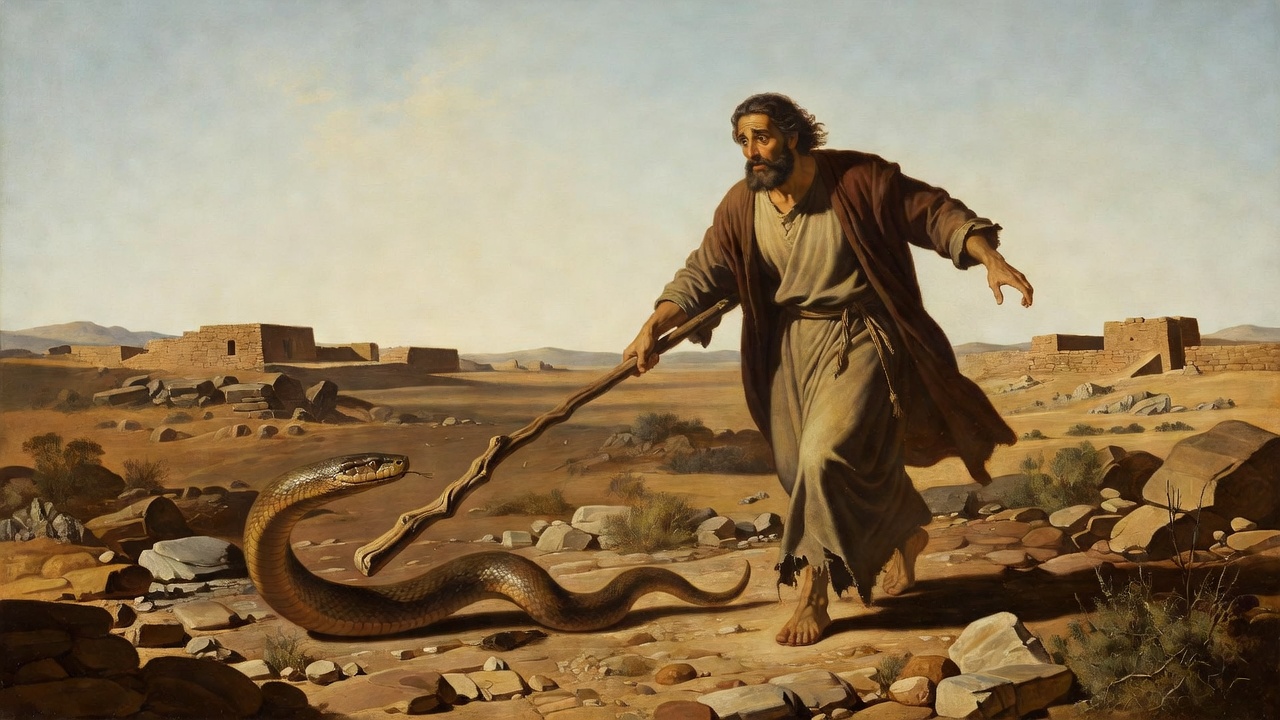
1Ɗa Musa wu ushuki, <<A̱ ushuku baci nu mpa tamkpamu ba, ko ɗa a iwain kupanaka mu. A dana baci, <Vuzavaguɗu u ta̱wa̱ wa̱ nu ba.> >> 2Ɗa Vuzavaguɗu we ecei ni, <<Yiɗa̱i vi n i ɗa e ekiye a̱ nu na lo va?>> Ɗa Musa u danai, <<Kalangu kaꞋa.>> 3Ɗa Vuzavaguɗu u danai, <<Vakangu kaꞋa a iɗika.>> Ɗa Musa u vakangi kaꞋa a iɗika, ɗa ka vazai koko! Ɗa u docoi n ka̱ca̱pa̱ u ka̱sukpa̱i kaꞋa. 4Ɗa Vuzavaguɗu u danai ni, <<Banka n kukiye ku nu vu ka̱na̱ winja u koko wa.>> Ɗa Musa u bankai n kukiye ku ni, ɗa u ka̱na̱i koko ka, ɗa koko ka ko bonoi kalangu e ekiye a̱ ni. 5Ɗa Vuzavaguɗu u danai ni, <<YaꞋan ili i mereve i nampa, adama a na a̱ ushuku n Vuzavaguɗu Ka̱shile ki ikaya i le, Ka̱shile ki Ibirahi, n Ka̱shile ki Ishaku, n Ka̱shile Yakubu ko yotsongu ta̱ ka̱ci ka̱ ni wa̱ nu.>>
6Ɗaɗa kpamu Vuzavaguɗu u danai, <<Uka kukiye ku nu o motogu ma̱ nu.>> Ɗa Musa u ukai kukiye ku ni punu, ɗa wu uta̱ka̱i kukiye ka ɗa kokpoi wa̱ri n ukutu.
7Ɗa Vuzavaguɗu u danai, <<Gogo na bonoko ku ɗa punu o motogu ma.>> Ana u bonokoi n ku ɗa punu, ɗa wu uta̱ka̱i, ɗa ku bonoi ciɗa ci ikyamba i na i buwai.
8Ɗa Vuzavaguɗu u danai, <<A iwan baci kushuku n avu, ko kushuku n ili i mereve yu ugiti, i ta̱ a̱ kushuku n ili i mereve i ire ya. 9Ɗa baci a iwain kushuku n ili i mereve ire i nampa ya, ko kupana ka̱la̱ka̱tsu ka̱ nu, kenuku mini punu o Kuyene ku Nilu, ka̱ta̱ vu tsungu a iɗika i ɗekpu. Mini ma na vi kenuki va, mi ta̱ o kokpo mpasa lo a iɗika i ɗekpu ya.>>
10Ama ɗa Musa u danai Vuzavaguɗu, <<Vuzavaguɗu vu va̱, n ci yaꞋan kadanshi ka̱ta̱ kaꞋa ku uta̱ mayin ba, ali n ayin a ɗe ko n gogo na ana vi yaꞋin kadanshi nu mpa. N ci yaꞋan ta̱ kadanshi sawu koɓolo n cikeku kpamu.>>
11Ɗaɗa Vuzavaguɗu u danai ni, <<Yayi u nekei vuma una̱? Yayi kpamu u bonokoi ni kebebe ko kagulani? Yayi u nekei ni a̱shi ko uyimba̱? Mpa ɗa Vuzavaguɗu ba? 12Gogo na bana, mi ta̱ a̱ kuɓa̱nka̱ wu tsu na va kuyaꞋan kadanshi ka̱ta̱ n dana wu ili i na va kudansa.>>
13Ama ɗa Musa u danai, <<Vuzavaguɗu yaꞋan wupa ba, suku vuza yoku u bana.>>
14Ɗa Vuzavaguɗu u yaꞋin wupa m Musa, ɗa u danai, <<Haruna mokoshi ma̱ nu tamkpamu vuza va aza e Levi? N yeve ta̱ u tsu dansa ta̱ mayin. Wi ta̱ lo a uye adama a na i gasa, wi ta̱ feu a kuyaꞋan ma̱za̱nga̱, we ene wu baci. 15Vi yaꞋan kadanshi n a̱yi, ka̱ta̱ vu tonuko yi i na u kudana. N kuɓa̱nka̱ ɗa̱ ta̱ n i na i kudansa n i na i kuyaꞋan.>> 16A̱yi ɗa u kokpo vuza na u kuyaꞋanka uma kadanshi n una̱ u nu. Avu vi ta̱ o kokpo an Ka̱shile wa̱ ni, vu dana yi ili i na u kudansa. 17Ama ka̱ta̱ vu ɗika kalangu ka nampa vu walaka, adama a na ka ɗaɗa va kuyaꞋanka ili i mereve.
Musa u bonoi a Masar
18Ɗa Musa u bonoi wa akaya a̱ ni Jeturo ɗa u danai ni, <<YaꞋan m bono biꞋi me ene aza a̱ va̱ na ɗe a Masar ko a buwa ta̱ ɗe n wuma.>>
Ɗa Jeturo wu ushuki, <<Bana vu bono m ma̱ta̱na̱.>>
19Musa a̱yi biꞋi a Midiya Vuzavaguɗu u dana yi ta̱, <<Laza vu bono a Masar adama a na aza a na i a kuciga a kuna wu va a̱ kuwa̱ ta̱ ɗe ra̱ka̱.>> 20Ɗa Musa u ɗikai muku mo olobo n ni n vuka vi ni ɗa u kumbakai le a majaki, ɗa u ka̱na̱i uye o kubono a iɗika i Masar. Ɗa u ɗikai kalangu ka̱ ni e ekiye a̱ ni. 21Ɗa Ka̱shile ka danai Musa kpamu, <<Vi yawa baci a Masar vi yaꞋan ili i mereve i na n nekei nu utsura u kuyaꞋan e kelime ka FiriꞋauna. Ama mi ta̱ a kuzuwa yi wo okpo n ugbamukaci, wa̱ kuka̱sukpa̱ uma a̱ va̱ a laza ba. 22Ka̱ta̱ vu dana FiriꞋauna, <Ili i na Vuzavaguɗu n danai i ɗaɗa na, uma a Isaraila i ta̱ tsu maku mo kolobo ma iyain ma̱ va̱, 23N dana wu ta̱, <<Ka̱sukpa̱ yi u laza adama a na u yaꞋanka mu a̱ga̱nda̱.>> Ama vi iwan baci kuka̱sukpa̱ yi u laza, gogo na mi ta̱ a kuna maku ma iyain ma̱ nu.> >>
24Ana Musa u shamgbai a kasa a̱ ubuta̱ u yoku n limata i ni, a ayin a na i a̱ ka̱tsuma̱ ka nwalu ke le, ɗa Ka̱shile ka cinai ni ɗa u ɗa̱nga̱i kuna yi. 25Ɗa Zipura vuka Musa u la̱nsa̱i katali ka alyu ɗa u kiɗai kavaja ka maku ma̱ ni, ɗa u saꞋwakai ene a Musa, ɗa u danai, <<Mpasa n nampa mo okpo ta̱ urotu wu ushiyi u yolo u tsu mayun ɗa.>> 26Ana u danai, <<Vali vu savu vu na a shiyai yolo n urotu wu mpasa,>> wi ta̱ a kuyaꞋan kadanshi ku ukiɗi u kavaja. Ɗaɗa Vuzavaguɗu u ka̱sukpa̱i Musa n wuma.
27Ama kafu ayin a nanlo, Vuzavaguɗu u danai Haruna, <<Bana e meremune vi cina Musa.>> Ana u banai ɗa u gasai m Musa a kusan ku Ka̱shile, ɗa u rabasai ni ɗa wo oɓongi ni. 28Ɗa Musa u danai Haruna ili i na Vuzavaguɗu u danai ni dem u bana u dana. Ɗa kpamu u yotsongi ni ili i mereve i na Ka̱shile ka zuwai ni u yaꞋan.
29Ɗa Musa n Haruna a banai a Masar, ɗa o ɓolongi nkoshi m gba̱ra̱-gba̱ra̱ mi Isaraila. 30Ɗa Haruna u danai le ra̱ka̱ ili i na Vuzavaguɗu u danai Musa, ɗa ta na Musa u yaꞋin lo ili i mereve ya a̱ a̱shi e le. 31Ɗa ta na a̱ ushuki. Ana a panai Vuzavaguɗu wi ta̱ a kuciɓa n ele koɓolo n atakaci a na i kpamu o kusoꞋo, ɗa a̱ ɗa̱nga̱i ɗa a̱ kuɗa̱ngi, ɗa a cikpai Ka̱shile.
Did you know?
Moses’ Signs and Return to Egypt
- Aaron was born in Egypt three years before his younger brother Moses. God sent him to meet Moses in the wilderness at the mountain of God; because Aaron could speak well, he was to be the spokesman who relayed the LORD’s words to the people.Sources: Aaron · the Bible text itself
- Moses was told that, if the first two signs were not believed, he should take water from the Nile and pour it on the dry ground, where it would become blood. In the Old Testament that river is frequently called Sihor, “the black stream,” or simply “the river.”Sources: Nile · the Bible text itself
- The command to return reached Moses in Midian, the territory of a nomadic Arabian tribe in the desert north of the Arabian peninsula, where the Sinai peninsula served as pasture for their flocks. Jethro, the priest of Midian and Moses’ father-in-law, told him to go in peace, so Moses set out with his wife and sons, carrying the staff of God.Sources: Midian · Jethro · the Bible text itself
Notes written with AI assistance from open sources (Theographic Bible Metadata, CC BY-SA 4.0; Easton’s Bible Dictionary, public domain) and reviewed before publishing.
Places in this chapter
- Nile · Today: Nile River · 31.465, 30.367 · verse 9
- Egypt · 30.129, 31.308 · verses 18, 19, 20, 21, 24, 29
- Midian · 28.495, 35.012 · verse 19
Only places identified with high confidence are shown (90% or more according to the scholarly sources compiled by OpenBible). Period map: DARE (Digital Atlas of the Roman Empire), CC BY 4.0; modern map: © OpenStreetMap contributors; places: OpenBible.info (CC BY 4.0).
Credits and license for this translation
Cishingini Agwara Kambari [asg]
Cishingini: Cishingini Agwara Kambari [asg] (Bible)
copyright © 2025 Language Development and Translation Initiative (LDTI)
Language: (Cishingini)
Contributor: The Seed Company
This translation is made available to you under the terms of the
Creative Commons Attribution Share-Alike license 4.0.
You have permission to share and redistribute this Bible translation in any format and to make reasonable revisions and adaptations of this translation, provided that:
You include the above copyright and source information.
If you make any changes to the text, you must indicate that you did so in a way that makes it clear that the original licensor is not necessarily endorsing your changes.
If you redistribute this text, you must distribute your contributions under the same license as the original.
Pictures included with Scriptures and other documents on this site are licensed just for use with those Scriptures and documents.
For other uses, please contact the respective copyright owners.
Note that in addition to the rules above, revising and adapting God's Word involves a great responsibility to be true to God's Word. See Revelation 22:18-19.
2025-07-09
Source: http://ebible.org/asg/ · eBible.org