Deuteronomy 20
Cishingini Agwara Kambari [asg] · Tap a verse to see its cross-references.
Wila̱ adama a ukuna u kuvon
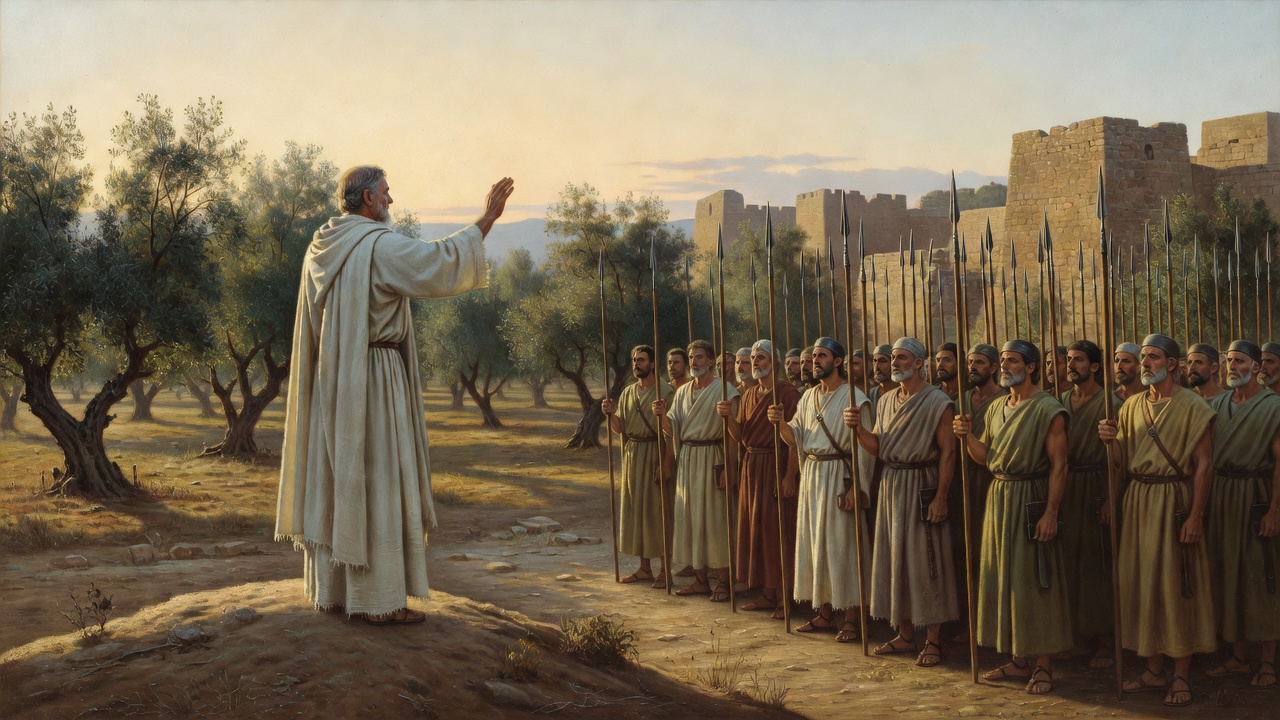
1<<Ɗa baci i banai kuvon a̱ ubuta̱ wi irala i ɗa̱, ɗa ye enei odoku n ekeke odoku n ovonshi a na a laꞋi ɗa̱ ka̱bunda̱i, ka̱ta̱ i pana wovon u le ba, adama a na Vuzavaguɗu Ka̱shile ka̱ ɗa̱ ka na ku uta̱ka̱i ɗa̱ a Masar, wi ta̱ koɓolo n a̱ɗa̱. 2Ayin a na baci i foɓusoi an ya̱ gita̱ vishili, ganu wi ta̱ a̱ kuta̱ u yaꞋan kadanshi n uma, 3wi ta̱ a kudana le, <A̱ɗa̱ aza a Isaraila panai, anana i foɓuso ta̱ an ya̱ shilika̱ n irala i ɗa̱, ka̱ta̱ ikyamba i ɗa̱ i kuwa̱ ba. Ka̱ta̱ i pana wovon ko a̱ɗu a̱ ɗa̱ a̱ muɗa̱ ba, ko i jeꞋeke ikyamba adama e le ba, 4Adama a na Vuzavaguɗu Ka̱shile ka̱ ɗa̱ wi ta̱ a kuwala n a̱ɗa̱, ciya̱ u shilika̱ n irala i ɗa̱, ka̱ta̱ i lyaꞋa le n kuvon.> 5Ka̱ta̱ aza e kelime osoji a yaꞋan kadanshi n uma, a dana, <Yayi a̱ ka̱tsuma̱ ka̱ ɗa̱ u maꞋi kpaꞋa ku savu ku na ka̱ta̱ e erengi ba? Ka̱sukpa̱i ni u bana a kpaꞋa ku ni, ta lo wa̱ kuwa̱ a̱ ubuta̱ u kuvon, ka̱ta̱ vuza yoku we erengu ku ɗa. 6Yi ta̱ punu n vuza na u ca̱Ꞌi kashina ki itacishi, ka na ka̱ta̱ u laꞋi umaci u ka ba? Ka̱sukpa̱i ni u bana a kpaꞋa, ta lo wa̱ kuwa̱ a̱ ubuta̱ u kuvon, ka̱ta̱ vuza yoku u lyaꞋaka yi kaꞋa. 7Ko yi ta̱ n vuza na wi m mazama ma na ka̱ta̱ u zuwai ba? Ka̱sukpa̱i ni u bana a kpaꞋa, ta lo wa̱ kuwa̱ a̱ ubuta̱ u kuvon, ka̱ta̱ vuza yoku u ɗika maꞋa.> 8Ka̱ta̱ aza e kelime o osoji a doku a dana, <Yayi a̱ ka̱tsuma̱ ka̱ ɗa̱ wi a kupana wovon a̱ ka̱ɗu ka̱ ni? Ka̱sukpa̱i ni u bana a kpaꞋa, ta lo wa zuwa a̱ɗu aza ni a̱ kuwa̱.> 9Ayin a na baci aza e kelime a o kotsoi kadanshi n uma a, ka̱ta̱ a zagba ovonshi a̱ ka̱tsura̱ dem.
10<<Makyan ma na baci i yawai ɗevu n likuci i na ya kuyaꞋan kuvon ka, suꞋuki le n akaka a̱ kula̱nsa̱ ida̱shi i ma̱ta̱na̱. 11Ɗa baci a̱ ushuki ɗa̱ m ma̱ta̱na̱ kpamu ɗa e nekei ka̱ci ka̱ le wa̱ ɗa̱, to uma a na i cinai punu ida̱shi a̱ likuci ya ra̱ka̱ i ta̱ o kokpo agbashi a̱ ɗa̱, ka̱ta̱ a̱ ga̱nda̱ka̱ ɗa̱. 12Ama ɗa baci a iwain kushuku n a̱ɗa̱, ɗa a yaꞋin kuvon n a̱ɗa̱, kanzai likuci ya. 13Ɗa baci Vuzavaguɗu Ka̱shile ka̱ ɗa̱ ke nekei ɗa̱ likuci ya e ekiye a̱ ɗa̱, unai mavali dem n kotokobi, 14ama a̱ma̱ci m muku, n ili i kuzuwa, koɓolo n ili i likuci i na i buwai ra̱ka̱, n ucanuku u na i pura̱i gbani a̱ ubuta̱ u kuvon, i ɗikaka ka̱ci ka̱ ɗa̱ i ɗa ci ili na i pura̱i gbani a̱ ubuta̱ u kuvon. Ka̱ta̱ i lyaꞋa uyoꞋo wu ucanuku wi irala i ɗa̱, i na Vuzavaguɗu Ka̱shile ka̱ ɗa̱ ke nekei ɗa̱. 15Nannai ɗa ya kuyaꞋan n likuci ra̱ka̱ i na yi daꞋin n a̱ɗa̱, i na yi a̱ ka̱tsuma̱ ku uduniyan u na wi ɗevu n a̱ɗa̱ ba. 16Ama a̱ ka̱tsuma̱ ka̱ likuci i uma a nampa i na Vuzavaguɗu Ka̱shile ka̱ ɗa̱ ki e kuneke ɗa̱ adama a na yo okpo ili yu uka̱ni i ɗa̱, ka̱ta̱ i ka̱sukpa̱ ko ili i te n wuma ba. 17Yi ta̱ a kuna le ra̱ka̱-ra̱ka̱, aza a Hitiya, n aza a Amoriya, n aza a KanaꞋana, n aza a Periziya, n aza a Hiviya, n aza a Jebusiya, uteku tsu na Vuzavaguɗu Ka̱shile ka̱ ɗa̱ ka dansai, 18adama a na ka̱ta̱ a piꞋisaka ɗa̱ ili yu unata i na i a kuyaꞋansaka a̱ma̱li e le ba, ali a zuwa ɗa̱ kuyaꞋanka Vuzavaguɗu Ka̱shile ka̱ ɗa̱ unushi.
19<<Ɗa baci i kambuki likuci n kuvon ali ɗa i geshei a̱ vishili adama na yi isa i ɗa, ka̱ta̱ i kapa nɗanga n likuci ma n kogovu ba. Adama na yi ta̱ a̱ kuta̱wa̱ ya lyaꞋa n ɗa, ka̱ta̱ i kapa n ɗa i varuku a iɗika ba. Nɗanga n kakamba uma a ɗa, an ya banka le n kuvon? 20Ama nɗanga n na i yevei a tsu lyaꞋa ba, n ɗaɗa i kukapa, ka̱ta̱ i yaꞋanka adasukpatsu a na ya kukumbaka nshilya mi irala ali i fa̱da̱ n ɗa.>>
Did you know?
Laws Concerning Warfare
- Before entering combat, Israelite officers announced specific exemptions from military duty, releasing men who had built a house not yet dedicated, planted a vineyard not yet harvested, become engaged to be married, or felt afraid.Sources: the Bible text itself
- The law established different warfare policies for distant cities compared to cities within the Promised Land; distant cities were first offered terms of peace, whereas the inhabitants of nearby nations were marked for complete destruction to avoid idolatry.Sources: the Bible text itself
- During long sieges, Israelite forces were forbidden from cutting down fruit-bearing trees to construct siege works, limiting their timber harvesting only to trees known not to produce food.Sources: the Bible text itself
Notes written with AI assistance from open sources (Theographic Bible Metadata, CC BY-SA 4.0; Easton’s Bible Dictionary, public domain) and reviewed before publishing.
Places in this chapter
- Egypt · 30.129, 31.308 · verse 1
Only places identified with high confidence are shown (90% or more according to the scholarly sources compiled by OpenBible). Period map: DARE (Digital Atlas of the Roman Empire), CC BY 4.0; modern map: © OpenStreetMap contributors; places: OpenBible.info (CC BY 4.0).
Credits and license for this translation
Cishingini Agwara Kambari [asg]
Cishingini: Cishingini Agwara Kambari [asg] (Bible)
copyright © 2025 Language Development and Translation Initiative (LDTI)
Language: (Cishingini)
Contributor: The Seed Company
This translation is made available to you under the terms of the
Creative Commons Attribution Share-Alike license 4.0.
You have permission to share and redistribute this Bible translation in any format and to make reasonable revisions and adaptations of this translation, provided that:
You include the above copyright and source information.
If you make any changes to the text, you must indicate that you did so in a way that makes it clear that the original licensor is not necessarily endorsing your changes.
If you redistribute this text, you must distribute your contributions under the same license as the original.
Pictures included with Scriptures and other documents on this site are licensed just for use with those Scriptures and documents.
For other uses, please contact the respective copyright owners.
Note that in addition to the rules above, revising and adapting God's Word involves a great responsibility to be true to God's Word. See Revelation 22:18-19.
2025-07-09
Source: http://ebible.org/asg/ · eBible.org