Deuteronomy 14
Cishingini Agwara Kambari [asg] · Tap a verse to see its cross-references.
Ilikulya i ciɗa n ilikulya yu unata
1Musa u danai aza a Isaraila, <<A̱ɗa̱ muku n Vuzavaguɗu Ka̱shile n ɗa yi. Adama a nannai, ka̱ta̱ i ɗana ka̱ci ka̱ ɗa̱ ko kpamu i gbonduwo aci a̱ ɗa̱ a ayin na yi a kuyaꞋan kpalu ku vuza na u kuwa̱i ba. 2Adama a na a̱ɗa̱ uma a ciɗa a Vuzavaguɗu Ka̱shile ka̱ ɗa̱ a ɗa. A̱yi u zagba ɗa̱ ta̱ adama a na yo okpo uma a̱ uka̱ni a̱ ni a̱ ka̱tsuma̱ ka uma a na i aduniyan ra̱ka̱.
3<<Ka̱ta̱ i takuma ili na yi n unata ba. 4Na ɗa nnama n na ya kutakuma: anaka, nu nkyon ni nraɗika, 5nren, ni nsheun, nu nnama n kakamba n na mi ni iyoci i mereꞋen, n aza na i ni iyoci ya nsheun, n kyanci, n azu, n a̱giri a kusan, 6yi ta̱ a kufuɗa kutakuma nnama dem n na mi n okotsu aɓaci e re n aza na kpamu a̱ tsu ga̱ra̱ n a takumasakai. 7Ama n nannai dem, a̱ ka̱tsuma̱ ka aza a na a̱ tsu ga̱ra̱ n a takumasakai n aza na i n okotsu a uɓaci. Yi a kutakuma karakuma, n kyalu, n rema ba. Bonokoi le ili yu unata wa̱ ɗa̱, ko an wo okpoi a̱ tsu ga̱ra̱ ta̱ n a takumai, ama i n uɓaci wo okotsu ba. 8Ka̱ta̱ i takuma ma̱gurusunu ba. Bonokoi ni ili yu unata, wi ta̱ n okotsu uɓaci ama u tsu ga̱ra̱ n u takumai ba. Ka̱ta̱ i takuma inyama i ni ko kpamu i saꞋwa agifa a̱ ni ba.
9<<A̱ ka̱tsuma̱ ki ili i wuma i na yi a̱ mini dem, yi ta̱ a kufuɗa kutakuma aza na i n ugiza̱ koɓolo n a̱fa̱ɓu. 10Ama ili i na dem yi babu ugiza̱ koɓolo n a̱fa̱ɓu ka̱ta̱ i takuma le ba, ili yu unata i ɗa wa̱ ɗa̱.
11<<Yi ta̱ a kufuɗa ya takuma manu dem ma na mi ciɗa. 12Ama nnu n na ya kutakuma ba ele ɗa na: ajimba, asakali, agawun, 13nshangi, nraɗagbede n icuꞋu i le dem, 14n icuꞋu ya agaun dem, 15a̱da̱la̱, obobili, n mapapadan, 16mkpoyonlo, mkpa̱tuwa̱n, ntokutoku m mini, 17mkpa̱tuwa̱n kakamba, asakali, agbagba a̱ mini, 18ajimba, obobili, n icuꞋu ya ajimba dem, oborou, n agan.
19<<IcuꞋu yi ili i ciɗinkpi dem, ili yu unata i ɗa wa̱ ɗa̱, ka̱ta̱ i takuma le ba. 20Ama ili ye evelyu dem i na yi ciɗa, yi ta a kufuɗa ya takuma.
21<<Ka̱ta̱ i takuma agifa ba, ama yi ta̱ a kufuɗa ye neke omoci a na i punu ida̱shi koɓolo n a̱ɗa̱ a takuma, ko kpamu i denke omoci a. Adama na a̱ɗa̱ uma a ciɗa a ɗa u Vuzavaguɗu Ka̱shile ka̱ ɗa̱.
<<Ka̱ta̱ i suꞋwan maku ma maraɗika ma na ma buwai a kapa mani ba.>>
I te a̱ ka̱tsuma̱ ka kupa
22<<Mayun ɗa yu uta̱ka̱ i te a̱ ka̱tsuma̱ ka kupa ki ili ya ashina i ɗa̱ a̱ ka̱ya̱ dem. 23LyaꞋi i te a̱ ka̱tsuma̱ ka kupa ki ishina i ɗa̱, ma̱kya̱n ma savu m maniꞋin koɓolo m muku mu ugiti mi ili i kuzuwa i ɗa̱, anaka nu nlala e kelime ka Vuzavaguɗu Ka̱shile ka̱ ɗa̱ a̱ ubuta̱ wi ida̱shi i na u kuzagba adama a na i cikpa yi n Kula ku ni, ci i ciya̱ wovon n kuyeve tsu na ya kutono Vuzavaguɗu Ka̱shile ka̱ ɗa̱ ayin dem. 24Ama ɗa baci ubuta̱ u na yi a kubanka n i te a̱ ka̱tsuma̱ ka kupa ka, ili i na Vuzavaguɗu Ka̱shile ka̱ ɗa̱ ka zuwakai ɗa̱ una̱singai ɗa u yaꞋin ɗa̱ daꞋin, adama a na ubuta̱ u na Vuzavaguɗu Ka̱shile ka̱ ɗa̱ ki a kuzagba a na ya cikpa Kula ku ni u yaꞋan ɗa̱ ta̱ daꞋin, ili i na i kuyaꞋan i ɗaɗa na 25kucukpai i denge i ɗa ka̱ta̱ i banka n ikebe ya a̱ ubuta̱ u na Vuzavaguɗu Ka̱shile ka̱ ɗa̱ ki a kuzagba va. 26Ka̱ta̱ yu una ikebe ya i tsula ili i na i cikalai, ko kanaka, ko malala, ko ma̱kya̱n, ko ili i na de i tsu maka vuza, ko ili dem i na ka̱ɗu ka̱ ɗa̱ ka cigai. Ta ɗe i kulyaꞋa i ɗa n i yaꞋin ma̱za̱nga̱ e kelime ka Vuzavaguɗu Ka̱shile ka̱ ɗa̱, a̱ɗa̱ n aza a kpaꞋa a̱ ɗa̱ dem. 27Ama ka̱ta̱ i cinukpa n aza e Levi a na i punu ida̱shi a̱ likuci i ɗa̱ ba, adama a na ele i n upecu ko ili yu uka̱ni u ka̱ci ke le, tsu na a̱ɗa̱ yi ba.
28<<A kubana ukocishi wa̱ a̱ya̱ a tatsu dem, yi ta̱ a̱ kutuka̱ n ili i te a̱ ka̱tsuma̱ ka kupa ya ashina a̱ ɗa̱ a na i kyaꞋi a̱ ka̱ya̱ ka nanlo ka ra̱ka̱, ka̱ta̱ i zuwa a̱ likuci i ɗa̱. 29IlikulyaꞋa i nampa ya, adama a aza e Levi a ɗa, ele na i n upecu n ili yu uka̱ni i ka̱ci ke le tsu na a̱ɗa̱ yi ba, kpamu adama o omoci, mkpan n agapa a na i punu ida̱shi a̱ likuci i ɗa̱. Adama na ele feu a̱ ta̱wa̱ a lyaꞋa a̱ cuwa̱, ka̱ta̱ Vuzavaguɗu Ka̱shile ka̱ ɗa̱ ka zuwaka ɗa̱ una̱singai a̱ ubuta̱ wu ulinga we ekiye a̱ ɗa̱.>>
Did you know?
Dietary Regulations and Tithe Provisions
- The dietary laws in Deuteronomy 14 distinguish clean from unclean land animals based on two physical criteria: having completely divided hooves and chewing the cud. Aquatic creatures were considered clean for consumption only if they possessed both fins and scales.Sources: the Bible text itself
- To accommodate families who lived far from the designated sanctuary, the law allowed agricultural tithes to be converted into silver for travel. Upon arriving at the central sanctuary, worshippers could use the money to purchase festive food and drink to celebrate with their households.Sources: the Bible text itself
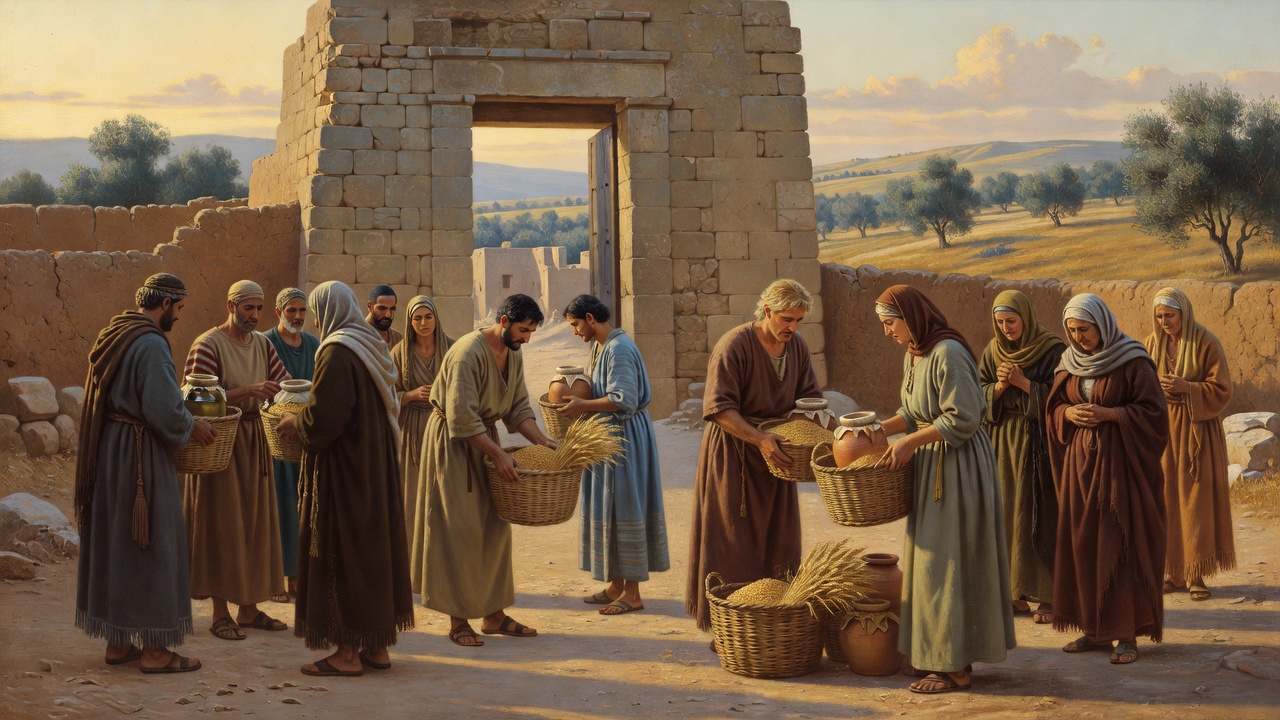
- Every third year, the annual tithe was gathered and stored within local towns rather than taken to the central sanctuary. This food was set aside to support community members without land inheritances, specifically Levites, resident foreigners, orphans, and widows.Sources: the Bible text itself
Notes written with AI assistance from open sources (Theographic Bible Metadata, CC BY-SA 4.0; Easton’s Bible Dictionary, public domain) and reviewed before publishing.
Credits and license for this translation
Cishingini Agwara Kambari [asg]
Cishingini: Cishingini Agwara Kambari [asg] (Bible)
copyright © 2025 Language Development and Translation Initiative (LDTI)
Language: (Cishingini)
Contributor: The Seed Company
This translation is made available to you under the terms of the
Creative Commons Attribution Share-Alike license 4.0.
You have permission to share and redistribute this Bible translation in any format and to make reasonable revisions and adaptations of this translation, provided that:
You include the above copyright and source information.
If you make any changes to the text, you must indicate that you did so in a way that makes it clear that the original licensor is not necessarily endorsing your changes.
If you redistribute this text, you must distribute your contributions under the same license as the original.
Pictures included with Scriptures and other documents on this site are licensed just for use with those Scriptures and documents.
For other uses, please contact the respective copyright owners.
Note that in addition to the rules above, revising and adapting God's Word involves a great responsibility to be true to God's Word. See Revelation 22:18-19.
2025-07-09
Source: http://ebible.org/asg/ · eBible.org