Acts 4
Ŋwɛ menomenyɛɛ́ mekɛ́ · Tap a verse to see its cross-references.
Áchwɔ́ ne Pita ne Jɔn né ɛchomele melɔ
1Ndɛre Pita ne Jɔn alu jɔ́ge, ampyɛ upɛ Ɛsɔwɔ fɔ́ chóncho ne muú kpaá bɔɔ́ bi ábáme ɛcha upɛ Ɛsɔwɔ ne bɔɔ́ Sadusi fɔ́ áchwɔ sɔ́ ɛbwɔ́ mejɔɔ́ meno. 2Ne matɔɔ́ asɔ́ bɔɔ́ bina dɔɔ́ gétúge Pita ne Jɔn abɔ́ agarege nnó, tɛ mbaá Jisɔs akwíle né negbo, bɔɔ́ ako bi akame ne Jisɔs ákwilé nyɛ ntó. 3Ne ágbaré Pita ne Jɔn áfɛ́. Ndɛre nkwale akwɔne, ɛbwɔ́ ájyɛ fɛ́ bwɔ́ né denɔ, nnó mechɔ ɛwémbɔ ɛla wyɛ geya. 4Yɛ́mbɔ bɔɔ́ bi áwuú mekomejɔɔ́ Pita ne Jɔn, gejamé ákáme, ne ácho né geluage bɔɔ́ bi áfyɛɛ́ matɔɔ́ ne Jisɔs, ɛbwɔ́ álú nana genógé bɔ dɛle ata.
5Bií ujyagé, afwa melɔ ne ákpakpa melɔ ne anlɛré mabɛ Ɛsɔwɔ ábɔ́ áchwɔ́ cho melu ɛma né Jɛrosalɛ. 6Anas ayi abɔ alu ɛtukpɛ ampyɛ upɛ Ɛsɔwɔ abɔ́ alu wyɛ, ne Kaifas, ne Jɔn ne Aleksanda ne bɔɔ́ abifɔ abi átané ntó ula gepu ɛtukpɛ ampyɛ upɛ Ɛsɔwɔ. 7Ne ɛbwɔ́ ája Pita ne Jɔn, áchwɔ tɛ́ne mbɛ ushu bwɔ́, ne agií bwɔ́ aké, “Ɛkɛ nnó ne ɛnyú depyɛ́ɛ mechɔ ɛwena njuú? Utó nyú utané ɛfɔ́? Ɛnyú depyɛ́ geno ɛyige na né mabɔ wá?”
8Wyɛ né gébé ɛyigémbɔ, Mendoó Ukpea ɛgbeé Pita metɔɔ́ ne aké ne ɛbwɔ́, “Ɛnyú afwa ne ákpakpa melɔ, 9nnó geno ɛyige ɛse depyɛ mbaá mbweré mende yina gelɔ wɔ́? Ɛnyú degige ɛse fina nnó dekaá fɔ́ genó ɛyi gepyɛ ne ji akɛne mbɔ wɔ́? 10Gɔge degaré ɛnyú ne bɔɔ́ Isrɛli ako nnó, ɛle uto Jisɔs Kras ayi atane Nasarɛt ne upyɛ́ mende yi atɛ́né mbɔ mbɛ ushu ɛnyu, atoó cháncha. Ɛlé Jisɔs yina ne ɛnyú debɔ dewɔ́mé né gekwa, ne Ɛsɔwɔ apyɛ ji akwíle né negbo. 11Ji ne alu ntaá ɛni ŋwɛ Ɛsɔwɔ aké,
‘Ntaá ɛni ɛnyú antɛné upú debɔ́ déshya neni nela ɛnine negbaré nékúné gepú.’ 12Jisɔs yina jimbí ne akage féré bɔɔ́ né ɛfwyale gabo. Nendé muú yicha ápɔ́ sé fa mme yina ayi Ɛsɔwɔ atɔmé nnó áchwɔ áféré ɛsé né ɛfwyale gabo.”
13Ákpakpa bimbɔ áwuúge nkane Pita ne Jɔn ajɔ́ge ayi álá pɔ́ ne ɛfɔ metɔɔ́, ála mano mekpo fuú, gétúgé ákaá nnó ɛbwɔ́ ápɔ́ bɔɔ́ ne ájyɛ ŋwɛ wɔ́. Ne ɛbwɔ́ átɛ nnó Pita ne Jɔn ájɔ́ge mbɔ gétúgé ábɔ́ akɛné mɛ́ ne Jisɔs. 14Ne ɛbwɔ́ abɔ ákagé shya fɔ́ geno ɛyige Pita ne Jɔn ábɔ́ ápyɛ́ getúgé ɛbwɔ́ ágɛné mende yi atoó mbɔ nkane atɛné nekúné aŋgbá Jisɔs bimbɔ. 15Ɛfɛɛ́ ne afwa ne ákpakpa melɔ bimbɔ ágaré Pita ne Jɔn nnó átané kpɛ́ dafyɛ, ne ɛbwɔ́ álagé meso, alɔ mangií atɛ áké, 16“Ɛsé depyɛ nyɛ nnó ne ande bina? Yɛ́ndémuú fa né Jɛrosalɛ ákaá nnó gekpɛkpɛge ufélekpá bi, ɛle ɛbwɔ́ ne apyɛɛ́ ne ɛse dékágé shya sé. 17Yɛmbɔ mampyɛ nnó mechɔ ɛwé ɛmage ɛjyɛ se mbɛ, debɔ́ mamfyɛ́ bwɔ́ mema ne ɛbwɔ nnó ɛkage ákyaá manjɔɔ́ ne muú fɔ́ né mbaá mabɔ Jisɔs.”
18Ájɔɔ́ge mbɔ, ákuú Pita ne Jɔn ákéré mmu ne ákwelé ɛbwɔ́ mbeé nnó, “Ɛkagé ama atyaá mabɔ Jisɔs yɛ manlɛré mekomejɔɔ́ wuú mbaá muú.” 19Ne Pita ne Jɔn áshuú bwɔ́ meko aké, “Ɛnyú ambɔɔ́ fɛrege mechɔ ɛwé, ɛlu cho né mbɛ ushu Ɛsɔwɔ, manwu ne Ɛsɔwɔ wa manwu ne ɛnyú? 20Ɛse debɔ mangárégé genó ɛyi ɛsé dewuú ne dégɛné.” 21Ne afwa ɛso ama áfélé ɛbwɔ́ amɛ ne ályá ɛbwɔ́ nnó ájyɛ. Ɛbwɔ́ ágɛ́ fɔ meti manchyɛ bɔɔ́ Jisɔs ɛfwyale wɔ́, nendé bɔɔ́ áko áfɛ́ɛge Ɛsɔwɔ né mechɔ ɛwé ɛbɔ́ ɛpyɛ́. 22Ɛlé ufélekpá wáwálé, mende yi ápyɛ́mbɔ ji atoó apwɔ usaá aŋmɛ upéa.
Bɔɔ́ Jisɔs ánɛmmyɛ nnó Ɛsɔwɔ apyɛ ɛbwɔ́ ábɛgé fɔ́ ne ɛfɔ́ɔ
23Ndɛre bɔɔ́ bimbɔ álya Pita ne Jɔn ákérége meso, ágaré ɛkwɔ bwɔ́ genó ɛyige anɔɔ́ baá bií apyɛ upɛ Ɛsɔwɔ ne ákpakpa melɔ abɔ ajɔɔ́. 24Bɔɔ́ Jisɔs awúge mbɔ, ácho melu ɛma anɛnemmyɛ mbaá Ɛsɔwɔ aké, “Átá yi apwɔ amu, wɔ yi ɔkwyɛ́ mfaa ne mme ne manyi ne unó uko bi úlú wyɛ. 25Ɔpyɛ gekwenege ntɛ ɛsé Dɛvid, maa utɔɔ́ wyɛ, ajɔɔ́ né uto Mendoó Ukpea nnó,
‘Ulannó bɔɔ́ abi álá pɔ́ bɔɔ́ Jus matɔɔ́ ásɔ́ bwɔ́ dɔɔ́?
Ulannó bɔɔ́ melɔ átɛnege ukɔlɔ ne Ɛsɔwɔ detuú?
26Afwa abi mme ákpómege mmyɛ mámyɛ bee,
ne ákpakpa melɔ átɛnege ukɔ́lɔ́ mamyɛ ne Ɛsɔwɔ
ne muú yi ji ajyá nnó abɛ Muú yi Ɛsɔwɔ akweré ji ɛlá gefwa.’
27Genó ɛyigé Dɛvid abɔ́ ajɔɔ́ mbɔ, gepyɛ wáwálé fa melɔ ɛwé. Mfwa Hɛrɔd ne Pontyɔs Palɛt, chóncho ne abifɔ abi álá pɔ́ bɔɔ́ Jus ne bɔɔ́ Isrɛli ásɔ mala manwá Jisɔs, Jisɔs muú utɔɔ́ melɔ́mélɔ́ wyɛ ayi ɔbɔ ɔjyaá nnó abɛ Muú yi wɔ ɔkwere ji ɛlá gefwa. 28Ɛbwɔ áchomé mbɔ, ápyɛ le geno ɛyige wɔ Ɛsɔwɔ né uto byɛ, ɔbɔ́ ɔkwyɛ mɛ́ ɔbɛlé nnó ubɔ mampyɛ́. 29Átá nana gɛ́ nkane ɛbwɔ́ áfelege ɛse amɛ. Pyɛ ɛsé, baá utɔɔ́ byɛ dégarégé mekomejɔɔ́ wyɛ débɛgé fɔ́ ne ɛfɔ́ɔ metɔɔ́. 30Pyɛ ɛse, depyɛge bɔɔ́ mamée atoóge ne dema depyɛgé ufélekpá né utó bi Jisɔs, muú utɔɔ́ melɔ́mélɔ́ wyɛ, nnó bɔɔ́ ákpá amɛ ágɛ́ utó byɛ.”
31Gébégé ánéré manɛmmyɛ, mme meko anyií né mbaá yi ɛbwɔ́ alú. Mendoó Ukpea ɛchwɔ gbeé ɛbwɔ́ metɔɔ́ ne ɛpyɛ ɛbwɔ́ alɔ mangare mekomejɔɔ́ Ɛsɔwɔ ayi álá pɔ́ ne ɛfɔ́.
Bɔɔ́ bi ákamé ne Jisɔs ákarege unó bwɔ́ ne atɛ
32Né ɛchomele bɔɔ́ abi áfyɛɛ́ metɔɔ́ ne Jisɔs, álu meko ama ne metɔɔ́ ɛma. Muú ɛbwɔ́ fɔ ayi ájɔge nnó genó ɛyigé na ɛlé ɛya apɔ́. Ne genó ɛyigé muú ama awya, gelu ɛyigé bɔɔ́ akó. 33Áŋgbá Jisɔs ágarege ájyɛ ne ɛshyɛ mampyɛ bɔɔ́ ákaá nnó, Ata Jisɔs akwilé né negbo. Ne Ɛsɔwɔ apoóge ɛbwɔ́ ako dɔɔ́. 34Yɛ muú ayi genó gelií ji apɔ́. Ɛwyage bɔɔ́ ákpóo makɔɔ́ yɛ upú bwɔ, 35ne áchwɔ́ ne manka yimbɔ mbaá áŋgbá Jisɔs. Ɛbwɔ́ ákaré manka mbaá bɔɔ́ bi ákamé ne Jisɔs ako nkane yɛ́ndémuú ákɛlege.
36Mende fɔ ntó abɔ́ alu ɛfɛɛ́ ayi ákuú ji Josɛf, atane ula gepú ámpyɛɛ́ upɛ Ɛsɔwɔ. Ábyɛ́ ji né melɔ Syaprɔs ne áŋgbá Jisɔs ntó akuú ji Banabas. (Ula utɛne nnó Memfyɛ́ bɔɔ́ ɛshyɛ.) 37Ne akpó ntó mekɔɔ́ wuú ɛwé ɛma achwɔ ne ŋka yimbɔ mbaá áŋgbá Jisɔs.
Did you know?
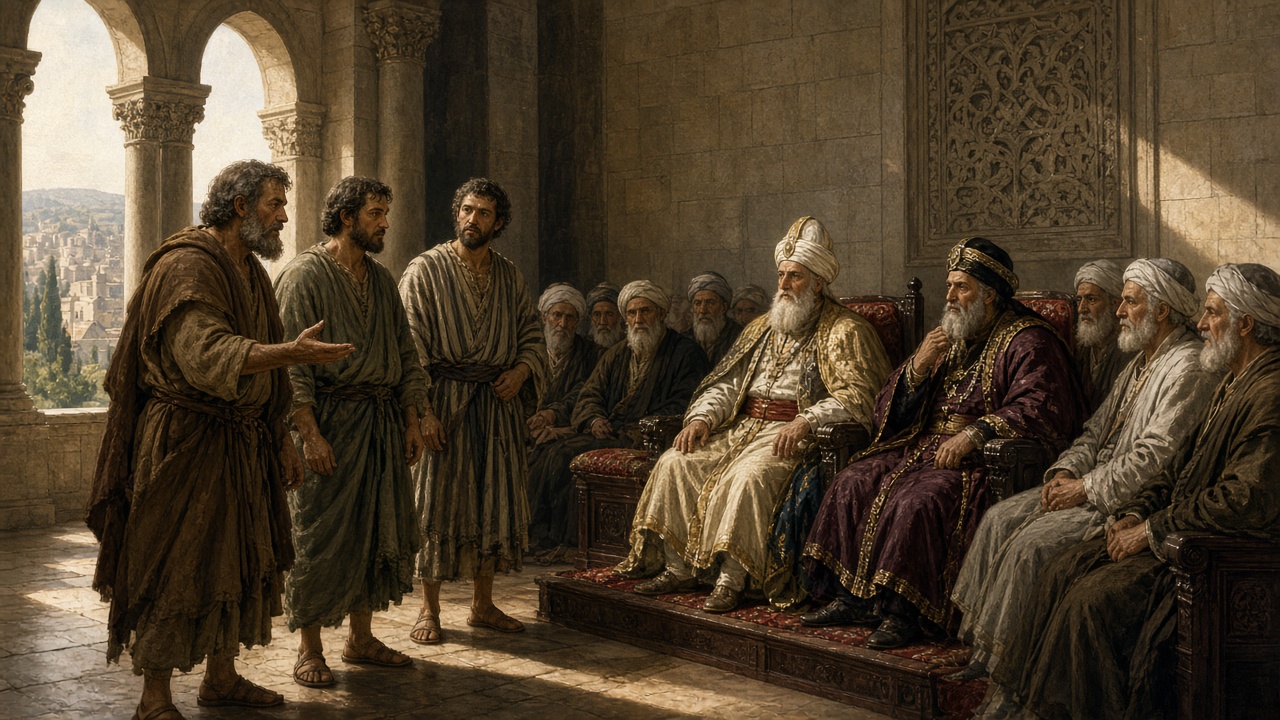
Peter and John before the Sanhedrin
- The priests, the captain of the temple guard, and the Sadducees seized Peter and John because they were teaching the people and proclaiming in Jesus the resurrection of the dead. Caiaphas, who sat with the assembly the next day, belonged to the Sadducees.Sources: the Bible text itself · Caiaphas
- Annas, called high priest here, had held that office from A.D. 7 to 14 until a Roman procurator deposed him. Caiaphas, who had married Annas's daughter, was raised to the office in A.D. 25; even so, some Jews may still have regarded Annas as the legal high priest, since Mosaic law treated the office as lifelong, and Annas was probably president or deputy of the Sanhedrin. John and Alexander, relatives of the high priest and otherwise unknown, sat with them.Sources: the Bible text itself · Annas · John (Relative of the High Priest) · Alexander (Son of Simon)
- Peter, a fisherman from Bethsaida, and John, also a fisherman and a son of Zebedee, were brought before the rulers, elders, and scribes. The council marveled at their boldness when it realized that they were unschooled, ordinary men, and took note that they had been with Jesus.Sources: the Bible text itself · Simon Peter · John the Apostle
Notes written with AI assistance from open sources (Theographic Bible Metadata, CC BY-SA 4.0; Easton’s Bible Dictionary, public domain) and reviewed before publishing.
Places in this chapter
- Jerusalem · 31.777, 35.234 · verses 5, 16
- Nazareth · 32.702, 35.298 · verse 10
- Cyprus · 35.000, 33.000 · verse 36
Only places identified with high confidence are shown (90% or more according to the scholarly sources compiled by OpenBible). Period map: DARE (Digital Atlas of the Roman Empire), CC BY 4.0; modern map: © OpenStreetMap contributors; places: OpenBible.info (CC BY 4.0).
Credits and license for this translation
Ŋwɛ menomenyɛɛ́ mekɛ́
New Testament in Denya (CM:anv:Denya)
copyright © 2010 Wycliffe Bible Translators, Inc.
Language: Denya
Translation by: Wycliffe Bible Translators, Inc.
Copyright Information
© 2010, Wycliffe Bible Translators, Inc. All rights reserved.
This translation text is made available to you under the
terms of the Creative Commons License: Attribution-Noncommercial-No Derivative Works.
( http://creativecommons.org/licenses/by-nc-nd/3.0/ )
In addition, you have permission to port the text to different file formats, as long as you
do not change any of the text or punctuation of the Bible.
You may share, copy, distribute, transmit, and extract portions
or quotations from this work, provided that you include the above copyright
information:
You must give Attribution to the work.
You do not sell this work for a profit.
You do not make any derivative works that change any of the actual words or punctuation of the Scriptures.
Permissions beyond the scope of this license may be
available if you contact
us with your request.
The New Testament
in Denya
© 2010, Wycliffe Bible Translators, Inc. All rights reserved.
This translation is made available to you under the terms of the
Creative Commons Attribution-Noncommercial-No Derivatives license 4.0.
You may share and redistribute this Bible translation or extracts from it in any format, provided that:
You include the above copyright and source information.
You do not sell this work for a profit.
You do not change any of the words or punctuation of the Scriptures.
Pictures included with Scriptures and other documents on this site are licensed just for use with those Scriptures and documents.
For other uses, please contact the respective copyright owners.
2024-02-11
Source: http://ebible.org/anvNT/ · eBible.org