Matthew 2
Kije Manido Odikido8in: Ocki Mazinaigan · Tap a verse to see its cross-references.
Nandam nabeg 8abanog odose8ag // e pi nda icpenima8adjin Jesosan
1Jesos ki nta8igigoban Betleem (Bethléem) odenakag, Coda (Judée) akikag, meg8adj Herod ka ogima8igobanen. Ka ick8a nta8igidj, nandam nabeg ka nanada kikenima8adjin 8anagocan, acitc 8abanog ka odji8adj, Jerusalem odenani ogi oditana8a. 2Ki k8ag8ed8e8ag dac: “Adi apan abinodjij kagi nta8igidj acitc ke Coda8inni ogima8idj? Nigi 8abamananan o8anagociman 8abanog inekena. Nigi pijamin dac e pi nda manadjiagidj.”
3Apitc ogima Herod ka nodagedj ii, ki kitci migockadendam, acitc ke8ina8a kakina a8iagog Jerusalemikag ka tajike8adj. 4Herod dac ogi ma8adjian kakina Coda8inni kitci aiamie ogiman acitc Coda8inni kikinoamage8innin. Midac ka iji k8ag8edjimadjin adi ke iji nta8iginipanin ini8eni8an Kije Manidon kagi ikidonigobanen kidji pidjinija8andjin.
5Ogi nak8e8ajia8an dac: “8edi Betleem odenag, Coda akikag. Mi mega oo niganadjimo8inni kagi ojibiamogobanen:
6‘Kin Betleem, misa8adj e kitci agacinojag kidodenam,
Coda akikag ka iji tag8ag,
kin ma8adji kitci apitendag8an kidodenam
kakina ka inigok8ag Coda aki.
Kidakikag mega kada odji nta8igi
pejig Ogima kakina Israel a8iagon kidji nosoneogodjin,’ Michée 5.1(2)
mi ejibiigadeg,” ki ikido8ag.
7Herod dac ogi kimodji nd8e8eman ini8e naben 8abanog ka odjindjin, kidji 8idamagodjin anapitc maia ka nagozindjin 8anagocan. 8Midac 8edi Betleemikag ogi ijinija8an acitc ogi inan: “Madjaok, k8ag8e mika8ik dac ataji maia e tedj aa abinodjij. Apitc dac ick8a mika8eg, pi nda 8idamaocik, kenin kidji gi nda manadjiag,” ogi inan.
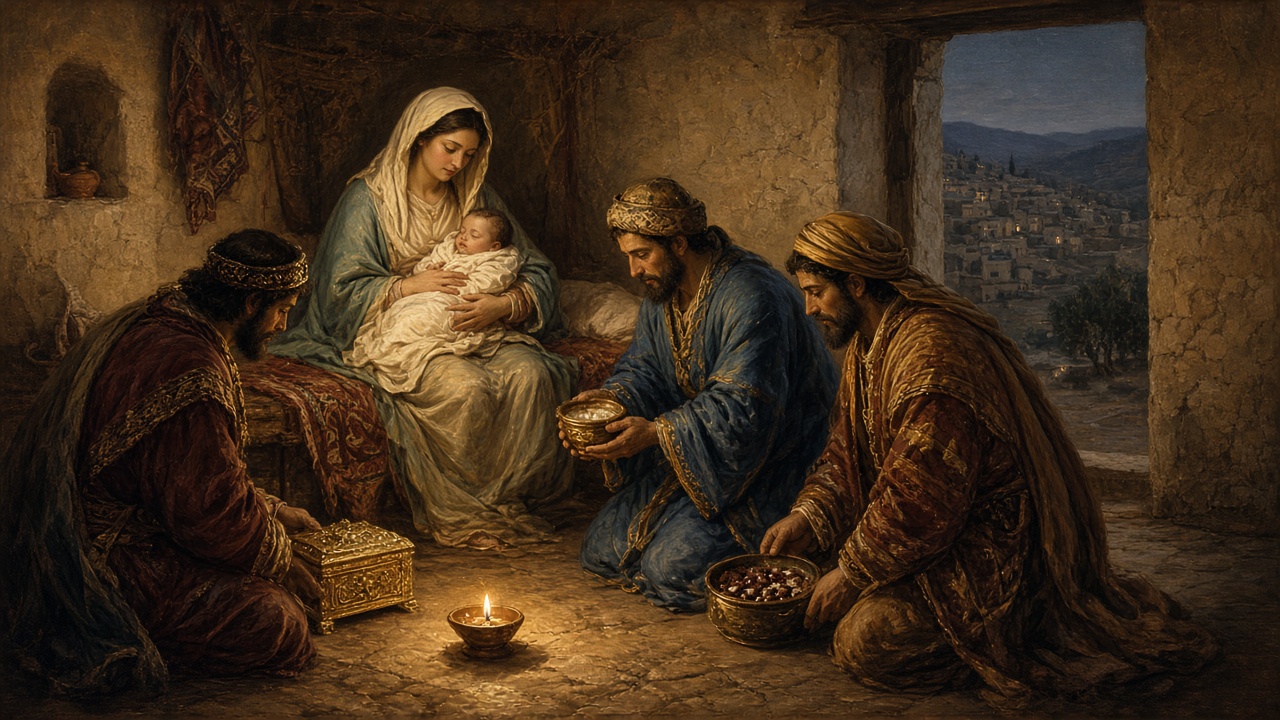
9Apitc ka ick8a aiamiigo8adjin ogiman, igi8e nabeg ki madja8ag. Mina8adj dac ki koki nagozi8an ini 8anagocan kagi 8abama8agobanen 8edi 8abanog inekena. Ki ani nigani8an ini 8anagocan ke ani ija8adj, pinici kidji iji kibisikandjin iima ka iji tegobanen aa abinodjij. 10Ki kitci min8endamog apitc mina8adj ka koki 8abama8adjin ini 8anagocan. 11Ki pidige8ag dac migi8amikag acitc ogi 8abama8an ini abinodjijan acitc odjodjomini Manin. Ogi nibak8ita8a8an dac acitc ogi manadjia8an. Mina8adj dac ogi cebidona8an omackimoda8an acitc ogi ca8enima8an oza8iconian, acitc ka minomatenig pig8ini, acitc ka minomag8anig pig8ini “mir” (myrrhe) ka ijinikadenig. Israel aki|src="HK00356B.TIF" size="col" ref="MAT (2.21)"
12Mina8adj dac Kije Manido ogi inan ini naben meg8adj e nibandjin ega kidji koki nda 8abama8adjin ogiman Herodan. Midac kodag mikanani ka iji madjiado8adj e ki8e8adj odaki8akag.
Josep odiji8inan Jesosan acitc Manin 8edi Idjip (Égypte) akikag
13Ka ick8a madja8adj igi8e nabeg 8abanog ka odji8adj, ka Tibendjigedj odajeniman ogi pi nda 8abamigon Josep meg8adj e nibadj, acitc ogi igon: “8anickan, madji8ij aa abinodjij kigi odjodjoman, acitc Idjip (Égypte) akikag ipai8en. Tajiken 8edi, pinici kidji 8idamonan anapitc ke pi koki ki8ean. Ogima Herod mega oga nanada 8abaman ini abinodjijan kidji nisadjin.”
14Josep dac ki 8anicka, ogi madji8inan ini abinodjijan acitc odjodjomini, acitc Idjip akikag ki ipai8e8ag meg8a tibik. 15Ki tajike8ag dac 8edi pinici kidji nibondjin Herodan. Kakina dac ii ki ani iji8ebani kagi inapanin ka Tibendjigedj kidji tibadjimondjin niganadjimo8innin:
“Nigi nd8e8ema nig8izis kidji nagadag Idjip akini.” Osée 11.1
Nisagani8i8ag Betleem ockina8esag
16Meg8adj kiabadj e pimadizipan ogima Herod, apitc ka kikendag egi 8agackibinigodjin ini naben 8abanog ka odjindjin, ki kitci nickadizi. Ki anoki dac kidji nisimagani8indjin kakina ockina8esan Betleem ka tajikendjin acitc 8ajagam iima, ka nijopibon8ezindjin iji tcabacic. Mi mega ii ka iji tibaigepan, e abadjitodj ka igopanin ini naben kagi 8abamanipanin 8anagocan. 17Kakina dac ii ki iji8ebani kagi iji tibadjimogobanen niganadjimo8inni Jeremi:
18“Nodjigade e pabibaginani8ag iima Rama odenakag.
Kitci ma8inani8an acitc kitci kackendjigade.
Racel (Rachel) omoka8anan odabinodjijiman.
Ka8in kackiagani8isi kidji kagidjiagani8idj,
kakina mega ki nisagani8i8an.” Jérémie 31.15
Jesos onigiigon koki ki8e8an Israel akikag
19Apitc ka nibodj ogima Herod, ka Tibendjigedj odajeniman ogi pi nda 8abamigon Josep, 8edi Idjip (Égypte) akikag, meg8adj e nibadj. 20Ajenin dac ogi igon: “8anickan, madji8ij aa abinodjij kigi odjodjoman. Koki ki8en dac 8edi Israel akikag. Aja mega ki nibo8ag igi8e ka 8i nisa8apanin ini abinodjijan.” 21Josep dac ki 8anicka, ogi madji8inan ini abinodjijan kigi odjodjomini, acitc ki koki ki8e8ag Israel akikag.
22Josep dac ki nodage Akiliosan (Archélaüs), Herodan og8izisini, egi nabicka8andjin odadamini kidji ogima8indjin 8edi Coda (Judée) akikag. Midac ka iji segizidj kidji iji a8i tajikedj iima. Mina8adj dac ki 8idama8agani8i meg8adj e nibadj adi ke todag, midac ka iji ijadj Galilee akikag. 238edi dac ki nda tajike pejig odenani, Nazaret (Nazareth) ka ijinikadenig. Midac ka iji8ebag adi kagi ikido8agobanen niganadjimo8innig: “Kada Nazareti8inni8i aa Kije Manidon ke pidjinijaogodjin.”
Did you know?
Magi, Herod, and Nazareth
- The King Herod of this chapter is Herod the Great. His son Archelaus, by Malthace, a Samaritan woman, inherited a third of the kingdom: Idumea, Judea, and Samaria. Until a few days before Herod's death another son, Antipas, had been named successor, but in his last moments Herod named Archelaus; for fear of him, Joseph turned aside from Judea and withdrew to Galilee.Sources: Archelaus · the Bible text itself
- Matthew links the deaths of the boys in Bethlehem to words spoken through the prophet Jeremiah: a voice in Ramah, Rachel weeping for her children. Rachel, one of Jacob's wives, died giving birth to Benjamin and was buried by the wayside on the road to Ephrath, that is Bethlehem, directly north of the town. Her sepulchre is regarded with great veneration by the Jews.Sources: the Bible text itself · Rachel · Bethlehem
- Bethlehem, in the hill country of Judah, was earlier called Ephrath and was also known as the city of David; under the Romans it lay in Judea, the southernmost of the three divisions of Palestine. Joseph and Mary went instead to Nazareth in Galilee, their home, a town not mentioned in the Old Testament. The name Nazareth is generally supposed to come from the Hebrew netser, a shoot or sprout, though some connect it with a word for guarding or watching.Sources: Bethlehem · Judea · Nazareth · the Bible text itself
Notes written with AI assistance from open sources (Theographic Bible Metadata, CC BY-SA 4.0; Easton’s Bible Dictionary, public domain) and reviewed before publishing.
Places in this chapter
- Bethlehem · 31.704, 35.208 · verses 1, 5, 6, 8, 9, 16
- East · Today: region around Amman · 31.955, 35.934 · verses 1, 2, 9
- Jerusalem · 31.777, 35.234 · verses 1, 3
- Judea · Today: Judea 1 · 31.777, 35.234 · verses 1, 5, 22
- Egypt · 30.129, 31.308 · verses 13, 14, 15, 19
- Galilee · 32.760, 35.527 · verse 22
- Nazareth · 32.702, 35.298 · verse 23
Only places identified with high confidence are shown (90% or more according to the scholarly sources compiled by OpenBible). Period map: DARE (Digital Atlas of the Roman Empire), CC BY 4.0; modern map: © OpenStreetMap contributors; places: OpenBible.info (CC BY 4.0).
Credits and license for this translation
Kije Manido Odikido8in: Ocki Mazinaigan
Algonquin: Algonquin New Testament New Testament only
copyright © 1998 Canadian Bible Society
Language: Algonquin
Translation by: Canadian Bible Society
Algonquin New Testament
About Algonquin
Algonquin is one of the Algonquian languages of Canada in the same family as Cree, Ojibwe, Naskapi and Atikamekw. It is locally known as Anicinabemowin. It is spoken in northwestern Quebec in 9 communities in Abitibi-Temiscamingue, and one community in Ontario. Like other languages in Quebec introduced to Christianity by the Roman Catholic Church, it is written using Roman script instead of the syllabic script used in Cree, Ojibwe and various other Algonquian languages in Canada.
About This Translation
The translation represented by this text was started under the auspices of the North American Branch of the Summer Institute of Linguistics in 1975. SIL staff worked in close partnership with members of the Algonquin First Nation at Pikogan and with the Roman Catholic Church. The Canadian Bible Society provided consultant and publishing support to this project and published the New Testament in 1998. The translation team also produced weekly lectionary readings for the Church. If you are interested in obtaining a printed copy of this New Testament, please contact the Canadian Bible Society at http://www.biblescanada.com .
Copyright Information
Algonquin New Testament © 1998 Canadian Bible Society
The text of the Bible in Algonquin that appears in this electronic format or website is for personal use only.
Up to five hundred (500) verses of the Bible text in any form (written, visual, electronic or audio) may be quoted without permission. The quoted verses may not be more than 50% of a complete book of the Bible, or more than 25% of the total text of the work in which they are quoted. Prior written permission must be obtained for any other use of the text. Copyright acknowledgement must in all cases appear on the title or copyright page.
For more information on copyright conditions or to apply, visit http://www.biblesociety.ca/copyright .
Algonquin New Testament © 1998 Canadian Bible Society
This translation is made available to you under the terms of the
Creative Commons Attribution-Noncommercial-No Derivatives license 4.0.
You may share and redistribute this Bible translation or extracts from it in any format, provided that:
You include the above copyright and source information.
You do not sell this work for a profit.
You do not change any of the words or punctuation of the Scriptures.
Pictures included with Scriptures and other documents on this site are licensed just for use with those Scriptures and documents.
For other uses, please contact the respective copyright owners.
2014-04-21
Source: http://ebible.org/alqALGNT/ · eBible.org