Matthew 3
YISASINI KAMA VAYA · Tap a verse to see its cross-references.
Monó Non Péantan Banta Yoni Ano Ma Yisasini Aa Uvíden Puntáantein Baya Ino
1Maí damú Yudiá barafá banta ída van kámápin monó non péantan banta Yoni afoká uven banasi monó baya máa sen tiamemí, 2“Tiretí ankan ará baerano. Inaru yafisin inka ádé erikhen mino.” 3Sakhanampa vanta Aisaiyan oorá Tiyarafenu ano Yonin nan mi máa sikharen mino,
“Banta ida van kámá bara fáké mana vanta ano oovaren máa siyan mino,
‘Bafani aa uvídeya
veni aa funtáantano.’” Ais 40:3
4Yoni véi kameri ayo fóké uvaran au anamun uren kao au fóké amú anan uren báken panon má bonkampun anu vá niyaren mino. Monó Non Péantan Banta Yoni ino.|alt="John the Baptist" src="CN01651B.tif" size="span" loc="Mat 3:4" ref="MAT 3.4" 5Yerusaremíke nanin banta vá Yudiá bara fáke nanin banta vá minó Yodaní non akhen páke nanin banta vá ano vanta ída van kámá barafá Yonini vaya ineno van ore ore en mino. 6Oriven mo vetí ankani ume sian páman urákan Yoni ano Yodaní nompin monó non péanten mino. 7Yoni ma monó non péantiyan onákan Farasisi kayo vá Sadyusi kayo vá mairá eríkan betí ankan máa sen tiamemí, “Tiretí ankan namu osafáe akhafanan banan Tiyarafenui arananá uman mano siretimpin ereno van iyan mifo mai van iye anó tiamikhayá mai uman pinté karan orono van iya fono. 8Máan tiya ompo siretí ankan ma fura seya ará baédanteya mai siretí ankani avúavá pókesá aní oro. 9Téi siretí ankan tiamé umpo siretí ída vá Abaraamu nan tetin tinafu ino se vá ineno. Tiyarafenu ano kanaíen ma onámaná kayo sintin Abaraamun anavasiní inten mino. 10Minó daa ma ída aran iran nain tíkaré irafin karú dano van mai yaa kayo anafin tantume fe van mino.
11“Téi ma siretí ankan nompó péantiyarúna mai siretin nan inka ará baéken mino siré aní iyá umpo sen toyampá ma eriyain bantai ákona ano senti ákona esantakhá téi ída kanaí é ben arantan anamun ayufirí ukhé uno. Béi anon Kantá Aunan má ira vá póké péantanten mino. 12Béin ayampin bakhari in danka van mino. Bei uviti namumpin bakhari iyan uviti aítan mápin kaiyáken ída kípan irafin aítan taman kaurinten mino.” Béin ayampin bakhari in danka van mino.|alt="winnowing" src="HK00097B.TIF" size="col" ref="MAT 3.12"
Yoni Ano Ma Yisasin Monó Non Péantein Baya Ino
13Yoni ma vaya siyákan maen Yisasi Karirifá me ampiren Yoni ano véin monó non péantano van Yodení non arufá oren mino. 14Oríkan Yoni ano véin ayópá ono van temí, “Éi ano ma séi monó non pétintaren mifo éi fará téi varunafá eriya fono.”
15Máa síkan Yisasi evaránen béin tiamemí, “Ída ifo séi ma siyarunaí ma éi esin mi Tiyarafenu ano ma erasan nan ma funtákein avúavá barano ma sikhá ein baya ano mo kanaí inten mino.” Síkan Yoni iniren beni vaya vákuren monó non péanten mino.
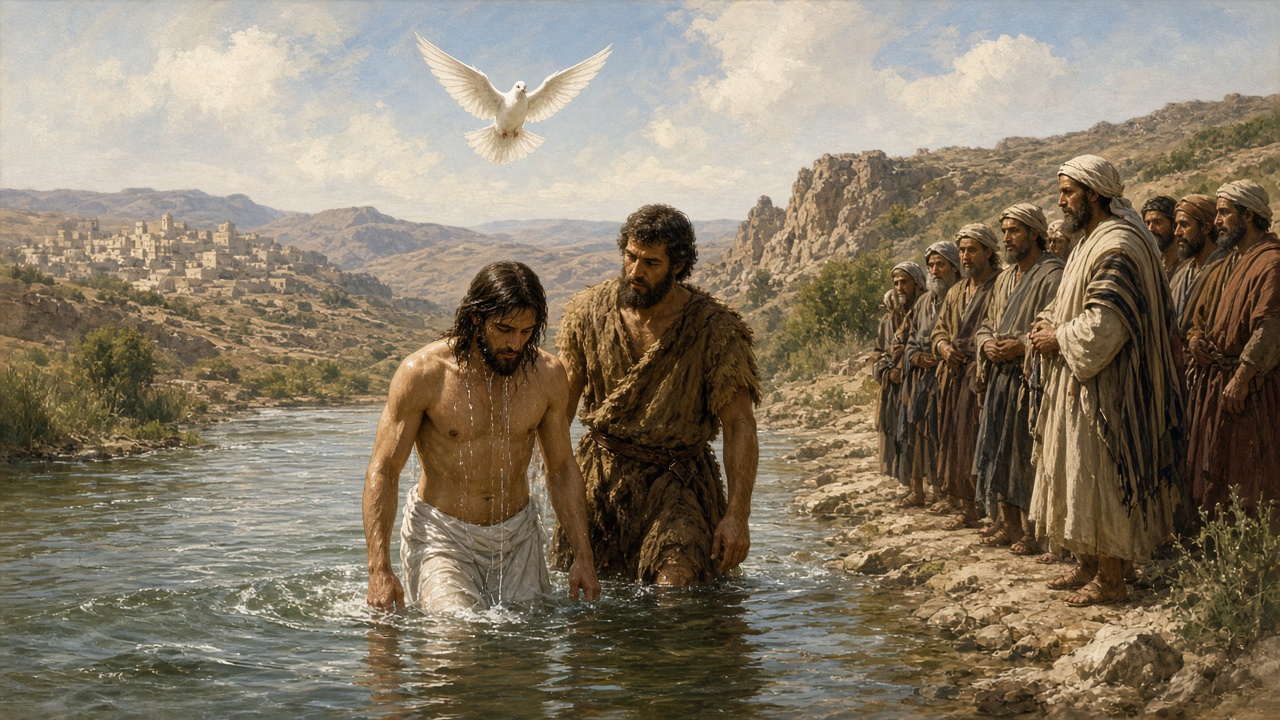
16Yisasin ma monó non péantádan non pinté ainen e ayoren avafá ma ódiyain má inaru ona yivin béi oniyain má Tiyarafenui Aunan mano mana kukhofá nun avúaváká ten béi vaípá eren mino. 17Eriyain má inaru fáké mana oova ano máa semí, “Mai sen tanin mino. Téi ven nan moéké tinunu ukhé te sú káká ben nan moéké timusin iyá uno.” Tiyarafenui Aunan mano mana kukhofá nun avúaváká ten Yisasi vaípá eren mino.|alt="Jesus’ baptism" src="CN01656b.TIF" size="col" loc="Mat 3:17" ref="MAT 3.17"
Did you know?
Repentance and Baptism at the Jordan
- Matthew identifies John the Baptist as the one spoken of through the prophet Isaiah: a voice calling in the wilderness, “Prepare the way for the Lord.” Easton's Bible Dictionary (1897) records that John’s mission was the subject of prophecy, citing this passage, Isaiah 40:3, and Malachi 3:1, and that he was of priestly descent—his father Zacharias a priest of the course of Abia, and his mother Elisabeth of the daughters of Aaron. A chronology dates both the beginning of John’s ministry and his baptism of Jesus to AD 26.Sources: the Bible text itself · John the Baptist · John the Baptist Begins Ministry · John Baptizes Jesus
- John came preaching in the wilderness of Judea, and people went out to him from Jerusalem, all Judea, and the whole region around the Jordan, confessing their sins and being baptized in the Jordan River. Easton's Bible Dictionary (1897) notes that under the Romans, in the time of Christ, Judea denoted the southernmost of the three divisions of Palestine, as distinguished from Galilee and Samaria, and included the territories of Judah, Benjamin, Dan, Simeon, and part of Ephraim. Jesus came from Galilee—called Galil by the Jews—to the Jordan to be baptized by John.Sources: the Bible text itself · Judea · Galilee
- John warned the Pharisees and Sadducees not to rely on the claim, “We have Abraham as our father,” saying that God could raise up children for Abraham from the stones. Easton's Bible Dictionary (1897) explains the name Abraham as “father of a multitude” and describes him as the son of Terah, named before his older brothers because he was the heir of the promises.Sources: the Bible text itself · Abraham
Notes written with AI assistance from open sources (Theographic Bible Metadata, CC BY-SA 4.0; Easton’s Bible Dictionary, public domain) and reviewed before publishing.
Places in this chapter
- Judea · Today: Judea 1 · 31.777, 35.234 · verses 1, 5
- Jerusalem · 31.777, 35.234 · verse 5
- Jordan · Today: Jordan River · 31.761, 35.558 · verses 5, 6, 13
- Galilee · 32.760, 35.527 · verse 13
Only places identified with high confidence are shown (90% or more according to the scholarly sources compiled by OpenBible). Period map: DARE (Digital Atlas of the Roman Empire), CC BY 4.0; modern map: © OpenStreetMap contributors; places: OpenBible.info (CC BY 4.0).
Credits and license for this translation
YISASINI KAMA VAYA
The New Testament in the Agarabi language of Papua New Guinea
Nupela Testamen long tokples Agarabi long Niugini
Copyright © 2010 The Bible Society of Papua New Guinea
Language: Agarabi
Translation by: Wycliffe Bible Translators
This translation is made available to you under the terms of the
Creative Commons Attribution-Noncommercial-No Derivatives license 4.0.
You may share and redistribute this Bible translation or extracts from it in any format, provided that:
You include the above copyright and source information.
You do not sell this work for a profit.
You do not change any of the words or punctuation of the Scriptures.
Pictures included with Scriptures and other documents on this site are licensed just for use with those Scriptures and documents.
For other uses, please contact the respective copyright owners.
2013-01-07
Source: http://png.bible/agd/ · eBible.org