John 11
I 'utz laj tzij re i dios · Tap a verse to see its cross-references.
U camic i ma Lázaro
1ʼO jun achi, ma Lázaro u bi, lic iwab. Ire are qui xibal i ati Mariy i ati Márta, je jekel pa ral tinimit Betánia. 2I ati Mariy-le, are ati Mariy chi xoʼon panok, xcojow cunbal muy che rakan i Kajwal, y xu chakijsaj ruʼ u wi. Ire, ranab i ma Lázaro chi iwab. 3I je queb ranab-le, xqui tak rason ruʼ i Jesus, xqui bij bic:
—Kajwal, lic iwab i achi chi cʼax ca naʼo —xqui bij.
4I Jesus, are xu ta ile, xu bij:
—I yobil-le, n-are ta ca qʼuisaw u camic. Are i rumal re, are ca ʼalijinsaw u ʼij u choʼab i Dios, ca ʼalijinsaw u ʼij u choʼab i u Cʼojol i Dios chique i winak —xu bij.
5I Jesus lic cʼax que u na i oxib alcʼwa-laxel-le. 6(Tupu cʼax que u naʼo), are xu ta chi iwab i ma Lázaro, xcanaj chic queb ʼij chila pa ʼo wi. 7Teʼuri xu bij chique u tijoxelab:
—Coj ʼe chic pa Judéa (pa jekel wi i ma Lázaro).
8I u tijoxelab xqui bij che:
—Tijonel, ¿cawaj bari cat ʼe tan chic chila? Man cacaj teʼek i nimak tak aj Israel chila cat qui camsaj che abaj —xe cha che.
9(I Jesus xu bij jun tzij chique, ʼilbal-re chi maja cu rik i ʼij ca camic.) Xu bij:
—¿Xataba n-ta cablajuj ʼor che jun ʼij? ʼOlic pues. We jun ca bin paʼij, n-ta cu taquij wi rib, man ʼo i sak chuwach i jyub taʼaj crilo. 10Péro we jun ca bin chaʼab, cu taquij rakan, man n-ti sak ruʼ —xu bij.
11Teʼuri xu bij i Jesus chique:
—I kamig ma Lázaro ya xwaric, xui-ri ca ʼe in cʼastaj —xu bij.
12I u tijoxelab xqui bij che:
—Kajwal, we xa cwaric, lic cutzir-i —xe cha.
13Xui-ri, i usucʼ u tzij i Jesus queʼelok chi ma Lázaro camnak chic. I u tijoxelab xqui chʼob ique chi xa cwaric, man queje ile xu bij i Jesus. 14Teʼuri i Jesus xu ʼalijinsaj u tzij chique; xu bij:
—I ma Lázaro ya xcamic. 15Quin quicotic chi n-in ta chila are xcamic. ʼUtz queʼel chiwe yix, man ca cowir u cubibal i cʼux chwe, rumal wach i quin ʼan na. Bay. Joʼ, jo kila —xu bij chique.
16ʼO jun chique i tijoxelab, ma Tomas u bi, xak “a-Yox” quiqui bij che. Ire xu bij chique i juban chic tijoxelab:
—Xak choj ʼoj yoj ruʼ, chakachiʼilaj bi i ka Mayes; we quiqui camsaj, xak coj qui camsaj yoj ruʼ —xu bij.
I Jesucrísto are rajaw i cʼaslemal
17Are xupon i Jesus chila pa Betánia, ʼo chic cajib ʼij che u mukic i ma Lázaro. 18I ral tinimit Betánia, n-naj ta ʼo wi che i Jerusalen, colo queb kilómetro ruʼ nicʼaj ʼo che u najtil. 19Rumal-i je qʼui chique i aj Israel winak xe ʼe quila i ati Márta i ati Mariy, que qui pacbej qui bis rumal u camic i qui xibal. 20I ati Márta, are xu ta chi xupon i Jesus, xa ʼe u cʼulaj; xui-ri, i ati Mariy xcanaj can ruʼ ja. 21I ati Márta xu bij che i Jesus:
—Kajwal, we tene at ʼo chi, n-queje tene ca cam-i in xibal. 22Péro wetaʼam chi Dios cu ya na chawe wach ca tzʼonoj che —xu bij che i Jesus.
23I Jesus xu bij che:
—I a xibal ca cʼasi chic.
24I ati Márta xu bij che:
—Wetaʼam chi ire cwalij chic are que walij i camnak pa qʼuisbal ʼij —xu bij.
25Are ʼuri i Jesus xu bij che:
—Are yin que in walijsaj i je camnak; are yin in qui cʼaslemal. Pachin cu cuba u cʼux chwe yin, we xcamic, ca cʼun chic sak chuwach. 26Xak pachin i cʼaslic, we xu cuba u cʼux chwe yin, lic n-ca cam taj. ¿Cat cojon yet che ile? —xu bij che.
27I ati Márta xu bij:
—In cojom ile, Kajwal. Cul in cʼux che chi yet at i Crísto, at Racʼal i Dios; are yet chi ʼax koyʼem wi a cʼunic chuwach i jyub taʼaj —xcha.
I Jesus xoʼ chila pa muktal wi i ma Lázaro
28Are xbitaj ile, teʼuri i ati Márta xa ʼe chu siqʼuixic u chaʼ, chi ati Mariy. Xu bij che aliʼal:
—I ka Tijonel ya xcʼunic y cat u siqʼuij —xu bij.
29I ati Mariy, are xu ta ile, juntir xwalijic, xa ʼe chu cʼulaxic i Jesus. 30I Jesus cʼa maja coc che i tinimit; chila ʼo wi pa xcʼulax wi rumal i ati Márta. 31I aj Israel winak chi je ʼo chi rachoch i ati Mariy, quiqui pacbej u bis, are xquilo chi juntir xa ʼe i ati Mariy, xqui chʼobo chi mok chila ca ʼe oʼ wi pa muktal wi u xibal. Rumal-i ique xe terej bic. 32I ati Mariy xupon chila ruʼ i Jesus. Are xril u wach, xuqui chuwach y xu bij che:
—Kajwal, we tene at ʼo chi, n-queje tene ca cam-i in xibal —xu bij.
33I Jesus xril ati Mariy coʼic, xak xe ril i juban je ʼo ruʼ que oʼic. Ile n-xu maj tu wach y xa ʼutut u cʼux. 34Xu tzʼonoj chique:
—¿Pa xi muk wi i a-Lázaro? —coʼono.
—Kajwal, chol awila —xe cha che.
35I Jesus xoʼic. 36Rumal-i, i aj Israel winak xqui bij:
—Chiwilapeʼ, lic cʼax cu na i ma Lázaro —xe cha.
37Xak je ʼo jujun chique xqui bij:
—Are ire-le chi xu tzunsaj i mawach. We tene ʼo ire chi ¿ca cam nawi i ʼetz ma Lázaro? —xqui bij chiquiwach.
Wach u walijsaxic i ma Lázaro chiquixol i camnak
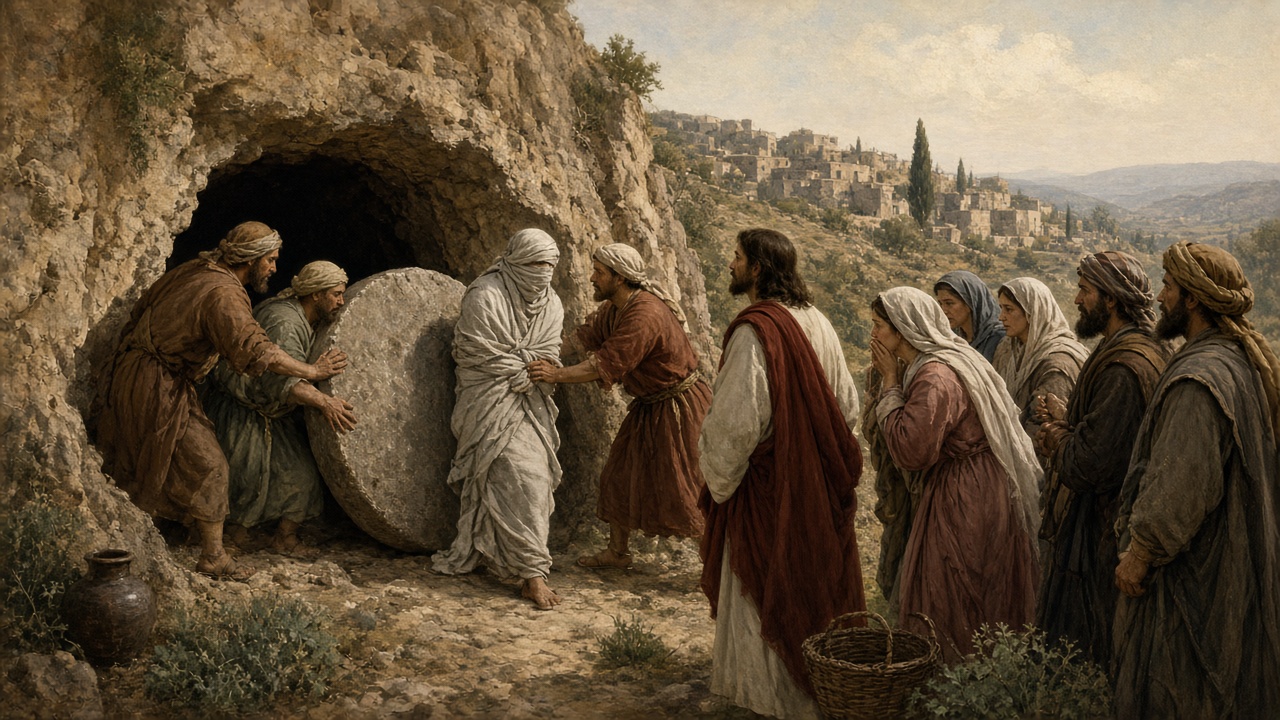
38I Jesus lic xa ʼutut tan chic pu cʼux, y xtejeb pan pa muktal wi i ma Lázaro. I jul pa qui mukum wi qui worom che jun abaj, tzʼapim can u chiʼ ruʼ jun abaj. 39I Jesus xu bij:
—Chiwesaj i abaj-le.
I ati Márta, chi ranab i camnak xu bij che i Jesus:
—Kajwal, ya n-ʼus ta chic; ya ʼo chic ruxlab man ya ʼo chic cajib ʼij che —coʼono.
40Are ʼuri i Jesus xu bij:
—¿Xataba n-in bim ta chawe, we cul a cʼux chwe, cawil i nim laj u ʼij u choʼab i Dios? —xu bij che.
41Are ʼuri xquesaj abaj chu chiʼ i jul. I Jesus xtaken chicaj, xu bij:
—Ta, quin tioxij chawe man a tom in tzij. 42Yin wetaʼam chi yet ʼax quin a ta wi, péro xin bij i tzij-le cumal que i winak-i, man ʼutz quiqui coj ique chi yet in a takom lok —xu bij.
43Are xbitaj ile rumal, teʼuri co xchʼawic; xu bij:
—A-Lázaro, ¡chat el lok! —xcha.
44Juntir xel li camnak, balʼatim i rakan u ʼab pa cʼul; i u palaj xak pasim pa cʼul. I Jesus xu bij:
—Chi toro, man ca binic —xu bij chique.
Xqui tzucuj wach u chapic i Jesus
45I aj Israel winak chi je petnak ruʼ i ati Mariy, je qʼui xqui cuba qui cʼux che i Jesus rumal wach i xquilo. 46Xui-ri je ʼo jujun chique xe ʼe chu bixquil chique i aj Fariséo wach i xu ʼan i Jesus. 47Rumal-i, i aj Fariséo, xak cuʼ i ajwab sacerdóte, xe ʼe chu molic quib cuʼ i aj nucʼbal tʼisbal. Are qui molom quib, xqui bij chiquiwach:
—¿Wach caka ʼano? I achi-le, mas i milágro ca tijin chu ʼanic. 48We toʼ queje ile caka canaj, conojel i winak quiqui coj ni u tzij i achi-le. Teʼuri i ʼatbal tzij pa Róma que u tak li rakan u ʼab, quiqui maj i rachoch i Dios waral, xak quiqui ya quib puwi i ka tinimit —xqui bij.
49Teʼuri, i mer cajʼatzil i sacerdóte che i junab-le, ma Caifas u bi, ire xu bij chique i qui molom quib:
—¡Yix n-ta ʼo iwetaʼam! 50¿N-qui chʼob ta bari chi ʼutz queʼel chake we ta ca cam jun achi, xa jun, pa qui qʼuexel conojel i winak? Queje ile, n-ca sach tu wach ronojel i ka tinimit —xu bij chique.
51I mam Caifas, are xu bij i tzij-le, n-toʼ ta pu jolom ire xpe wi; ruʼ i Dios petnak wi u bixquil ile. Dios xa ʼanaw che are xu bij i tzij-le, man i mam-le ʼatz laj sacerdóte che i junab-le. Queje ile, xu ʼalijinsaj chique chi Jesus ca cam na pa qui qʼuexel i aj Israel winak. 52Y n-xui ta chique i aj Israel; xak ca cam na, junamsabal-que conojel i je racʼal i Dios chi je ʼo chuwach tak i jyub taʼaj.
53Che i ʼij-le, i nimak tak aj Israel xqui jek u yijbaxic wach u camsaxic i Jesus quiqui ʼano. 54Rumal-i, i Jesus n-xmalcat ta chic chiquiwach u qʼuial aj Israel winak chila pa Judéa, xui-ri xa ʼe che jun aldéa chi ʼo chu chiʼ i chakij jyub pa n-ta wi winak. I aldéa-le, Efrain u bi. Chila xcanaj wi cuʼ u tijoxelab.
55Are ya mer cu rik i ʼij re i páscua que i aj Israel winak, je qʼui i winak xe ʼel pa qui tinimit, xe ʼe cʼa Jerusalen. Xe ʼe chu ʼanic rawasil, ʼanbal chʼam che quib chuwach i Dios man ya ca cʼun i nimaʼij páscua. 56Are xe malcat pa tinimit Jerusalen, xqui tij u takexic chiquixol i winak, ʼilbal-re we ca cʼun i Jesus. Are xe oc pa rachoch i Dios, xqui tzʼonoj chiquiwach:
—¿Wach qui chʼob yix? ¿Ca cʼun nawi che i nimaʼij-i? ¿O n-ca cʼun taj? —xe cha.
57I aj Fariséo, xak cuʼ i ajwab sacerdóte xquesaj u bixquil chique i winak: “We xiwil u wach i Jesus, chi bij chake,” xqui bij. Queje ile xqui bij man cacaj ique quiqui chapo.
Did you know?
Lazarus Raised at Bethany
- John places Bethany, the village of Lazarus and his sisters Mary and Martha, a little less than two miles from Jerusalem. Easton's Bible Dictionary (1897) locates it on the southeastern slope of the Mount of Olives, on the road to Jericho, and says it took its name from the palm trees that grew there and was known as el-Azariyeh, “place of Lazarus.”Sources: Bethany · the Bible text itself
- Thomas, one of the twelve, was also called Didymus, the Greek equivalent of his name, which means “twin.” When Jesus chose to go back to Judea, where people had just tried to stone him, Thomas said to the other disciples, “Let us also go, so that we may die with Him.”Sources: Thomas · the Bible text itself
- After some reported what Jesus had done, the chief priests and Pharisees convened the Sanhedrin, afraid that if everyone believed in Jesus the Romans would take away both their place and their nation. Caiaphas, high priest that year and, according to Easton's Bible Dictionary (1897), a Sadducee who held office from A.D. 27 to 36, said it was better that one man die for the people than that the whole nation perish. John says that as high priest that year he was prophesying that Jesus would die for the nation, and from that day they plotted to kill him.Sources: Caiaphas · the Bible text itself
Notes written with AI assistance from open sources (Theographic Bible Metadata, CC BY-SA 4.0; Easton’s Bible Dictionary, public domain) and reviewed before publishing.
Places in this chapter
- Judea · Today: Judea 1 · 31.777, 35.234 · verses 7, 8, 54
- Jerusalem · 31.777, 35.234 · verses 18, 54, 55
- Ephraim · Today: Taybeh · 31.954, 35.300 · verse 54
Only places identified with high confidence are shown (90% or more according to the scholarly sources compiled by OpenBible). Period map: DARE (Digital Atlas of the Roman Empire), CC BY 4.0; modern map: © OpenStreetMap contributors; places: OpenBible.info (CC BY 4.0).
Credits and license for this translation
I 'utz laj tzij re i dios
New Testament in Achi (I 'utz laj tzij re i dios)
copyright © 2009 Wycliffe Bible Translators, Inc.
Language: Achi
Dialect: Cubulco
Translation by: Wycliffe Bible Translators, Inc.
Achi, Cubulco
Achi' is a Mayan language very
closely related to K'iche' (Quiché in the older orthography). It is spoken by the
Achi people, primarily in the area of Baja Verapaz in Guatemala. There are two Achi'
dialects. Cubulco Achi' is spoken by approximately 48,000 people in the Cubulco area
west of Rabinal area. Rabinal Achi' is spoken by approximately 37,000 people in the
Rabinal area.
El Nuevo Testamento
en el idioma Achí de Cubulco de
Guatemala
Ediciones anteriores
Segunda edición
©2009, Wycliffe Bible
Translators
Primera edición
Publicado por
©1984, Sociedad Bíblica
Internacional
Copyright Information
© 2009, Wycliffe Inc. All rights reserved.
This translation text is made available to you under the terms of the Creative
Commons License: Attribution-Noncommercial-No Derivative Works. ( http://creativecommons.org/licenses/by-nc-nd/3.0/ ) In addition, you have
permission to port the text to different file formats, as long as you do not change
any of the text or punctuation of the Bible.
You may share, copy, distribute, transmit, and extract portions or quotations from
this work, provided that you include the above copyright information:
You must give Attribution to the work.
You do not sell this work for a profit.
You do not make any derivative works that change any of the actual words or
punctuation of the Scriptures.
Permissions beyond the scope of this license may be available if you contact us
with your request. If you want to revise a translation, use a translation in an
adaptation, or use a translation commercially, we will consider your request.
NT:segunda edición
The New Testament
in Achi
© 2009, Wycliffe Inc. All rights reserved.
This translation is made available to you under the terms of the
Creative Commons Attribution-Noncommercial-No Derivatives license 4.0.
You may share and redistribute this Bible translation or extracts from it in any format, provided that:
You include the above copyright and source information.
You do not sell this work for a profit.
You do not change any of the words or punctuation of the Scriptures.
Pictures included with Scriptures and other documents on this site are licensed just for use with those Scriptures and documents.
For other uses, please contact the respective copyright owners.
2013-01-05
Source: http://ebible.org/acr-acc/ · eBible.org