Genesis 50
Uisneno In Kabin ma Prenat: Rais Manba'an Fe'u nok Reta' Ahun-hunut · Tap a verse to see its cross-references.
1Onaim naiꞌ Yusuf anhoo in aamf ee, ma nkae nmeꞌ-meꞌur. Ma in nneek nafan-fainꞌ ee. 2Rarit naiꞌ Yusuf naprenat tua aꞌurus uis-minaꞌ he npairoir naiꞌ Yakop in aon-taꞌun he kais anpuun. 3Onaim tua aꞌurus uis-miin ein naan, anpairoir naiꞌ Yakop in aon-taꞌun naan neno boꞌ haa, on reꞌ natiꞌ te, sin nmoeꞌ nani. Onaim abitan Masir ankaen amsaꞌ oras naiꞌ Yakop anmaet. Sin nkaenaꞌ naiꞌ Yakop tar antea neno boꞌ hiut (70), on reꞌ sin aꞌnaet es anmaet.
4Neno boꞌ hiut namsopu te, naiꞌ Yusuf natoon neu in aꞌnaak meupn ee mnak, “Amneen mirek-rekoꞌ! Au ꞌtoit ki he meik au hanak ia meu uisf ee. Hi mak on nai: 5‘Oras au amaꞌ he noi nmate te, in ntoit kau he ꞌnao ꞌsuub in aon-taꞌun ia ꞌeu pah Kanaꞌan. Onaim au ꞌbaiseun ko usiꞌ he mfee kau mainuan, he au ꞌeik au amaꞌ in aon-taꞌun ma ꞌnao ꞌsuub ee ꞌeu pah Kanaꞌan. Rarit, naꞌ au ꞌfain ꞌuum.’ ”
6Oras uisf ee nneen hanaf naan ate, in nataah am nak, “Karu ho msuup amrair meu ho amaꞌ on naan ate, maut he mnao ma msuub ee.”
7Onaim naiꞌ Yusuf annao he nsuub in amaf. Too mfaun ein nokan amsaꞌ. Sin esan reꞌ uisf ee in aꞌnaak meupn ein ok-okeꞌ, ma kaes koꞌun naꞌkon pah Masir. 8Naiꞌ Yusuf in orif-tataf sin, ma sin ameupt ein ok-okeꞌ msaꞌ nokan nbin subat naan. Amaikaꞌ nbi Gosen, arahaa sin feek ein, riꞌaan ein, ma muiꞌt ein. 9Soraurs ein nokan namfa-faun. Bian ansaen akreet bikaseꞌ, bian ansaen bikaseꞌ. Natuin amnokat sin namfaun, es naꞌ pukan anaot neu subat naan, naraor gok pirore mnanuꞌ.
10Rarit sin arsin nnaon ma nraak noe Yarden, nbi baer jes in kaan ee, Atat. Natiꞌ te, abitan naan neman ma nterin makaꞌ nbin bare naan. Anbi naan, naiꞌ Yusuf sin nkaenaꞌ sin amaf. Sin nbeꞌen nteinꞌ ein fai hiut.
11Oras abitan Kanaꞌan niit sin nsusan on naan ate, sin naꞌuab ein am nak, “Hae! Hi mkius miit. Atoin Masiras sin nbeꞌen amates ate, nuuꞌ gui ka aanꞌ-anaꞌ fa. Sin ankaen ate, on reꞌ ne joo!” Etun sin nakanab bare naan Abel-Misraim. In aꞌmoufn ii, nak ‘atoin Masiras sin nukat’.
12Rarit naiꞌ Yakop in aanh ein nmoeꞌ natuin saaꞌ reꞌ sin nbaꞌan anrari. 13Onaim sin nroi neik naiꞌ Yakop in aon-taꞌun naan, ma nnaon nsuub ee nbi nuat reꞌ npaumaak kuan Makpera ma kuan Mamre. Naiꞌ Abraham ansoos nafeek bare naan naꞌko atoin es naꞌko uuf Hetes, kaan ee naiꞌ Efron; he nmoeꞌ je njair sin baer subat.
Naiꞌ Yusuf anhaan mau in taatf ein
14Oras ansuub anrair sin amaf naiꞌ Yakop ate, naiꞌ Yusuf nok in orif-tataf sin, annaon nfanin neun pah Masir. Too mfaun reꞌ nokan nbin subat naan amsaꞌ on naan.
15Oras sin ntean pah Masir ate, naiꞌ Yusuf in taatf ein nmurai namtaun, natuin sin aamf ee nmate nrair. Onaim sin naꞌuab ein es nok es am nak, “Hae! Hit tatenab tarek-rekoꞌ tiit feꞌ! Kais-kaisaꞌ naiꞌ Yusuf natenab kit feꞌ. Karu in he nmoeꞌ rais reꞌuf neu kit ate, on mee?” 16Rarit sin nꞌakoran ma nsoun ein hanaf neu naiꞌ Yusuf am nak, “Usiꞌ. Hai mimnau feꞌ, oras hit amaꞌ anmoin feꞌ, in nreun kai 17he mitoon ko, tua, mak, ‘Naiꞌ Usu ro he nnikan nain in taatf ein sin saant ein. Natuin sin nmoꞌe nrarin rais reꞌuf neu ne.’ Hai mimnau msaꞌ am mak, hit amaꞌ in naꞌruriꞌ ma naꞌbees neu Uisneno naꞌko afi unuꞌ. Hai mfain Uisneno naan In aten amsaꞌ. Onaim oras ia hai iim amtoit saok sanat, natuin hai mmoꞌe mrair sanat meu ko, tua.”
Anneen on naan ate, naiꞌ Yusuf ankae.
18Rarit in taatf ein neikn ok neman ma nriꞌtuun nbin in matan, ma naꞌuab ein am nak, “Mait kai mjair ho aten, tua.”
19Mes naiꞌ Yusuf nak neu sin am nak, “Sin au tataꞌ arki! Hi kais mimtau mtein! Uisneno nmees kuun es reꞌ anmuiꞌ hak he nhukun tuaf. Mes au reꞌ ia, ka ꞌmuiꞌ fa hak, tua. 20Unuꞌ te, batuur hi mꞌakoor he mmoeꞌ reꞌuf meu kau. Mes Uisneno nabanit hi sair amreꞌut naan, he nmoeꞌ je njair reko. Etun In nait kau ꞌjair aꞌnaet aꞌbi pah ia, henatiꞌ too mfaun ein napenin aꞌhonis. 21Onaim oras ia, au utoon ki, he kais mimtau mten-teniꞌ. Au ufeek kuuk am ꞌak, au of aꞌkius ki, ma hi aanh ein ok-okeꞌ.”
Nok uab naan ate, naiꞌ Yusuf nhaan mau in taatf ein.
Naiꞌ Yusuf in aꞌmaten
22Rarit naiꞌ Yusuf natua nabaar anbi pah Masir nok in orif-tataf sin ok-okeꞌ. In nmoin naan toon nautn es toon boꞌes. 23In niit naiꞌ Efraim in anah-upuf sin feꞌ. Ma in nkauh naiꞌ Manase in upuf, es reꞌ naiꞌ Makir in aanh ein.
24Naiꞌ Yusuf naꞌuab neu in taatf ein am nak, “Sin au tataꞌ arki! Au ꞌnaben ate, au neno ꞌmaet ki he ntea goen. Mes au ꞌpirsai ꞌak Uisneno of anpairoir ki. In of neik ki mpoi miꞌko pah reꞌ ia. In of naꞌnaak neu ki he mfain meu pah reꞌ In nfee je neu hit naiꞌ-kaꞌo Abraham, naꞌi naiꞌ Isak, ma hit amaꞌ naiꞌ Yakop. In nfee bare naan neik rais supat.” 25Onaim naiꞌ Yusuf antoit in orif-tataf sin he nsupan am nak, “Hi ro he mbaꞌan meu kau. Karu ntea oras reꞌ Uisneno neik ki mfain on hit pah ee te, hi ro he meik au aok-taꞌuk ia.”
26Rarit naiꞌ Yusuf anmate nbi pah Masir, ma in nmoin naan toon nautn es toon boꞌes (110). Rarit sin npairoir in aon-taꞌun. Onaim sin natunuꞌ in aon-taꞌun naan nbi in noup paran.
Did you know?
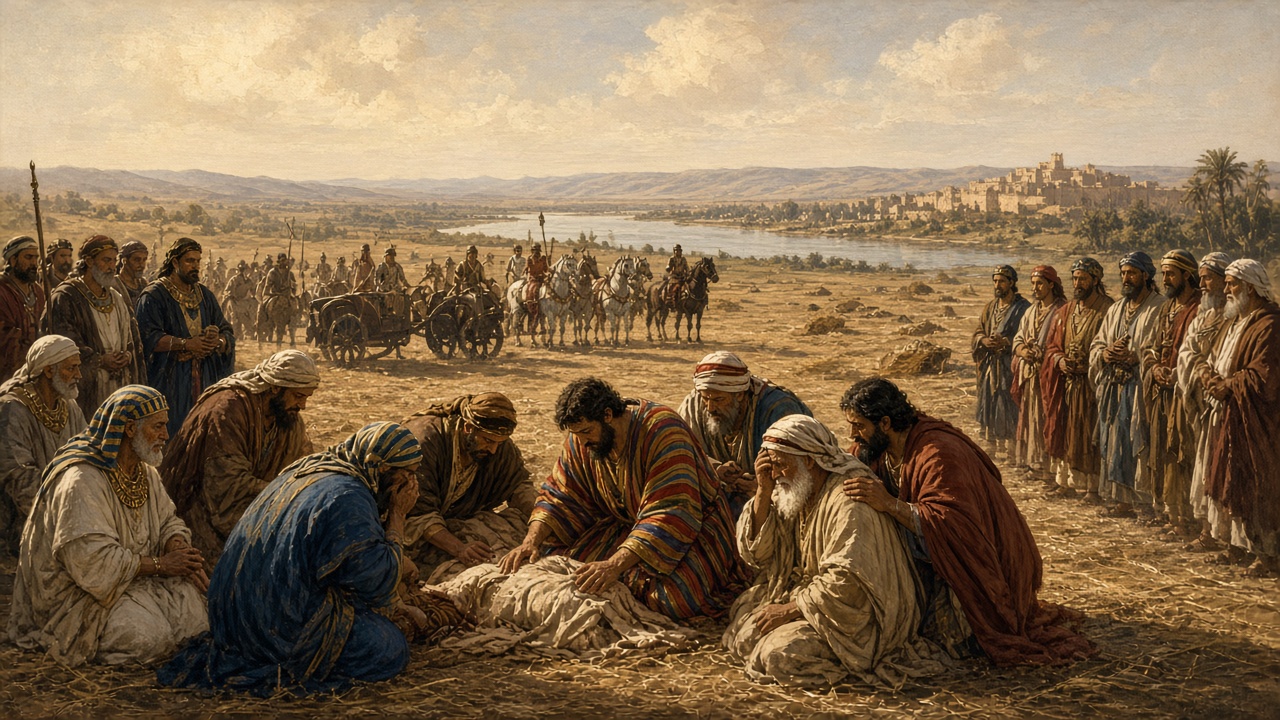
The Burial of Jacob and the Death of Joseph
- The threshing floor of Atad, where the company wailed loudly for seven days across the Jordan, takes its name from a word meaning buckthorn. The Canaanites who saw the mourning called the place Abel-mizraim, 'meadow of Egypt' or 'mourning of Egypt.' Easton's Bible Dictionary places Abel-mizraim west of the Jordan and says its site is unknown, while describing Atad as probably near Hebron.Sources: the Bible text itself
- Jacob's sons buried him in the cave of Machpelah, in the field near Mamre, the burial site Abraham had bought from Ephron the Hittite. Easton's Bible Dictionary identifies Ephron as the son of Zohar and records the price as four hundred shekels of silver.Sources: the Bible text itself
- Joseph remained in Egypt and lived to the age of one hundred and ten, long enough to see Ephraim's sons to the third generation. The sons of Machir, son of Manasseh, were brought up on Joseph's knees—a phrase the Revised Version renders 'born upon Joseph's knees,' which Easton's Bible Dictionary explains as adoption from birth. He told his brothers that God would bring them up to the land promised to Abraham, Isaac, and Jacob, and he made the sons of Israel swear to carry his bones up from Egypt; when he died, they embalmed him and placed him in a coffin there.Sources: the Bible text itself
Notes written with AI assistance from open sources (Theographic Bible Metadata, CC BY-SA 4.0; Easton’s Bible Dictionary, public domain) and reviewed before publishing.
Places in this chapter
- Canaan · 32.767, 35.333 · verses 5, 13
- Egypt · 30.129, 31.308 · verses 7, 14, 22, 24, 26
- Goshen · Today: Goshen 1 · 30.799, 31.834 · verse 8
- Atad · Today: near the mouth of the Jordan River · 31.915, 35.530 · verses 10, 11
- Jordan · Today: Jordan River · 31.761, 35.558 · verses 10, 11
- Machpelah · Today: Cave of the Patriarchs · 31.525, 35.111 · verse 13
Only places identified with high confidence are shown (90% or more according to the scholarly sources compiled by OpenBible). Period map: DARE (Digital Atlas of the Roman Empire), CC BY 4.0; modern map: © OpenStreetMap contributors; places: OpenBible.info (CC BY 4.0).
Credits and license for this translation
Uisneno In Kabin ma Prenat: Rais Manba'an Fe'u nok Reta' Ahun-hunut
Genesis and the New Testament in the Amarasi language of Indonesia
Kejadian dan Perjanjian Baru dalam bahasa Amarasi dari
copyright © 1999-2014 Unit Bahasa dan Budaya, Kupang NTT, Indonesia
Language: Amarasi
Translation by: Wycliffe Bible Translators
This translation is made available to you under the terms of the
Creative Commons Attribution-No Derivatives license 4.0.
You may share and redistribute this Bible translation or extracts from it in any format, provided that:
You include the above copyright and source information.
You do not make any derivative works that change any of the actual words or punctuation of the Scriptures.
Pictures included with Scriptures and other documents on this site are licensed just for use with those Scriptures and documents.
For other uses, please contact the respective copyright owners.
2022-03-11
Source: http://ebible.org/aaz/ · eBible.org