Genesis 49
Uisneno In Kabin ma Prenat: Rais Manba'an Fe'u nok Reta' Ahun-hunut · Tap a verse to see its cross-references.
Naiꞌ Yakop natoon neu in aanh ein, es-es ate nok in aꞌmonin anbi neon amnemat
1Rarit naiꞌ Yakop anreun noꞌen in aanh ein ok-okeꞌ. Sin neman ntean on naan ate, in naꞌuab am nak, “Hi iim ampaumak-maak kau feꞌ. Au he utoon ki es-es ate hi ꞌmonim anbi neon amnemat.” 2Rarit naiꞌ Yakop anmurai naꞌuab ma natoon nain neu in aanh ein am nak,
“Naiꞌ Yakop in aanh ein ki! Hi mkoen om iim nai ma mhake mfuun maan kau.
Amtakan hi ruikm ein he mneen am mitniin hi amaꞌ Israꞌel in uaban ma in aꞌan.
3Neu ko, aam Ruben. Ho reꞌ ia, aan moen unu, asoit enoꞌ. Ho mjair on reꞌ au teas ma au ꞌnimak aꞌneꞌu. Areꞌ tuaf anhormaat ko. 4Mes feꞌ-feꞌ ete ho neek maan naꞌoniꞌ. Ho roim ii ka nhake nkiꞌif, on reꞌ noe sakoꞌ reꞌ ka tꞌeek taan ee fa. Nok askeken, ho mnao mtuup mok au fee bi Bilha, ma mhaiꞌniis ho amaꞌ in haraꞌ tupaꞌ. Es naan ate, ho sapaam reꞌ amjair on atoin koꞌu ma mone ꞌnaek ka matekaꞌ fa heen!
5Naiꞌ Simeon ma naiꞌ Lewi! Hi nua ki taos meseꞌ. Atteek ahaa besi-benas ate, hi nua ki manoem ein kah een. Etun hi mhaꞌmuiꞌ ma misusab too mfaun. 6Hi mmariin ammaet, karu hi mꞌoet mifeek bijae ngguin sin pii oetk ein, tar antea sin nfukaꞌ nenuꞌ nabaar ahaa sin baark ein. Hi ꞌmoeꞌm ein maufinu batuur-batuur. Karu hi meek-meuk nisim, hi mroor miis atoniꞌ. Au kaꞌ roim fa he ꞌok aꞌseor hi rasim. 7Onaim oras ia, au ꞌkaas hi neek mapuut ein naan, natuin hi mapuut besin ki! Ma hi tooꞌs ein naan ka mpaek fa rais kasian akreꞌo msaꞌ. Hi of ro he misaah kiim hi ꞌmoeꞌ reuꞌf ein. Uisneno of anporin nsiksakan hi sufam-kauꞌm ein. Sin of natuan nbin bare-bare nbin pah Israꞌel.
8Neu ko, aam Yahuda. Ho kanam naan, in aꞌmoufn ii ‘pures-boꞌis’. Ho oriꞌ ma ho tataꞌ sin of anboꞌis ko ma nhormaat ko. Ho of miis ho muusn ein, tar antea sin ka bisa nait fa sin aꞌnaak ein. 9Ho reꞌ ia, on reꞌ singa muin maꞌtain es, reꞌ naim kuun amnahat. Ho on reꞌ singa keso reꞌ nbiun ma nakoo in aon ee he ntuup. Ka tiit fa es, reꞌ nabrain he noik ko. Ho on reꞌ singa ainaf amsaꞌ reꞌ npao in anah; ka tiit fa es nabrain he nakꞌaun ee. Ho on naan msaꞌ. Atoin ein of anmasahun ko, ma ka nabeiꞌ ein fa he nmoꞌen tafiꞌ-tafiꞌ. 10Ho of es amnaaꞌ aprenat. Ho sufam-kauꞌm ein of annaaꞌ aprenat anmaktun-tuin ein, tar antea tuaf es, reꞌ in nmuiꞌ sapaaf anneis-neis. In of es antook ma nnaaꞌ aprenat naan. Rarit too naꞌkon uuf-uuf sin of naꞌruir ein ma naꞌbesan neu ne. 11Ho of ammoin nok neek marine. Ho mroim saaꞌ-saaꞌ aah ate, of anmuiꞌ. Ho he mmoeꞌ saaꞌ amsaꞌ, of anjair! Onaim ho muiꞌt ein, nok ho reen ee aafk ein of amfaun ma nho-hoen. 12Ho bukaem ii ro namiin ka natfeek fa.
13Neu ko, aam Sebulon. Ho auf pusaak ee of mainua feko ma npaumaak tasi, tar antea nmanaak nok kota Sidon. Abnao ngguin neman naꞌkon mee-mee ma nasanut sin boint ein nbin ho tais je in ninen nok mamut.
14Neu ko, aam Isaskar. Ho reꞌ ia on reꞌ bikaes es, reꞌ nteek ee te, keledai maꞌtaniꞌ. Mes ho ꞌnaak fautm ii kah een. Karu ho mtuup ambi raan atnanaꞌ, sekau es reꞌ he npooꞌ ko he mnao mkoon. Mes karu ho miit kuan es in areokn ii et panin ne, es ka nreun ko fa msaꞌ ate, ho mait ho bruaꞌ ma mroi sin ma mnao meu nee. Ho on reꞌ nana nai!
16Neu ko, aam Dan. Ho kanam naan, in aꞌmoufn ii, ‘afeek rasi’. Ho mok ho sufam-kauꞌm ein of amjair afeek rasi meu hi pah Israꞌel sin sin rasin. Hi mifeek rasi te, natai ma ka mpiir fa humaf. 17Ho mahiinm ii on reꞌ kaun araut reꞌ antuup anpao nbi raan ee ninen. Karu atoniꞌ nsae bikaseꞌ ma npeoꞌ naan ate, nok askeken, ho mrau mrair bikaseꞌ naan in haen tikan, tar antea in tuan naan anmouf.
18Koi, UISNENO! Au ꞌon-ꞌonen he Ho mfee ꞌhonis meu kai ok-okeꞌ.
19Neu ko, aam Gat. Ho kaan maan atneen ete, in haan ii on reꞌ ‘mbaan musu’. Pukan apaikaurt ein of anbaan ko, mes ho of mbaan ambaras sin, ma miis sin.
20Neu ko, aam Aser. Ho rene ma poꞌon sin aafk ein esan reꞌ reko nnes-nesin. Ho of ammoeꞌ kokis aminat humaꞌ-humaꞌ reꞌ maꞌosaꞌ, he uisf ein neman nsosan naꞌkon ko.
21Neu ko, aam Naftali. Ho on reꞌ ruu ainaf, reꞌ naen ma nfui nmaet. Es ka nabeiꞌ fa he nꞌator ko. Ho muhoniꞌ maan ho aanh ein, namasan rek-reko.
22Neu ko, aam Yusuf. Ho on reꞌ fae reꞌ nmoni npaumaak oe mataꞌ. In taen ein of annoonk ein nsaen neun rame mnanuꞌ, on reꞌ ho sufam-kauꞌm ein annaon neun bare-bare. 23Anmuiꞌ tuaf bian reꞌ nasaeb sin neek meens ein neu ko, on reꞌ musu reꞌ nakrao ko. 24Mes Uisneno reꞌ au uꞌbees ꞌeu Na ji, anturun ma nbaab ko. Es naan ate, In nmoeꞌ ho ꞌnimam naan naꞌbeiꞌ, tar antea ho mubeiꞌ ma mukrao mbaras meu ho musun naan, maski naꞌroo. Ho of miis sin, natuin Uisneno es anturun ma nbaab ko. Batuur In kuasn ee maꞌtaniꞌ! Etun au uꞌpeis ok ꞌeu Ne. Natuin In es anpao ma npanat kau. 25In of anpanat ko msaꞌ, ma nfee ko tetus-athoen humaꞌ-humaꞌ. Esan reꞌ: tetus naꞌko neno tunan, ma naꞌko pah-pinan, ma ho aan hoin ein amfaun ma nꞌao-minan. 26Aꞌtoeꞌf ein ka namnekun fa. Tetus reꞌ au ꞌfee je ꞌeu ko reꞌ ia, anneis naꞌko ꞌtoeꞌf ein ok-okeꞌ! Maut he teuts ein reꞌ ia nasai piut neu ko, natuin ho mneis muꞌko ho oriꞌ-tataꞌ sin ok-okeꞌ.
27Neu ko, aam Benjamin. Ho brainm ii on reꞌ aus fui koꞌu reꞌ namnaah. Feꞌ kik-kiku msaꞌ, in nheek enrair in amnahat. Mes karu nfai te, in nnao ma nbati mnaah nesif naan neu in aanh ein. Ho sufam-kauꞌm ein of maꞌtaink ein on reꞌ naan amsaꞌ!”
28Uab ein ia, naiꞌ Yakop in uab sin neu in aanh ein. In natoon nain sin, es-es ate in aꞌmonin, nok in sufan-kauꞌn ein anbi neno-neno amnemat. Sin arsin reꞌ naan, esan reꞌ anjarin aam uuf neun uuf boꞌes am nua nbin pah Israꞌel.
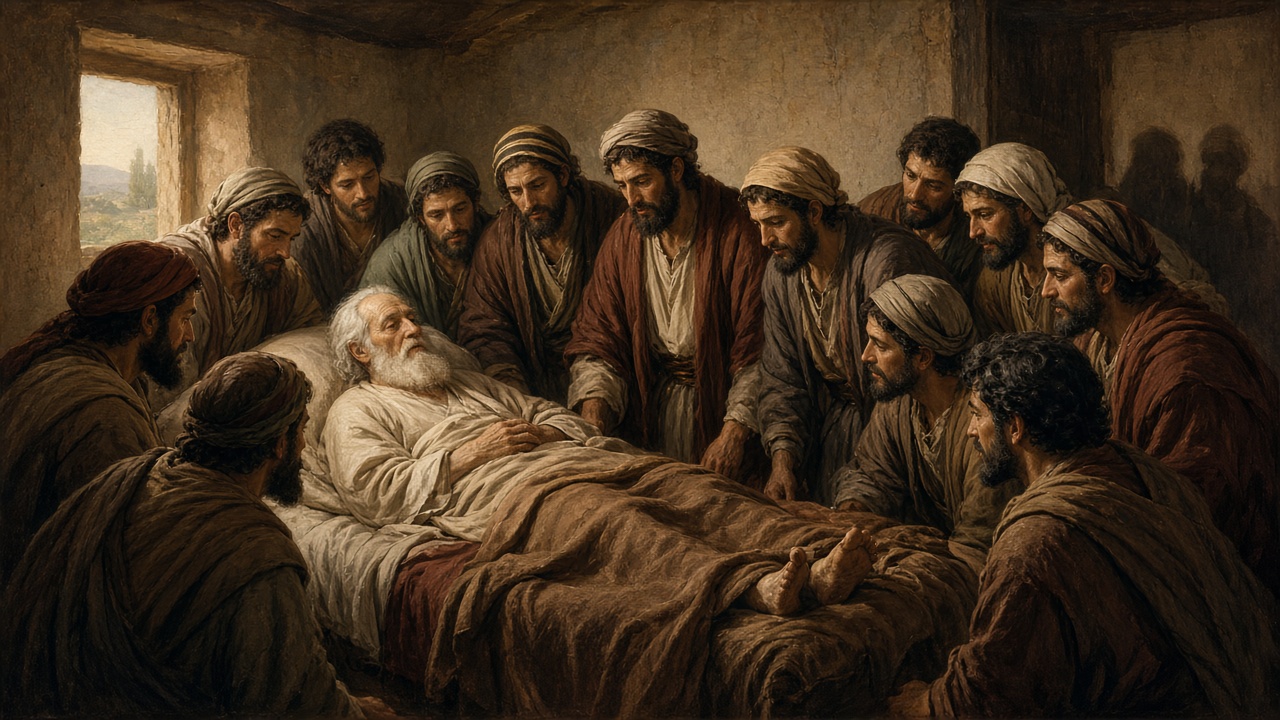
Naiꞌ Yakop anmaet
29Rarit naiꞌ Yakop antoit in aanh ein he nmoꞌen rais manbaꞌan. In naꞌuab am nak, “Ka ꞌroo fa heen ate, au he ꞌmaet een. Karu au ꞌmaet, hi ro he mnao msuub kau meu naiꞌ-kaꞌo Abraham in nopu. Nopu naan et nuat reꞌ npaumaak kuan Makpera ma kuan Mamre et pah Kanaꞌan. Unuꞌ te, naiꞌ-kaꞌo Abraham ansoos nuat naan nok rene ma poꞌon naan he njair in baer subat. In nsoos nafeek ee naꞌko atoin Hetes es, kaan ee naiꞌ Efron. 31Anbi naan, sin nsuub hit naiꞌ-kaꞌo Abraham, ma hit beiꞌ-kaꞌo bi Saraꞌ, au amaꞌ naiꞌ Isak, ma au ainaꞌ bi Ripka. Onaim hi ro he msuub kau mbi naan, ꞌbi au fee bi Lea in abnapan. 32Mimnau! Hi kais amnikan he msuub kau mbi nuat reꞌ naiꞌ-kaꞌo Abraham ansoos naan ee reꞌ naan.”
33Naiꞌ Yakop naꞌuab anrair on naan ate, in ntuup anfain neu haraꞌ tuup ee, ma in nmaet.
Did you know?
Last Blessings for Israel's Twelve Tribes
- Jacob's sayings play on the meanings of his sons' names. Judah (Hebrew Yehudah) comes from Leah's words, "Now will I praise" (odeh), and Jacob says that Judah's brothers will praise him. Dan's name echoes his mother Bilhah's "God hath judged me" (dananni); Jacob says Dan will judge, or provide justice for, his people, and Easton's Bible Dictionary (1897) suggests this probably alludes to Samson, a later judge from the tribe of Dan.Sources: Judah (patriarch) · Dan · the Bible text itself
- The chapter calls each speech a blessing, yet some are stern. Reuben, firstborn of Jacob and Leah, whose name means "Behold a son!", is told he will no longer excel because he defiled his father's bed. Simeon and Levi, who took violent revenge on Hamor and the Shechemites, hear their anger cursed and are told they will be dispersed in Jacob and scattered in Israel; the Authorized Version's "they digged down a wall" is rendered in the Revised Version "they houghed an ox," as this chapter says they hamstring oxen.Sources: Reuben · Simeon · Levi (patriarch) · the Bible text itself
- Jacob then asks to be buried with his fathers in the cave in the field of Ephron the Hittite, which Abraham bought as a family grave. Machpelah, a name understood to mean "portion" or "double cave," stood on a hillside east of Hebron, facing Mamre in the land of Canaan. Abraham and Sarah, Isaac and Rebekah, and Leah were already buried there.Sources: Machpelah · Ephron · Mamre · the Bible text itself
Notes written with AI assistance from open sources (Theographic Bible Metadata, CC BY-SA 4.0; Easton’s Bible Dictionary, public domain) and reviewed before publishing.
Places in this chapter
- Shiloh · Today: Khirbet Seilun · 32.056, 35.290 · verse 10
- Sidon · Today: Sandikli archaeological site in Sidon · 33.561, 35.372 · verse 13
- Canaan · 32.767, 35.333 · verse 30
- Machpelah · Today: Cave of the Patriarchs · 31.525, 35.111 · verse 30
Only places identified with high confidence are shown (90% or more according to the scholarly sources compiled by OpenBible). Period map: DARE (Digital Atlas of the Roman Empire), CC BY 4.0; modern map: © OpenStreetMap contributors; places: OpenBible.info (CC BY 4.0).
Credits and license for this translation
Uisneno In Kabin ma Prenat: Rais Manba'an Fe'u nok Reta' Ahun-hunut
Genesis and the New Testament in the Amarasi language of Indonesia
Kejadian dan Perjanjian Baru dalam bahasa Amarasi dari
copyright © 1999-2014 Unit Bahasa dan Budaya, Kupang NTT, Indonesia
Language: Amarasi
Translation by: Wycliffe Bible Translators
This translation is made available to you under the terms of the
Creative Commons Attribution-No Derivatives license 4.0.
You may share and redistribute this Bible translation or extracts from it in any format, provided that:
You include the above copyright and source information.
You do not make any derivative works that change any of the actual words or punctuation of the Scriptures.
Pictures included with Scriptures and other documents on this site are licensed just for use with those Scriptures and documents.
For other uses, please contact the respective copyright owners.
2022-03-11
Source: http://ebible.org/aaz/ · eBible.org