Genesis 37
Uisneno In Kabin ma Prenat: Rais Manba'an Fe'u nok Reta' Ahun-hunut · Tap a verse to see its cross-references.
Naiꞌ Yakop anfain neem neu pah Kanaꞌan
1Reꞌ ia, naiꞌ Yakop sin retaꞌ. Neon goes ii, naiꞌ Yakop anfani nteniꞌ, ma natuan nbin pah Kanaꞌan, reꞌ in amaf naiꞌ Isak natua nbi naan naꞌko unuꞌ.
Naiꞌ Yusuf nok in taatf ein
2Oras naan, naiꞌ Yakop in aanh es naꞌko in fee bi Rahel, kaan ee naiꞌ Yusuf. Oras in nmoin naan toon boꞌes am hiut, in nok in taatf ein natiꞌ te sin nnaon ntiut sin aꞌbibin ma ꞌbib-kasen buꞌ-buaꞌ. In taatf ein, naiꞌ Yakop in fee bi Bilha ma bi Silpa sin aanh ein. Naiꞌ Yusuf reꞌ ia, in aktutaꞌ uab neu in amaf, anmatoon nok in taatf ein sin aꞌmoeꞌk ein.
3Oras nahoniꞌ naiꞌ Yusuf, naiꞌ Yakop namnais jen. Etun in nneek nanesib naiꞌ Yusuf naꞌko in anah bian sin. Neot es naiꞌ Yakop ansoo baru mnaun es reokn ii kah, ma nfee je neu naiꞌ Yusuf. 4Oras in taatf ein nitan nak sin aamf ee nneek nanesib neu naiꞌ Yusuf ate, sin nsaken naiꞌ Yusuf, tar antea sin ka nromin fa he naꞌuab ein nok ne.
5Fai jes, naiꞌ Yusuf namnei. Rarit in natoon amneit naan neu in taatf ein am nak, “Hae! Hi mneen feꞌ! Au umnei mnak hit tfuut hit maak-gandum sin atbi rene. Onaim au maak reif ein reꞌ mafuut ein naan, anfeen anhaken amneof aah. Mes hi maak ein anhaken nfuun naan au ngguin, rarit naꞌruir ein ma naꞌbesan neun au ngguin.” Annenan on naan ate, in taatf ein ansaken anteinꞌ ee.
8Rarit sin nakainaꞌ naiꞌ Yusuf am nak, “Hoe! Ho mak oniꞌ ho he mjair usif he muprenat kai, oo?” Sin nsaekn ee maꞌtaniꞌ, natuin in natoon amneit naan neu sin.
9Rarit naiꞌ Yusuf namnei ntein. Onaim in natoon neu in taatf ein am nak, “Hae! Au umnei ꞌtein. Au ꞌiit manas, funan, ma kfuun boꞌes am meseꞌ. Sin naꞌruir ein ma naꞌbesan kau rek-reko.” 10Oras naiꞌ Yusuf natoon anrair mneit naan neu in amaf ma in taatf ein ate, in aamf ee napuun naiꞌ Yusuf ma nakain ee maꞌtaniꞌ mnak, “Mnei saaꞌ na es reꞌ naan! Ho mutenab mak, au ꞌok ho ainaꞌ ma sin ho tataꞌ sin neman he nneek ho haem ein naan, aa oo? Ho reokm ii!” 11Onaim naiꞌ Yusuf in taatf ein nsaken batuur-batuur. Mes in aamf ee natenab mneit ein naan anbi in nekan.
Sin naꞌsosaꞌ naiꞌ Yusuf he njair ate nbi pah Masir
12Neot es, naiꞌ Yusuf in taatf ein neik sin aamf ee in aꞌbibin ma ꞌbib-kasen annaon npaumak-maak kuan Sikem. 13Ka ꞌroo fa te, in aamf ee nak, “Usu! Ho tataꞌ sin natukun muꞌit anpaumak-makan etan Sikem. Onaim ho mubarab he mnao mkius miit sin feꞌ.”
Naiꞌ Yusuf nataah am nak, “Reko, tua.”
14Onaim in aamf ee nak, “Ho mnao mkius miit sin ho tataꞌ nok muꞌit ein feꞌ. Sin on mee? Rekon aa oo, aiꞌ on mee? Rarit ho mfain uum he mutoon kau.”
Rarit naiꞌ Yusuf annao nasaitan amneraꞌ pah Hebron ma nkono ntea Sikem. 15Antea nee te, in naim sin anfuun am nateef anbin amneraꞌ huun naan. Oras in nateef tuaf es, tuaf naan nataan ee mnak, “Ho maim saaꞌ?”
16Naiꞌ Yusuf nataah am nak, “Aam, au ꞌaim sin au tataꞌ. Sin napooꞌ neik hai muiꞌt ein he naꞌekuꞌ sin anpaumak-maak anbin bare ia. Aiꞌ ho miit sin, tua?”
17Tuaf naan nataah ee mnak, “Sin ka etan fa ia ntenin. Mes sin nak am he nnaon nteinꞌ ein anpaumak-maak kuan Dotan.”
Rarit naiꞌ Yusuf annao natuin sin, tar in niit sin anbin Dotan. 18Mes oras naiꞌ Yusuf feꞌe nbi ꞌroo, sin niit anrair je. Onaim sin nmaꞌakoran he nroor goe. 19Rarit sin nmaꞌuab ein am nak, “Hi mkius miit. Amneit ee neem een! 20Naa, iim nai he troor tisan. Rarit hit tait itpoirn ee neu koon hain es anbi ia. Rarit hit tatonan hit amaꞌ mtak, muiꞌ fui ngguin anpius goe ma neku nrair je goen! Maut he hit tkius tiit in amneit ein on mee!”
21Anneen on naan ate, in tataf naiꞌ Ruben naim raan aꞌpoꞌi he nafetin naan naiꞌ Yusuf. Onaim in nakainaꞌ in oirf ein am nak, “Hae! Hit kais atroor goe! 22Reko nneis, hit tꞌokar tataam ee teu koon haniꞌ reꞌ ia. Bare ia, baer ruman. Onaim ka tiit fa tuaf reꞌ nahiin moꞌet ia. Asar hit kaisaꞌ tniimn ee he naaꞌ ii nsai.” In naꞌuab on naan, natuin in he nafetiꞌ naiꞌ Yusuf he nreun nggoe he nfain.
23Oras naiꞌ Yusuf neem antea te, sin nheek je ma nhoroꞌ nain in baur reko naan. 24Rarit sin nheer anfoont ee, ma nꞌokar nataam ee neu koon haniꞌ naan.
25Rarit sin ntebi nfanin ma nbukaen. Sin feꞌe nbukaen on naan ate, nok askeken sin niit atoniꞌ puukn es neman. Pukan amneemt ein naan anpaken bikaes unta. Sin nasaeb ein abruaꞌ he nraakn ein. Baer raakn ein naan esan reꞌ: hau foo meniꞌ in oen, bumbu humaꞌ-humaꞌ, ma hau reꞌu humaꞌ-humaꞌ. Ankis-kisun ate, pukan amneemt ein naan, atoin Ismaelas sin reꞌ neman naꞌkon kuan Gireat. Sin he nnaon neu bare ꞌroo neun pah Masir.
26Rarit naiꞌ Yahuda naꞌuab neu in orif-taatf ein am nak, “Hae! Reko nneis on nai. Hit kais atroor goe. Hit tapein saaꞌ? Maski on mee msaꞌ, hit ka neu he taꞌkoroꞌ taan fa in naaꞌ. 27Reko nneis hit taꞌsoos ee teu atoin Ismaelas sin. Maski hit tmoeꞌ je on mee msaꞌ, hit oir hoin aa. Onaim hit kaisaꞌ tniim ne.” Rarit sin nmaktuinaꞌ rasi naan.
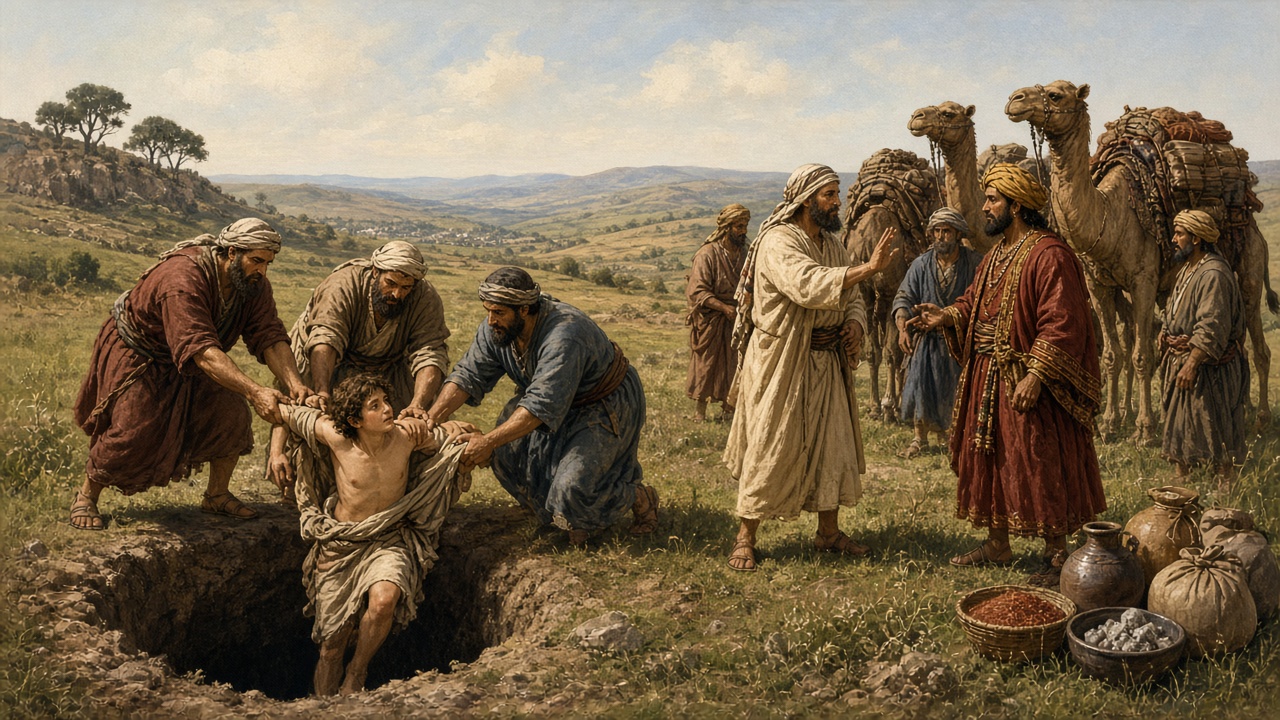
28Onaim oras atoin araakn ein naan he nkonon ate, naiꞌ Yusuf in taatf ein anheer napoitn ee naꞌko konaꞌ naan. Onaim sin naꞌsoos ee neu atoin Ismaelas sin. In oosn ii roi mutiꞌ fuaꞌ boꞌ nua. Rarit asoost ein naan neik naiꞌ Yusuf antean pah Masir.
29Oras sin naꞌsosaꞌ naiꞌ Yusuf ate, naiꞌ Ruben ka nahiin fa. Onaim oras in nnao neu konaꞌ naan ate, in naskeek, natuin naiꞌ Yusuf ka et na fa heen. Rarit in npius nakratiꞌ in paken anbi in aon, natuin in nsuus anmaet. 30Onaim in ntebi nfain neu in oirf ein am nak, “Airoo! Naiꞌ Usu ka et fa koon ee! Oras ia au he unsaaꞌ aꞌtein?”
31Rarit sin nroro ꞌbiib jes. Sin nait naiꞌ Yusuf in baur reko naan, ma nateep ee neu naaꞌ naan. 32Rarit sin nait baur manaaꞌ naan ma neik je neu sin amaf, ma natonan am nak, “Aam! Hai mait baru ia. Amkius miit ee. Kais-kaisaꞌ naiꞌ Usu in baru.”
33Ankius baru naan ate, naiꞌ Yakop nahiin nain je neu in aanh ee baru. Onaim in nataah am nak, “Airoo! Batuur, au aanh ee in baur gui es reꞌ ia. Ka tahiin neu muiꞌ fui ngguin npius niis ne et mee. Airoo! Au aanh ee nmate nrair!”
34Rarit naiꞌ Yakop anpius nakratiꞌ in baru, ma ntainuus aꞌkaor bijae maaꞌ, natuin in nsuus ma nnanaꞌreen. In nkae nmeꞌ-meꞌur aꞌroo neu in anah naan. 35In aan mone ma aan feto neman ma nhaan mau goe, mes ka nabeiꞌ je fa. In naꞌuab am nak, “Kahaf! Au of aꞌsuus ma ꞌnanaꞌreen tar antea au ꞌmaet. Natuin au ka neu he ꞌnikaꞌ fa au anah reꞌ ia.” Onaim naiꞌ Yakop ansuus ma nnanaꞌreen piut, natuin in namnau in anah naiꞌ Yusuf.
36Oras naiꞌ Yakop feꞌ ansuus on naan ate, araakn ein naan antean nrarin pah Masir. Sin neik naiꞌ Yusuf ma naꞌsoos ee neu kaes kouꞌ goes, kaan ee naiꞌ Potifar. In reꞌ ia, usif pah Masir in aꞌnaak paot.
Did you know?
Joseph Sold by His Brothers
- Israel loved Joseph more than his other sons because he was the child of his old age, and he made him a robe of many colors. Easton's Bible Dictionary (1897) reads the Hebrew of Genesis 37:3 as a long, full garment with sleeves, the kind worn by the children of nobles. When the brothers saw that favor, they hated him and could not speak a kind word to him.Sources: Joseph (son of Jacob) · the Bible text itself
- Jacob sent seventeen-year-old Joseph from the Valley of Hebron to see how his brothers and the flocks were faring; they had pastured near Shechem and then gone on to Dothan. Easton's Bible Dictionary (1897) calls Dothan a famous pasture ground with two wells, identified with modern Tell-Dothan about twelve miles north of Samaria among the hills of Gilboa, and says it is mentioned on monuments in 1600 BC. There the brothers saw a caravan of Ishmaelites coming from Gilead, their camels carrying spices, balm, and myrrh on the way down to Egypt.Sources: Dothan · Gilead · the Bible text itself
- Reuben, Jacob's eldest son by Leah, tried to save Joseph from death and planned to return him to their father. Judah then persuaded the brothers to sell Joseph to the Ishmaelites rather than shed his blood. In Egypt the Midianites sold him to Potiphar, an officer of Pharaoh and captain of the guard; Easton's Bible Dictionary (1897) explains that name as 'dedicated to Ra,' the sun-god, and takes the title to mean, probably, chief of the state police, with a margin reading 'chief of the executioners.'Sources: Reuben · Judah (patriarch) · Potiphar · the Bible text itself
Notes written with AI assistance from open sources (Theographic Bible Metadata, CC BY-SA 4.0; Easton’s Bible Dictionary, public domain) and reviewed before publishing.
Places in this chapter
- Canaan · 32.767, 35.333 · verse 1
- Shechem · Today: Tell Balatah · 32.214, 35.282 · verses 12, 13, 14
- Valley of Hebron · 31.525, 35.102 · verse 14
- Egypt · 30.129, 31.308 · verses 25, 28, 36
- Gilead · Today: Gilead 1 · 32.187, 35.692 · verse 25
Only places identified with high confidence are shown (90% or more according to the scholarly sources compiled by OpenBible). Period map: DARE (Digital Atlas of the Roman Empire), CC BY 4.0; modern map: © OpenStreetMap contributors; places: OpenBible.info (CC BY 4.0).
Credits and license for this translation
Uisneno In Kabin ma Prenat: Rais Manba'an Fe'u nok Reta' Ahun-hunut
Genesis and the New Testament in the Amarasi language of Indonesia
Kejadian dan Perjanjian Baru dalam bahasa Amarasi dari
copyright © 1999-2014 Unit Bahasa dan Budaya, Kupang NTT, Indonesia
Language: Amarasi
Translation by: Wycliffe Bible Translators
This translation is made available to you under the terms of the
Creative Commons Attribution-No Derivatives license 4.0.
You may share and redistribute this Bible translation or extracts from it in any format, provided that:
You include the above copyright and source information.
You do not make any derivative works that change any of the actual words or punctuation of the Scriptures.
Pictures included with Scriptures and other documents on this site are licensed just for use with those Scriptures and documents.
For other uses, please contact the respective copyright owners.
2022-03-11
Source: http://ebible.org/aaz/ · eBible.org