Mateus 10
Tupã Je'ẽha · Toque num versículo para ver as referências cruzadas.
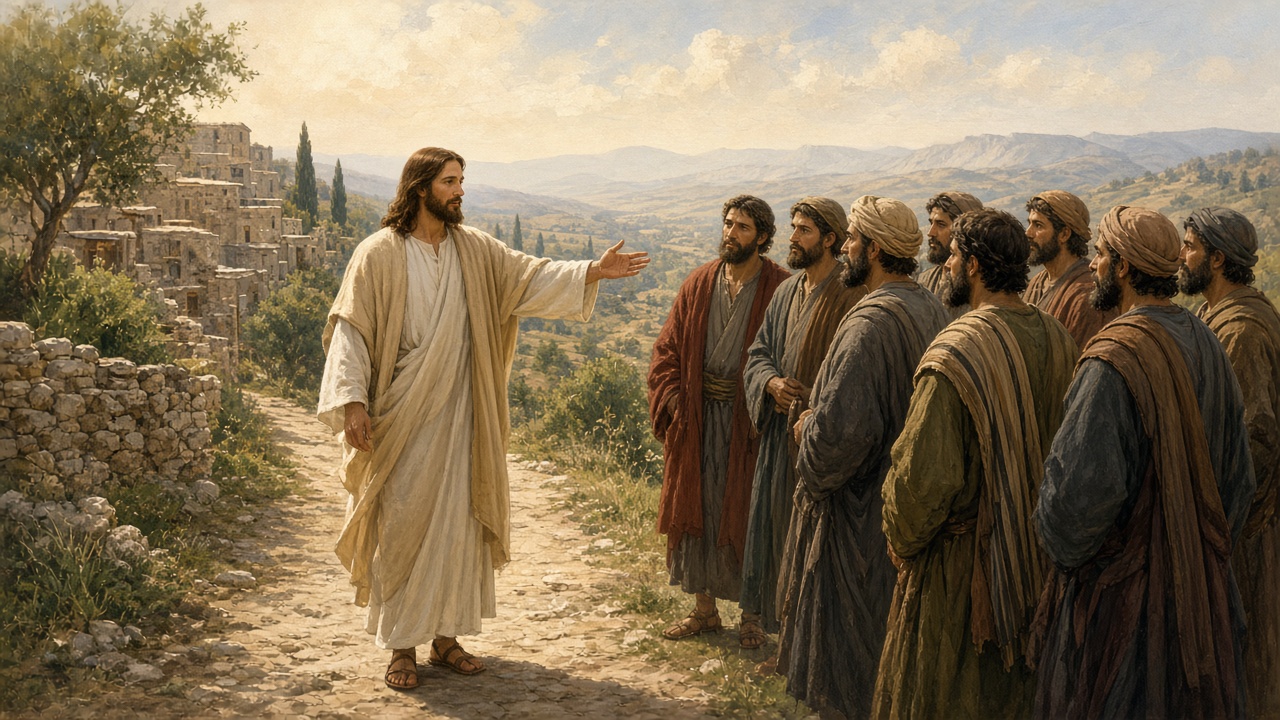
Jesu namõ jumu'e ixo ame'ẽ ta ke
1Inamõ jumu'e ixo ame'ẽ ta ke Jesu mujy'ar. Awa py mokõi sawa'e ta hetaha ke. A'e pandu:
—Pejur! Pesarahã! Ihẽ je'ẽha rupi ãjã ta ke pemuhem ta katu pemondo. Ihẽ je'ẽha rupi upa katu te ma'e ahy ixo ame'ẽ ta ke pemukatu ta tĩ — aja awa py mokõi sawa'e ta pe.
2Pe, ame'ẽ ta ke a'e mondo. Awa py mokõi sawa'e ta ke Jesu mondo. Kuja riki sawa'e ta rer. Ko Simã. Petu aja amõ her tĩ. Amõ Andere tĩ. Simã mu a'e. Amõ Tian tĩ. Semende ra'yr a'e. Imu amõ tĩ. Her Juã. 3Amõ Siri tĩ. Amõ Matoroméu tĩ. Amõ Tome tĩ. Amõ Matéu tĩ. Amukwehe homa awa tama'e kapitã keruhũ pe tamatarer matyr ame'ẽ ke a'e. Amõ Tian tĩ. Apéu ra'yr a'e. Amõ Tandéu tĩ. 4Amõ Simã tĩ. Jundéu awa tama'e ywy ngi huwajan ta ke a'e mujan tar katu muhem ame'ẽ ke a'e. Amõ Jun Ikario amõ tĩ. A'e riki Jesu rehe huwajan ta ke muhyk ta werur.
Awa py mokõi sawa'e ta pandu pandu oho
5Ame'ẽ awa py mokõi sawa'e ta ke Jesu mondo. Kuja a'eta pe a'e pandu:
—Jundéu awa aja ym ame'ẽ ta koty peho ym. Samari ywy pe har tama'e ok ta pe peho ym tĩ. 6Jundéu awa ta koty jõ peho. Tupã rehe har mu'e ame'ẽ ta nixói ngã pe, a'erehe arapuharan ta kanim ame'ẽ ta aja saka a'eta. A'erehe ame'ẽ ta pe jõ pepandu pandu peho. 7Kuja pepandu peho: “Ixoty ipy'a ke ngã muruwak rahã, Tupã pandu ta: ‘Pehẽ rehe ihẽ rury katu. Ihẽma'e ta ke pehẽ’ aja. A'erehe mã peja pehẽ py'a ke ixoty pemuruwak” aja pepandu peho. 8Pepandu pandu peho rahã, kuja pema'ema'e tĩ. Upa ahy ixo ame'ẽ ta ke pemukatu. Manõ ame'ẽ ta ke pemukwera katu tĩ. Pereran ma'e u'u hũ ame'ẽ ta ke pemukatu tĩ. Ipy'a rehe ãjã ta ihĩ ame'ẽ ta py'a ngi ãjã ta ke pemuhem pemondo tĩ. Pehẽ pe pyrãtãha ke Tupã muwyr. A'erehe ame'ẽ pyrãtãha namõ amõ ta ke pemukatu tĩ. Mukatuha rehe pemuhepy ym.
9—Tamatarer ke peraho ym. 10Pehẽ kupe pe ma'e ryru peraho ym tĩ. Mokõi kamixa peraho ym tĩ. Mokõi sapat peraho ym tĩ. Myra te'e pehẽ po pe peraho ym tĩ. (Myra rehe te'e wata ame'ẽ ke.) Pehẽ po te'e peho. Pesarahã! Ma'e nixói ame'ẽ ke parakyha pe ijar muwyr ta me'ẽ te'e. A'erehe ma'e ke peraho ym. Ma'e ke Tupã riki muwyr ta pehẽ pe. (Parakyha pe ijar muwyr ta, ame'ẽja saka.)
11—Amõ ok ta pe pehyk rahã, hok pe pehẽ ke muxe ame'ẽ ke pekekar. Mahem rahã, a'ep pepyta we rĩ. Ame'ẽ ok ta pe pexo rahã, ame'ẽ rok pe jõ pepyta. Amõ amõ ok ta pe peho rahã, aja pema'ema'e tĩ. 12Amõ ta rok pe pexe peho rahã, kuja pepandu: “Mã peja pehẽ rehe Tupã usak katu” aja. 13Pe, ame'ẽ rok wyr pe har ta pandu: “Ko pejur katu” aja. Pehẽ po ke pyhyk katu pehẽ ngi rahã, ame'ẽ ta rehe Tupã usak katu ta.
—Pe, ame'ẽ rok wyr pe har ta hok pe pehẽ ke muxe tar ym rahã, ame'ẽ ta rehe Tupã hury ym ta. 14Hok pe amõ ta pehẽ ke muxe ym rahã, peho rahã, pehẽ py ngi ywy ku'i pejuhyk pembor. (Tupã ke putar ym ame'ẽ ta ke ko, aja pemujekwa ngã pe tĩ.) Ok ta pe har ta pehẽ ke putar ym rahã, aja pemujekwa tĩ. Pehẽ py ngi ywy ku'i pejuhyk pembor tĩ. (Aja rahã, ame'ẽ ok ta pe har ta ke Tupã putar ym tĩ, aja pemujekwa ngã pe tĩ.)
15—Ko ihẽ apandu pehẽ pe. Yman rahã ngã ke Tupã mupyrara ta. Sondo ok ta pe har ta ke Tupã mupyrara ta. Ngomo ok ta pe har ta ke Tupã mupyrara ta tĩ. Ame'ẽ ta 'ar koty te we pehẽ rehe hendu ym ame'ẽ ta ke Tupã mupyrara ta. Ymanihar ta 'ar koty te we pehẽ ke putar ym ame'ẽ ta ke a'e mupyrara ta tĩ — aja awa py mokõi sawa'e ta pe Jesu pandu.
Pehẽ ke amõ ta mupyrara ta
16A'e pandu tĩ:
—Pehendurahã! Jundéu awa ta koty pehẽ ke ihẽ amondo axo. Amõ amõ ta Tupã je'ẽha putar ym tĩ. Parahy ta. So'o jarõ, ame'ẽja saka. A'erehe pesak katu peho. Mã peja pesak katu kỹ! Pehẽ riki peparahy ym tĩ. 17Pesak katu kỹ. Pehẽ ke amõ ta pyhyk ta. Pe, kapitã ruwa koty pehẽ ke raho ta. Pehẽ rehe har je'ẽ je'ẽ hũ ta. Jundéu awa tama'e jy'ariha renda pe pehẽ ke raho ta tĩ. A'ep pehẽ rehe har je'ẽ je'ẽ hũ ta tĩ. So'o pirer pu'i pe pehẽ ke pirok ta tĩ.
18—Ihẽ rehe pejurujar katu, a'erehe kapitã keruhũ ruwa koty pehẽ ke amõ ta raho ta tĩ. Pehẽ rehe har a'eta je'ẽ je'ẽ hũ ta. Pe, mahy ta. Kapitã ruwa koty aja tĩ. Pehẽ ke mupyrara ta tĩ. Arahã myrandu katu ke pepandu ta a'eta pe. Jundéu awa aja ym ame'ẽ ta pe pepandu ta tĩ. 19Kapitã ta ruwa koty pehẽ ke pyhyk raho rahã: “Ma'e ke jande japandu ta my? Myja me'ẽ jande japandu ta my?” aja pekwa pekwa ym pexo tĩ. Arahã ma'e pepandu ta ame'ẽ ke pehẽ pe Tupã mujekwa ta. 20Arahã pepandu rahã, pehẽ je'ẽha aja ym ta. Anĩ. Tupã'ã muwyr ame'ẽ je'ẽha ke pepandu ta. Jande pái keruhũ I'ã ke muwyr ta pehẽ pe.
21—Arahã amõ ke kapitã pe imu pandu ta: “Ko Jesu kotyhar ke. Ejukwa” aja pandu ta. Ipái ta aja tĩ. Kapitã pe ta'yr ta ke raho ta tĩ. “Ko Jesu kotyhar ta ke. Ejukwa” aja ta tĩ. Ipái ta ke ta'yr ta raho ta tĩ. “Ko Jesu kotyhar ta ke. Ejukwa” aja ta tĩ. 22Ihẽ rehe pejurujar katu, a'erehe pehẽ rehe upa amõ ta parahy ta. Ihẽ rehe tapijar te'e we pejurujar katu rahã, Tupã namõ pexo katu ta. 23Pehẽ ke ok ta pe har ta mupyrara rahã, amõ ok ta pe pejan peho. Apandu katu pehẽ pe. Upa katu te ok ta rupi peho. Ame'ẽ upa rahã, ihẽ ajywyr ta. Ko awa ihẽ tĩ. Tupã je'ẽha rupi ajur.
24—Pesarahã! Jumu'eha 'ar koty te we mu'eha katuha. Te'e paraky ame'ẽ 'ar koty te we ijar katuha tĩ. 25A'erehe mu'eha aja jumu'eha ixo rahã, katu tiki tĩ. Ijar aja te'e paraky ame'ẽ ixo rahã, katu tiki tĩ. Pehẽ riki aja tĩ. (Ihẽ riki mu'eha aja. Pehẽ riki jumu'eha ta.) Ihẽ rehe har amõ ta pandu: “Nde riki Satana” aja naĩ. (Ãjã ramũi a'e.) Aja rahã, ihẽ 'ar koty te we pehẽ rehe har ma'e jaxer ai ame'ẽ ke amõ ta pandu ta — aja Jesu mujekwa. Awa py mokõi jumu'eha ta pe mujekwa.
Sawa'e ta ngi pekyje ym. Tupã ngi pekyje.
26Awa py mokõi jumu'eha ta pe Jesu pandu tĩ:
—Pehẽ ke amõ ta mupyrara ta. Anĩ. Sawa'e ta ngi pekyje ym. Pehẽ pe ihẽ apandu ame'ẽ ke amõ ta ukwa ym. Yman rahã upa ame'ẽ ke amõ ta pe pepandu pandu ta. Upa amõ ta ukwa ta. Ma'e ke rehe pehẽ jõ pehendu ame'ẽ ke amõ ta pe pemujekwa ta. Apo ma'e kanim aja ixo ame'ẽ ke upa mujekwa ta amõ ta pe. Amõ ta ukwa ym ha rupi pekwa ame'ẽ ke upa pemujekwa ta a'eta pe tĩ.
—Pesarahã! Sawa'e ta ngi pekyje ym. Pehẽ ke a'eta jukwa rahã, ame'ẽ jõ riki. Pehẽ'ã ke marã ka ym mahyha. Tupã anĩ. Pekyje ingi. Pehẽ ke a'e jukwa rahã, amõ we tĩ. Mupyraraha renda pe pehẽ ke a'e mupyrara ta. A'erehe pekyje ingi.
29—Mokõi ma'ewyra ra'yr rehe amõ muhepy rahã, peteĩ tamatarer pu'a ra'yr muhepy. Pe, ame'ẽ ma'ewyra ra'yr rehe har Tupã usak katu. Jande pái keruhũ pandu ym rahã, ma'ewyra ra'yr manõ ym ta. (Aja rahã, kuja mujekwa katu. Ma'ewyra ra'yr 'ar koty te we pehẽ rehe jande pái keruhũ usak katu.) Pehẽ aja tĩ. Pehẽ ãkã rehe pehẽ'a ihĩ. Ame'ẽ hetaha ke a'e ukwa katu. (Ame'ẽ ke ukwa rahã, upa katu te pehẽ rehe har a'e ukwa katu tĩ, aja mujekwa katu. A'erehe pehẽ rehe Tupã usak katu te we ta, aja mujekwa katu tĩ) — aja Jesu pandu.
Kirisutu rehe har ukwa katu ame'ẽ ta rehe har
32A'e pandu tĩ:
—Mupyrara ame'ẽ ta namõ amõ ixo rahã, kuja pandu: “Jesu kotyhar ke ihẽ” aja pandu. Aja rahã, kuja ehe har ihẽ riki apandu ta tĩ: “Ihẽ kotyhar te ke a'e” aja ihẽ pái keruhũ pe ihẽ apandu ta. (Aja rahã, ame'ẽ ke ihẽ pái keruhũ putar katu tĩ.) Ywatehar ke a'e. 33Pe, mupyrara ame'ẽ ta namõ amõ ixo rahã, kuja pandu: “Ihẽ anĩ. Jesu ke ihẽ akwa ym. Ixotyhar ym ihẽ” aja pandu. Aja rahã, kuja ehe har ihẽ apandu ta tĩ: “Peme'ẽ anĩ. Ihẽ akwa ym peme'ẽ. Ihẽ kotyhar aja ym a'e” aja ihẽ pái keruhũ pe ihẽ apandu ta. (Aja rahã, ame'ẽ ke ihẽ pái keruhũ putar ym tĩ.) Ywatehar ke a'e — aja Jesu pandu.
Ianam ta jumai ta ame'ẽ rehe har
34A'e pandu tĩ:
—Kome'ẽ ywy keruhũ pe har ta jumai mai ixo. Ame'ẽ ke ihẽ amuputu'u ajur, aja pekwaha my? Anĩ. Aja ym ajur. Ihẽ ajur, a'erehe amõ amõ ta jumai mai ta. 35Ipái ta ihẽ rehe jurujar katu, a'erehe ta'yr ta je'ẽ je'ẽ hũ ta. (Huwajan ta aja saka ta.) Imãi ta ihẽ rehe jurujar katu, a'erehe imembyr kũjã ta je'ẽ je'ẽ hũ ta tĩ. (Huwajan ta aja saka ta tĩ.) Ixawa'e mãi ta ihẽ rehe jurujar katu, a'erehe imembyr reko ame'ẽ ta je'ẽ je'ẽ hũ ta tĩ. (Huwajan ta aja saka ta tĩ.) 36Ihẽ rehe amõ jurujar katu rahã, hok wyr pe har ta je'ẽ je'ẽ hũ ta. (Huwajan ta aja saka tĩ.) Amõ ruwajan 'ar koty te we katu ym ha.
37—Ipái rehe amõ ipy'a katu, ame'ẽ 'ar koty te we ihẽ rehe ipy'a katu. Aja jõ rahã, ihẽ kotyhar te a'e. Imãi rehe aja tĩ. Ipy'a katu tĩ. Pe, i'ar koty te we ihẽ rehe ipy'a katu. Aja jõ rahã, ihẽ kotyhar te a'e tĩ. Ta'yr rehe aja tĩ. Tajyr rehe aja tĩ. Ame'ẽ ta 'ar koty te we ihẽ rehe ipy'a katu. Aja jõ rahã, ihẽ kotyhar te a'e tĩ. 38Ihẽ kotyhar aja amõ ixo rahã, ame'ẽ ke amõ ta jukwa tar katu. Ame'ẽ ngi kyje ym rahã, ihẽ kotyhar aja ixo ta. 39Amõ riki ihẽ kotyhar wan ta. A'erehe ame'ẽ ke amõ ta jukwa tar katu. A'erehe ihẽ rehe jurujar tar ym. Hijar, a'erehe jukwaha ke amõ muputu'u. A'erehe a'e ixo we tipe. Ame'ẽ ke Tupã putar ym. Inamõ ixo ym ta. Aja ihẽ tĩ. Aputar ym tĩ. Amõ riki ihẽ rehe jurujar katu, a'erehe a'e ke amõ ta jukwa. Jurujar katuha ke hijar ym. Aja rahã, Tupã namõ a'e ixo katu ta. Uhã te hũ aja a'e ixo ta — aja Jesu pandu.
Ma'e katu ame'ẽ ke Tupã muwyr ta
40A'e pandu tĩ:
—Ihẽ rehe har pepandu pandu peho. A'erehe pehẽ pe amõ pandu: “Ihẽ rok pe pepyta katu” aja. Aja pehẽ ke hok pe muxe katu rahã, ihẽ ke a'e muxe katu, ame'ẽja saka tĩ. Tupã ke a'e muxe katu tĩ, ame'ẽja saka tĩ. Ihẽ ke Tupã muwyr. 41Tupã je'ẽha pandu ame'ẽ ke ko, aja amõ ukwa. A'erehe hok pe a'e muxe katu. Aja rahã, ma'e katu ame'ẽ ke Tupã muwyr ta ipe. Tupã je'ẽha pandu ame'ẽ pe ma'e katu ame'ẽ ke Tupã muwyr ta ipe. Aja ok jar pe a'e muwyr ta tĩ. Juja katu te muwyriha ke. “Ko sawa'e katu” aja amõ ukwa. A'erehe hok pe ame'ẽ sawa'e ke muxe katu rahã, ma'e katu ame'ẽ ke Tupã muwyr ta ipe tĩ. Sawa'e katu ame'ẽ pe ma'e katu ame'ẽ ke Tupã muwyr ta ipe. Aja ma'e katu ame'ẽ ke ok jar pe Tupã muwyr ta tĩ. Juja katu te muwyriha ke. 42Pesarahã! Kuja pekwa katu pexo. “Ko Jesu kotyhar ke” aja amõ ukwa. A'erehe jyngwéi rahã, kúi pe y rysã me'ẽ ipe. (Aja rahã ipy'a katu ehe aja mujekwa.) Aja rahã y me'ẽha pe ma'e katu ame'ẽ ke Tupã riki muwyr ta tĩ — aja Jesu pandu.
Você sabia?
Os doze enviados em missão
- Simão, chamado Pedro, e seu irmão André — o primeiro par nomeado entre os doze — eram pescadores de Betsaida, na costa ocidental do mar da Galileia. Tiago e João, citados em seguida, eram filhos de Zebedeu, um pescador da Galileia que tinha os próprios barcos e empregados.Fontes: o próprio texto bíblico · Simon Peter · Andrew · Zebedee
- Mateus, identificado na lista como o cobrador de impostos, era filho de Alfeu e antes era conhecido como Levi; recolhia impostos em Cafarnaum, e o nome Mateus significa “dom de Deus”. Tomé, nomeado ao lado dele, também era chamado Dídimo, o equivalente grego do nome hebraico, que significa “gêmeo”. Bartolomeu significa “filho de Tolmai” e, em geral, se supõe que seja a mesma pessoa que Natanael.Fontes: o próprio texto bíblico · Matthew · Thomas · Bartholomew
- Jesus adverte que o dia do juízo será mais tolerável para Sodoma e Gomorra do que para uma cidade que recusar os doze apóstolos. O Dicionário Bíblico de Easton (1897) descreve essas cidades da planície de Sidim como destruídas pelo fogo e proverbiais pela maldade, e as situa, provavelmente próximas uma da outra, perto da extremidade norte do que hoje é o mar Morto.Fontes: o próprio texto bíblico · Sodom · Gomorrah
Notas escritas com auxílio de IA a partir de fontes abertas (Theographic Bible Metadata, CC BY-SA 4.0; Easton’s Bible Dictionary, domínio público) e revisadas antes de publicar.
Créditos e licença desta tradução
Tupã Je'ẽha
New Testament in Kaapor (BR:urb:Kaapor)
copyright © 2012 Wycliffe Bible Translators, Inc.
Language: Kaapor
Translation by: Wycliffe Bible Translators, Inc.
Copyright Information
© 2012, Wycliffe Bible Translators, Inc. All rights reserved.
This translation text is made available to you under the
terms of the Creative Commons License: Attribution-Noncommercial-No Derivative Works.
( http://creativecommons.org/licenses/by-nc-nd/3.0/ )
In addition, you have permission to port the text to different file formats, as long as you
do not change any of the text or punctuation of the Bible.
You may share, copy, distribute, transmit, and extract portions
or quotations from this work, provided that you include the above copyright
information:
You must give Attribution to the work.
You do not sell this work for a profit.
You do not make any derivative works that change any of the actual words or punctuation of the Scriptures.
Permissions beyond the scope of this license may be
available if you contact
us with your request.
The New Testament
in Kaapor
© 2012, Wycliffe Bible Translators, Inc. All rights reserved.
This translation is made available to you under the terms of the
Creative Commons Attribution-Noncommercial-No Derivatives license 4.0.
You may share and redistribute this Bible translation or extracts from it in any format, provided that:
You include the above copyright and source information.
You do not sell this work for a profit.
You do not change any of the words or punctuation of the Scriptures.
Pictures included with Scriptures and other documents on this site are licensed just for use with those Scriptures and documents.
For other uses, please contact the respective copyright owners.
2014-04-27
Fonte: http://ebible.org/urbNT/ · eBible.org