1 Timóteo 4
Tupã Je'ẽha · Toque num versículo para ver as referências cruzadas.
Mu'eharan ta rehe har ihẽ amujekwa ta
1Kuja Tupã'ã mujekwa katu:
—'Ar rehe angaha uhyk tate rahã, Jesu rehe jurujar katuha ke amõ amõ ta hijar ta oho. Ãjã ta mujekwa ame'ẽ ke rehe a'eta hendu katu ta. A'eta jumu'e ta oho tĩ — aja mujekwa.
2Ãjã ta mujekwa ame'ẽ ke mu'eharan ta mu'e. Te'e pandu ame'ẽ ta ke a'eta. Te'eha mu'e. Aja ngã ke a'eta muka'u te'e. Aja rahã, katu ym, aja a'eta ukwa katu. Anĩ. Huxĩ ym. Anĩ. A'eta mu'e we rĩ. 3A'eta pandu naĩ:
—Pejumendar ym. Kũjã ke pepyhyk ym tĩ. Amõ amõ ma'e pehẽ mi'u ke pe'u ym tĩ — aja pandu naĩ.
Anĩ. Ame'ẽ mi'u ke awa u'u katu aja Tupã mujã jande pe. Jumendar rahã, katu tĩ. Aja yman Tupã mujekwa katu tĩ.
—Jande pái keruhũ! Jande pe jande mi'u nde eremuwyr katu. A'erehe ne jõ riki katu te ame'ẽ ke — aja Tupã pe Jesu kotyhar ta pandu.
Pe, u'u katu. Jetehar te ke ukwa katu tĩ. A'erehe u'u katu. 4Upa katu te ngã mi'u awa u'u katu aja Tupã mujã katu jande pe. Ame'ẽ rehe: “Katu tiki” aja Tupã pe japandu, pe, ja'u katu. Ame'ẽ rehe: “Ja'u ym” aja mã peja japandu ym.
Jumendar rahã, katu tĩ. Kũjã ke pyhyk rahã, katu tĩ. Aja yman Tupã mujekwa tĩ. 5Upa jande mi'u ja'u katu, aja Tupã je'ẽha rehe amõ mupinim. Jande ja'u rahã: “Katu tiki” aja Tupã pe japandu tĩ. A'erehe upa jande mi'u ja'u katu aja Tupã mujã jande pe. Jajumendar rahã, katu tiki tĩ. Kũjã pyhyk rahã, katu tiki tĩ.
Jesuma'e miasu ke
6Ame'ẽ mu'eharan ta rehe har Jesu kotyhar ta pe nde eremujekwa rahã, miasu katu nde. Jesu Kirisutuma'e miasu ke nde. Tupã rehe har amõ ta pandu pandu nde pe. Nde erehendu katu ehe. Tapijar te'e we nde erejumu'e erexo. Aja rahã, nde erekwa katu ta. Jetehar te ke nde pe amõ ta mu'e mu'e tĩ. Nde erejurujar katu ehe tĩ. Ame'ẽ ke rehe tapijar te'e we nde erejumu'e erexo tĩ. Upa aja me'ẽ rahã, miasu katu riki nde. 7Ymanihar jundéu awa ramũi ta panduha ke emu'e ym. Ame'ẽ riki Tupã rehe har mujekwa ym ngã pe. Jupe te'e je'ẽ je'ẽ ixo ame'ẽ ke ame'ẽ. Katu ym aja. Nde py'a ke tapijar te'e we emãtã katu exo rĩ. Aja rahã, Tupã rehe har nde erekwa katu te we rĩ.
8Awa jumuwewi wewi katu rahã, pyrãtã katu jupe. Ame'ẽ riki katu we. Amõ katu te. Kuja. Tupã rehe har amõ ukwa katu te we rahã, ame'ẽ riki i'ar koty te we katuha. Aja rahã, Tupã usak katu ehe apo. Pe, yman rahã, inamõ a'e ixo ta. 9Ame'ẽ je'ẽha riki jetehar te ke. Upa ngã jurujar katu ehe rahã, katu tiki. 10A'erehe japaraky hũ. A'e je'ẽha ke ngã pe japandu pandu hũ. Ame'ẽ riki jandema'e parakyha. Tupã rehe jajurujar katu, a'erehe je'ẽha ke japandu pandu we rĩ. Tupã riki ixuwe katu te hũ ame'ẽ ke a'e. Upa ngã ke a'e muhã katu. Jete riki. Jurujar katu ehe ame'ẽ ta ke a'e muhã katu.
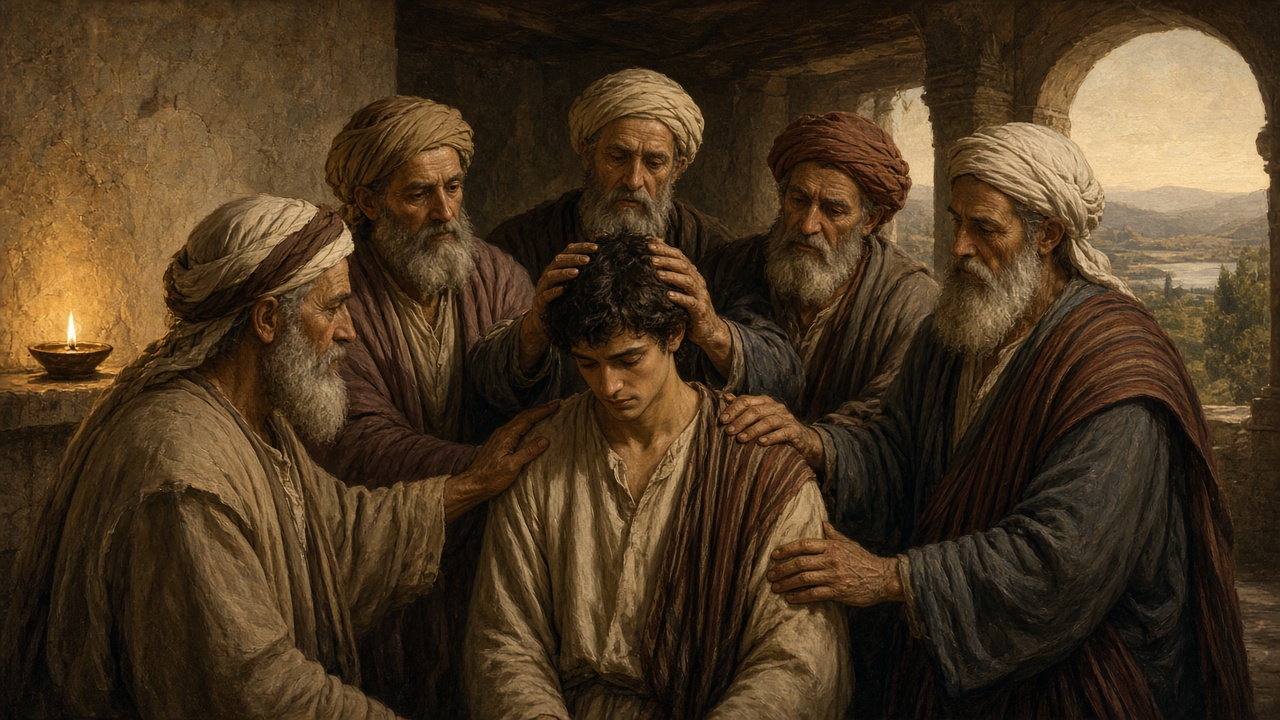
11Timo! Nde pe ihẽ apandu ame'ẽ ke ngã pe epandu katu. Emu'e katu tĩ. 12Nde riki ta'ynuhu. A'erehe myja katuha namõ awa ixo katu my? Ame'ẽ ke emujekwa katu Jesu kotyhar ta pe. Aja rahã, nde aja a'eta tĩ. Nde aja jetehar te ke jõ a'eta pandu ta tĩ. Nde aja a'eta katu ixo ta tĩ. Nde aja amõ ta rehe a'eta ipy'a katu ta tĩ. Nde aja Tupã rehe tapijar te'e we a'eta jurujar katu ta tĩ. Nde aja ma'e ka'u te'eha ke a'eta ma'ema'e ym ta tĩ. Upa aja rahã: “Mã! Ta'ynuhu a'e. A'erehe ukwa ym” aja ym pandu.
13Nde rehe ihẽ ahyk ym we oho rĩ. A'erehe Jesu kotyhar ta jy'ar rahã, Tupã je'ẽha ke epandu pandu ngã pe rĩ. Emujekwa katu ngã pe tĩ. Emu'e katu ngã pe tĩ. 14Nema'e parakyha ke nde pe Tupã mujekwa. A'e je'ẽha ke nde erepandu pandu. Ame'ẽ riki nema'e parakyha. Ne ãkã rehe ipo ke tamũi ta mujar rahã, nema'e parakyha ke nde pe me'ẽ. Arahã ame'ẽ rehe har Tupã je'ẽha pandu ame'ẽ ta pandu tĩ. Ame'ẽ parakyha ke tapijar te'e we ema'ema'e katu. (Tupã je'ẽha ke nde erepandu pandu, ame'ẽ riki nema'e parakyha ke.) 15Upa ihẽ apandu ame'ẽ ke ema'ema'e katu. Upa nde erekwa katuha namõ ema'ema'e katu tĩ. Aja rahã, katu ame'ẽ ke nde erema'ema'e katu te we rĩ, aja ngã pe nde eremujekwa ta. 16Myja katu nde erexoha my? Ame'ẽ rehe har ekwa ekwa exo. Katu ema'ema'e. Nde eremu'e ame'ẽ ke emuka'u te'e ym. Amõ koty emu'e ym. Aja rahã, Tupã namõ nde erexo katu ta. Nde rehe hendu ame'ẽ ta muka'u te'e ym ta tĩ. A'erehe Tupã namõ ixo katu ta tĩ.
Você sabia?
Falso ensino e treino na piedade
- O capítulo diz que o Espírito declara expressamente que, em tempos posteriores, alguns abandonarão a fé para seguir espíritos enganadores e doutrinas de demônios. Serão influenciados pela hipocrisia de mentirosos, cuja consciência foi cauterizada com ferro quente, e proibirão o casamento e exigirão abstinência de certos alimentos.Fontes: o próprio texto bíblico
- A carta responde a essas exigências dizendo que Deus criou esses alimentos para serem recebidos com ação de graças por quem crê e conhece a verdade. Toda criação de Deus é boa, e nada do que é recebido com ação de graças deve ser rejeitado, porque é santificado pela palavra de Deus e pela oração.Fontes: o próprio texto bíblico
- O autor exorta o jovem a quem se dirige a não deixar que ninguém despreze a sua juventude, mas a ser exemplo no falar, na conduta, no amor, na fé e na pureza. Até que o autor chegue, ele deve dedicar-se à leitura pública das Escrituras, à exortação e ao ensino, e não negligenciar o dom que lhe foi dado por meio de profecia, quando os presbíteros lhe impuseram as mãos. O exercício físico, acrescenta a carta, tem valor limitado, enquanto a piedade é valiosa em tudo e encerra promessa para a vida presente e para a futura, uma palavra que a carta chama fiel e digna de plena aceitação.Fontes: o próprio texto bíblico
Notas escritas com auxílio de IA a partir de fontes abertas (Theographic Bible Metadata, CC BY-SA 4.0; Easton’s Bible Dictionary, domínio público) e revisadas antes de publicar.
Créditos e licença desta tradução
Tupã Je'ẽha
New Testament in Kaapor (BR:urb:Kaapor)
copyright © 2012 Wycliffe Bible Translators, Inc.
Language: Kaapor
Translation by: Wycliffe Bible Translators, Inc.
Copyright Information
© 2012, Wycliffe Bible Translators, Inc. All rights reserved.
This translation text is made available to you under the
terms of the Creative Commons License: Attribution-Noncommercial-No Derivative Works.
( http://creativecommons.org/licenses/by-nc-nd/3.0/ )
In addition, you have permission to port the text to different file formats, as long as you
do not change any of the text or punctuation of the Bible.
You may share, copy, distribute, transmit, and extract portions
or quotations from this work, provided that you include the above copyright
information:
You must give Attribution to the work.
You do not sell this work for a profit.
You do not make any derivative works that change any of the actual words or punctuation of the Scriptures.
Permissions beyond the scope of this license may be
available if you contact
us with your request.
The New Testament
in Kaapor
© 2012, Wycliffe Bible Translators, Inc. All rights reserved.
This translation is made available to you under the terms of the
Creative Commons Attribution-Noncommercial-No Derivatives license 4.0.
You may share and redistribute this Bible translation or extracts from it in any format, provided that:
You include the above copyright and source information.
You do not sell this work for a profit.
You do not change any of the words or punctuation of the Scriptures.
Pictures included with Scriptures and other documents on this site are licensed just for use with those Scriptures and documents.
For other uses, please contact the respective copyright owners.
2014-04-27
Fonte: http://ebible.org/urbNT/ · eBible.org