Apocalipse 7
PATHEN LEKHABU THENG · Toque num versículo para ver as referências cruzadas.
Pathen chate ventup a um
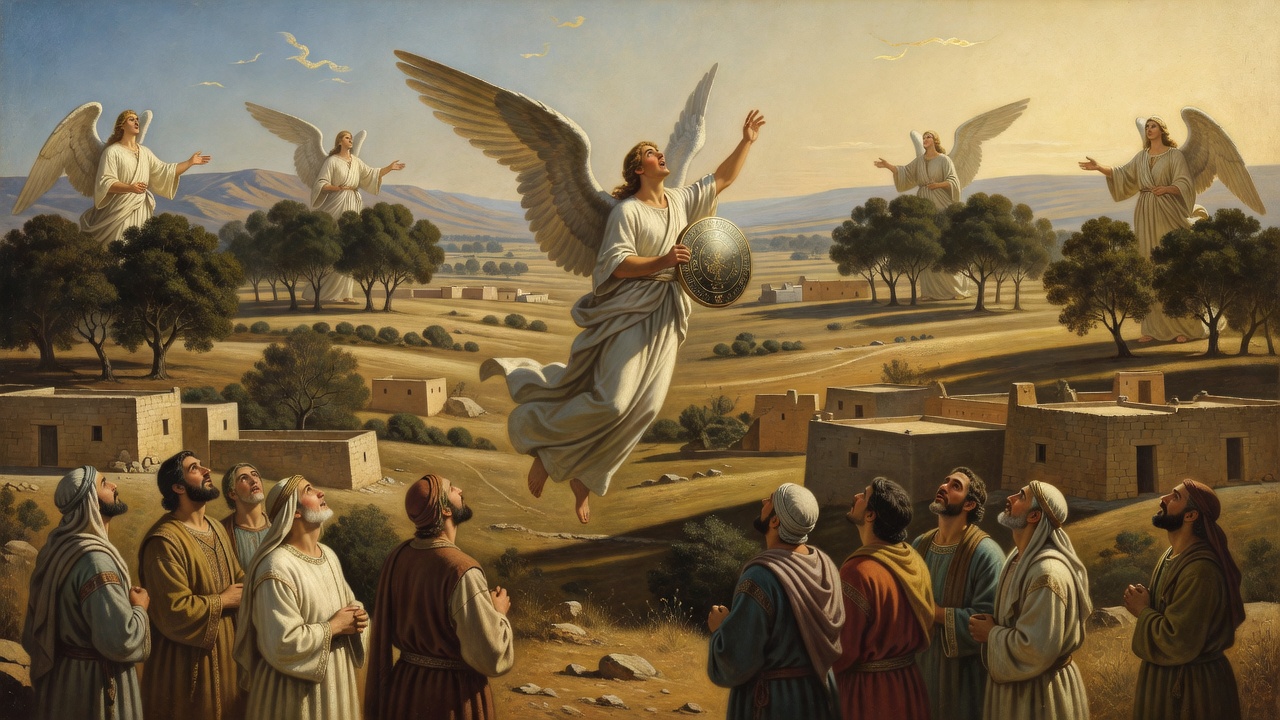
1Chujouvin keiman vantil li leiset kolning-li a adin'u kamun, ama hon huinun-li chu leiset chunga anunlouna ding uvin atuhtangun ahi. Thingphung hoa thingna khat jong akiling pon, chule twikhanglen jong phatvet mai bangin ajolsel jenge. 2Chule keiman vantil chomkhat solama konna ahunga Pathen hing mohor achoi chu kamun ahi. Chule ama chun hiche vantil-li, leiset chung le twikhanglen suhset theina thaneina kipeho jah a asamin, 3“Keihon Pathen mohor chu asohte ho chalpanga kanampeh masang seuvin leiset ahilouleh twikhanglen ahilouleh thing ho susehih un,” ahinti-e. 4Chule keiman mi ijat chu Pathen mohor kinam khum hiuvem–Israel nam sunga konna mi sang jakhat le sang somli le sangli ahiuve, ti kajan ahi. 5Judah phunga konna mi sangsom le sangni, Reuben phunga konna mi sangsom le sangni, Gad phunga konna mi sangsom le sangni; 6Asher phunga konna mi sangsom le sangni, Naphtali phunga konna mi sangsom le sangni, Manasseh phunga konnami sangsom le sangni; 7Simeon phunga konna mi sangsom le sangni, Levi phunga konna mi sangsom le sangni, Issachar phunga konna mi sangsom le sangni; 8Zebulun phunga konna mi sangsom le sangni, Joseph phunga konna mi sangsom le sangni, Benjamin phunga konna mi sangsom le sangni ahiuve.
Namtin vaipi thangvahna
9Hiche jou chun keiman mi atama tam, sima simjou ding hilou chitin namtina kon, phungtina kon, mitina kon chule paotin a konna laltouna mai chule Kelngoinou anga adin uchu kamui. Amaho chun ponbang jeng akivonun, chule akhut uva lusu-bah akichoi cheh uvin ahi. 10Chule amaho chun aw choh jejun asam uvin, “Huhhingna chu laltouna a toupa I-Pathen uva kon le Kelngoinou a kon ahi,” atiuve. 11Chule vantil ho jouse chu laltouna kimvela, chule upaho kimvela, chule hinna nei-liho kimvela chun ading uvin ahi. Chule amaho laltouna angsunga chun alhu uvin amaiyu tol'a asulut un chule Pathen chu ahouvun ahi. 12Ama hon avahchoiyun, “Amen! Phattheina le loupina le chihna le thangvahna le jabolna le thaneina chule thahatna chu I-Pathen uva a-imatih chanin hijing hen, Amen” tin asam uve. 13Chuphat in vantil ho lah a khat chun kajah a, “Hiche abang jenga kivon ho hi koiho hiuvem? Hoiya hungkon hiuva ham?” eiti. 14Chuin keiman ajah a, “Pu, nangman nahenai” tin kaseiye. Chuphat in aman kajah a, “Amaho hi thohhahsa phat sunga thi ho ahiuve. Amaho hin aponsil'u chu kelngoinou thisana akisop ngim uva chule bangleh ah ahitai.” 15“Hijeh a chu amaho hi Pathen laltouna masanga ding uva olmo louva sun le jana Hou-In sunga chu kicholdo man louva Pathen ajenu ahi. Chule laltouna a toupa chun amaho aumna diu apeh ding ahi.” 16Amaho gilkel kit talou dingu chule dangchah kit talouhel dingu ahi; nisa sat in jong amaho akahkhah tahlouhel dingu ahi. 17Ajeh chu laltouna a toupa chu amaho kelngoi chin'a aching dingpa hi ding ahi. Aman amaho chu hintwi lonna mun'a apuilut ding chule Pathen'in amit uva konna amitlhiu atheh hulpeh dingu ahi.
Você sabia?
As tribos seladas e a grande multidão
- Apocalipse 7 apresenta o número dos selados como 144.000, doze mil de cada uma das tribos de Israel nomeadas no capítulo. Israel era outro nome de Jacó, o segundo dos filhos gêmeos de Isaque e Rebeca; o Easton's Bible Dictionary (1897) explica o nome de Jacó como alguém que segue os calcanhares de outro, ou um suplantador.Fontes: o próprio texto bíblico · Jacob (Israel)
- Embora Rúben fosse o filho mais velho de Jacó e Lia, a lista dos selados começa com Judá e depois nomeia Rúben. A lista inclui também tanto José como Manassés; Manassés era o filho mais velho de José, e Jacó adotou a ele e a seu irmão Efraim como seus próprios filhos.Fontes: o próprio texto bíblico · Reuben · Manasseh (son of Joseph)
- Depois do selamento, a visão mostra uma multidão grande demais para ser contada, de toda nação, tribo, povo e língua, de pé diante do trono e do Cordeiro, com vestes brancas e ramos de palmeira nas mãos. Um dos anciãos diz que eles saíram da grande tribulação e lavaram as suas vestes, tornando-as brancas no sangue do Cordeiro.Fontes: o próprio texto bíblico
Notas escritas com auxílio de IA a partir de fontes abertas (Theographic Bible Metadata, CC BY-SA 4.0; Easton’s Bible Dictionary, domínio público) e revisadas antes de publicar.
Créditos e licença desta tradução
PATHEN LEKHABU THENG
The Holy Bible in the Chongthu Dialect of India
Copyright © 2020 Chongthu Bible Translation Team
Language: Chongthu (Chin, Thado)
Dialect: Chongthu
This is a draft copy of a work in progress. It will be updated.
This translation is made available to you under the terms of the
Creative Commons Attribution Share-Alike license 4.0.
You have permission to share and redistribute this Bible translation in any format and to make reasonable revisions and adaptations of this translation, provided that:
You include the above copyright and source information.
If you make any changes to the text, you must indicate that you did so in a way that makes it clear that the original licensor is not necessarily endorsing your changes.
If you redistribute this text, you must distribute your contributions under the same license as the original.
Pictures included with Scriptures and other documents on this site are licensed just for use with those Scriptures and documents.
For other uses, please contact the respective copyright owners.
Note that in addition to the rules above, revising and adapting God's Word involves a great responsibility to be true to God's Word. See Revelation 22:18-19.
2026-10-02
Fonte: http://ebible.org/tczchongthu/ · eBible.org