Jó 5
PATHEN LEKHABU THENG · Toque num versículo para ver as referências cruzadas.
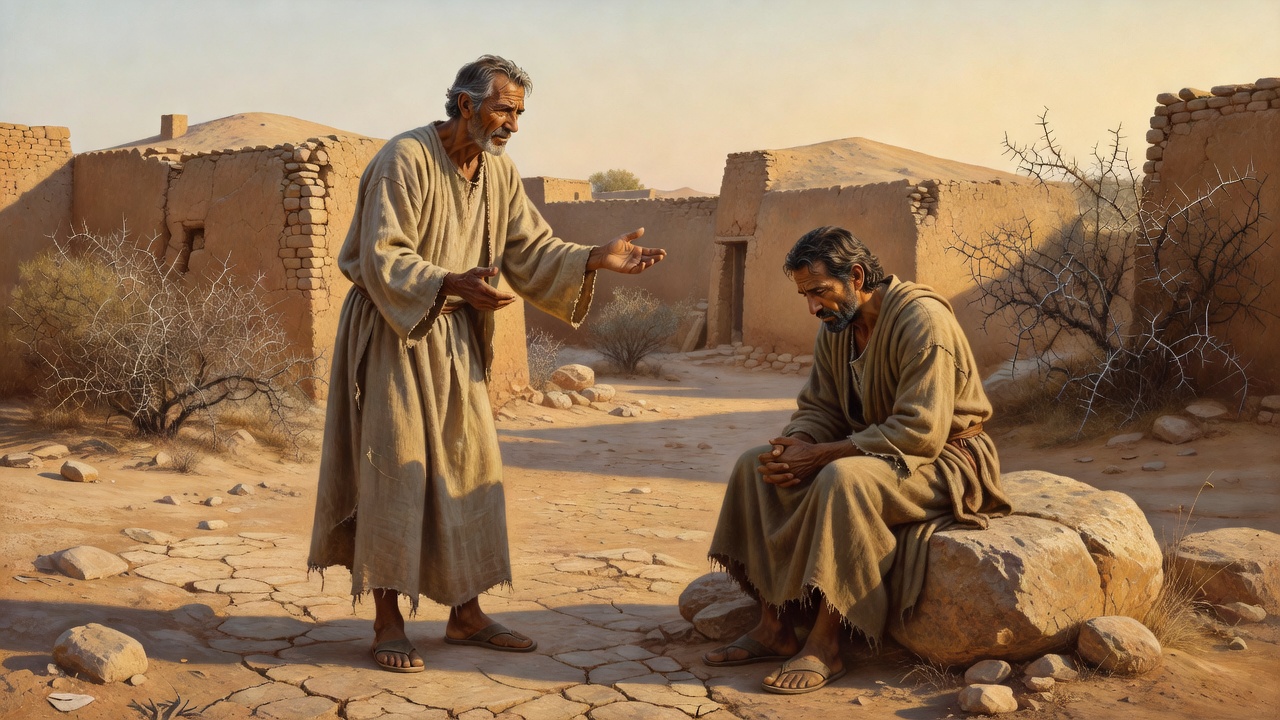
Eliphaz In Pathen Panpina Angaichat
1Na kithopi ding kou temin mikhat beh in nahin donbut na dem? Vantil ho koipen in nahin kithopi ding ham? 2Tahbeh in lunghanna hin mingol asuhmang jia chule thangsetna in chihna neilou ho asumang ji'e. 3Keiman mingol ho chomkhat kahsung alolhin nao kamui ahinla vangset na chun hetman louvin alhunkhum jitai. 4Achateu jong ajong ajellin gamsa chonin achonun amaho dingin panpina agamlan ahi, ahuhdoh diu umlouvin thutanna mun'a amehgoi jiuve. 5Achang chu lingleh khauva akium jeng vang'in agilkel ten avallhum peh un, agou chu adangchah ten hai hot hot in adel uve. 6Thilse hi leivui lah a konna hungput doh ahipoi chule hahsatna hi leisetna konna hung dondoh ahipoi. 7Meilah a konna meisi chunglanga lengtou dinga gotsa aum banga mihem tehi ahahsa ding monga penga ahi. 8Keihi nang chu hileng Pathen kom'a cheng ting chule kachung chang thu ama kom'a kase lhah ding ahi. 9Aman thil oupe tah hetdoh jou hoi hilou ajat sim joulou thil kidang aboldoh e. 10Aman leiset chunga go ajuh sah jin, chule loulaija jong twi alonsah sohkeije. 11Aman mivaichate khantouna apen chule genthei hesoh thohte ahuhdoh ji'e. 12Athil gonu asuh nohphah peh in, hijeh chun akhut uva atoh jouseu amolso joulou diu ahi. 13Miching ho chu aki chihsah nauva amang jin hijeh chun aduha thuh nauva athil gonnu asuhbei pehji tai. 14ama hon sun laijin muthim atoh khauvin sunkim laijin amaho chu janlai bangin aki mai le leuve. 15Mikam hatte a kon'in mi vaichate ahuhdoh jin chule mithahat ten atuhchah kheh hou jong amaho a kon'in ahuhdoh ji'e. 16Chule hiche ho a chun achaina leh mivaichan kinepna aneijin, chule mihahem te kam jong ahuhbit jin ahi.
Eliphaz In Pathen Akon Suhdih Nahi Phatthei Ahi-Ti
17Ahinla Pathen'in asuhdih ho kipana khu ngaito temin, na chonset tengleh Hatchungung pan nahilna khu don louvin koi hih in. 18Aman amavo jin chule boljong aboldam jin aman ajep jin ahinla akhut in asudam kitjin ahi. 19Vangsetna gupma kon'in nahuhdoh intin asagi veina teng jongleh thilse a kon'in nahoi doh inte. 20Kellhah lai jongleh thina a kon'in nahuhdoh intin gallai jongleh chemjama kon'in nahuhdoh inte. 21Misuminse nom te a kon'in hung hoidoh in natin chule manthahna ahung lhun teng kicha tapon nate. 22Manthah na le kel alhah teng nangin nanuisat ding gamlah a gamsa jouse nagin louding ahitai. 23Nangma gam lah a songho toh lungmong tah a naum khoma chule gamlah a gamsa ho toh lungmonga nalhat khom diu ahitai. 24Nachenna nain abitne ti nakihetna, nanei nagou ho nagavet teng imacha akiholmo umlou ding ahi. 25Nangin chate tamtah neijin natin, nason na chilhah te hampa banga hung tam diu ahi. 26Nateh teng lhankhuh hin jonin natin, aphat cha changpholla changpal kichom khom nahung bah ding ahi. 27Keihon hinkho hi kakhol uvin, chule hiche hi dih din kamu doh uve, kahilna hi ngaijin chule nangma tah a dingin mangchan.
Você sabia?
O Conselho de Elifaz sobre o Sofrimento e a Correção Divina
- Elifaz retrata o sofrimento como uma disciplina divina com propósito, e não como mera desgraça casual, afirmando que a aflição não brota do solo sem motivo. Ele exorta Jó a não desprezar a correção do Todo-Poderoso, que fere apenas para depois curar e restaurar.Fontes: o próprio texto bíblico
- Ao prometer livramento de seis calamidades e até mesmo de sete, Elifaz utiliza uma fórmula poética tradicional de paralelismo numérico progressivo. Esse recurso retórico, comum na poesia de sabedoria do Antigo Oriente Próximo, intensifica a ênfase para transmitir a ideia de proteção total e completa.Fontes: o próprio texto bíblico
- Elifaz descreve a restauração final com imagens agrícolas e pastoris, retratando uma vida em que os animais selvagens e o solo pedregoso deixam de ser hostis. Ele projeta uma morte serena na maturidade da vida, comparada a um feixe de cereais colhido no tempo certo.Fontes: o próprio texto bíblico
Notas escritas com auxílio de IA a partir de fontes abertas (Theographic Bible Metadata, CC BY-SA 4.0; Easton’s Bible Dictionary, domínio público) e revisadas antes de publicar.
Créditos e licença desta tradução
PATHEN LEKHABU THENG
The Holy Bible in the Chongthu Dialect of India
Copyright © 2020 Chongthu Bible Translation Team
Language: Chongthu (Chin, Thado)
Dialect: Chongthu
This is a draft copy of a work in progress. It will be updated.
This translation is made available to you under the terms of the
Creative Commons Attribution Share-Alike license 4.0.
You have permission to share and redistribute this Bible translation in any format and to make reasonable revisions and adaptations of this translation, provided that:
You include the above copyright and source information.
If you make any changes to the text, you must indicate that you did so in a way that makes it clear that the original licensor is not necessarily endorsing your changes.
If you redistribute this text, you must distribute your contributions under the same license as the original.
Pictures included with Scriptures and other documents on this site are licensed just for use with those Scriptures and documents.
For other uses, please contact the respective copyright owners.
Note that in addition to the rules above, revising and adapting God's Word involves a great responsibility to be true to God's Word. See Revelation 22:18-19.
2026-10-02
Fonte: http://ebible.org/tczchongthu/ · eBible.org