Jó 10
Bibiri Kuyie Nnɑ́ɑǹtì Pɑ́tíri · Toque num versículo para ver as referências cruzadas.
Isɔbu sɑ́útìi sɔkɛ́mɛ̀
1N dɛmmu mufòmmu,
dɛɛ̀ te kɛ̀ n yóó nkù sɛ̀í,
n nɑ́ɑ́nnɛ̀ mɛyɛǹcɑɑ̀rìmɛ̀ mmɛ.
2N yóó nɑ́kɛ́mu Kuyie nkɛ dɔ̀:
kù bɑ́ nni ntounko tinɑ́ɑǹtì,
kù n nɑ́kɛ́ kù n sɛ́í ntìì ĩ́nkɛ̀.
3Kuyie nhɑ n fɛ̃́ũnko kɛ̀ dɛ̀ dɑ nɑɑtimɑɑ̀?
A sènkɛ̀rì mí nhɑ dɔ̀ɔ̀ wè nɛ̀ ɑ nɔu kɛ̀ dɛ̀ wennimɑɑ̀,
dɛ̀ wenni kɛ dò nhɑ́ dɔɔ̀ bɛyɛibɛ dɔ́ kɛ́dɔɔ̀ tɑ̀ɑ̀?
4A mɔkɛ onìtì kó inuɔ nyɑɑ̀?
A wúó nhonìtì ti wúómmɛ̀ mmɑɑ̀?
5A we kũpúrì onìtì kpɛyɛ kɔ̃mɛ mmɑɑ̀?
A bie ndònnɛ̀ onìtì kpɛyɛ dòmmɛ̀ mmɑɑ̀?
6Kɑ̀ɑ wɑnti n kó mɛyetímɛ̀,
kɛ fɛintɛ n kó mɛyɛinɑɑ̀?
7A yɛ̃́mu kɛ tú n yí cɑ̀ɑ̀rɛ̀ mùmɑmù.
Òmɔù nɛ́ mɛ nyí bomɛ̀ wèè bo n fietɛ ɑ nɔu miɛkɛ.
8Fɔ̃́ɔ̃̀ m pìítɛ́ kɛ n dɔ̀ɔ̀ n kɔ̃̀ntì timɔu,
kɛ nɛ́ bo n kuɔ pɑ́í pɑ́íɑ̀?
9Dentɛní kɛ dò nhɑ m pìítɛ́ tiyɑɑtì tɛ̃mɛ̀ mmɛ,
ɑ dɔ́ kɛ́wɛ̃tɛ kɛ́ n tɑnnɛ́ mutɑ̃́ɑ̃́ mmɑɑ̀?
10A nh utɛ́ kɛ̀ nni ndò mmɛnɑɑmiɛ̀ mmɛ,
kɑ̀ɑ n kɑ̃ntɛ́ dinɑɑkɑ̃nnì kɔ̃mɛ.
11Kɛ n dɑ̀tínnɛ́ tikɔ̃̀ntì nɛ̀ mɛmɑmbii,
kɛ nh ɑ̃nnɛ́ yɛkṹɔ̃̀ kɛ n detí icĩɛ̃.
12Kɛ n dɔ̀ɔ̀ diwɛ̀ì kɛ m pɑ̃ mufòmmu,
ɑ dɑkɛmu n kpɛ́í ndɛɛ̀ te kɛ̀ n fòù.
13Nɛ́ ntɛ tìì sɔ̀ri ɑ yɛ̀mmɛ̀ miɛkɛ.
N yɛ̃́mu tìì bo ɑ yɛ̀mmɛ̀ tiì tú:
14A bo nni mpɑkɛ́mɛ̀ kɛ̀ n cɑ̀ɑ̀rɛ̀ ɑ m pĩ́,
kɛ̀ n yetɛ́ ɑ bɑ́ nni nwúónko.
15Kɛ̀ n cɑ̀ɑ̀rɛ̀, n tùɔ̀ti icɛ nyi,
bɑ́ kɛ̀ n yí cɑ̀ɑ̀rɛ̀ m bɑ́ɑ́ nɑ kɛ́éu n yuu,
n nɛ́ di ifɛi nyi kɛ sɑ̀nnɛ̀ n diu n sémmɛ̀ miɛkɛ nkɛ.
16Kɛ̀ n yɛ̃ m bo íi n yuu ɑ́ n fɛ̃nnɛ́ dicìrícìrì kɔ̃mɛ,
n yĩ́nkɛ̀ nkɛ ɑ bɛnkúmɛ̀ ɑ kpetì kɛ m puotì.
17Tii nníí nyitóo kɛ̀ titɛtì tùɔ̀kɛní,
kɑ̀ɑ miɛkɛ dɔkɛ n yiɛ̀ kɛ yɛ́útí,
yɛhɑ̃ɑ̃pɔ̀ntĩ̀rɛ̀ yɛɛ̀ nɛ́ n duò kɛ sɛ́i.
18Bɑ nnɛ́ te kɑ̀ɑ n dènnɛní n yɔ̃ pɔutì miɛkɛ?
N nɑ nku bɑ́ òmɔù mu n yí n yɑ̀.
19Kɛ̀ dɛ̀ nɑ ndò n ketɛ́ kɛ í buotɛ́ kutenkù,
kɛ̀ n nɑ nyɛtìní n yɔ̃ pɔutì kɛ̀ bɛ̀ m pɛ̃nkɛ́nɛ̀ kufɔ̃ti.
20N we tɛ̃́nkɛ í kpɑɑ́ kɛ sũ,
n yóu kɛ̀ m múnkɛɛ wei sɑ́m̀pɔ́.
21Kɛ nɛ́ nɑ kɛ́kò mbɛ̀ kũũ̀ nkɛ̀ kɛ í wĩɛ̃tiní,
dibiìnnì kó dihɛì dɛ̀ dò nkɛ̀ bì,
22dɛ kó dihɛì dɛ̀ ɔ̃ɔ̃ wentɛ́ kɛ́mbìmu,
dɛ bíɛ́kɛ̀ dibiìnnì diì kɛ̀ bo,
dɛ̀mɑrɛ̀ í kɛ̀ dò nsɛ́i,
kuyie ncuokɛ̀ dɛ̀ ɔ̃ ndò nkɛyènkɛ̀ nkɛ.
Você sabia?
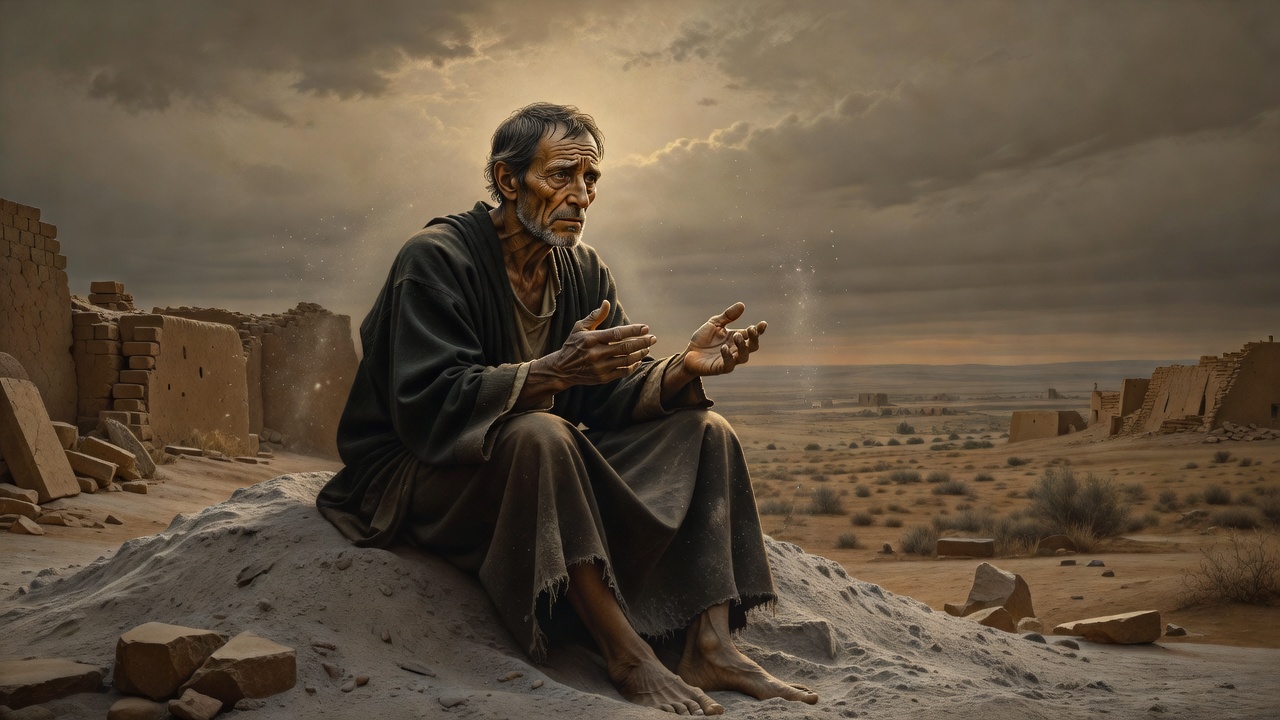
O clamor de Jó sobre sua criação e mortalidade
- Em seu clamor a Deus, Jó recorre a imagens cotidianas antigas, como a fabricação de queijo e a olaria, para descrever a formação da vida humana no ventre materno, retratando Deus como quem molda o barro, derrama o leite e entretece carne e ossos.Fontes: o próprio texto bíblico
- Jó retrata a morada dos mortos como um lugar de escuridão profunda, sombras e desordem, suplicando a Deus por um breve alívio antes de partir para esse destino sem retorno.Fontes: o próprio texto bíblico
Notas escritas com auxílio de IA a partir de fontes abertas (Theographic Bible Metadata, CC BY-SA 4.0; Easton’s Bible Dictionary, domínio público) e revisadas antes de publicar.
Créditos e licença desta tradução
Bibiri Kuyie Nnɑ́ɑǹtì Pɑ́tíri
The Holy Bible in the Ditammari language of Benin
copyright © 2001 SIM International
Language: Ditammari
Translation by: SIM
This translation text is made available to you under the
terms of the Creative Commons License: Attribution-Noncommercial-No Derivative Works.
( http://creativecommons.org/licenses/by-nc-nd/3.0/ )
In addition, you have permission to port the text to different file formats, as long as you
do not change any of the text or punctuation of the Bible.
You may share, copy, distribute, transmit, and extract portions
or quotations from this work, provided that you include the above copyright
information:
You must give Attribution to the work.
You do not sell this work for a profit.
You do not make any derivative works that change any of the actual words or punctuation of the Scriptures.
Permissions beyond the scope of this license may be
available if you contact
us with your request.
This translation is made available to you under the terms of the
Creative Commons Attribution-No Derivatives license 4.0.
You may share and redistribute this Bible translation or extracts from it in any format, provided that:
You include the above copyright and source information.
You do not make any derivative works that change any of the actual words or punctuation of the Scriptures.
Pictures included with Scriptures and other documents on this site are licensed just for use with those Scriptures and documents.
For other uses, please contact the respective copyright owners.
2022-05-31
Fonte: http://ebible.org/tbzsim/ · eBible.org