Ezequiel 46
Bibiri Kuyie Nnɑ́ɑǹtì Pɑ́tíri · Toque num versículo para ver as referências cruzadas.
Tɛkpɑ̀ɑ̀tìbitɛ yó ndòmmɛ̀
1Kɛ̀ ti Yiɛ̀ nKuyie nní nnɑ́kɛ́ kɛ dɔ̀: N cĩ́ɛ̃̀tɛ̀ dɑ̀nkù dɛ miɛkɛ kɔku kó dibòrì dìì bo diyiè yìɛ̀ní kɛ̀ɛ̀ bíɛ́kɛ̀ dì níí yó nkpetímu yɛwe yɛ̀kuɔ̀ mutɔ̃mmú kpɛyɛ miɛkɛ, tɛom̀pùtɛ̀ yiè kɛ̀ bɛ̀ɛ dì kpetɛ́ nɛ̀ otɑ̃̀nkù pɑ̀nwè kó dibɑnni miɛkɛ. 2Kɛ̀ tɛkpɑ̀ɑ̀tìbitɛɛ tɑnní kukpɑ̃́nkpɑ̃́nkù kó dibòrì ditowɑɑ̀ bíɛ́kɛ̀ kpɛri, kɛ́cómmú kɛ́dírí dibòrì kó idɛí, kɛ̀ ikuɔ́ nìùbɛ̀ n feutɛ́ o wũɔ̃ fɛ̀ɛ̀ yóó tuɔ nnɛ̀ mɛtɑummɛ̀ kɔfɛ, kòò nínkú dɛndɛ dibòrì kɛ́deè kɛ́yɛ̀, bɛ̀ mɛ mbɑ́ɑ́ kpetínnɛ́ dibòrì kɛ́tuɔkɛnɛ̀ kuyuoku. 3Siom̀pùsi kó yɛwe nɛ̀ otɑ̃̀nkù pɑ̀nwè kó dibɑnni bɛnìtìbɛ̀ níí yóó dɛ nnínkú kukpɑ̃́nkpɑ̃́nkù bòrì kɛ́ n sɑ̃ntɛ.
4Tɛom̀pùtɛ̀ yiè tɛkpɑ̀ɑ̀tìbitɛ níí yó n féútɛ́ yɛpedɑbɛ yɛkuɔ̀ ndi, nɛ̀ dibɔdɑɑ̀ dìmɑ́ɑ̀ dɛ̀ɛ̀ kpɑ kuyɛ̀nkù. 5Kɛ̀ tɛ̀ɛ wɑɑ́ mmuyuo ncìdóòbɛ̀ tɛpíítɛ̀ nɛ̀ bɛ̀nùmmù, mɛkùɔ̀ ndítìrìbɛ̀ bɛ̀kuɔ̀, dɛɛ̀ yóó wɛ̃nnɛ́nɛ̀ dipedɑɑ̀ kɛ́tuɔ nkɛ́wɑɑ́ mmuyuo nhò dɔ́ mù mmɑmɛ̀ yɛpedɑbɛ kpɛ́í nkɛ̀ muyuo mbo cìdóòbɛ̀ tɛpíítɛ̀ nɛ̀ bɛ̀nùmmù wèe kɔɔrɛ mɛkùɔ̀ ndítìdìbɛ̀ bɛ̀kuɔ̀. 6Otɑ̃̀nkù pɑ̀nwè kó dibɑnni yiè wèe níí bo kuɔ dinɑɑdɑɑ̀ dìì kpɑ kuyɛ̀nkù nɛ̀ yɛpedɑbɛ yɛ̀kuɔ̀ nɛ̀ dipedɑɑ̀ dìmɑ́ɑ̀ dɛ̀ɛ̀ kpɑ kuyɛ̀nkù. 7Kɛ̀ tɛkpɑ̀ɑ̀tìbitɛɛ wɑɑ́ mmuyuo ncìdóòbɛ̀ tɛpíítɛ̀ nɛ̀ bɛ̀nùmmù dinɑɑdɑɑ̀ kpɛ́í, nkɛ́ mɛ nwɑɑ́ ndipedɑɑ̀ kpɛ́í kɛ́wɑɑ́ mmuyuo nhò dɔ́ mù mmɑmɛ̀ yɛpedɑbɛ kpɛ́í, kɛ̀ muyuo mbo cìdóòbɛ̀ bɛ̀nùmmù wèe kɔɔrɛ mɛkùɔ̀ ndítìrìbɛ̀ bɛ̀kuɔ̀. 8Tɛkpɑ̀ɑ̀tìbitɛ níí yóó tɑnní kukpɑ̃́nkpɑ̃́nkù kó dibòrì ditowɑɑ̀ bíɛ́kɛ̀ kpɛri ndi, kɛ́wɛ̃tɛ kɛ di nyɛnnɛ̀. 9Yɛbɑɑ nkó yɛwe kɛ̀ bɛnìtìbɛ̀ níí kɔtɛní n cĩ́ɛ̃̀tɛ̀ m bɑ́ɑmmu, kɛ̀ wèè tɑ dibòrì kubɑkù cɑ̃̀nku kpɛri wèe yɛ̀ kubɑkù yoú kpɛri, kɛ̀ wèè tɑ kuyoú kpɛri wèe yɛ̀ kucɑ̃̀nku kpɛri, òmɔù bɑ́ɑ́ yɛ̀ dibòrì ò tɑ dì, kɛ̀ wèè tɑ kùù píkù wèe yɛ̀ kutɛkù. 10Tɛkpɑ̀ɑ̀tìbitɛ níí yó mbɛ̀ ɛ̀rinɛ̀mu kɛ́tɑ kɛ́ mbɛ̀ ɛ̀rinɛ̀ kɛ́yɛ̀.
Bɛ̀ bo nfeu mɛ̀ɛ̀ botí iwũɔ̃ ibotí ibotí ti Yiɛ̀ nKuyie
11Kɛ̀ ti Yiɛ̀ nKuyie mbɛ́i nkɛ dɔ̀: Yɛbɑɑ nkó yɛwe nɛ̀ di kó mɛtíímmɛ̀ mɛmɔu, tɛkpɑ̀ɑ̀tìbitɛ níí wɑɑ́ mmuyuo ncìdóòbɛ̀ tɛpíítɛ̀ nɛ̀ bɛ̀nùmmù mùù yóó wɛ̃nnɛ́nɛ̀ dinɑɑdɑɑ̀ kɛ́tuɔ, kɛ mɛ nyĩ́ dipedɑɑ̀ kɛ́wɑɑ́ nhò dɔ́ mù mmɑmɛ̀ yɛpedɑkɛ̀ kpɛ́í, kɛ̀ muyuo mbo cìdóòbɛ̀ tɛpíítɛ̀ nɛ̀ bɛ̀nùmmù wèe kɔɔrɛ mɛkùɔ̀ ndítìrìbɛ̀ bɛ̀kuɔ̀.
12Kɛ̀ tɛkpɑ̀ɑ̀tìbitɛ m pɑ̃ fɛɔ̃̀fɛ̀ kɛ yóó fɛ̀ nni nféútɛ́ kɛ́tuɔ, yoo ò m pɑ̃ dipɑ̃nnì mɛtɑummɛ̀ kpɛri, bɛ̀ɛ ò kpetɛ́ diyiè yìɛ̀ní kɛ̀ɛ̀ bíɛ́kɛ̀ kó dibòrì kòò n féútɛ́ o ɔ̃̀fɛ̀ kɛ́tuɔnnɛ̀ o pɑ̃nnì mɛtɑummɛ̀ kpɛri, ò ɔ̃ɔ̃ yĩ́mɛ̀ tɛom̀pùtɛ̀ yiè. Kòò dèè wèe yɛ̀ kɛ̀ bɛ̀ɛ kpetínnɛ́ dibòrì.
13Ò níí n féútɛ́ bɑ́ dìì yiè dipedɑbii dìì mɔ̀kɛ dibenni dìmɑ́ɑ̀ kɛ kpɑ kuyɛ̀nkù. Kɛ níí dì fèútɛ́ bɑ́ dìì kṹnweńnì. 14Bɑ́ dìì kṹnweńnì kɛ níí m pɑ̃ muyuo ncìdóòbɛ̀ bɛ̀nùmmù, mɛkùɔ̀ ndítìrìbɛ̀ bɛ̀dɛ́bɛ̀ mɛ̀ɛ̀ yóó kɔɔrɛnɛ̀ muyuo. Dɛ kó ikuɔ́ yó mbomu sɑ̃́ɑ̃̀ bɑ́ dìì kṹnweńnì ò níí mɛ nyĩ́. 15Bɑ́ dìì kṹnweńnì di níí n féútɛ́ dipedɑbii kɛ́ m pɑ̃ muyuo nnɛ̀ mɛkùɔ̀, di yó mmɛ nhɔ̃ nsɑ̃́ɑ̃̀.
Tɛkpɑ̀ɑ̀tìbitɛ kó ibí níí yó nte dɛ̀
16Kɛ̀ ti Yiɛ̀ nKuyie nyíɛ́ kɛ́ m bɛ́innɛ̀ kɛ dɔ̀: Kɛ̀ tɛkpɑ̀ɑ̀tìbitɛ wɛ̀tɛ́ tɛ tenkɛ̀ kɛ pɑ̃ tɛ birɛ mɑrɛ̀, tɛ̀ mɛ nkɛ̀ pɑ̃ wè, weè yó nkɛ̀ te, kòò kú o bíi sɔɔtɛ́. 17Kɛ̀ dɛ̀ mɛ ndò ntɛkpɑ̀ɑ̀tìbitɛ wɛ̀tɛ́ kɛtenkɛ̀ kɛ pɑ̃ tɛ kóo tɔ̃ntì mɔù, wè nkɛ̀ te, kɛ̀ n kó dibenni tùɔ̀kɛní, tidɑɑtì yɛ̀rìmù benni, wèe wɛ̃tɛ kɛ́ kɛ̀ nhò duɔ́, tɛ bí iì mɑ́ɑ̀ bo nɑ kɛ́nte ò í pɑ̃ kɛ̀ sɑ̃́ɑ̃̀. 18Tɛkpɑ̀ɑ̀tìbitɛ bɑ́ɑ́ túótɛ́ n nìtìbɛ̀ kóò mɔù kó kɛtenkɛ̀ kɛ́pɑ̃ tɛ bí, kɛ̀ dɛ yiɛ̀ mpɑɑ̀ kɛtenkɛ̀. Tɛ̀ níí dɛitɛ tɛ tenkɛ̀ miɛkɛ nkɛ kɛ́pɑ̃ tɛ bí.
Kuyie ncĩ́ɛ̃̀tɛ̀ kó dɛdɛɛ̀
19Dɛ kó difɔ̃nkúò kòo n tɑnnɛ̀ kukpɑ̃́nkpɑ̃́nkù kó dibòrì kɛ̀ ti kɔtɛ Kuyie ncĩ́ɛ̃̀tɛ̀ dɑ̀nkù dɛ miɛkɛ kɔku kó dibòrì kubɑkù yoú kpɛri, dìì wetí ikuɔ́ nìùbɛ̀ kó tidieti kɛ̀ ditou mɑrì bo dɛ ììkɛ̀ bíɛ́kɛ̀. 20Kòo n nɑ́kɛ́ kɛ dɔ̀: Ikuɔ́ nìùbɛ̀ yó ndɛ mberi iwũɔ̃ bɛ̀ n feu ì mɛyɛi ncĩ́ɛ̃́mmɛ̀ kpɛ́í nnɛ̀ mɛyɛi nhũtímù. Bɛ̀ níí yóó dɛ mpṹnnɛ́ mudiì, bɛ̀ bɑ́ɑ́ mù kɔ̀tɛnɛ̀ kukpɑ̃́nkpɑ̃́nkù bòrì ditowɑɑ̀ bíɛ́kɛ̀ kpɛri, bɛnìtìbɛ̀ cɛ̃́nkoo kɔbɛ yɑ̀ɑ̀ bo mù kɑ̀ɑ́kɛ́ kɛ́kú.
21Kòo deè kɛ́ n kɔtɛnɛ̀ kukpɑ̃́nkpɑ̃́nkù ditowɑɑ̀ bíɛ́kɛ̀ kɔku ku kpɛ̃ɛ̃́mmɛ̀ mɛnɑ̀ɑ̀ borɛ̀, bɑ́ mɛ̀ɛ̀ kpɛ̃ɛ̃́mmɛ̀ kɛ̀ mɛ̀ mɔ̀kɛ kudɑ̀nkù. 22Bɑ́ mɛ̀ kɛ̀ mɛ kó kudɑ̀nkù okùmɛ̀ bo cìdòmɛ́tìrì sipísìdɛ́, mɛpɛ̃kùmɛ̀ cìdòmɛ́tìrì tɛpíítɛ̀ nɛ̀ mɛ̀nùmmù kɛ mɑ tipíìtì tinɑ̀ɑ̀. 23Kɛ̀ kuduotí tì fitɛ́ tinɑ̀ɑ̀ mɛmmɛ, kɛ̀ dɛdɛɛ̀ nkù ɔrí kɛ fitɛ́. 24Kòo n nɑ́kɛ́ kɛ dɔ̀: Bɛ̀ɛ̀ pĩ nKuyie ncĩ́ɛ̃̀tɛ̀ miɛkɛ mutɔ̃mmú bɛ̀ yó mberi dɛndɛ iwũɔ̃ ku nìtìbɛ̀ kù feu ì.
Você sabia?
Adoração, Deveres Reais e Cozinhas do Templo
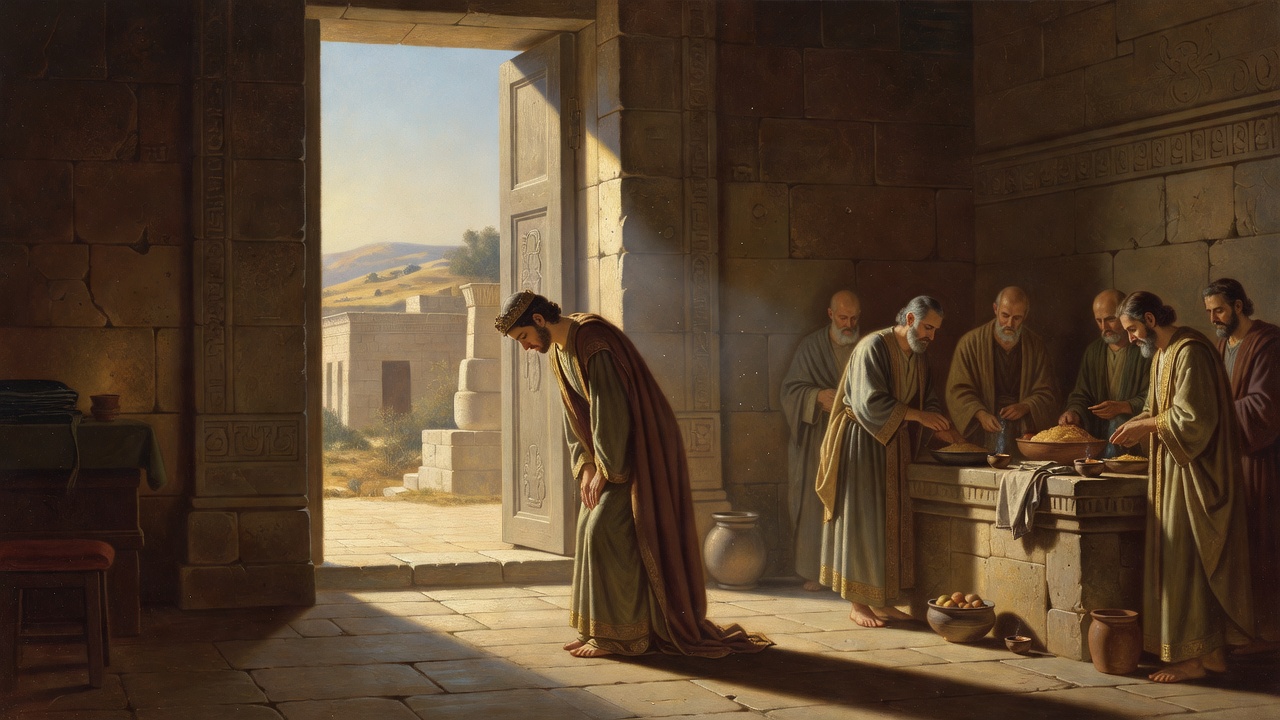
- A porta oriental do átrio interior permanecia fechada durante os seis dias de trabalho, sendo aberta apenas no sábado e no dia da lua nova. O príncipe devia permanecer junto ao batente da porta e adorar no limiar enquanto os sacerdotes ofereciam os seus sacrifícios, e a porta ficava aberta até a tarde.Fontes: o próprio texto bíblico
- Durante as festas fixas, os adoradores que entravam pela porta norte deviam sair pela porta sul, e os que entravam pelo sul deviam sair pelo norte. Além disso, as leis de propriedade proibiam expressamente que o príncipe tomasse as terras do povo, devendo dar herança a seus filhos apenas de seus próprios bens.Fontes: o próprio texto bíblico
- A visão detalha áreas de cozinha distintas no templo: câmaras especiais a oeste para os sacerdotes cozinharem as ofertas pelo pecado e pela culpa, e quatro átrios menores nos cantos do pátio externo, onde os ministros do templo preparavam os sacrifícios oferecidos pelo povo.Fontes: o próprio texto bíblico
Notas escritas com auxílio de IA a partir de fontes abertas (Theographic Bible Metadata, CC BY-SA 4.0; Easton’s Bible Dictionary, domínio público) e revisadas antes de publicar.
Créditos e licença desta tradução
Bibiri Kuyie Nnɑ́ɑǹtì Pɑ́tíri
The Holy Bible in the Ditammari language of Benin
copyright © 2001 SIM International
Language: Ditammari
Translation by: SIM
This translation text is made available to you under the
terms of the Creative Commons License: Attribution-Noncommercial-No Derivative Works.
( http://creativecommons.org/licenses/by-nc-nd/3.0/ )
In addition, you have permission to port the text to different file formats, as long as you
do not change any of the text or punctuation of the Bible.
You may share, copy, distribute, transmit, and extract portions
or quotations from this work, provided that you include the above copyright
information:
You must give Attribution to the work.
You do not sell this work for a profit.
You do not make any derivative works that change any of the actual words or punctuation of the Scriptures.
Permissions beyond the scope of this license may be
available if you contact
us with your request.
This translation is made available to you under the terms of the
Creative Commons Attribution-No Derivatives license 4.0.
You may share and redistribute this Bible translation or extracts from it in any format, provided that:
You include the above copyright and source information.
You do not make any derivative works that change any of the actual words or punctuation of the Scriptures.
Pictures included with Scriptures and other documents on this site are licensed just for use with those Scriptures and documents.
For other uses, please contact the respective copyright owners.
2022-05-31
Fonte: http://ebible.org/tbzsim/ · eBible.org