2 Crônicas 3
Bibiri Kuyie Nnɑ́ɑǹtì Pɑ́tíri · Toque num versículo para ver as referências cruzadas.
Sɑdomɔɔ mɑɑ́mɛ̀ Kuyie ncĩ́ɛ̃̀tɛ̀
1Kɛ̀ Sɑdomɔɔ ketɛ́ ti Yiɛ̀ nKuyie ncĩ́ɛ̃̀tɛ̀ kó mumɑrimù Sedisɑdɛmmu Mɔdiyɑɑ tɑ̃rì ĩ́nkɛ̀. Ti Yiɛ̀ nKuyie ndo bɛnkɛ dɛ̀ kumɑ́ɑ̀ o cicɛ Dɑfiti Sebusiibɛ botí kou Odinɑnni yiɛ́ miɛkɛ kòo dɛ̀ tũ̀ntɛ. 2O kpɑ̀tì benni nɑɑnnì miɛkɛ kóo tɑ̃ɑ̃̀dɛ́rì miɛkɛ do nkɛ ò ketɛ́mɛ̀ Kuyie ncĩ́ɛ̃̀tɛ̀ mumɑrimù.
3Ntɛ Sɑdomɔɔ do mɑɑ́ Kuyie ncĩ́ɛ̃̀tɛ̀ kɛ̀ tɛ̀ ndòmmɛ̀: Ò do bennɛ́ tɛ bɛ̀ do beúmɛ̀ mmɛ dɛ mɔnnì kɛ̀ mɛokùmɛ̀ ḿbo mɛ́tìrì sipísìtɑ̃ɑ̃ti kɛ̀ mɛpɛ̃kùmɛ̀ ḿbo mɛ́tìrì tɛpíítɛ̀. 4Kòo mɑɑ́ kukpɑ̃́nkpɑ̃́nkù kɛ̀ ku okùmɛ̀ mmɑ̀nnɛ̀ tɛcĩ́ɛ̃̀tɛ̀ diɛtɛ̀ kɔ̃mɛ mɛ́tìrì tɛpíítɛ̀, mɛcómmɛ̀ mɛ́tìrì sipísìkuɔ̀ kɛ́dɑri ku miɛkɛ mɛsɔɔ nsɑ̀ɑ̀mɛ̀. 5Kòo dɑri kudieku diɛkù dɛtekperɛ̀ kó tidɑbɛɛtì, kòo tì dɑ̀ri mɛsɔɔ nsɑ̀ɑ̀mɛ̀, kɛ́ tì kerí kɛ̀ dɛ̀ ndò ntipuonti nɛ̀ mɛfĩmmɛ. 6Kòo kù dɑ̀ri yɛtɑ̃́sɑ̀ɑ̀yɛ̀, kɛ̀ tɛ sɔɔ nní ntú Pɑdifɑimmu kó kɛtenkɛ̀ kó mɛsɔɔ. 7Kòo dɑri mɛsɔɔ nyɛsɑ̃ǹkɛ̀ nɛ̀ yɛbòrɛ̀ nɛ̀ yɛcɑ̀kɛ̀, kɛ́kerí bɛĩ́nkɛ̀mbɑ̀rìbɛ̀ kó tifèntì dɛ kó imɑrí ĩ́nkɛ̀.
8Kòo mɑɑ́ ikuɔ́ nɛntì dieku kɛ̀ ku okùmɛ̀ mmɑ̀nnɛ̀ tɛcĩ́ɛ̃̀tɛ̀ kó mɛpɛ̃kùmɛ̀ mɛ́tìrì tɛpíítɛ̀, kɛ̀ ku pɛ̃kùmɛ̀ mbo mɛ́tìrì tɛpíítɛ̀. Kòo kù dɑ̀ri mɛsɔɔ nsɑ̀ɑ̀mɛ̀ kɛ̀ mɛ cɛ̃́ɛ̃́kù ḿbo tɔ́nnì sipísìdɛ́. 9Kɛ̀ sikɑ̃ũ kó mɛsɔɔ ncɛ̃́ɛ̃́kù mbo cìdóò dikéè. Kòo dɑri mɛsɔɔ nkudɑ̀nkù kó tidieti.
10Kòo dɔɔ̀ bɛĩ́nkɛ̀mbɑ̀rìbɛ̀ kó tifèntì tìdɛ́tì kɛ́ tì dɑ̀ri mɛsɔɔ nkɛ́ tì còńnɛ́ ikuɔ́ dieku, ikuɔ́ nɛntì kó kufɑ̃́ɑ̃́. 11Kɛ̀ dɛ kó bɛĩ́nkɛ̀mbɑ̀rìbɛ̀ bɛdɛ́ kó ifìɛ̀ti kó mɛokùmɛ̀ mbo mɛ́tìrì tɛpíítɛ̀, kɛ̀ oketiwè kó kufìɛ̀ti kùmɑ́ɑ̀ kó mɛokùmɛ̀ ḿbo mɛ́tìrì mɛ̀dɛ́mɛ̀ nɛ̀ dikéè kɛ kɑ́ɑ́ kumɑrí, kɛ̀ kutɛkù kó mɛokùmɛ̀ ḿbo mɛ́tìrì mɛ̀dɛ́mɛ̀ nɛ̀ dikéè kɛ kɑ́ɑ́ nhodɛ́rì kɔku. 12Kɛ̀ odɛ́rì kɔku ketikù kó mɛokùmɛ̀ mɛ mmɑ kɛ kɑ́ɑ́ nhoketiwè kɔku, kɛ̀ kudɛ́ríkù mɛ mmɑ kɛ kɑ́ɑ́ kumɑrí. 13Kɛ̀ dɛ kó bɛĩ́nkɛ̀mbɑ̀rìbɛ̀ bɛdɛ́ ncómmú kɛ pĩ̀ntɛ bɛ fɛ̀tì kɛ̀ ti okùmɛ̀ bo mɛ́tìrì tɛpíítɛ̀ kɛ̀ bɛ̀ wetí Kuyie ncĩ́ɛ̃̀tɛ̀ miɛkɛ. 14Kòo dɔɔ̀ kuyɑ̀ɑ̀kù kùù bo kpetínnɛ́ dibòrì nɛ̀ mupɑ̀ɑ̀konkperímù mùù dò mmɛbèrìmɛ̀ nɛ̀ muwũɔ̃mmù nɛ̀ mùù dò mmɛyĩ̀ĩ̀, kɛ kpɛ̃ nkɛ̀ dɛ̀ dò mbɛĩ́nkɛ̀mbɑ̀rìbɛ̀.
Sɑdomɔɔ dɔ̀ɔ̀mɛ̀ disɔɔwũɔ̃̀ kó yɛsɑ̃ǹkɛ̀ nɛ̀ diwũɔ̃tɔ̀nnì
15Kɛ̀ disɔɔwũɔ̃̀ kó yɛsɑ̃ǹkɛ̀ ncómmú Kuyie ncĩ́ɛ̃̀tɛ̀ ììkɛ̀ kɛ̀ yɛ okùmɛ̀ ḿbo mɛ́tìrì tɛpíítɛ̀ nɛ̀ mɛ̀nùmmù kɛ́dɔɔ̀ yɛtɛitiyɛ̀ dɛ kó yɛsɑ̃ǹkɛ̀ ĩ́nkɛ̀, kɛ̀ yɛ okùmɛ̀ ḿbo mɛ́tìrì mɛ̀dɛ́mɛ̀ nɛ̀ dikéè. 16Kòo dɔɔ̀ kɛ̀ dɛ̀ ndò mmɛfĩmmɛ kɛ́fii ndɛ kó yɛtɛitiyɛ̀ yómmɛ̀, kɛ́dɔɔ̀ kɛ̀ dɛ̀ ndò nyɛtebɛ bɛ̀ tu yɛ̀ kèdènɑ́tì, kɛ̀ yɛ̀ mbo tɛkɔ̀ùtɛ̀ (100) kɛ̀ bɛ̀ɛ yɛ̀ cɑ̀tínnɛ́ mɛfĩmmɛ yɛtɛitiyɛ̀ yómmɛ̀. 17Kòo deè kɛ́cónnɛ́ Kuyie ncĩ́ɛ̃̀tɛ̀ ììkɛ̀ yɛsɑ̃ǹkɛ̀, diì nkubɑkù yoú, ditɛrì kucɑ̃̀nku, kɛ́yú kuyoú kpɛri kɛ dɔ̀: Yɑkinni (dɛ̀ɛ̀ tu Kuyie nfìí) kɛ yú kucɑ̃̀nku kpɛri kɛ dɔ̀: Boɑsi (dɛ̀ɛ̀ tu Kuyie ntú muwɛ̃rímú yiɛ̀).
Você sabia?
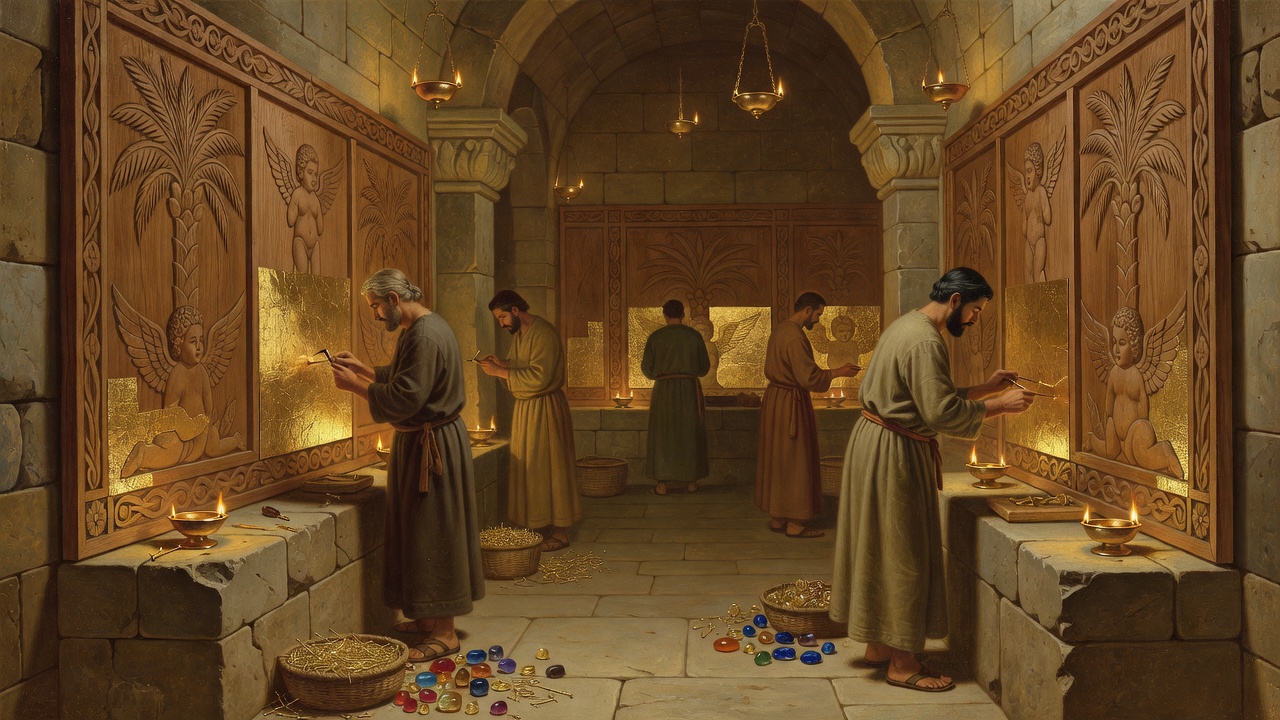
A construção do Templo de Salomão
- Salomão começou a construir o templo em Jerusalém no monte Moriá, no local da eira de Ornã, o jebuseu. Davi havia insistido anteriormente em comprar essa propriedade pelo preço total depois que o anjo destruidor foi detido ali, preparando o lugar para a casa do SENHOR.Fontes: o próprio texto bíblico · Ornan · Mount Moriah
- O interior do templo foi revestido de ouro puro e decorado com pedras preciosas, com ouro trazido de Parvaim. A localização exata de Parvaim é incerta, embora alguns a tenham associado a Ofir ou entendido o termo como uma referência genérica a regiões orientais.Fontes: o próprio texto bíblico · Parvaim
- Em frente ao templo foram erguidas duas colunas imponentes com capitéis decorativos, correntes entrelaçadas e cem romãs esculpidas. Salomão chamou a coluna do sul de Jaquim e a do norte de Boaz.Fontes: o próprio texto bíblico
Notas escritas com auxílio de IA a partir de fontes abertas (Theographic Bible Metadata, CC BY-SA 4.0; Easton’s Bible Dictionary, domínio público) e revisadas antes de publicar.
Lugares deste capítulo
- Jerusalem · 31.777, 35.234 · versículo 1
- Mount Moriah · 31.778, 35.236 · versículo 1
- Most Holy Place · Hoje: on Mount Moriah · 31.778, 35.236 · versículos 8, 10, 14
Só aparecem lugares com identificação de alta confiança (90% ou mais segundo as fontes acadêmicas reunidas pelo OpenBible). Mapa da época: DARE (Digital Atlas of the Roman Empire), CC BY 4.0; mapa atual: © colaboradores do OpenStreetMap; lugares: OpenBible.info (CC BY 4.0).
Créditos e licença desta tradução
Bibiri Kuyie Nnɑ́ɑǹtì Pɑ́tíri
The Holy Bible in the Ditammari language of Benin
copyright © 2001 SIM International
Language: Ditammari
Translation by: SIM
This translation text is made available to you under the
terms of the Creative Commons License: Attribution-Noncommercial-No Derivative Works.
( http://creativecommons.org/licenses/by-nc-nd/3.0/ )
In addition, you have permission to port the text to different file formats, as long as you
do not change any of the text or punctuation of the Bible.
You may share, copy, distribute, transmit, and extract portions
or quotations from this work, provided that you include the above copyright
information:
You must give Attribution to the work.
You do not sell this work for a profit.
You do not make any derivative works that change any of the actual words or punctuation of the Scriptures.
Permissions beyond the scope of this license may be
available if you contact
us with your request.
This translation is made available to you under the terms of the
Creative Commons Attribution-No Derivatives license 4.0.
You may share and redistribute this Bible translation or extracts from it in any format, provided that:
You include the above copyright and source information.
You do not make any derivative works that change any of the actual words or punctuation of the Scriptures.
Pictures included with Scriptures and other documents on this site are licensed just for use with those Scriptures and documents.
For other uses, please contact the respective copyright owners.
2022-05-31
Fonte: http://ebible.org/tbzsim/ · eBible.org