Mateus 3
Ya habi ni apo namalyari: Bayon tsipan - Ayta Mag-antsi · Toque num versículo para ver as referências cruzadas.
Ya panoro ni Juan Bautista
1Hên nabuyot hilay na ha balayan Nazaret, hilan Apo Jesus, ay ampanoro yay na hi Juan Bautista kanlan dinumani kana, ha probinsyan Judea, ha logal ya kabalah-balahan. 2Habaytsi ya an-ipamwang na, “Paghêhêan haka talibatokan yoy nay pamanyag yon kasalanan, ta nilumatêng ya pamanlokop ni Apo Namalyari.” 3Hi Juan Bautista ya inungkat ni Propeta Isaias, hatoy mihay mámipamwang hên an-ipaihip kana ni Apo Namalyari, ya wana,
“Main ampan-angaw ha logal ya kabalah-balahan, ya wana kanlan kal-atan ya naka-tsipon,
‘Il-an yoy nakêm yo ha pamanlumatêng hên Panginoon,
Ya nanad ha pamil-an hên dann ha pamanlumatêng hên mihay matag-ay ya manungkulan.’”
Habaytoy hinabi ni Propeta Isaias ya tungkol kan Juan Bautista.
4Hi Juan ay nakatakop hên dyag ha habot hên kamelyo, haka ya tagkêh na ay dyag ha balat. Ya angkênaên na ay doron haka main bayron pulot panilan ya an-inêmên na. 5Kal-atan lan taga-Jerusalem, haka kaatag pon ya logal ha probinsyan Judea, haka hilay ampaidi ha mitatalipay hên Ilog Jordan, ay dinumani kan Juan. 6Inamin haka inhuko lay kasalanan la, bayo nagpabawtismo hila kana ha Ilog Jordan.
7Noa, hên nahêlêk na ya mal-at ya Pariseo, haka Saduseo ya dinumani kana, ta êmên hila pabawtismo, ay wana kanla, “Nanad kaw utan, ya ampipag-ahug ha angkaulam. Hinoy namipamwang kamoyu hên tumakah kaw ha parusa ya lumatêng? 8Daygên yo ya pamaptêg hên naghêhê kaw ha kasalanan yo. 9Paan kaw mangihip hên mailigtas kaw ha parusa ni Apo Namalyari, gawan hi apo Abraham ay ninuno yo. Agyan hata bato, ay madyag ni Apo Namalyari hên kaapo-apoan ni apo Abraham. 10Ya pamanatol ni Apo Namalyari ay nanad ha payakol ya naitag-ay hên mihay ampamotoh hên kayo. Balang kayo ya a ampanagêy hên mangangêd, ay potohên ta iulam ha apoy. Haka hikaw ay maialimbawa ha kayo ya a ampanagêy hên mangangêd. 11Ya impangakon Mámiligtas, ya lumatêng, ay matag-ay ya tungkulan kangko. Agyan mantan hên pag-apin bitsih na, ay ayn akon karapatan. Hikoy ampamawtismo kamoyu ha lanêm, ta êmên ipahlêk ya pinaghêhêan yon tinalibatokan ya kasalanan yo. Noa, hiyay mamawtismo kamoyu ha Espiritu ni Apo Namalyari haka ha apoy. 12Hiyay mamipapawa hên mapanyag kangêran kanlan mapanyag karawakan hên nanad ha mihay ampamalohboh. Ta ya trigo ya binalohbohan ay ihimpan, noa, ya apa haka tatap ay ulamên ha apoy ya a angkaparê.”
Ya pamawtismo kan Apo Jesus
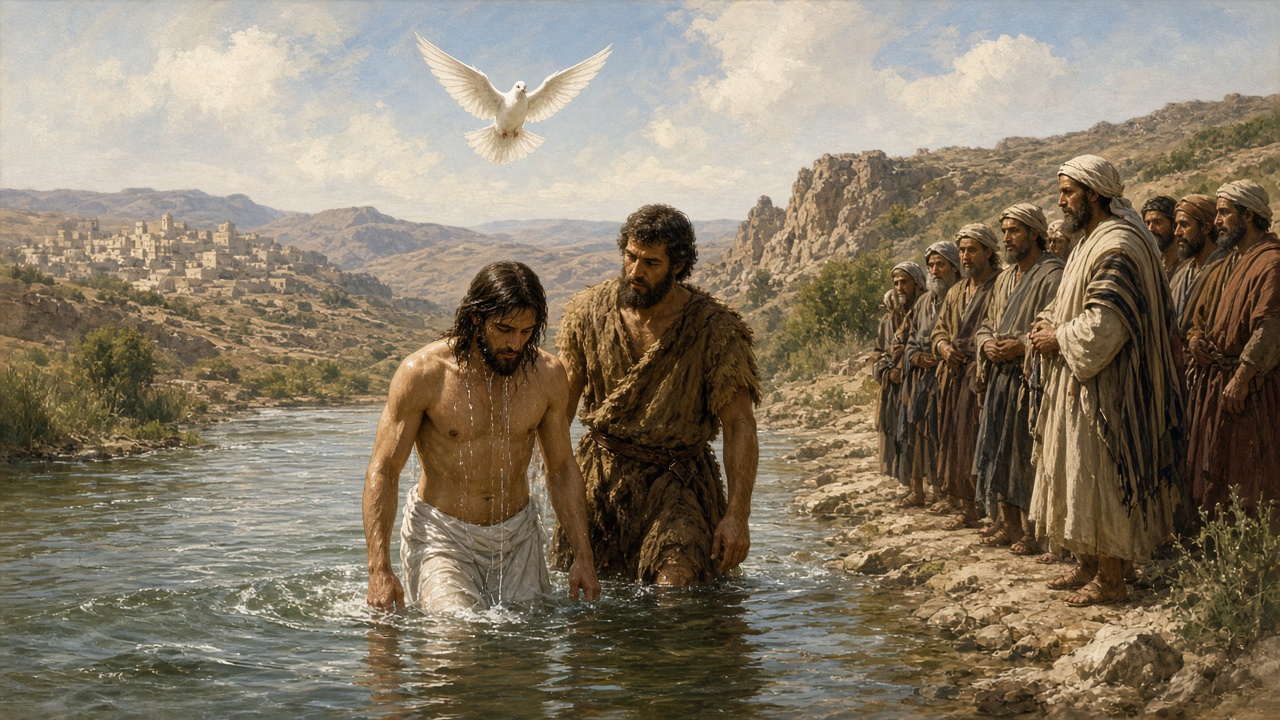
13Hên ampamawtismo hi Juan, ay nilumatêng hi Apo Jesus, ya ubat ha balayan Nazaret, ha probinsyan Galilea, ta nagpabawtismo ya kan Juan ha Ilog Jordan. 14Noa, binawal ya ni Juan, ya wana, “Hika ya dapat mamawtismo kangko! Pata hiko pon ya mamawtismo kamo!” 15Noa, hinabi ni Apo Jesus, “Paulayan mon malyari ya habaytsi, ta êmên matupad ya kalabayan ni Apo Namalyari.” Kabay nabay etaman hi Juan hên mamawtismo kan Apo Jesus. 16Hên nabawtismoan yay na hi Apo Jesus, hên inumawah ya ha lanêm, ay biglan nagloat ya langit, haka na nahêlêk ya Espiritu ni Apo Namalyari, ya an-umaypa hên nanad ha mihay pati-pati, ya inumugpa kana. 17Hên habayto, ay main habi ya ubat ha langit, ya wana, “Hatsi ya panlugurên kon Anak ya ampamahigla kangko.”
Você sabia?
Arrependimento e batismo no Jordão
- Mateus identifica João Batista como aquele de quem falou o profeta Isaías: uma voz que clama no deserto: “Preparem o caminho do Senhor”. O Dicionário Bíblico de Easton (1897) registra que a missão de João foi objeto de profecia, citando este trecho, Isaías 40:3 e Malaquias 3:1, e que ele era de descendência sacerdotal — o pai, Zacarias, sacerdote da turma de Abias, e a mãe, Isabel, das filhas de Arão. Uma cronologia data tanto o início do ministério de João quanto o batismo de Jesus no ano 26 d.C.Fontes: o próprio texto bíblico · John the Baptist · John the Baptist Begins Ministry · John Baptizes Jesus
- João veio pregando no deserto da Judeia, e pessoas de Jerusalém, de toda a Judeia e de toda a região ao redor do Jordão foram ao seu encontro, confessando os pecados e sendo batizadas no rio Jordão. O Dicionário Bíblico de Easton (1897) observa que, sob os romanos, no tempo de Cristo, Judeia designava a mais meridional das três divisões da Palestina, distinta da Galileia e da Samaria, e incluía os territórios de Judá, Benjamim, Dã, Simeão e parte de Efraim. Jesus veio da Galileia — chamada Galil pelos judeus — ao Jordão para ser batizado por João.Fontes: o próprio texto bíblico · Judea · Galilee
- João advertiu os fariseus e os saduceus a não se fiarem da afirmação “Temos a Abraão por pai”, dizendo que Deus podia suscitar filhos para Abraão a partir das pedras. O Dicionário Bíblico de Easton (1897) explica o nome Abraão como “pai de uma multidão” e o descreve como filho de Terá, nomeado antes dos irmãos mais velhos porque era o herdeiro das promessas.Fontes: o próprio texto bíblico · Abraham
Notas escritas com auxílio de IA a partir de fontes abertas (Theographic Bible Metadata, CC BY-SA 4.0; Easton’s Bible Dictionary, domínio público) e revisadas antes de publicar.
Lugares deste capítulo
- Judea · Hoje: Judea 1 · 31.777, 35.234 · versículos 1, 5
- Jerusalem · 31.777, 35.234 · versículo 5
- Jordan · Hoje: Jordan River · 31.761, 35.558 · versículos 5, 6, 13
- Galilee · 32.760, 35.527 · versículo 13
Só aparecem lugares com identificação de alta confiança (90% ou mais segundo as fontes acadêmicas reunidas pelo OpenBible). Mapa da época: DARE (Digital Atlas of the Roman Empire), CC BY 4.0; mapa atual: © colaboradores do OpenStreetMap; lugares: OpenBible.info (CC BY 4.0).
Créditos e licença desta tradução
Ya habi ni apo namalyari: Bayon tsipan - Ayta Mag-antsi
New Testament in Ayta, Mag-antsi
copyright © 2006 Wycliffe Bible Translators, Inc.
Language: Mag-antsi Ayta (Ayta, Mag-antsi)
Translation by: Wycliffe Bible Translators
Contributor: Wycliffe Bible Translators, Inc.
Copyright Information
© 2006, Wycliffe Bible Translators, Inc. All rights reserved.
This translation text is made available to you under the
terms of the Creative Commons License: Attribution-Noncommercial-No Derivative Works.
( http://creativecommons.org/licenses/by-nc-nd/3.0/ )
In addition, you have permission to port the text to different file formats, as long as you
do not change any of the text or punctuation of the Bible.
You may share, copy, distribute, transmit, and extract portions
or quotations from this work, provided that you include the above copyright
information:
You must give Attribution to the work.
You do not sell this work for a profit.
You do not make any derivative works that change any of the actual words or punctuation of the Scriptures.
Permissions beyond the scope of this license may be
available if you contact
us with your request.
Printed book ISBN 9789718260654
The New Testament
in Ayta, Mag-antsi
© 2006, Wycliffe Bible Translators, Inc. All rights reserved.
This translation is made available to you under the terms of the
Creative Commons Attribution-Noncommercial-No Derivatives license 4.0.
You may share and redistribute this Bible translation or extracts from it in any format, provided that:
You include the above copyright and source information.
You do not sell this work for a profit.
You do not change any of the words or punctuation of the Scriptures.
Pictures included with Scriptures and other documents on this site are licensed just for use with those Scriptures and documents.
For other uses, please contact the respective copyright owners.
2015-03-17
Fonte: http://ebible.org/sgb/ · eBible.org