Salmos 97
De Heilige Schrift, Petrus Canisiusvertaling, 1939 · Toque num versículo para ver as referências cruzadas.
1Jahweh is Koning! Laat de aarde jubelen, De ontelbare eilanden juichen! 2Donkere wolken pakken zich om Hem heen, Recht en gerechtigheid schragen zijn troon. 3Vuur gaat voor zijn aangezicht uit, En het vlamt om zijn schreden; 4Zijn bliksems verlichten de wereld, De aarde ziet het, en beeft! 5De bergen smelten als was voor het aanschijn van Jahweh, Voor den Heer van de volheid der aarde; 6De hemelen kondigen zijn gerechtigheid aan, Alle volken aanschouwen zijn glorie. 7Alle beeldenaanbidders worden te schande, Die zich op hun goden beroemen; En diep in het stof werpen alle afgoden Zich voor Hem neer. 8Sion hoort het vol vreugde, Juda’s dochteren juichen, Jahweh, om uw gericht; 9Want Gij zijt de Allerhoogste op heel de aarde, o Jahweh, Hoog boven alle goden verheven! 10Jahweh heeft lief Die de ongerechtigheid haat; Hij behoedt het leven van zijn getrouwen, En redt ze uit de handen der bozen. 11Een licht straalt over de rechtvaardigen uit, En blijdschap over de oprechten van hart; 12De vromen zullen zich in Jahweh verheugen, En loven zijn heilige Naam!
Você sabia?
O Reinado Universal do Senhor
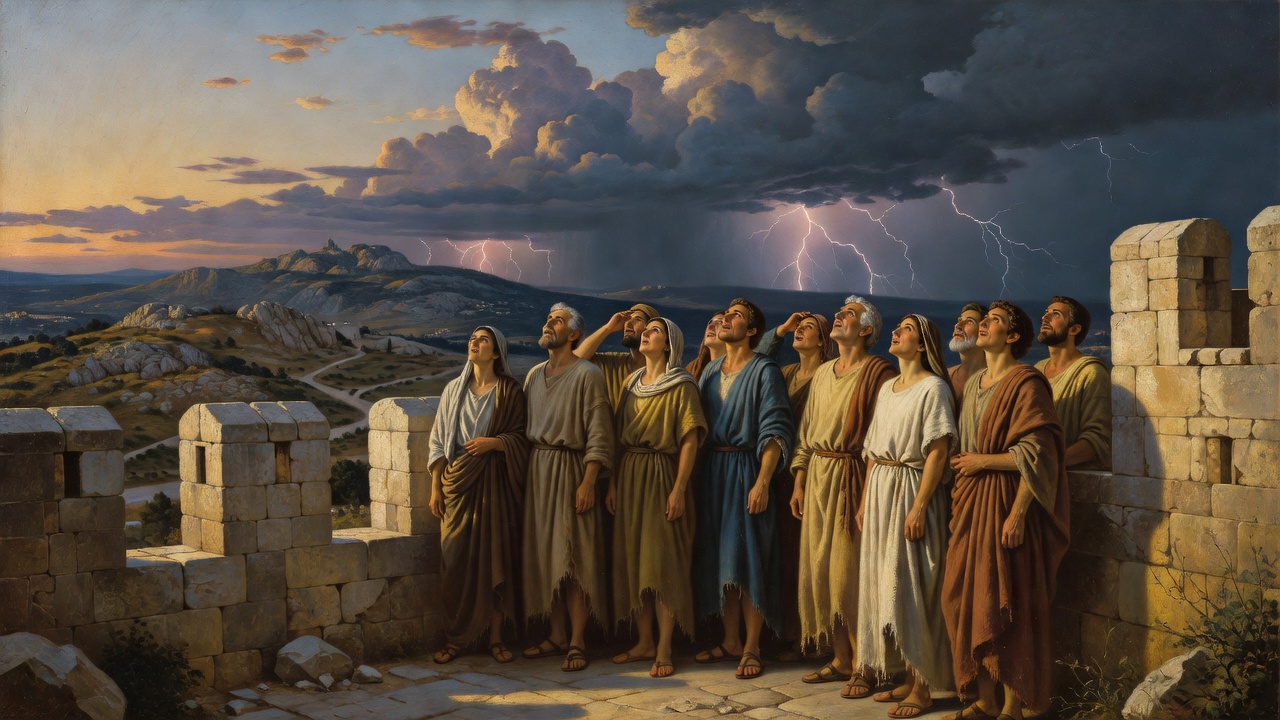
- O Salmo 97 retrata o governo supremo de Deus usando imagens dramáticas de teofania, descrevendo nuvens densas, trevas, fogo consumidor e relâmpagos que fazem a terra tremer e os montes derreterem como cera.Fontes: o próprio texto bíblico
- O salmo menciona Sião se alegrando junto com as cidades vizinhas de Judá; historicamente, Sião era a colina sudeste elevada de Jerusalém, onde o rei Davi estabeleceu sua fortaleza e palácio.Fontes: o próprio texto bíblico · Zion
- O texto confronta diretamente a idolatria ao declarar a vergonha daqueles que se vangloriam de imagens esculpidas, contrastando esse culto inútil com o livramento e a alegria concedidos aos retos de coração.Fontes: o próprio texto bíblico
Notas escritas com auxílio de IA a partir de fontes abertas (Theographic Bible Metadata, CC BY-SA 4.0; Easton’s Bible Dictionary, domínio público) e revisadas antes de publicar.
Lugares deste capítulo
- Zion · Hoje: Jerusalem · 31.777, 35.234 · versículo 8
Só aparecem lugares com identificação de alta confiança (90% ou mais segundo as fontes acadêmicas reunidas pelo OpenBible). Mapa da época: DARE (Digital Atlas of the Roman Empire), CC BY 4.0; mapa atual: © colaboradores do OpenStreetMap; lugares: OpenBible.info (CC BY 4.0).
Créditos e licença desta tradução
De Heilige Schrift, Petrus Canisiusvertaling, 1939
The Holy Bible in Dutch, Petrus Canisius translation, 1939
Public Domain
Language: Nederlandse taal (Dutch)
Eerste uitgave: Het Spectrum, Utrecht, Brussel, 1939
De Petrus Canisiusvertaling is een Nederlandse rooms-katholieke bijbelvertaling, waarvan de eerste complete uitgave verscheen in 1939. De volledige naam luidt: "De Heilige Schrift, vertaling uit de grondtekst met aantekeningen, in opdracht van de Apologetische Vereniging 'Petrus Canisius' ondernomen met goedkeuring van de hoogwaardige bisschoppen van Nederland". De Petrus Canisiusvertaling is de eerste Nederlandse katholieke vertaling die gebaseerd is op de grondteksten in hun oorspronkelijke taal. Andere vertalingen gingen uit van de Vulgaat. Het taalgebruik van de uitgave is naar hedendaagse normen licht archaïsch te noemen, maar nog steeds vlot verstaanbaar.
Verantwoording in verband met de auteursrechten
In verband met de auteursrechten is contact opgenomen met de oorspronkelijke uitgever (1), de Katholieke Vereniging voor Oecume (2) en de Katholieke Bijbelstichting (3) en werden geen bezwaren gevonden tegen deze publicatie. Rekening houdend met de wettelijke termijnen, kan deze uitgave beschouwd worden als vrij van auteursrechten.
First publication: Het Spectrum, Utrecht, Brussel, 1939
The translation "Petrus Canisius" is a dutch roman catholic bible translation, that was first published in 1939. Its full title is "The Holy Scripture, translation of the original texts with annotations, commissioned by the Apologetical Society 'Petrus Canisius' and executed with the approval of the most reverend bishops of the Netherlands". The translation "Petrus Canisius" is the first dutch catholic translation that was based on the scripture texts in their original language. Other translations were based on the Vulgate. The language of this edition is to current standards moderately archaic, but still easily understood.
Accountability in relation to copyright
Concerning the copyright contacts have been made with the original publisher (1), the Katholieke Vereniging voor Oecumene (Catholic Society for Ecumenism) (2) and the Katholieke Bijbelstichting (Catholic Bible Foundation) (3) and no objections have been found against this publication. Taking into account the legal terms, this edition can be considered to be in the public domain.
UITGEVERIJ UNIEBOEK|HET SPECTRUM BV, HOUTEN, THE NETHERLANDS
KATHOLIEKE VERENIGING VOOR OECUMENE, 'S HERTOGENBOSCH, THE NETHERLANDS
KBS, HOEVEN, THE NETHERLANDS
2024-08-06
Fonte: http://ebible.org/nld1939/ · eBible.org