Salmos 92
De Heilige Schrift, Petrus Canisiusvertaling, 1939 · Toque num versículo para ver as referências cruzadas.
1Een psalm; een lied voor de Sabbat. Heerlijk is het, Jahweh te loven, Uw Naam te prijzen, Allerhoogste, 2‘s Morgens vroeg uw goedheid te roemen, En uw trouw in de nacht: 3Op lier en harp, Met citerslag. 4Want Gij hebt mij verblijd door uw daden, o Jahweh, En ik juich om het werk uwer handen. 5Hoe groot zijn uw werken, o Jahweh, Hoe peilloos diep uw gedachten! 6Dom, wie dàt niet erkent; Dwaas, wie dàt niet begrijpt. 7Wanneer dan de zondaars groeien als gras, En al de boosdoeners bloeien: Dan is het, om voor altijd te gronde te gaan, 8Maar Gij, Jahweh, blijft eeuwig verheven! 9Ja, uw vijanden, Jahweh, lopen hun bederf tegemoet, En alle boosdoeners worden verstrooid. 10Maar mijn hoorn heft zich op als die van een buffel, Met verse olie word ik gezalfd; 11Vol vreugde ziet mijn oog op mijn vijanden neer, Hoort mijn oor van die mij bestrijden. 12Maar de rechtvaardige groeit als een palm, Als de ceder op de Libanon rijst hij omhoog. 13Zij worden in Jahweh’s tempel geplant, En bloeien in de voorhoven van onzen God; 14Zij dragen nog vrucht als ze oud zijn, En blijven nog sappig en fris. 15Zo verkondigen ze, dat Jahweh gerecht is, Mijn Rots, aan wien geen onrecht kleeft!
Você sabia?
Um Cântico de Louvor para o Sábado
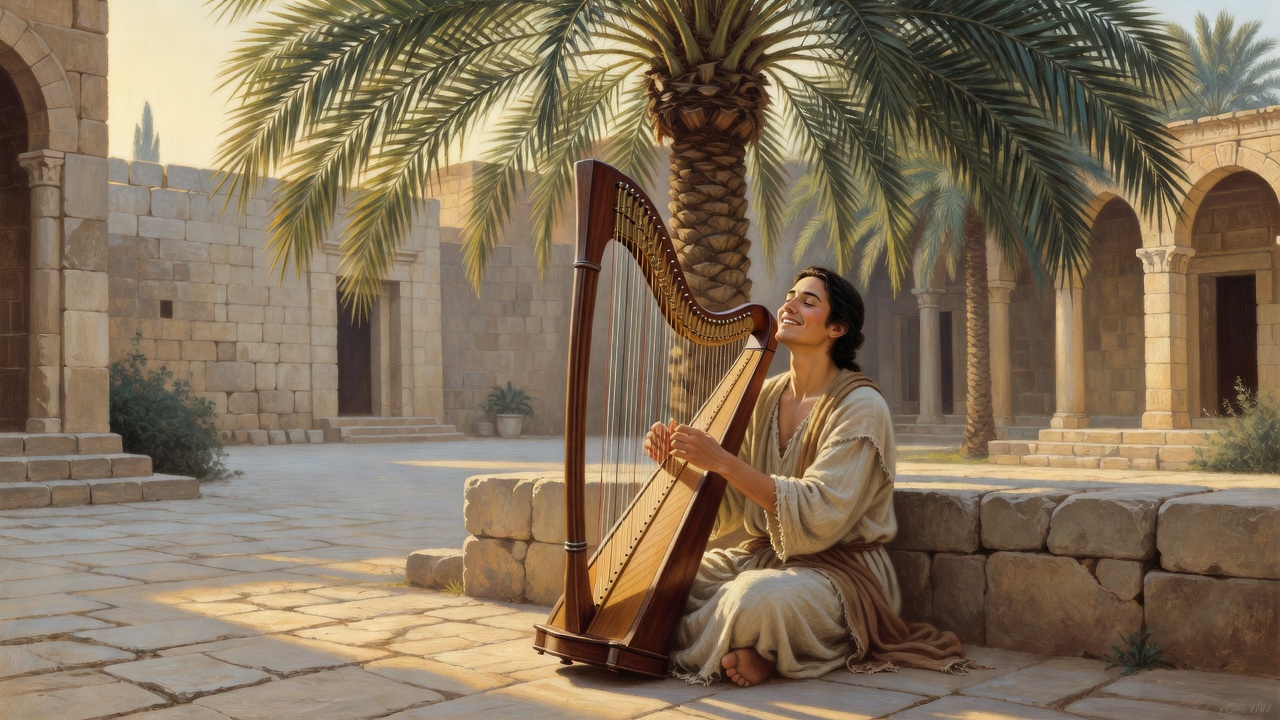
- O Salmo 92 é expressamente identificado em seu cabeçalho como um cântico para o dia de sábado. Ele descreve o louvor a Deus pela manhã e à noite, com o acompanhamento de instrumentos musicais como a harpa de dez cordas e a lira.Fontes: o próprio texto bíblico
- O salmo contrasta os malfeitores, que brotam rapidamente como a relva apenas para perecer, com os justos. Os fiéis são comparados a palmeiras vigorosas e aos altos cedros da famosa cordilheira do Líbano, permanecendo verdes e frutíferos até na velhice.Fontes: o próprio texto bíblico · Lebanon
Notas escritas com auxílio de IA a partir de fontes abertas (Theographic Bible Metadata, CC BY-SA 4.0; Easton’s Bible Dictionary, domínio público) e revisadas antes de publicar.
Lugares deste capítulo
- Lebanon · 33.540, 35.584 · versículo 12
Só aparecem lugares com identificação de alta confiança (90% ou mais segundo as fontes acadêmicas reunidas pelo OpenBible). Mapa da época: DARE (Digital Atlas of the Roman Empire), CC BY 4.0; mapa atual: © colaboradores do OpenStreetMap; lugares: OpenBible.info (CC BY 4.0).
Créditos e licença desta tradução
De Heilige Schrift, Petrus Canisiusvertaling, 1939
The Holy Bible in Dutch, Petrus Canisius translation, 1939
Public Domain
Language: Nederlandse taal (Dutch)
Eerste uitgave: Het Spectrum, Utrecht, Brussel, 1939
De Petrus Canisiusvertaling is een Nederlandse rooms-katholieke bijbelvertaling, waarvan de eerste complete uitgave verscheen in 1939. De volledige naam luidt: "De Heilige Schrift, vertaling uit de grondtekst met aantekeningen, in opdracht van de Apologetische Vereniging 'Petrus Canisius' ondernomen met goedkeuring van de hoogwaardige bisschoppen van Nederland". De Petrus Canisiusvertaling is de eerste Nederlandse katholieke vertaling die gebaseerd is op de grondteksten in hun oorspronkelijke taal. Andere vertalingen gingen uit van de Vulgaat. Het taalgebruik van de uitgave is naar hedendaagse normen licht archaïsch te noemen, maar nog steeds vlot verstaanbaar.
Verantwoording in verband met de auteursrechten
In verband met de auteursrechten is contact opgenomen met de oorspronkelijke uitgever (1), de Katholieke Vereniging voor Oecume (2) en de Katholieke Bijbelstichting (3) en werden geen bezwaren gevonden tegen deze publicatie. Rekening houdend met de wettelijke termijnen, kan deze uitgave beschouwd worden als vrij van auteursrechten.
First publication: Het Spectrum, Utrecht, Brussel, 1939
The translation "Petrus Canisius" is a dutch roman catholic bible translation, that was first published in 1939. Its full title is "The Holy Scripture, translation of the original texts with annotations, commissioned by the Apologetical Society 'Petrus Canisius' and executed with the approval of the most reverend bishops of the Netherlands". The translation "Petrus Canisius" is the first dutch catholic translation that was based on the scripture texts in their original language. Other translations were based on the Vulgate. The language of this edition is to current standards moderately archaic, but still easily understood.
Accountability in relation to copyright
Concerning the copyright contacts have been made with the original publisher (1), the Katholieke Vereniging voor Oecumene (Catholic Society for Ecumenism) (2) and the Katholieke Bijbelstichting (Catholic Bible Foundation) (3) and no objections have been found against this publication. Taking into account the legal terms, this edition can be considered to be in the public domain.
UITGEVERIJ UNIEBOEK|HET SPECTRUM BV, HOUTEN, THE NETHERLANDS
KATHOLIEKE VERENIGING VOOR OECUMENE, 'S HERTOGENBOSCH, THE NETHERLANDS
KBS, HOEVEN, THE NETHERLANDS
2024-08-06
Fonte: http://ebible.org/nld1939/ · eBible.org