Salmos 42
De Heilige Schrift, Petrus Canisiusvertaling, 1939 · Toque num versículo para ver as referências cruzadas.
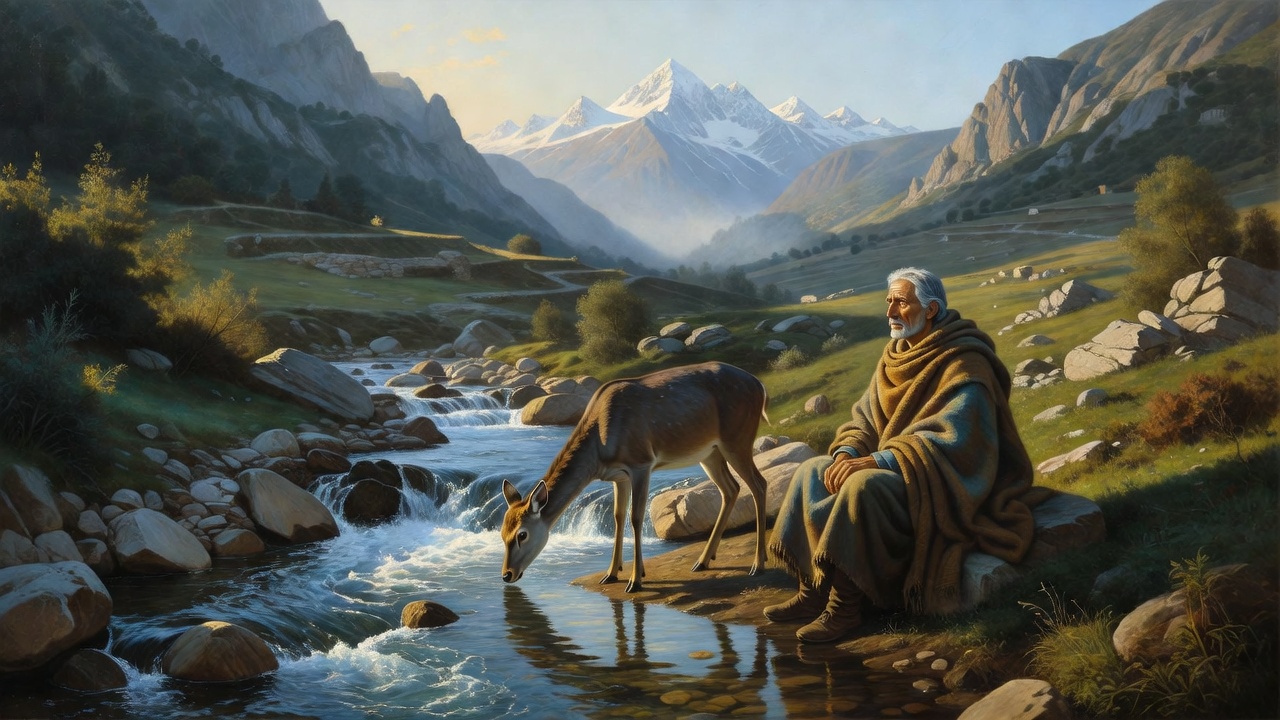
1Voor muziekbegeleiding. Een leerdicht; van de zonen van Kore. Zoals een hert smacht naar de stromende wateren. Zo smacht mijn ziel naar U, o God! 2Mijn ziel dorst naar God, naar den levenden God: Wanneer mag ik opgaan, en Gods aanschijn aanschouwen? 3Dag en nacht zijn de tranen mijn brood, Omdat mij almaar gezegd wordt: “Waar blijft toch uw God!” 4Ik denk er met diepe weemoed aan terug, Hoe ik optrok in vorstelijke stoet naar Gods huis, Onder gejuich en gejubel En het gejoel van de schare. 5Mijn ziel, wat zijt gij bedroefd, En wat kreunt gij in mij? Vertrouw toch op God: Dan zal ik Hem eens mogen danken Als mijn Helper en God! 6Mijn ziel is bedroefd, daarom denk ik aan U terug, In het land van Jordaan en Hermon en in het lage gebergte. 7Afgrond dreunt tegen afgrond door het gebruis van uw stromen. Al uw golven en baren slaan over mij heen. 8Overdag blijf ik uitzien naar Jahweh om zijn genade, ‘s Nachts klinkt mijn lied als een gebed tot den levenden God. 9Ik zeg tot mijn God en mijn Rots: “Waarom zijt Gij mij vergeten; Waarom ga ik in rouw door de druk van mijn vijand?” 10De hoon van mijn haters schrijnt als een steek in mijn beenderen, Omdat mij almaar gezegd wordt: “Waar blijft toch uw God!” 11Mijn ziel, wat zijt gij bedroefd, En wat kreunt gij in mij? Vertrouw toch op God: Dan zal ik Hem eens mogen danken Als mijn Helper en God!
Você sabia?
A Sede de Deus Longe de Casa
- O salmo é apresentado como um cântico dos filhos de Coré, uma família levítica descendente do levita Coré que participava da música e do culto no templo.Fontes: o próprio texto bíblico · Korah (Levite)
- O autor expressa sua saudade de Deus a partir das terras do norte, mencionando a região do Jordão, o monte Hermom e o monte Mizar. O Hermom é uma cadeia imponente com múltiplos cumes que chegam a cerca de 2.800 metros de altitude, enquanto Mizar (que significa 'pequenez') designa uma colina menor nas proximidades.Fontes: o próprio texto bíblico · Hermon · Hill Mizar
- O poema utiliza metáforas vívidas de água, partindo de uma corça sedenta que anseia por correntes até cascatas estrondosas e ondas impetuosas que simbolizam uma profunda aflição emocional.Fontes: o próprio texto bíblico
Notas escritas com auxílio de IA a partir de fontes abertas (Theographic Bible Metadata, CC BY-SA 4.0; Easton’s Bible Dictionary, domínio público) e revisadas antes de publicar.
Lugares deste capítulo
- Jordan · Hoje: Jordan River · 31.761, 35.558 · versículo 6
- Mount Hermon · 33.400, 35.850 · versículo 6
Só aparecem lugares com identificação de alta confiança (90% ou mais segundo as fontes acadêmicas reunidas pelo OpenBible). Mapa da época: DARE (Digital Atlas of the Roman Empire), CC BY 4.0; mapa atual: © colaboradores do OpenStreetMap; lugares: OpenBible.info (CC BY 4.0).
Créditos e licença desta tradução
De Heilige Schrift, Petrus Canisiusvertaling, 1939
The Holy Bible in Dutch, Petrus Canisius translation, 1939
Public Domain
Language: Nederlandse taal (Dutch)
Eerste uitgave: Het Spectrum, Utrecht, Brussel, 1939
De Petrus Canisiusvertaling is een Nederlandse rooms-katholieke bijbelvertaling, waarvan de eerste complete uitgave verscheen in 1939. De volledige naam luidt: "De Heilige Schrift, vertaling uit de grondtekst met aantekeningen, in opdracht van de Apologetische Vereniging 'Petrus Canisius' ondernomen met goedkeuring van de hoogwaardige bisschoppen van Nederland". De Petrus Canisiusvertaling is de eerste Nederlandse katholieke vertaling die gebaseerd is op de grondteksten in hun oorspronkelijke taal. Andere vertalingen gingen uit van de Vulgaat. Het taalgebruik van de uitgave is naar hedendaagse normen licht archaïsch te noemen, maar nog steeds vlot verstaanbaar.
Verantwoording in verband met de auteursrechten
In verband met de auteursrechten is contact opgenomen met de oorspronkelijke uitgever (1), de Katholieke Vereniging voor Oecume (2) en de Katholieke Bijbelstichting (3) en werden geen bezwaren gevonden tegen deze publicatie. Rekening houdend met de wettelijke termijnen, kan deze uitgave beschouwd worden als vrij van auteursrechten.
First publication: Het Spectrum, Utrecht, Brussel, 1939
The translation "Petrus Canisius" is a dutch roman catholic bible translation, that was first published in 1939. Its full title is "The Holy Scripture, translation of the original texts with annotations, commissioned by the Apologetical Society 'Petrus Canisius' and executed with the approval of the most reverend bishops of the Netherlands". The translation "Petrus Canisius" is the first dutch catholic translation that was based on the scripture texts in their original language. Other translations were based on the Vulgate. The language of this edition is to current standards moderately archaic, but still easily understood.
Accountability in relation to copyright
Concerning the copyright contacts have been made with the original publisher (1), the Katholieke Vereniging voor Oecumene (Catholic Society for Ecumenism) (2) and the Katholieke Bijbelstichting (Catholic Bible Foundation) (3) and no objections have been found against this publication. Taking into account the legal terms, this edition can be considered to be in the public domain.
UITGEVERIJ UNIEBOEK|HET SPECTRUM BV, HOUTEN, THE NETHERLANDS
KATHOLIEKE VERENIGING VOOR OECUMENE, 'S HERTOGENBOSCH, THE NETHERLANDS
KBS, HOEVEN, THE NETHERLANDS
2024-08-06
Fonte: http://ebible.org/nld1939/ · eBible.org