Jeremias 47
De Heilige Schrift, Petrus Canisiusvertaling, 1939 · Toque num versículo para ver as referências cruzadas.
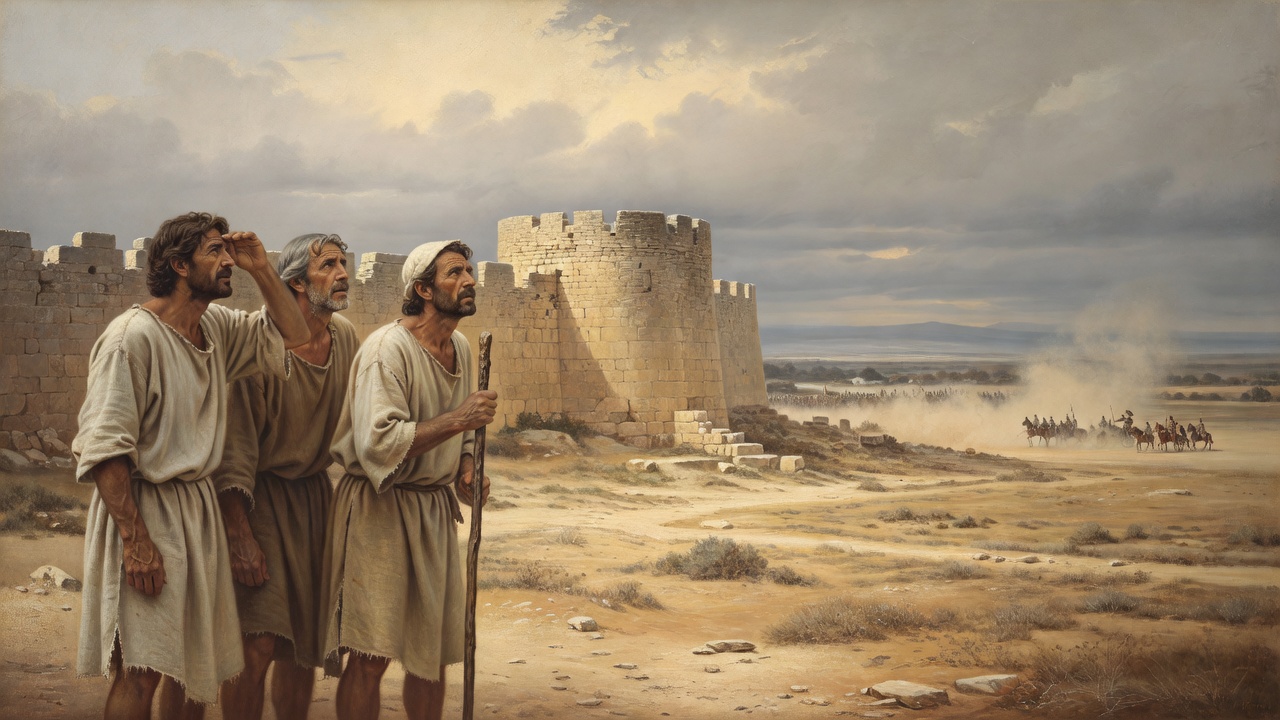
1Het woord van Jahweh, dat tot den profeet Jeremias over de Filistijnen werd gericht, eer Farao Gaza overweldigde. 2Zo spreekt Jahweh! Zie, de wateren rollen aan uit het noorden, Een onstuimige vloed; Ze overstromen het land met al wat er op staat, De steden met die er in wonen. De mensen jammeren, Al de inwoners huilen: 3Om het stampen der hoeven van zijn hengsten, Het gedreun van zijn wagens, het geratel der wielen. De vaders zien naar hun kinderen niet om, Zo hangen hun handen verslapt: 4Omdat de dag is gekomen, Waarop alle Filistijnen worden verdelgd. Beroofd worden Tyrus en Sidon Van hun laatste helpers; Want Jahweh gaat de Filistijnen vernielen, Het overschot van het kustland van Kaftor. 5Gaza heeft zich kaal geschoren, Asjkelon is met stomheid geslagen; Overschot der Enakieten, Hoe lang zult gij u kerven? 6Ha, zwaard van Jahweh, Wanneer komt ge tot rust? Keer terug in uw schede, Word rustig en stil! 7Hoe zou het tot rust kunnen komen; Want Jahweh heeft het besteld Tegen Asjkelon en tegen de kusten der zee: Daar heeft Hij het ontboden!
Você sabia?
Julgamento sobre os Filisteus
- Jeremias se refere aos filisteus como o remanescente das costas de Caftor. As tradições bíblicas identificam Caftor como a terra de origem dos filisteus, um lugar amplamente associado por estudiosos a Creta ou a partes da costa do Mediterrâneo oriental.Fontes: o próprio texto bíblico · Caphtor
- O capítulo direciona seus avisos contra Gaza e Ascalom, duas das cinco cidades filisteias proeminentes ao longo da costa mediterrânea. Ambas eram centros antigos conhecidos por sua posição estratégica e rotas comerciais que ligavam o Egito e as regiões vizinhas.Fontes: o próprio texto bíblico · Gaza · Ashkelon
- A profecia observa que a destruição iminente cortaria todos os aliados restantes de Tiro e Sidom. Esses dois grandes portos fenícios ao norte eram centros marítimos cruciais cujos interesses estavam intimamente ligados à região costeira.Fontes: o próprio texto bíblico · Tyre · Sidon
Notas escritas com auxílio de IA a partir de fontes abertas (Theographic Bible Metadata, CC BY-SA 4.0; Easton’s Bible Dictionary, domínio público) e revisadas antes de publicar.
Lugares deste capítulo
- Gaza · Hoje: Tell Harube · 31.504, 34.464 · versículos 1, 5
- Sidon · Hoje: Sandikli archaeological site in Sidon · 33.561, 35.372 · versículo 4
- Tyre · 33.271, 35.196 · versículo 4
- Ashkelon · Hoje: Tel Ashkelon · 31.664, 34.546 · versículos 5, 7
- Great Sea · Hoje: Mediterranean Sea · 31.805, 34.170 · versículo 5
- Philistia · 31.664, 34.546 · versículo 5
Só aparecem lugares com identificação de alta confiança (90% ou mais segundo as fontes acadêmicas reunidas pelo OpenBible). Mapa da época: DARE (Digital Atlas of the Roman Empire), CC BY 4.0; mapa atual: © colaboradores do OpenStreetMap; lugares: OpenBible.info (CC BY 4.0).
Créditos e licença desta tradução
De Heilige Schrift, Petrus Canisiusvertaling, 1939
The Holy Bible in Dutch, Petrus Canisius translation, 1939
Public Domain
Language: Nederlandse taal (Dutch)
Eerste uitgave: Het Spectrum, Utrecht, Brussel, 1939
De Petrus Canisiusvertaling is een Nederlandse rooms-katholieke bijbelvertaling, waarvan de eerste complete uitgave verscheen in 1939. De volledige naam luidt: "De Heilige Schrift, vertaling uit de grondtekst met aantekeningen, in opdracht van de Apologetische Vereniging 'Petrus Canisius' ondernomen met goedkeuring van de hoogwaardige bisschoppen van Nederland". De Petrus Canisiusvertaling is de eerste Nederlandse katholieke vertaling die gebaseerd is op de grondteksten in hun oorspronkelijke taal. Andere vertalingen gingen uit van de Vulgaat. Het taalgebruik van de uitgave is naar hedendaagse normen licht archaïsch te noemen, maar nog steeds vlot verstaanbaar.
Verantwoording in verband met de auteursrechten
In verband met de auteursrechten is contact opgenomen met de oorspronkelijke uitgever (1), de Katholieke Vereniging voor Oecume (2) en de Katholieke Bijbelstichting (3) en werden geen bezwaren gevonden tegen deze publicatie. Rekening houdend met de wettelijke termijnen, kan deze uitgave beschouwd worden als vrij van auteursrechten.
First publication: Het Spectrum, Utrecht, Brussel, 1939
The translation "Petrus Canisius" is a dutch roman catholic bible translation, that was first published in 1939. Its full title is "The Holy Scripture, translation of the original texts with annotations, commissioned by the Apologetical Society 'Petrus Canisius' and executed with the approval of the most reverend bishops of the Netherlands". The translation "Petrus Canisius" is the first dutch catholic translation that was based on the scripture texts in their original language. Other translations were based on the Vulgate. The language of this edition is to current standards moderately archaic, but still easily understood.
Accountability in relation to copyright
Concerning the copyright contacts have been made with the original publisher (1), the Katholieke Vereniging voor Oecumene (Catholic Society for Ecumenism) (2) and the Katholieke Bijbelstichting (Catholic Bible Foundation) (3) and no objections have been found against this publication. Taking into account the legal terms, this edition can be considered to be in the public domain.
UITGEVERIJ UNIEBOEK|HET SPECTRUM BV, HOUTEN, THE NETHERLANDS
KATHOLIEKE VERENIGING VOOR OECUMENE, 'S HERTOGENBOSCH, THE NETHERLANDS
KBS, HOEVEN, THE NETHERLANDS
2024-08-06
Fonte: http://ebible.org/nld1939/ · eBible.org