Isaías 4
De Heilige Schrift, Petrus Canisiusvertaling, 1939 · Toque num versículo para ver as referências cruzadas.
1Zeven vrouwen zullen vechten om één man op die dag, En zeggen: ons eigen brood willen we eten, Onze eigen kleren wel dragen, Als we maar naar u mogen heten: neem de smaad van ons weg! 2Maar op die dag zal de Spruit van Jahweh Tot glorie en heerlijkheid worden, De Vrucht van het land tot roem en luister Van wie in Israël zal worden gered; 3En de rest van Juda En wat in Jerusalem gespaard bleef, Zal heilig worden genoemd, Iedereen in Jeruzalem, die staat opgeschreven ten leven. 4Als de Heer de smet van Sions dochters heeft uitgewist, En de bloedschuld uit Jerusalem weggespoeld, Door de stormwind van oordeel, Door de orkaan van verwoesting: 5Dan schept Jahweh over heel de bergrug van Sion, En over heel zijn omgeving, Een wolk van rook overdag, En een gloed van laaiende vlammen des nachts. Dan zal de glorie van Jahweh ze allen bedekken Als een schutdak en tent, 6Tot schaduw tegen de hitte op de dag, Tot toevlucht en schuilplaats tegen stortvloed en regen!
Você sabia?
A purificação e restauração de Sião
- O monte Sião era uma das elevações naturais sobre as quais Jerusalém foi construída. Conquistado dos jebuseus por Davi, ficou conhecido como a Cidade de Davi e, nos escritos proféticos, representa com frequência o centro da comunidade santa.Fontes: Mount Zion · Jerusalem · o próprio texto bíblico
- O capítulo inicia com as consequências de um conflito devastador, no qual sete mulheres suplicam para levar o nome de um único homem enquanto provêm seu próprio sustento e vestes, buscando apenas afastar a sua desonra social.Fontes: o próprio texto bíblico
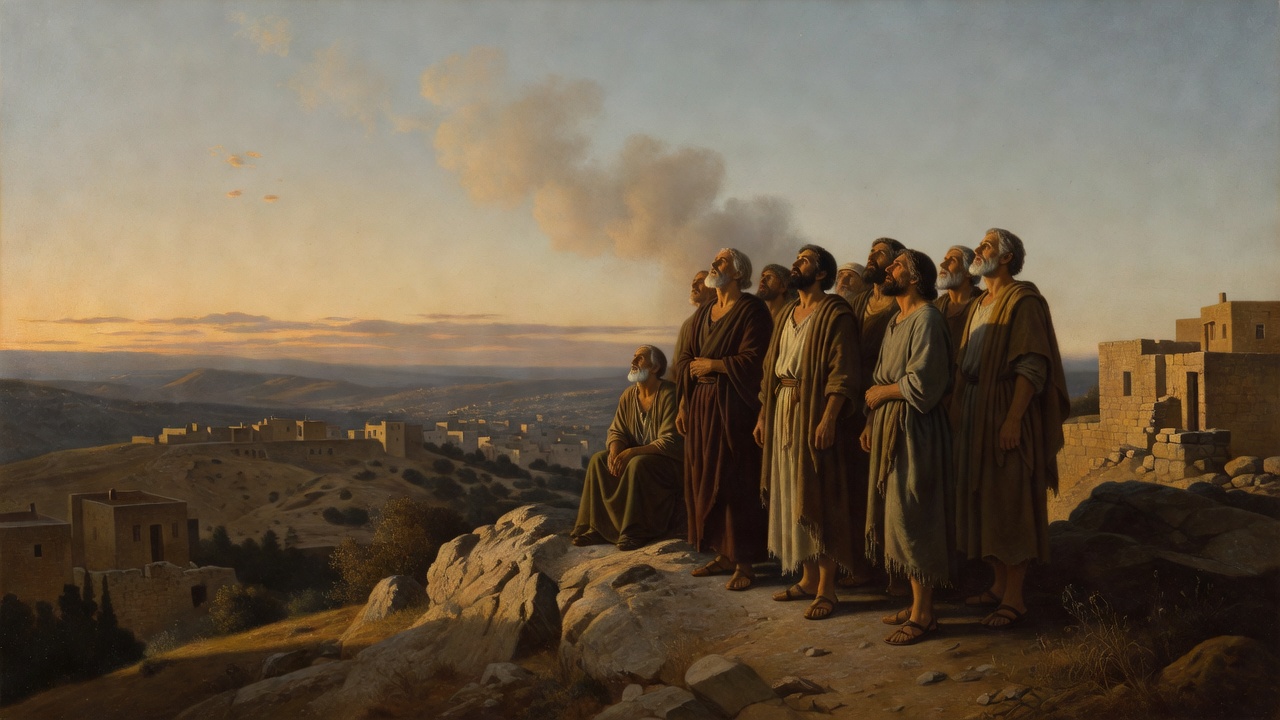
- Isaías retrata a restauração divina por meio da imagem de uma cobertura protetora sobre o monte Sião, manifestada como nuvem de fumaça de dia e fogo resplandecente à noite, oferecendo abrigo e refúgio aos que estão inscritos para a vida.Fontes: o próprio texto bíblico
Notas escritas com auxílio de IA a partir de fontes abertas (Theographic Bible Metadata, CC BY-SA 4.0; Easton’s Bible Dictionary, domínio público) e revisadas antes de publicar.
Lugares deste capítulo
- Jerusalem · 31.777, 35.234 · versículos 3, 4
- Zion · Hoje: Jerusalem · 31.777, 35.234 · versículos 3, 4
- Mount Zion · 31.772, 35.229 · versículo 5
Só aparecem lugares com identificação de alta confiança (90% ou mais segundo as fontes acadêmicas reunidas pelo OpenBible). Mapa da época: DARE (Digital Atlas of the Roman Empire), CC BY 4.0; mapa atual: © colaboradores do OpenStreetMap; lugares: OpenBible.info (CC BY 4.0).
Créditos e licença desta tradução
De Heilige Schrift, Petrus Canisiusvertaling, 1939
The Holy Bible in Dutch, Petrus Canisius translation, 1939
Public Domain
Language: Nederlandse taal (Dutch)
Eerste uitgave: Het Spectrum, Utrecht, Brussel, 1939
De Petrus Canisiusvertaling is een Nederlandse rooms-katholieke bijbelvertaling, waarvan de eerste complete uitgave verscheen in 1939. De volledige naam luidt: "De Heilige Schrift, vertaling uit de grondtekst met aantekeningen, in opdracht van de Apologetische Vereniging 'Petrus Canisius' ondernomen met goedkeuring van de hoogwaardige bisschoppen van Nederland". De Petrus Canisiusvertaling is de eerste Nederlandse katholieke vertaling die gebaseerd is op de grondteksten in hun oorspronkelijke taal. Andere vertalingen gingen uit van de Vulgaat. Het taalgebruik van de uitgave is naar hedendaagse normen licht archaïsch te noemen, maar nog steeds vlot verstaanbaar.
Verantwoording in verband met de auteursrechten
In verband met de auteursrechten is contact opgenomen met de oorspronkelijke uitgever (1), de Katholieke Vereniging voor Oecume (2) en de Katholieke Bijbelstichting (3) en werden geen bezwaren gevonden tegen deze publicatie. Rekening houdend met de wettelijke termijnen, kan deze uitgave beschouwd worden als vrij van auteursrechten.
First publication: Het Spectrum, Utrecht, Brussel, 1939
The translation "Petrus Canisius" is a dutch roman catholic bible translation, that was first published in 1939. Its full title is "The Holy Scripture, translation of the original texts with annotations, commissioned by the Apologetical Society 'Petrus Canisius' and executed with the approval of the most reverend bishops of the Netherlands". The translation "Petrus Canisius" is the first dutch catholic translation that was based on the scripture texts in their original language. Other translations were based on the Vulgate. The language of this edition is to current standards moderately archaic, but still easily understood.
Accountability in relation to copyright
Concerning the copyright contacts have been made with the original publisher (1), the Katholieke Vereniging voor Oecumene (Catholic Society for Ecumenism) (2) and the Katholieke Bijbelstichting (Catholic Bible Foundation) (3) and no objections have been found against this publication. Taking into account the legal terms, this edition can be considered to be in the public domain.
UITGEVERIJ UNIEBOEK|HET SPECTRUM BV, HOUTEN, THE NETHERLANDS
KATHOLIEKE VERENIGING VOOR OECUMENE, 'S HERTOGENBOSCH, THE NETHERLANDS
KBS, HOEVEN, THE NETHERLANDS
2024-08-06
Fonte: http://ebible.org/nld1939/ · eBible.org