1 Coríntios 13
De Heilige Schrift, Petrus Canisiusvertaling, 1939 · Toque num versículo para ver as referências cruzadas.
1Al spreek ik de talen van mensen en engelen, Maar ik heb de liefde niet: Ik ben een rinkelend bekken, Of een rammelend cymbaal. 2Al heb ik de gave der profetie, Al bezit ik alle geheimen en kennis, Al heb ik het volle geloof, dat bergen verzet: Zonder liefde ben ik niets. 3Al schenk ik weg al wat ik heb, Al geef ik mijn lichaam, om mij te laten verbranden: Zo ik de liefde niet heb, Het dient mij tot niets. 4De liefde is geduldig, De liefde is goedertieren, De liefde is niet afgunstig, Niet pronkzuchtig, niet verwaand. 5Zij handelt niet onedel, En zoekt zichzelve niet, Zij laat zich niet verbitteren, En rekent het kwade niet aan. 6Over onrecht is zij niet blijde, Maar over de waarheid verheugd. 7Alles bedekt zij, alles gelooft zij, Alles hoopt zij, alles duldt zij. 8De liefde: zij vergaat nimmer! Maar profetieën: zij houden op, En talen: zij zullen verstommen, En kennis: zij zal vergaan. 9Want ons kennen is ten halve, Ons profeteren slechts ten dele; 10Maar komt eens het volmaakte, Het onvolmaakte verdwijnt. 11Toen ik een kind was, sprak ik als kind, Voelde ik als kind, dacht ik als kind; 12Nu ik een man ben, Leg ik het kinderlijke af. Thans zien wij in een wazige spiegel; Straks aangezicht tot aangezicht. Thans ken ik slechts ten halve; Straks ten volle, zoals ik zelf ben gekend. 13Zo blijven bestaan Geloof, hoop en liefde, Drie in getal; Maar de grootste daarvan is de liefde.
Você sabia?
O amor acima de todos os dons
- Sem amor, diz o capítulo, falar em línguas de homens e de anjos é apenas um gongo que ressoa ou um címbalo que retine. Quem tem profecia, poder para sondar todos os mistérios e todo o conhecimento, e fé capaz de mover montanhas não é nada; quem dá aos pobres tudo o que possui, ou entrega o próprio corpo, não ganha nada.Fontes: o próprio texto bíblico
- O amor é paciente e bondoso. Não inveja, não se gaba nem age com orgulho; não é grosseiro, não busca o próprio interesse nem se ira com facilidade, e não guarda conta das ofensas. Não se alegra com o mal, alegra-se com a verdade e tudo suporta, tudo crê, tudo espera e tudo persevera.Fontes: o próprio texto bíblico
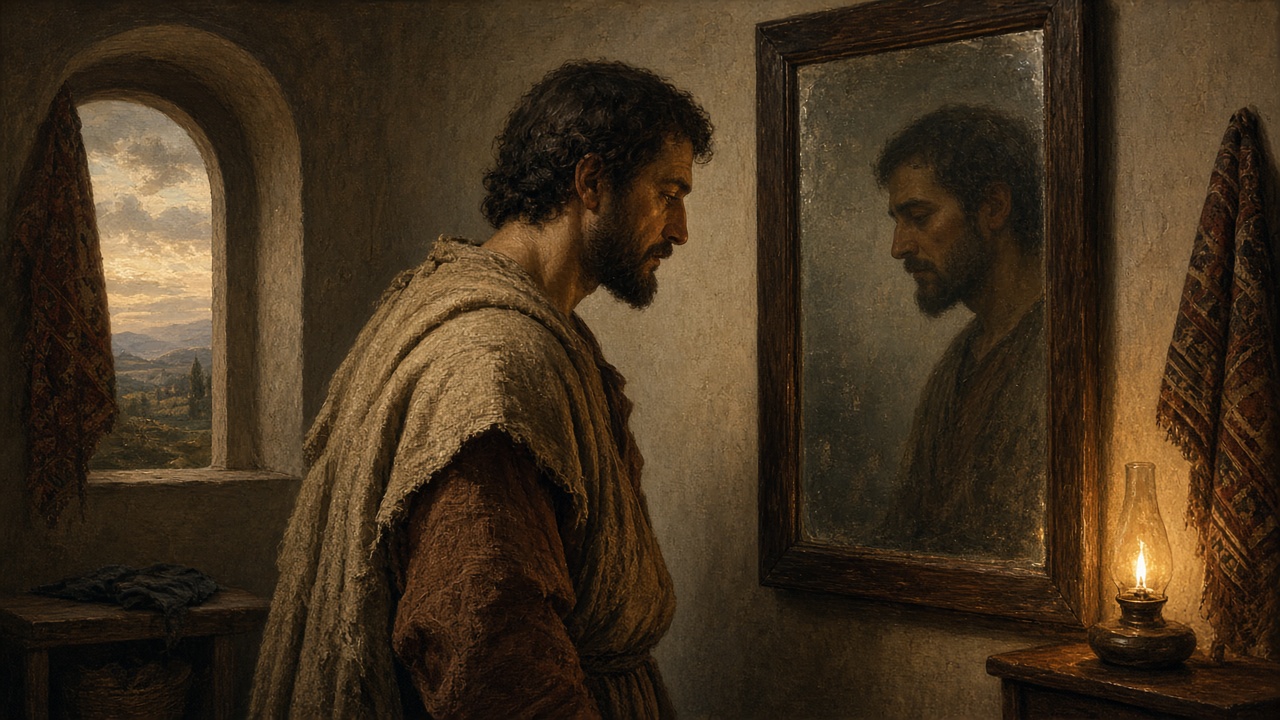
- O amor, diz o capítulo, jamais acaba, mas as profecias cessarão, as línguas serão contidas e o conhecimento será dispensado. O que agora se conhece e se profetiza é parcial, como o raciocínio de uma criança ou um reflexo embaçado num espelho, em vez de ver face a face. Permanecem a fé, a esperança e o amor, e o maior deles é o amor.Fontes: o próprio texto bíblico
Notas escritas com auxílio de IA a partir de fontes abertas (Theographic Bible Metadata, CC BY-SA 4.0; Easton’s Bible Dictionary, domínio público) e revisadas antes de publicar.
Créditos e licença desta tradução
De Heilige Schrift, Petrus Canisiusvertaling, 1939
The Holy Bible in Dutch, Petrus Canisius translation, 1939
Public Domain
Language: Nederlandse taal (Dutch)
Eerste uitgave: Het Spectrum, Utrecht, Brussel, 1939
De Petrus Canisiusvertaling is een Nederlandse rooms-katholieke bijbelvertaling, waarvan de eerste complete uitgave verscheen in 1939. De volledige naam luidt: "De Heilige Schrift, vertaling uit de grondtekst met aantekeningen, in opdracht van de Apologetische Vereniging 'Petrus Canisius' ondernomen met goedkeuring van de hoogwaardige bisschoppen van Nederland". De Petrus Canisiusvertaling is de eerste Nederlandse katholieke vertaling die gebaseerd is op de grondteksten in hun oorspronkelijke taal. Andere vertalingen gingen uit van de Vulgaat. Het taalgebruik van de uitgave is naar hedendaagse normen licht archaïsch te noemen, maar nog steeds vlot verstaanbaar.
Verantwoording in verband met de auteursrechten
In verband met de auteursrechten is contact opgenomen met de oorspronkelijke uitgever (1), de Katholieke Vereniging voor Oecume (2) en de Katholieke Bijbelstichting (3) en werden geen bezwaren gevonden tegen deze publicatie. Rekening houdend met de wettelijke termijnen, kan deze uitgave beschouwd worden als vrij van auteursrechten.
First publication: Het Spectrum, Utrecht, Brussel, 1939
The translation "Petrus Canisius" is a dutch roman catholic bible translation, that was first published in 1939. Its full title is "The Holy Scripture, translation of the original texts with annotations, commissioned by the Apologetical Society 'Petrus Canisius' and executed with the approval of the most reverend bishops of the Netherlands". The translation "Petrus Canisius" is the first dutch catholic translation that was based on the scripture texts in their original language. Other translations were based on the Vulgate. The language of this edition is to current standards moderately archaic, but still easily understood.
Accountability in relation to copyright
Concerning the copyright contacts have been made with the original publisher (1), the Katholieke Vereniging voor Oecumene (Catholic Society for Ecumenism) (2) and the Katholieke Bijbelstichting (Catholic Bible Foundation) (3) and no objections have been found against this publication. Taking into account the legal terms, this edition can be considered to be in the public domain.
UITGEVERIJ UNIEBOEK|HET SPECTRUM BV, HOUTEN, THE NETHERLANDS
KATHOLIEKE VERENIGING VOOR OECUMENE, 'S HERTOGENBOSCH, THE NETHERLANDS
KBS, HOEVEN, THE NETHERLANDS
2024-08-06
Fonte: http://ebible.org/nld1939/ · eBible.org