Atos 24
Abware̱se̱ŋ Wo̱re̱-ɔ · Toque num versículo para ver as referências cruzadas.
Ane̱ŋ ne̱ Yudaa awuye‑o a po̱rɔ Pɔɔl gominaa‑o akatɔ‑rɔ‑ɔ
1To, ke̱mo̱ ŋke nnuu kamɛɛ, ne̱ Wuribware̱ ɔlɔŋŋɔpo̱ bre̱sɛ Ananiyas na maŋ abre̱sɛ ko̱ na lɔɔyaa ko̱ ne̱ ba te̱e̱ mò̱ ɛ Tɛrɛtulus‑o a le̱e̱ Yɛro̱salɛm ba Kaye̱sare̱ya mfe̱ŋ. Ne̱ baa yɔ gominaa‑o akatɔ‑rɔ ya tɔwe̱ bamo̱ kanɔ se̱ ase̱ŋ ne̱ bo̱ de bo̱ kye Pɔɔl‑ɔ. 2Ne̱ gominaa‑o a te̱e̱ Pɔɔl mɔ baa, ne̱ Tɛrɛtulus a le̱e̱ ase̱ŋ ne̱ bamo̱ aa Pɔɔl de‑o ko̱tɔwe̱ kaase̱ tɔwe̱ fe̱yɛ, “Bre̱sɛ Feelis, fo̱ kanyiase̱ŋ ne̱ fo̱ de fo̱ e̱ de̱e̱re̱ ane̱ se̱‑ɔ se̱, ane̱ a nya kaye̱e̱yuri kyee, ne̱ atɔ bwe̱e̱tɔ i kyurowi a baa atɔ timaa ane̱ swe̱e̱re̱ mɔ se̱. 3Ane̱ a sure nkyurowi amo̱ se̱ to̱ŋ ke̱maa na saŋ ke̱maa, ne̱ aa waa ane̱ kɔne̱ bwe̱e̱tɔ bwe̱e̱tɔ. 4To, ma kpa a ŋ kra mo̱ne̱ bo̱ kye̱na mfe̱e̱ kyee, amaa mo̱ e̱ ko̱re̱ mo̱ne̱ ne̱e̱ fe̱yɛ mo̱nꞌ nu ane̱ ase̱ŋ katiŋ mɔ. 5Ane̱ a ŋu ne̱e̱ fe̱yɛ ɔnyare̱ mɔ gye̱ se̱sɛ bɔye̱, ne̱ ɔɔ sa ne̱ aa fii ane̱‑ɔ. Ɔ naa ɔ baa Yudaa awuye wo̱re̱ wo̱re̱ ne̱ bo̱ bo̱ kaye̱ mɔ‑rɔ‑ɔ pɛɛɛ ase̱ŋ. Ne̱ ɔ be̱e̱ ɔ gye̱ bamo̱ ne̱ bo̱ gya Yeesuu Nasarɛte̱nyi a e̱kpa‑ɔ se̱‑ɔ agye̱ŋkpɛɛpo̱‑ɔ ɔko̱. 6Ne̱ ɔɔ waa Wuribware̱ suŋkpa ne̱ ɔ bo̱ Yɛro̱salɛm maŋ‑nɔ‑ɔ iyisi, [ne̱ ane̱ a kra mò̱, ne̱ ane̱ a kra fe̱yɛ ane̱ e̱ baa ane̱ mbraa‑ɔ a ane̱ bo̱ gyi mò̱ ase̱ŋ. 7Amaa, ne̱ Lisiyas, soogyaa ɔgye̱ŋkpɛɛpo̱‑ɔ, a ba, ne̱ ɔɔ bo̱ taa mò̱ e̱le̱ŋ se̱ le̱e̱ ane̱ ase̱. Ne̱ Lisiyas a sa kanɔ fe̱yɛ bamo̱ ne̱ mò̱ aa bamo̱ de ase̱ŋ‑ɔ ba fo̱ ase̱.] 8Fo̱ ya bise ɔnyare̱ mɔ, fo̱ fɔŋfɔŋ i nu a fo̱ bo̱ le̱e̱ mò̱ ase̱ ke̱tɔ se̱ ne̱ ane̱ aa mò̱ de ase̱ŋ ne̱ ane̱ e̱ po̱rɔ mò̱‑ɔ.” 9Ne̱ Yudaa awuye ne̱ bamo̱ aa Tɛrɛtulus a ba‑ɔ a ba bamo̱ nnɔ bo̱ waa‑rɔ fe̱yɛ mpo̱rɔ‑ɔ pɛɛɛ gye̱ kase̱ŋtiŋ ne̱e̱.
Ane̱ŋ ne̱ Pɔɔl a kya kanɔ gominaa‑o akatɔ‑rɔ‑ɔ
10Ne̱ ŋkee gominaa‑o a sa Pɔɔl kpa fe̱yɛ ɔ tɔwe̱ mò̱ ase̱ŋ. Ne̱ Pɔɔl yɛ, “Ɔbre̱sɛ, ŋ nyi fe̱yɛ fo̱ a gyi ase̱ŋ swe̱e̱re̱ mɔ se̱ kyee. Amo̱se̱‑ɔ mo̱ akatɔ a gyi fe̱yɛ mo̱ a ye̱re̱ fo̱ akatɔ‑rɔ mfe̱e̱ mo̱ e̱ kya kanɔ. 11Fe̱yɛ ane̱ŋ ne̱ fo̱ fɔŋfɔŋ a ŋu‑o, a mo̱ŋ kyɔ ŋke kudu ŋnyɔ ne̱e̱ fe̱yɛ mo̱ a yɔ Yɛro̱salɛm a ŋ ya suŋ Wuribware̱ mò̱ suŋkpa mfe̱ŋ. 12Amaa mo̱ apo̱rɔpo̱‑ɔ mo̱ŋ ŋu mo̱ mfe̱ŋ na mo̱ aa ɔko̱ i gyiiri ikii, ne̱ bo̱ mo̱ŋ ŋu mo̱ a sa ne̱ ase̱sɛ a baa ase̱ŋ ko̱ ke̱bware̱ko̱re̱ akyaŋ‑ɔ‑rɔ bɛɛɛ maŋ‑ɔ‑rɔ to̱ŋ ko̱. 13Ne̱ bamo̱ mɔ bo̱ maa taare̱ a bo̱ kaapo̱ fe̱yɛ ase̱ŋ ne̱ bo̱ yɛ mo̱ a waa‑ɔ gye̱ kase̱ŋtiŋ. 14Amaa mo̱ a sure si fo̱ akatɔ‑rɔ mfe̱e̱ fe̱yɛ bamo̱ ne̱ bo̱ gya Yeesuu Nasarɛte̱nyi a e̱kpa‑ɔ se̱‑ɔ ɔko̱ e̱ gye̱ mo̱. Hare̱e̱ gbaa bamo̱ a tɔwe̱ fe̱yɛ ane̱ŋ a e̱kpa‑ɔ gye̱ kaye̱ba ne̱e̱ ooo, mo̱‑ɔ mɔ, e̱kpa amo̱ dɛɛ se̱ ne̱ m bɔ mo̱ i suŋ Wuribware̱ ne̱ ane̱ Yudaa awuye a suŋ hare̱e̱ le̱e̱ de̱daa‑ɔ. Amaa ŋ gbaa mo̱ e̱ kɔɔre̱ mbraa ne̱ ane̱ ɔde̱daapo̱ Mosis a kyo̱rɛɛ na ke̱tɔ ke̱maa ne̱ Wuribware̱ akyaamɛɛ‑ɔ a kyo̱rɛɛ waa abware̱se̱ŋ wo̱re̱‑ɔ‑rɔ‑ɔ mo̱ i gyi. 15Ke̱tɔ ne̱ mo̱ a kɔɔre̱ Wuribware̱ gyi, ne̱ n gywii ke̱mo̱‑ɔ, ne̱ bo̱mo̱‑ɔ gbaa bo̱ gywii. Amo̱ e̱ gye̱ fe̱yɛ ase̱sɛ pɛɛɛ, atimaa na abɔye̱‑ɔ, i kyiŋŋi a bo̱ le̱e̱ lowi‑ro. 16Amo̱se̱‑ɔ saŋ ke̱maa ŋ nyi mo̱ kakpo̱nɔ‑rɔ fe̱yɛ mo̱ŋ waa bɔye̱ ko̱ bo̱ kye Wuribware̱ bɛɛɛ se̱sɛ.
17To, mo̱ a le̱e̱ Yɛro̱salɛm‑ɔ nsu kanɔ ŋko̱ ne̱e̱, ne̱ mo̱ a kiŋŋi yɔ mfe̱ŋ a ŋ ya taa atanne̱ sa mo̱ ase̱sɛ ne̱ ba wu kitiri‑o, na n lɔŋŋɔ Wuribware̱ mò̱ suŋkpa mfe̱ŋ. 18Bamo̱ a ŋu mo̱ Wuribware̱ suŋkpa‑ɔ mfe̱ŋ‑ɔ, mo̱ŋ lɛɛ n de iyisi, a le̱e̱ fe̱yɛ saŋ amo̱ mo̱ a kyɔ sa ne̱ Wuribware̱ ɔlɔŋŋɔpo̱ a kpɛɛ mo̱ iyisi‑o, ne̱ ane̱ŋ se̱‑ɔ mo̱ kayo̱wɔre̱ a te̱ŋ, ne̱ kpa da sa mo̱ fe̱yɛ ŋ yɔ mfe̱ŋ. Ase̱sɛ bwe̱e̱tɔ gbaa mo̱ŋ bo̱ mo̱ ase̱ hare̱e̱ ba waa e̱lawo̱. 19Mo̱ a bo̱ Wuribware̱ suŋkpa‑ɔ mfe̱ŋ‑ɔ, ne̱ Yudaa awuye ko̱ ne̱ baa le̱e̱ Asiya swe̱e̱re̱ se̱‑ɔ a ba. Bamo̱ e̱ gye̱ ne̱ weetee bo̱ ba fo̱ akatɔ‑rɔ mfe̱e̱, ne̱ mo̱ aa bamo̱ i de ase̱ŋ na bo̱ tɔwe̱. 20Bɛɛɛ fo̱ sa a ase̱sɛ mɔ ne̱ bo̱ ye̱re̱ mfe̱e̱‑ɔ tɔwe̱ ke̱bɔye̱ ne̱ mo̱ a gyi ke̱mo̱ ke̱pɔ saŋ ne̱ baa yaa mo̱ maŋ abre̱sɛ‑ɔ akatɔ‑rɔ. 21Amɔ ke̱se̱ŋ ko̱ŋko̱ kpeŋ ne̱ mo̱ a sure fe̱yɛ mo̱ a ye̱re̱ bamo̱ akatɔ‑rɔ tɔwe̱ fe̱yɛ, ‘Ane̱ŋ ne̱ mo̱ a kɔɔre̱ gyi fe̱yɛ ase̱sɛ ne̱ baa wu‑o i kyiŋŋi a bo̱ le̱e̱ lowi‑ro si, ne̱ ba gyi mo̱ ase̱ŋ mfe̱e̱ ndɔɔ‑ɔ.’ ”
22Ne̱ gominaa‑o ne̱ ɔɔ kyɔ nu Yeesuu a e̱kpa‑ɔ ke̱kaapo̱‑ɔ kaase̱ nɛɛnɛɛ‑ɔ a sa ne̱ baa yɔwe̱ ase̱ŋ‑ɔ kigyi. Ne̱ ɔɔ tɔwe̱ gywii bamo̱ fe̱yɛ, “Lisiyas, soogyaa ɔgye̱ŋkpɛɛpo̱‑ɔ, ya ba, mo̱ e̱ fa mo̱ne̱ ase̱ŋ‑ɔ mfɛɛre̱.” 23Ne̱ ɔɔ sa soogyaa bre̱sɛ ne̱ ɔ de̱e̱re̱ Pɔɔl se̱‑ɔ kanɔ fe̱yɛ ɔ taa mò̱ yaa de̱e̱re̱ mò̱ se̱ nɛɛnɛɛ, amaa ɔ sa a ɔ nya mò̱ e̱ye̱e̱ nare̱ kafwe̱e̱ fe̱yɛ se̱sɛ ne̱ bo̱ mo̱ŋ tii mò̱‑ɔ, na ɔ sa a mò̱ nyare̱‑ana sa mò̱ ke̱tɔ ne̱ ki tiri mò̱‑ɔ.
Pɔɔl na Feelis na Durusiilaa ase̱ŋ
24Ŋke mfe̱ne̱ ko̱ kamɛɛ, ne̱ Gominaa Feelis a te̱e̱ mò̱ ka ne̱ ɔ gye̱ Yudaanyi, ne̱ ba te̱e̱ mò̱ ɛ Durusiilaa‑o fe̱yɛ ɔ bo̱ nu Pɔɔl ase̱ŋ. Ne̱ oo suŋ te̱e̱ Pɔɔl baa, ne̱ ɔɔ sa mò̱ kpa fe̱yɛ ɔ sa se̱ŋsa gywii bamo̱. Ne̱ ɔɔ tɔwe̱ gywii bamo̱ ke̱tɔ ne̱ Kristoo Yeesuu ko̱kɔɔre̱gyi gye̱‑ɔ. 25Amaa Pɔɔl a maa se̱ ɔ tɔwe̱ ke̱dame̱naŋsɛ, na ane̱ŋ ne̱ se̱sɛ kra mò̱ e̱ye̱e̱, na ane̱ŋ ne̱ Wuribware̱ e̱ ba a ɔ bo̱ gyi ase̱sɛ ase̱ŋ ŋke ŋko̱‑ɔ ase̱ŋ‑ɔ, ne̱ kufu a nya gominaa‑o, ne̱ ɔ yɛ, “Mbe̱yɔmɔ fo̱ e̱ taare̱ a fo̱ yɔ. Mo̱ ya nya mo̱ e̱ye̱e̱, m be̱e̱ mo̱ i suŋ a n te̱e̱ fo̱.” 26Amaa ɔ fa fe̱yɛ Pɔɔl e̱ sa mò̱ atanne̱ na ɔ nya mò̱ e̱ye̱e̱ le̱e̱ tiikpa. Bo̱ le̱e̱ ane̱ŋ se̱‑ɔ, saŋ ke̱maa o suŋ ɔ te̱e̱ Pɔɔl na mò̱ aa mò̱ sa se̱ŋsa.
27Amo̱ a fo̱ nsu ŋnyɔ‑ɔ, ne̱ ɔnyare̱ ko̱ ne̱ ba te̱e̱ mò̱ ɛ Prakiyus Feesitus‑o a bo̱ teere Feelis gyi kigominaa. Feelis a yɔ‑ɔ, bo̱ le̱e̱ ane̱ŋ ne̱ ɔ kpa fe̱yɛ Yudaa awuye‑o kpa mò̱ ase̱ŋ‑ɔ se̱‑ɔ, ɔ mo̱ŋ sa a bo̱ lee Pɔɔl le̱e̱ mfe̱ŋ ne̱ baa tii mò̱‑ɔ.
Você sabia?
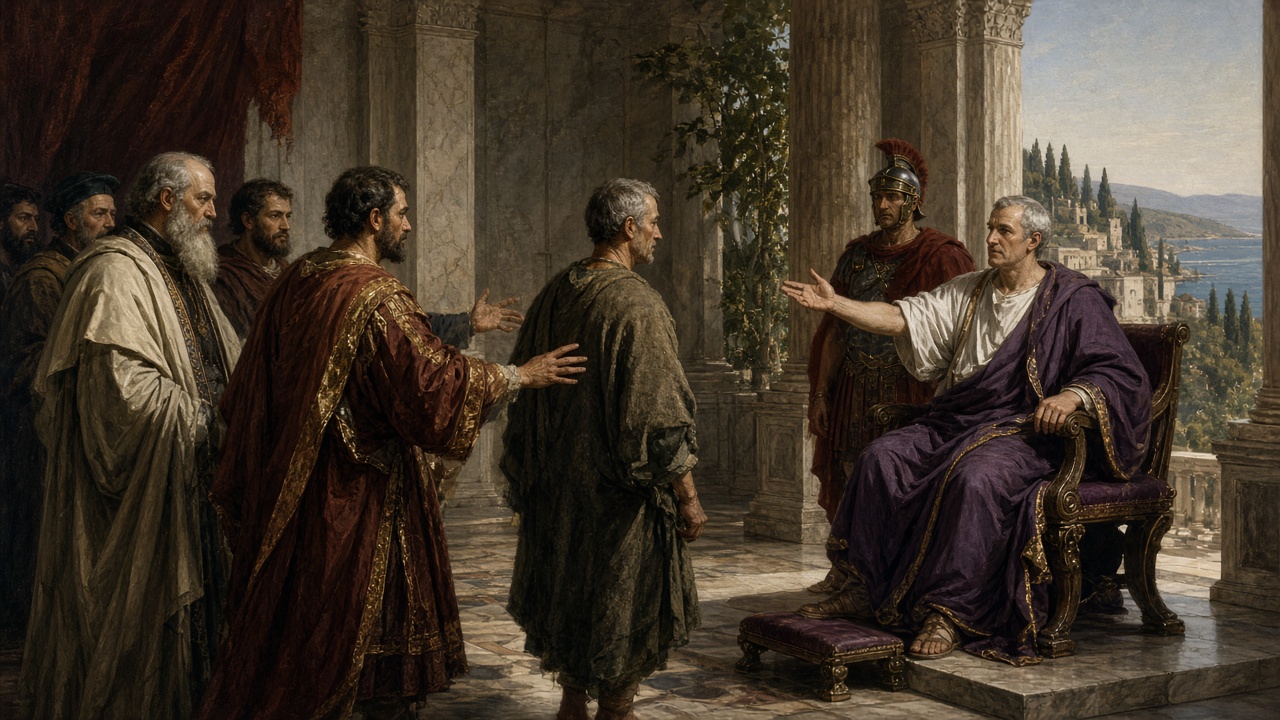
Paulo perante Félix
- O sumo sacerdote Ananias desceu com alguns anciãos e um advogado chamado Tértulo, que o Dicionário Bíblico de Easton descreve como um advogado romano empregado pelos judeus para apresentar a causa contra Paulo diante de Félix. Tértulo elogiou o governador e depois chamou Paulo de peste, que provocava dissensão entre os judeus por todo o mundo, de chefe da seita dos nazarenos e de homem que tinha tentado profanar o templo. O dicionário liga esse elogio inicial à limpeza que Félix fez do país, expulsando bandidos e impostores.Fontes: o próprio texto bíblico · Tertullus · Felix
- Félix, que estava bem informado a respeito do Caminho, adiou a audiência e manteve Paulo sob guarda, permitindo-lhe alguma liberdade e deixando que amigos atendessem às suas necessidades. O relato diz que ele esperava que Paulo lhe oferecesse um suborno e por isso o mandava chamar com frequência; o Dicionário Bíblico de Easton também afirma que ele parece ter esperado um suborno e, por isso, teve várias conversas com ele. Depois de dois anos, Pórcio Festo o sucedeu — o Dicionário Bíblico de Easton (1897) data essa nomeação em 60 d.C. — e, querendo fazer um favor aos judeus, Félix deixou Paulo na prisão.Fontes: o próprio texto bíblico · Felix · Portius Festus
- Alguns dias depois, Félix voltou com sua mulher Drusila, que era judia, e ouviu Paulo falar da fé em Cristo Jesus e da justiça, do domínio próprio e do juízo vindouro; Félix ficou amedrontado e o mandou embora. O Dicionário Bíblico de Easton (1897) identifica Drusila como a terceira e mais nova filha de Herodes Agripa I e diz que Félix a induziu a deixar o marido, Azizus, rei de Emesa. O mesmo verbete diz que ela e o filho morreram na erupção do monte Vesúvio em 79 d.C.Fontes: o próprio texto bíblico · Drusilla
Notas escritas com auxílio de IA a partir de fontes abertas (Theographic Bible Metadata, CC BY-SA 4.0; Easton’s Bible Dictionary, domínio público) e revisadas antes de publicar.
Lugares deste capítulo
- Caesarea · Hoje: Caesarea Maritima · 32.500, 34.892 · versículo 1
- Jerusalem · 31.777, 35.234 · versículos 11, 17
- Asia · 38.400, 28.300 · versículo 18
Só aparecem lugares com identificação de alta confiança (90% ou mais segundo as fontes acadêmicas reunidas pelo OpenBible). Mapa da época: DARE (Digital Atlas of the Roman Empire), CC BY 4.0; mapa atual: © colaboradores do OpenStreetMap; lugares: OpenBible.info (CC BY 4.0).
Créditos e licença desta tradução
Abware̱se̱ŋ Wo̱re̱-ɔ
New Testament in Chumburung (GH:ncu:Chumburung)
copyright © 2010 Wycliffe Bible Translators, Inc.
Language: Chumburung
Translation by: Wycliffe Bible Translators, Inc.
Copyright Information
© 2010, Wycliffe Bible Translators, Inc. All rights reserved.
This translation text is made available to you under the
terms of the Creative Commons License: Attribution-Noncommercial-No Derivative Works.
( http://creativecommons.org/licenses/by-nc-nd/3.0/ )
In addition, you have permission to port the text to different file formats, as long as you
do not change any of the text or punctuation of the Bible.
You may share, copy, distribute, transmit, and extract portions
or quotations from this work, provided that you include the above copyright
information:
You must give Attribution to the work.
You do not sell this work for a profit.
You do not make any derivative works that change any of the actual words or punctuation of the Scriptures.
Permissions beyond the scope of this license may be
available if you contact
us with your request.
The New Testament
in Chumburung
© 2010, Wycliffe Bible Translators, Inc. All rights reserved.
This translation is made available to you under the terms of the
Creative Commons Attribution-Noncommercial-No Derivatives license 4.0.
You may share and redistribute this Bible translation or extracts from it in any format, provided that:
You include the above copyright and source information.
You do not sell this work for a profit.
You do not change any of the words or punctuation of the Scriptures.
Pictures included with Scriptures and other documents on this site are licensed just for use with those Scriptures and documents.
For other uses, please contact the respective copyright owners.
2025-05-16
Fonte: http://ebible.org/ncuNT/ · eBible.org