Jó 29
Biblica® Ochiw Thuolo Motingʼo Loko Manyien™ · Toque num versículo para ver as referências cruzadas.
1Ayub nomedo wuoyo kawacho niya,
2“Yaye, mad ngʼato dwoka e ndalona machon
kendo kinde mane Nyasaye orita maber,
3ka en koda kuonde duto kendo ka lerne
ne menyona kuonde motimo mudho mane awuothe!
4Ee, mano kaka agombo ndalogo mane pod ategno,
kinde mane Nyasaye gwedho oda nikech ne en osiepna,
5ma en ndalono ma Jehova Nyasaye Maratego
ne pod ni koda kendo nyithinda noketa diere,
6ne en ndalo ma yorega ne dhi maber
kendo yiende mag zeituni ne nyak maber.
7“Kindeno kane adonjo gie ranga dala
mi abet e koma ei paw bura,
8to yawuowi ne weyona yo ka onena
to jodongo to ne oana malo.
9Jotend ogendini ne weyo wuoyo,
kendo negilingʼ thi ka giumo dhogi.
10Ruodhi kane onena to ne wuoyo gi dwol mapiny
kendo onge ngʼama ne nyalo winjo gima negiwacho.
11Ngʼato angʼata mane owinja ne loso maber kuoma,
kendo joma nonena ne pwoya,
12nikech ne akonyo joma odhier mane ywak ka dwaro kony,
kod joma onge wuonegi mane onge gi joma dikonygi.
13Ngʼama ne chiegni tho nogwedha;
kendo namiyo chuny dhako
ma chwore otho duogo mi ower gi mor.
14Arwako tim
makare kod adiera ka lepa.
15Ne abedo wangʼ muofni
kendo tiende pudhe.
16Ne abedo wuon jochan;
kendo ne akawo chandruok joma welo.
17Ne aketho teko mar joma thiro ji mi agologi
e lwet joma dwaro hinyogi.
18“Ne aparo e chunya ni, ‘Tho biro kawa mos ka adak maber e dalana,
kendo ka hika mae pinyni oniangʼ,
19Achalo gi yath, madongo e bath aora madongo ka ngʼich
nikech tiendene ochwo pi kendo thoo biro bedo e bedena gotieno.
20Huma mara biro siko kalandore
kendo tekra nosiki!’
21“Ji ne chikona itgi ka geno konyruok mathoth,
negirito rieko mawuok e dhoga ka gilingʼ mos.
22Onge ngʼama ne loso bangʼa;
wechena ne lwar e itgi mos ka ngʼidho.
23Ne girita ka joma rito koth ndalo oro,
kendo negimor gi wechena mana ka joma rito kodh chwiri.
24Kane abwonjo kodgi to ne amako dhogi;
kendo ler mane rieny koa e lela wangʼa, ne morogi ahinya.
25An ema ne anyisogi yo monego gilu kendo nabedo kaka ruodhgi;
ne achalo ruoth e dier jokedo mage;
bende ne achalo ngʼat mahoyo joma ywak.”
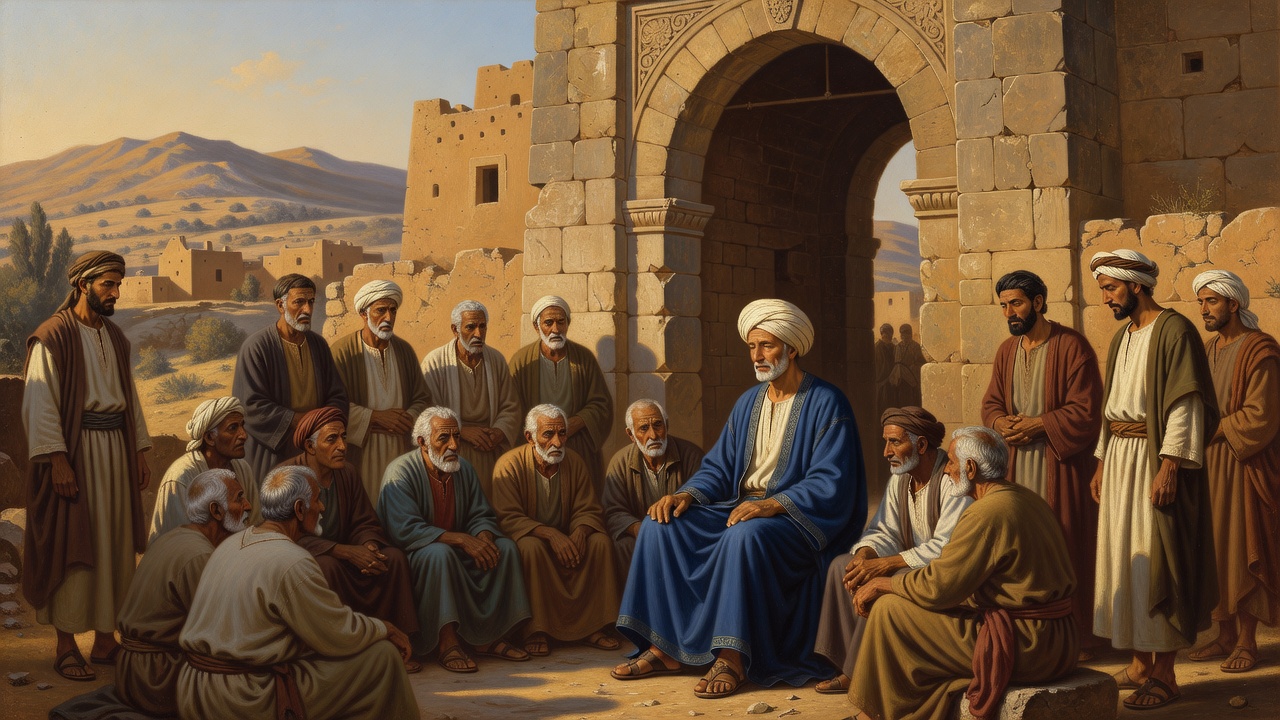
Você sabia?
Jó recorda sua antiga honra
- Na Antiguidade, o portão da cidade e a praça pública funcionavam como o centro da liderança comunitária, das assembleias e das decisões judiciais. Jó relembra que se sentava ali como conselheiro e chefe honrado, onde os jovens se afastavam, os anciãos se levantavam em respeito e os nobres silenciavam para ouvir suas orientações.Fontes: o próprio texto bíblico
- Jó descreve sua antiga retidão em termos de justiça social e proteção ativa aos vulneráveis. Ele atuava como defensor e amparo dos pobres, dos órfãos, das viúvas, dos cegos, dos coxos e dos estrangeiros, ao mesmo tempo em que reprimia os opressores.Fontes: o próprio texto bíblico
- Jó é identificado como um patriarca árabe que residia na terra de Uz. Neste capítulo, ele recorda com profunda saudade o período anterior às suas súbitas calamidades, quando seus filhos estavam reunidos ao seu redor e sua casa desfrutava de grande prosperidade e da amizade com Deus.Fontes: Job · o próprio texto bíblico
Notas escritas com auxílio de IA a partir de fontes abertas (Theographic Bible Metadata, CC BY-SA 4.0; Easton’s Bible Dictionary, domínio público) e revisadas antes de publicar.
Créditos e licença desta tradução
Biblica® Ochiw Thuolo Motingʼo Loko Manyien™
Dholuo: Biblica® Ochiw Thuolo Motingʼo Loko Manyien™ (Bible)
copyright © 2020 Biblica, Inc.
Language: Dholuo
Translation by: Biblica, Inc.
Biblica® Open New Luo Translation™
Copyright © 1980, 2002, 2003, 2020 by Biblica, Inc.
Used with permission. All rights reserved worldwide.
“Biblica” is a trademark registered in the United States Patent and Trademark Office by Biblica, Inc. Used with permission.
All content on open.bible is made available under a Creative Commons Attribution-ShareAlike 4.0 License ( http://creativecommons.org/licenses/by-sa/4.0/ ).
You are free to:
Share — copy and redistribute the material in any medium or format
Adapt — remix, transform, and build upon the material for any purpose, even commercially
Under the following conditions:
Attribution — You must attribute the work as follows: “Original work available for free at www.biblica.com and open.bible” Attribution statements in derivative works should not in any way suggest that we endorse you or your use of this work.
ShareAlike — If you remix, transform, or build upon the material, you must distribute your contributions under the same license as the original.
Use of trademarks: Biblica® is a trademark registered in the United States Patent and Trademark Office by Biblica, Inc. and may not be included on any derivative works. Unaltered content from open.bible must include the Biblica® trademark when distributed to others. If you alter the content in any way, you must remove the Biblica® trademark before distributing your work.
This translation is made available to you under the terms of the
Creative Commons Attribution Share-Alike license 4.0.
You have permission to share and redistribute this Bible translation in any format and to make reasonable revisions and adaptations of this translation, provided that:
You include the above copyright and source information.
If you make any changes to the text, you must indicate that you did so in a way that makes it clear that the original licensor is not necessarily endorsing your changes.
If you redistribute this text, you must distribute your contributions under the same license as the original.
Pictures included with Scriptures and other documents on this site are licensed just for use with those Scriptures and documents.
For other uses, please contact the respective copyright owners.
Note that in addition to the rules above, revising and adapting God's Word involves a great responsibility to be true to God's Word. See Revelation 22:18-19.
2025-05-10
Fonte: http://ebible.org/luo/ · eBible.org