Gênesis 3
Nan kalin Apo Dios · Toque num versículo para ver as referências cruzadas.
Nan Nenfasolan nan Inmona ay Takho
1Idwani, nan oweg nan kasisikapan isnan am-in ay ngag sisa'y enkik-iwi ay khinaeb Apo ay Dios. Kinwanina isnan fafai, “Ay kinwanin ngen tet-ewa nan Dios ay ad-iyo kankanen nan fekhas si olay ngag sisa ay kaew isnan naay oma?”
2Songfat et nan fafai ay mangwanin, “Mabfalin ay kanenmi nan fekhas nan olay ngag sisa ay kaew isna, 3kecheng magtek yangkhay nan kaew ay wad-ay is khawana nan infilina'y ad-imi kankanen paymo khidkhidchowen, tay mo angnenmi et matey kami.”
4Ngem kanan nan oweg, “Ad-i! Ay ke kayo sa matey? 5Kinwanin yangkhay nan Dios sa tay ammona ay mo kanenyo chi, et makaawat kayo, ya enfalin kayo ay kag ken siya ay mangammo isnan khawis ya ngaag,” kinwanina.
6Osto'y inilan nan fafai ay kalal-ayad ay fob-oyaen nan kaew ya kabfifikhaw nan fekhasna ay kanen, sa et makaawis nan silib ay nakwanin ichowana, ya ket pinmokhas ya kinana. Sa na't inagtan si asawana et nangan akhes. 7Osto ay kinancha chi ya ket ay nakaawat cha tet-ewa, ya finigfigcha ay ke cha pet enlalafos. Siya et chi ya chinmait cha isnan tofon si kaew ay makwanin igos ay ilofidcha.
8Isnan sedsechemna ay cha ensoysoysoy, chinngecha't si Apo ay Dios ay cha manad-alan isnan oma. Sa cha't ala ya tafon isnan kakak-aewan, ta ad-icha sakhangen si Apo ay Dios. 9Ngem ket ay ayakhan Apo ay Dios nan lalaki ay mangwanin, “Ento ka pay?”
10“Chinngek nan manad-alanam isna's kaoma ya omegyat ak tay ke pet enlalafos ak, sak et intafonan sik-a,” kinwanin nan lalaki.
11Sa et kanan Apo Dios, “Sino nan mangwanin enlalafos ka? Ay kinanmo ngen nan chey fekhas si kaew ay infilinko ay ad-im kanen?”
12Kanan et nan lalaki, “Nan fafai ay inigwam ay kadwak nan nangichawchaw isnan fekhas nan chey ay kaew ya kek et kinan.”
13Sa et kinwanin Apo ay Dios isnan fafai, “Em man inangnen chi ay?”
Sa na't kanan, “Nan oweg nan nammali ken sak-en ya kinanko.”
Nan Nangichawchawan Apo Dios isnan Chosa
14Idwani kinwanin Apo ay Dios isnan oweg, “Sik-a, khapo tay inangnem chi, nay et selaeg yo ay oweg isnan am-in ay enkik-iwi. Kecheng kayo is omayan nan nay ay chosa. Mailapo idwani, nan potoyo nan ikochongyo, ya chapog nan kag yo cha kankanen engkhana is mateyanyo. 15Khab-ek nan en-asiligtanyo isnan fafai ya enfinnoso nan wanen-edyo ay chwa. At khimmiken nan wanedna nan olom, ya at ketfam nan pagpakhachana.”
16Ya isnan fafai kinwanina, “Sik-a ay fafai, et paam-amchek nan likhatmo isnan enlitonam ya siya akhes isnan sakit nan omanakam. Olay mo siya sa, siya kayet ay maiilew ka ken asawam, ngem at iyapowana sik-a.”
17Sa na't kinwani akhes isnan lalaki, “Tay si asawam nan chinngem ya kinanmo nan fekhas si kaew ay infilinko ay ad-im kanen, nay et pangaakhek nan lota khapo isnan inangnem. At enfelabfelay ka ay enpawad-ay is ikatakhoyo engkhana's kifos si fiyagyo. 18Isyangkhay ay sibsifit nan wad-ayen nan lota, ya nan lokham nan kanenyo. 19Enlingelinget ka ona esa kayo mangan, et sisyasisya sa engkhana'y tomoli ka isnan lota ay nalpowam. Tay chapog nan nakhab-am, at siya akhes nan tomoliyam,” kinwanin Apo Dios.
20Nginadnan Adan si asawana is Eva, tay siya nan inan nan am-in ay takho. 21Sa et khinmaeb si Apo ay Dios is fachon cha Adan ay sin-asawa isnan kochil si enkik-iwi, sa na't inpafacho ken chaicha.
Nan Naipakaanan cha Adan ay Sin-asawa id Eden
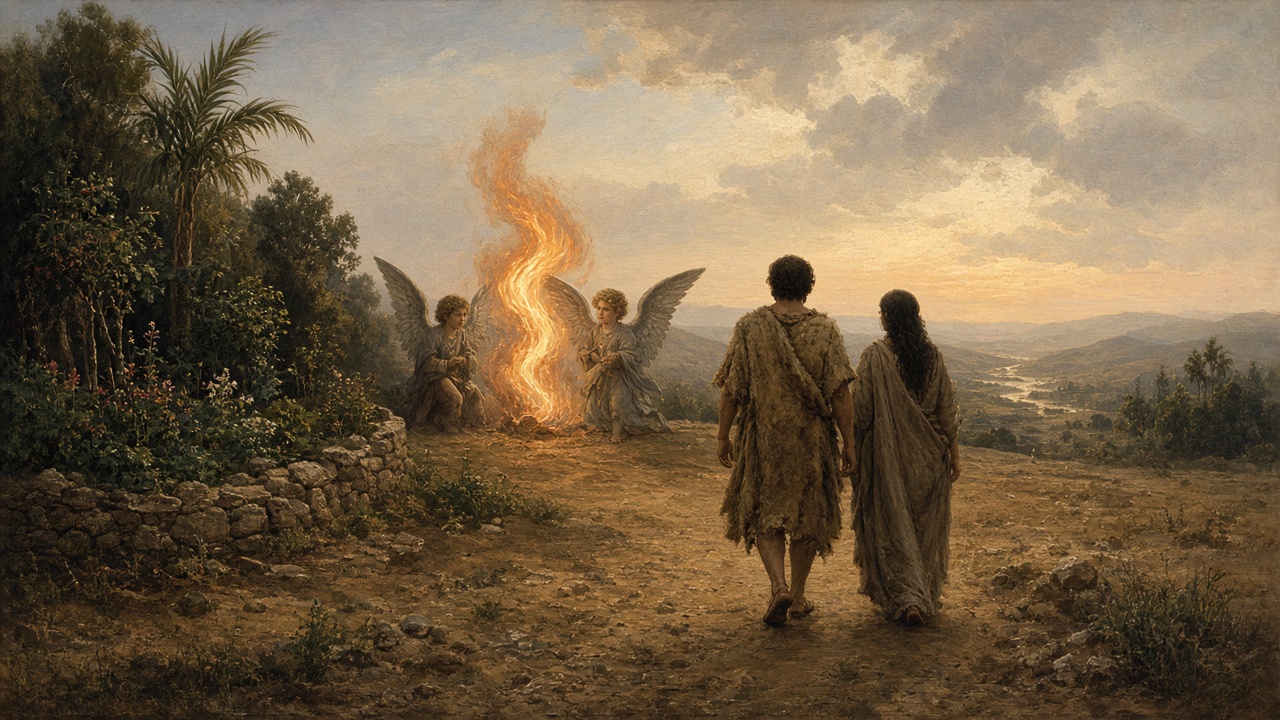
22Sa et kanan Apo ay Dios, “Chey, nenfalin nan takho ay kag ken chatako ay mangammo isnan khawis ya ngaag. Idwani, masapol ay ad-i maipap-alofos ay omala cha is kanencha isnan fekhas nan kaew ay omipabfiyag, ta sa cha't matakho is eng-engkhana.” 23Tay siya chi inpakaan Apo ay Dios chaicha isnan oma id Eden ta samalencha nan lota ay nakhab-ancha. 24Inpakaana, sa na't inpey isnan apet falaan si akhew ischi ay oma nan anghel ay manokkhong, ya nan enfidfichang ay fadyok ay enwaswasawas isnan olay entona, ta maid makaeey isnan chey ay kaew ay omipabfiyag.
Você sabia?
A queda e o exílio do Éden
- Uma referência tradicional explica Adão como “vermelho”, palavra babilônica usada como nome genérico do homem, com o mesmo sentido em hebraico e em assírio, e liga o nome ao fato de ele ter sido formado do pó da terra. Neste capítulo essa origem volta na sentença: ele trabalhará pelo alimento até voltar ao solo, pois é pó e ao pó tornará, e é enviado a cultivar a terra de onde foi tomado.Fontes: Adam · o próprio texto bíblico
- Neste capítulo Adão dá à sua mulher o nome Eva, que significa “vida” ou “vivente”, porque ela seria a mãe de todos os viventes.Fontes: Eve · o próprio texto bíblico
- A localização do jardim do Éden, de onde o homem é expulso neste capítulo, tem sido muito discutida: já se propôs a Armênia, a região a oeste do mar Cáspio, a Média, as proximidades de Damasco, a Palestina, o sul da Arábia e a Babilônia. Uma nota geográfica tradicional procura o lugar ao longo do Tigre e do Eufrates, na terra de Sinar, ou Babilônia.Fontes: Eden · o próprio texto bíblico
Notas escritas com auxílio de IA a partir de fontes abertas (Theographic Bible Metadata, CC BY-SA 4.0; Easton’s Bible Dictionary, domínio público) e revisadas antes de publicar.
Créditos e licença desta tradução
Nan kalin Apo Dios
New Testament in Bontok, Central
copyright © 1992 Wycliffe Bible Translators, Inc.
Language: Central Bontok (Bontok, Central)
Translation by: Wycliffe Bible Translators
Contributor: Wycliffe Bible Translators, Inc.
Copyright Information
© 1992, Wycliffe Bible Translators, Inc. All rights reserved.
This translation text is made available to you under the
terms of the Creative Commons License: Attribution-Noncommercial-No Derivative Works.
( http://creativecommons.org/licenses/by-nc-nd/3.0/ )
In addition, you have permission to port the text to different file formats, as long as you
do not change any of the text or punctuation of the Bible.
You may share, copy, distribute, transmit, and extract portions
or quotations from this work, provided that you include the above copyright
information:
You must give Attribution to the work.
You do not sell this work for a profit.
You do not make any derivative works that change any of the actual words or punctuation of the Scriptures.
Permissions beyond the scope of this license may be
available if you contact
us with your request.
The New Testament
in Bontok, Central
© 1992, Wycliffe Bible Translators, Inc. All rights reserved.
This translation is made available to you under the terms of the
Creative Commons Attribution-Noncommercial-No Derivatives license 4.0.
You may share and redistribute this Bible translation or extracts from it in any format, provided that:
You include the above copyright and source information.
You do not sell this work for a profit.
You do not change any of the words or punctuation of the Scriptures.
Pictures included with Scriptures and other documents on this site are licensed just for use with those Scriptures and documents.
For other uses, please contact the respective copyright owners.
2015-03-17
Fonte: http://ebible.org/lbk/ · eBible.org