Gênesis 16
Nan kalin Apo Dios · Toque num versículo para ver as referências cruzadas.
Cha Agar ken Ismael
1Si Sarai ay asawan Abram, maid anakna, ngem wad-ay nan faana ay iyEgipto ay fafai ay nenngachan si Agar. 2Ket ay kinwanin Sarai ken Abram, “Chey! Inyad-in Dios Apo nan omanakak. Iseyepmo man et nan faak ta asop ya way enfalin ay anakko ken siya.” Adi kad tinan-oyan Abram nan infaag asawana, 3et inchowan Sarai nan iyEgipto ay faana ay si Agar ken Abram ta enfalin ay asawana. (Siya na nan inmat kakwasan nan sinpoo ay tawen ay nentetey-an cha Abram id Canaan.) 4Inseyep Abram si Agar et naliton. Osto'y madlaw Agar ay maliton siya, ke na't ay ibfafan-ig nan apona ay si Sarai isnan teken ay pinang-ilana ken siya.
5Kinwanin et Sarai ken Abram, “Fasolmo nan omibfafan-ikhan Agar isnan teken ay pinang-ilana ken sak-en. Sak-en ay chadlos nan nangichowa ken siya ken sik-a, et engkhana issan nangammowana ay maliton siya ya ket ay omang-ango. Si Dios Apo koma nan mangokom ken chaita mo sino nan osto.”
6Kinwanin et Abram, “Faam met si Agar ya sik-a nan manetengngel ken siya, ikhad ka achi's angnem ken siya.” Siya chi ya ket inpalikhat Sarai nan faana engkhana'y linmayaw.
7Inchanan nan anghel Dios Apo si Agar isnan eb-eb is kamalalango ay ponchag isnan chalan ay omey id Sur. 8Sa na't kanan, “Agar ay faan Sarai, ento man nan nalpowam, ya ento nan omayam?”
“Chak ilayawan nan apok,” insongfat Agar.
9Kinwanin et nan anghel, “Tomoli ka isnan apom ya maiyornos ka ken siya.” 10Sa na't kayet kanan, “At agtak sik-a's angsaangsan ay wanen-edmo, ya maid makafilang ken chaicha. 11Et chey! Lalaki nan sam iyanak, ay at pangadnem si Ismael, tay chinngen Dios Apo nan akham isnan chadlos ay enliglikhatam. 12Nay met achi at kag atap ay dangki nan anakmo. At kholaena nan olay sino ya siya akhes at kholaencha siya. Ya maid kananan ib-ana.”
13Sa et kanan Agar is semekna, “Ay tet-ewa ngen ay inilak nan Dios ya khechangna'y matatakho ak kayet?” Tay siya chi, nginadnana nan Dios Apo ay nanot-oya ken siya is, Nan Dios ay Omil-ila. 14Siya et na nan chomalat ay nangadnan nan chey ay fofon ay wad-ay isnan nenfet-akan nan Kades ya Bered is, “Nan Fofon nan Enfibfiyag ay cha Omil-ila.”
15Et inyanak Agar nan winad-ay Abram ay lalaki, ya nginadnan Abram si Ismael. 16Walon poo ya enem nan tawen Abram issan nangiyanakan Agar ken Ismael.
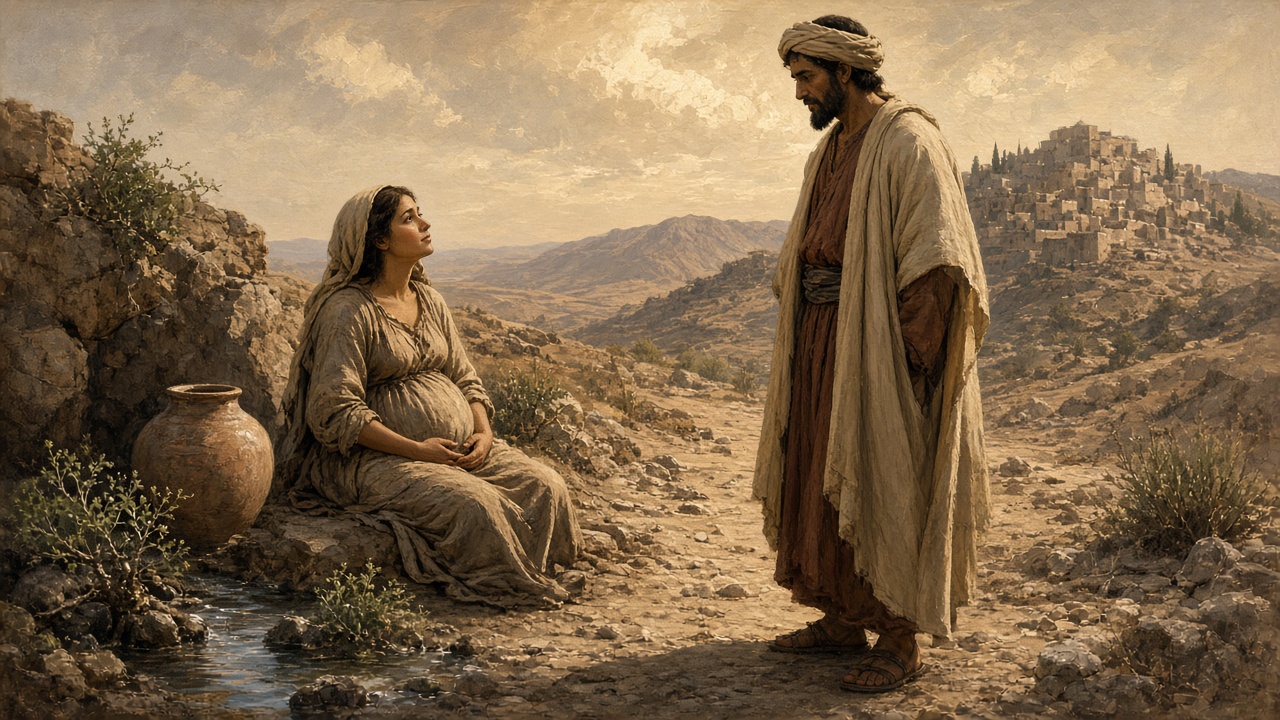
Você sabia?
A fuga de Hagar e o nascimento de Ismael
- Hagar, serva egípcia de Sarai, tem um nome entendido como “fuga” ou, segundo outros, “estrangeira”. Depois que Abrão viveu dez anos em Canaã, Sarai a entregou a ele como esposa secundária, na esperança de formar uma família por meio dela.Fontes: Hagar · o próprio texto bíblico
- Quando Sarai a tratou com dureza, Hagar fugiu pela estrada de Sur, pelo deserto que ficava entre ela e o Egito, aparentemente com a intenção de voltar para os parentes. O anjo do Senhor a encontrou junto a uma fonte de água. Sur, que significa “muro”, era um deserto na fronteira nordeste do Egito, provavelmente nomeado por fortificações de fronteira que iam de Pelúsio a Heliópolis.Fontes: o próprio texto bíblico · Hagar · Shur
- Hagar chamou o Senhor que lhe falou de “o Deus que me vê”, e o poço recebeu o nome de Beer-Laai-Roi, “o poço do Deus visível”, entre Cades e Berede, uma cidade no sul da Palestina, no deserto de Sur. Ela voltou à tenda de Abrão, e Ismael, o filho mais velho dele, nasceu em Manre quando Abrão tinha oitenta e seis anos; Abrão deu-lhe o nome que o anjo havia anunciado, porque o Senhor tinha ouvido a sua aflição.Fontes: o próprio texto bíblico · Hagar · Bered · Ishmael (Son of Hagar)
Notas escritas com auxílio de IA a partir de fontes abertas (Theographic Bible Metadata, CC BY-SA 4.0; Easton’s Bible Dictionary, domínio público) e revisadas antes de publicar.
Lugares deste capítulo
- Canaan · 32.767, 35.333 · versículo 3
Só aparecem lugares com identificação de alta confiança (90% ou mais segundo as fontes acadêmicas reunidas pelo OpenBible). Mapa da época: DARE (Digital Atlas of the Roman Empire), CC BY 4.0; mapa atual: © colaboradores do OpenStreetMap; lugares: OpenBible.info (CC BY 4.0).
Créditos e licença desta tradução
Nan kalin Apo Dios
New Testament in Bontok, Central
copyright © 1992 Wycliffe Bible Translators, Inc.
Language: Central Bontok (Bontok, Central)
Translation by: Wycliffe Bible Translators
Contributor: Wycliffe Bible Translators, Inc.
Copyright Information
© 1992, Wycliffe Bible Translators, Inc. All rights reserved.
This translation text is made available to you under the
terms of the Creative Commons License: Attribution-Noncommercial-No Derivative Works.
( http://creativecommons.org/licenses/by-nc-nd/3.0/ )
In addition, you have permission to port the text to different file formats, as long as you
do not change any of the text or punctuation of the Bible.
You may share, copy, distribute, transmit, and extract portions
or quotations from this work, provided that you include the above copyright
information:
You must give Attribution to the work.
You do not sell this work for a profit.
You do not make any derivative works that change any of the actual words or punctuation of the Scriptures.
Permissions beyond the scope of this license may be
available if you contact
us with your request.
The New Testament
in Bontok, Central
© 1992, Wycliffe Bible Translators, Inc. All rights reserved.
This translation is made available to you under the terms of the
Creative Commons Attribution-Noncommercial-No Derivatives license 4.0.
You may share and redistribute this Bible translation or extracts from it in any format, provided that:
You include the above copyright and source information.
You do not sell this work for a profit.
You do not change any of the words or punctuation of the Scriptures.
Pictures included with Scriptures and other documents on this site are licensed just for use with those Scriptures and documents.
For other uses, please contact the respective copyright owners.
2015-03-17
Fonte: http://ebible.org/lbk/ · eBible.org