Lucas 5
Biblica® Kiugo Gĩtheru Kĩa Ngai Kĩhingũre · Toque num versículo para ver as referências cruzadas.
Gwĩta Atũmwo a Mbere
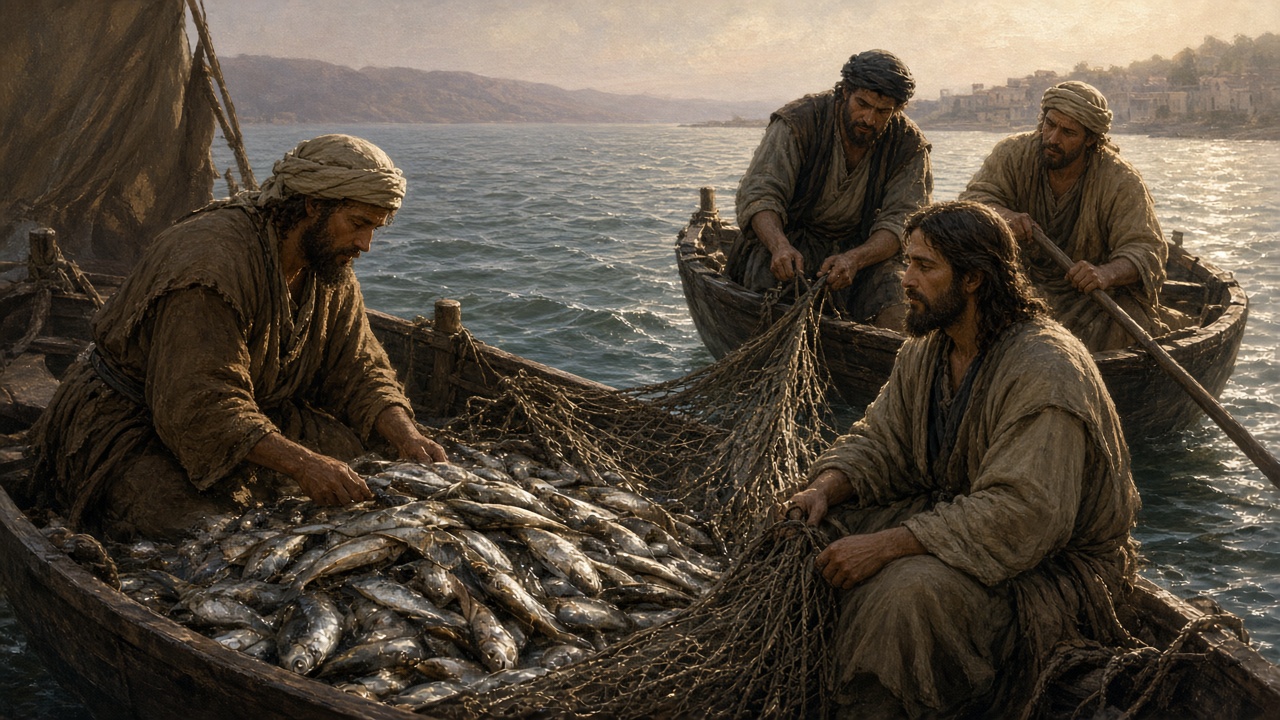
1Na rĩrĩ, mũthenya ũmwe Jesũ arũngiĩ hũgũrũrũ-inĩ cia iria rĩa Genesareti, nakĩo kĩrĩndĩ kĩa andũ aingĩ nĩkĩahatĩkanaga kĩmũkuhĩrĩrie nĩguo gĩthikĩrĩrie ũhoro wa Ngai, 2nake akĩona tũtarũ twĩrĩ hũgũrũrũ-inĩ cia iria rĩu, tũtigĩtwo ho nĩ ategi a thamaki, arĩa maathambagia neti ciao cia gũtega. 3Agĩtoonya gatarũ kamwe, nako kaarĩ ga Simoni, akĩmũthaitha agatoonyatoonyie maaĩ-inĩ, kehere hũgũrũrũ-inĩ. Agĩcooka agĩikara thĩ, akĩambĩrĩria kũruta andũ ũhoro arĩ gatarũ-inĩ kau.
4Na aarĩkia kwaria, akĩĩra Simoni atĩrĩ, “Twara gatarũ haarĩa hariku, mũikũrũkie neti maaĩ-inĩ, mũtege thamaki.”
5Nake Simoni akĩmũcookeria atĩrĩ, “Mwathi witũ, tũrutĩte wĩra mũritũ ũtukũ wothe, na tũtinanyiita kĩndũ o na kĩ. No tondũ nĩwoiga ũguo-rĩ, nĩngũikũrũkia neti.”
6Maarĩkia gwĩka ũguo, makĩnyiita thamaki nyingĩ mũno, nginya neti ciao ikĩambĩrĩria gũtuĩka. 7Nĩ ũndũ ũcio makĩheneria arĩa maarutithanagia wĩra nao, arĩa maarĩ gatarũ kau kangĩ moke mamateithie, nao magĩũka makĩiyũria tũtarũ twerĩ ki, o nginya tũkĩambĩrĩria gũtoonyerera maaĩ-inĩ.
8Hĩndĩ ĩrĩa Simoni Petero onire ũguo, akĩĩgũithia maru-inĩ ma Jesũ, akĩmwĩra atĩrĩ, “Njeherera Mwathani; niĩ ndĩ mũndũ mwĩhia!” 9Nĩgũkorwo we na arĩa othe maarĩ nao nĩmagegire mũno nĩ ũndũ wa thamaki iria maanyiitĩte, 10o na Jakubu na Johana, ariũ a Zebedi, arĩa maarutithanagia wĩra na Simoni nĩmagegire.
Nake Jesũ akĩĩra Simoni atĩrĩ, “Tiga gwĩtigĩra; kuuma rĩu ũrĩtegaga andũ.” 11Nĩ ũndũ ũcio makiumĩria tũtarũ twao hũgũrũrũ-inĩ cia iria, magĩtiga indo ciao ciothe, makĩmũrũmĩrĩra.
Mũndũ Warĩ na Mangũ
12Na rĩrĩ, hĩndĩ ĩmwe rĩrĩa Jesũ aarĩ itũũra-inĩ rĩmwe-rĩ, nĩguokire mũndũ waiyũrĩtwo nĩ mangũ mwĩrĩ wothe. Na rĩrĩa onire Jesũ, akĩĩgũithia, agĩturumithia ũthiũ wake thĩ, akĩmũthaitha, akĩmwĩra atĩrĩ, “Mwathani, ũngĩenda-rĩ, no ũũtherie.”
13Jesũ agĩtambũrũkia guoko gwake, akĩhutia mũndũ ũcio, akĩmwĩra atĩrĩ, “Ĩĩ, nĩngwenda. Therio!” Na o hĩndĩ ĩyo akĩhonio mangũ.
14Jesũ agĩcooka akĩmũkaania, akĩmwĩra atĩrĩ, “Ndũkeere mũndũ o na ũ, no thiĩ, ũkeyonanie kũrĩ mũthĩnjĩri-Ngai, na ũrute magongona marĩa Musa aathanire nĩ ũndũ wa gũtherio gwaku, arĩ ũira kũrĩ o.”
15Na rĩrĩ, ngumo yake ĩgĩkĩrĩrĩria kũhunja makĩria, o nginya kĩrĩndĩ kĩingĩ ma kĩa andũ gĩgĩũka kũmũthikĩrĩria na kũhonio mĩrimũ yao. 16No Jesũ nĩeheragĩra andũ, agathiĩ kũndũ gũtarĩ andũ kũhoera Ngai kuo.
Jesũ Kũhonia Mũndũ Wakuĩte Ciĩga
17Mũthenya ũmwe nĩ kũrutana aarutanaga, nao Afarisai na arutani a watho arĩa mookĩte kuuma matũũra mothe ma Galili, na Judea, na Jerusalemu, maikarĩte thĩ hau. Naguo hinya wa Ngai wa kũhonania warĩ hamwe na Jesũ. 18Na rĩrĩ, nĩhookire andũ makuuĩte mũndũ na kĩbarĩ, warũarĩte mũrimũ wa gũkua ciĩga, nao makĩgeria kũmũtoonyia nyũmba mamũige harĩ Jesũ. 19Na rĩrĩa maagire njĩra ya gwĩka ũguo nĩ ũndũ wa ũingĩ wa andũ, makĩhaica nyũmba-igũrũ magĩtharia maturubarĩ, makĩmũikũrũkĩria mwanya-inĩ ũcio o arĩ kĩbarĩ-inĩ, nginya gatagatĩ-inĩ ka andũ acio makĩmũiga o hau Jesũ aarĩ.
20Rĩrĩa Jesũ onire wĩtĩkio wao, akĩmwĩra atĩrĩ, “Mũrata, nĩwarekerwo mehia maku.”
21Nao Afarisai na arutani a watho makĩambĩrĩria gwĩciiria ngoro-inĩ ciao, makiuga atĩrĩ, “Kaĩ mũndũ ũyũ arĩ ũ, ũkũruma Ngai? Nũũ ũngĩhota kũrekanĩra mehia, tiga Ngai we wiki?”
22Nowe Jesũ nĩamenyaga ũrĩa meeciiragia na akĩmooria atĩrĩ, “Mũreciiria maũndũ macio ngoro-inĩ cianyu nĩkĩ? 23Nĩ ũndũ ũrĩkũ mũhũthũ; nĩ kwĩra mũndũ, ‘Nĩwarekerwo mehia maku,’ kana nĩ kũmwĩra, ‘Ũkĩra wĩtware’? 24No nĩgeetha mũmenye atĩ Mũrũ wa Mũndũ arĩ na ũhoti gũkũ thĩ wa kũrekanĩra mehia-rĩ … .” Akĩĩra mũndũ ũcio wakuĩte ciĩga atĩrĩ, “Ndakwĩra atĩrĩ, ũkĩra, oya kĩbarĩ gĩaku, ũinũke.” 25O hau hau akĩrũgama mbere yao, akĩoya kĩbarĩ kĩrĩa akomeire, na akĩinũka mũciĩ akĩgoocaga Ngai. 26Nao andũ othe nĩmagegire na magĩkumia Ngai. Makĩiyũrwo nĩ guoya, makiuga atĩrĩ, “Ũmũthĩ nĩtuonete maũndũ tũtarĩ tuona.”
Jesũ gwĩta Lawi
27Thuutha wa ũguo, Jesũ akiumagara na akĩona mũndũ warĩ mwĩtia wa mbeeca cia igooti wetagwo Lawi aikarĩte harĩa heetagĩrio mbeeca cia igooti. Jesũ akĩmwĩra atĩrĩ, “Nũmĩrĩra.” 28Nake Lawi agĩũkĩra, agĩtiga indo ciake ciothe, akĩmũrũmĩrĩra.
29Lawi agĩcooka akĩrugithĩria Jesũ iruga inene gwake mũciĩ, na gĩkundi kĩnene kĩa etia mbeeca cia igooti o na andũ angĩ nĩmarĩĩanagĩra nao. 30No Afarisai na arutani a watho arĩa maarĩ a gĩkundi kĩao magĩtetia arutwo ake makĩmooria atĩrĩ, “Mũrĩĩanagĩra na mũkanyuuanĩra na etia mbeeca cia igooti na andũ ehia nĩkĩ?”
31Nake Jesũ akĩmacookeria atĩrĩ, “Andũ arĩa agima mĩĩrĩ tio mabataragio nĩ ndagĩtarĩ, no nĩ arĩa arũaru. 32Niĩ ndiokire gwĩta andũ arĩa athingu, no nĩ arĩa ehia, nĩguo merire.”
Jesũ Kũũrio Kĩũria Igũrũ rĩa Kwĩhinga Kũrĩa
33Nao makĩmwĩra atĩrĩ, “Arutwo a Johana nĩ meehingaga kũrĩa irio kaingĩ kaingĩ makahooya, o nao arutwo a Afarisai nĩmekaga o ũguo, no aku marĩĩaga na makanyua hĩndĩ ciothe.”
34Nake Jesũ akĩmacookeria atĩrĩ, “No mwĩre ageni a mũhikania mehinge kũrĩa rĩrĩa e hamwe nao? 35No rĩrĩ, ihinda nĩrĩgakinya rĩrĩa mũhikania akeeherio kuuma kũrĩ o; matukũ-inĩ macio-rĩ, nĩ makeehinga kũrĩa irio.”
36Ningĩ Jesũ akĩmahe ũhoro na ngerekano ĩno, akĩmeera atĩrĩ, “Gũtirĩ mũndũ ũngĩtinia kĩraka kuuma harĩ nguo njerũ, agĩĩkĩre nguo ngũrũ. Angĩĩka ũguo, angĩkorwo atarũrĩte nguo njerũ, nakĩo kĩraka kĩu kĩa nguo ĩyo njerũ kĩage kwagĩrĩra nguo ĩyo ngũrũ. 37Ningĩ gũtirĩ mũndũ wĩkagĩra ndibei ya mũhihano mondo-inĩ ngũrũ. Angĩka ũguo, ndibei ĩyo ya mũhihano no ĩtarũre mondo icio, ndibei ĩyo ĩitĩke, nacio mondo icio itarũkange. 38Aca, ti ta ũguo, ndibei ya mũhihano no nginya ĩĩkĩrwo mondo-inĩ njerũ. 39O na gũtirĩ mũndũ thuutha wa kũnyua ndibei ngũrũ ũcookaga kwenda ndibei ĩyo ya mũhihano, nĩ ũndũ oigaga atĩrĩ, ‘Ĩrĩa ngũrũ nĩyo njega.’ ”
Você sabia?
Chamados, curas e vinho novo
- Jesus ensinou o povo do barco de Simão, no lago de Genesaré, enquanto a multidão se apertava na margem. O nome vem de uma cidade de Naftali, na margem ocidental, antes chamada Quinerete; a planície junto ao lago, notável pela fertilidade e pela beleza, era chamada “o Paraíso da Galileia”.Fontes: Gennesaret · o próprio texto bíblico
- Simão, também chamado Pedro, cresceu em Betsaida, na costa ocidental do mar da Galileia, e aprendeu o ofício de pescador. Tiago e João, seus sócios no outro barco, eram filhos de Zebedeu, um pescador galileu; o Dicionário Bíblico de Easton (1897) infere que Zebedeu tinha certa posição em Cafarnaum, pois possuía dois barcos e jornaleiros.Fontes: Simon Peter · James (Son of Zebedee) · Zebedee · o próprio texto bíblico
- O homem que Jesus chamou da coletoria se chama Levi neste capítulo; em outros relatos é Mateus, filho de Alfeu, cobrador de impostos em Cafarnaum. O Dicionário Bíblico de Easton (1897) sugere que ele talvez tenha adotado o nome Mateus em grata lembrança do chamado, e descreve o grande banquete que ofereceu naquele mesmo dia como uma festa de despedida.Fontes: Matthew · o próprio texto bíblico
Notas escritas com auxílio de IA a partir de fontes abertas (Theographic Bible Metadata, CC BY-SA 4.0; Easton’s Bible Dictionary, domínio público) e revisadas antes de publicar.
Lugares deste capítulo
- Gennesaret · Hoje: El Ghuweir · 32.861, 35.507 · versículo 1
- Galilee · 32.760, 35.527 · versículo 17
- Jerusalem · 31.777, 35.234 · versículo 17
- Judea · Hoje: Judea 1 · 31.777, 35.234 · versículo 17
Só aparecem lugares com identificação de alta confiança (90% ou mais segundo as fontes acadêmicas reunidas pelo OpenBible). Mapa da época: DARE (Digital Atlas of the Roman Empire), CC BY 4.0; mapa atual: © colaboradores do OpenStreetMap; lugares: OpenBible.info (CC BY 4.0).
Créditos e licença desta tradução
Biblica® Kiugo Gĩtheru Kĩa Ngai Kĩhingũre Gikuyu: Biblica® Kiugo Gĩtheru Kĩa Ngai Kĩhingũre (Bible) of Kenya copyright © 2013 Biblica, Inc. Language: Kikuyu (Gikuyu) Contributor: Biblica, Inc. Wĩra ũyũ ũheanĩtwo na ũndũ wa rũtha rwa biacara rwa Creative Commons Attribution-ShareAlike 4.0 International License (CC BY-SA). Ũngĩenda kuona kobĩ ya rũtha rũrũ rwa biacara, rora rũrenda-inĩ rwa: http://creativecommons.org/licenses/by-sa/4.0, kana ũtũme marũa kũrĩ: Creative Commons, PO Box 1866, Mountain View, CA 94042, USA. Biblica® nĩ mũhũri wa biacara wandĩkithĩtio nĩ Biblica, Inc., kũhũthĩra mũhũri wa biacara wa Biblica® kũbataraga marũa ma gwĩtĩkĩrio kuuma kũrĩ Biblica, Inc. Kuumana na rũtha rwa biacara rwa CC BY-SA, no ũkobie kana ũtambie wĩra ũyũ ũtarĩ mũgarũre, ĩndĩ ndũkagarũre rũri rwa biacara rwa Biblica®. Ũngĩgarũra kana ũkobie wĩra ũyũ, na tondũ wa ũguo ũtuĩke nĩ wĩra mwerũ uumanĩte na ũcio-rĩ, no nginya weheria mũhũri wa biacara wa Biblica®. Wĩra-inĩ ũcio mwerũ no nginya wonanie nĩ maũndũ marĩkũ ũgarũrĩte, na ũtarĩrie wĩra-inĩ ũcio ta ũũ: “Wĩra wa kĩhumo warĩ wa Biblica, Inc. na ũheanĩtwo tũhũ ng’enda-inĩ cia www.biblica.com na open.bible.” Kĩmenyitha kia Mwene-wĩra no nginya kĩandĩkwo iratathi rĩa kĩongo kĩa wĩra kana rĩa ũhoro wa Mwene-wĩra ta ũũ: Biblica® Kiugo Gĩtheru Kĩa Ngai Kĩhingũre™ Kĩmenyithia kĩa Mwene-wĩra © 2013 nĩ Biblica, Inc. Biblica® Open Kikuyu Holy Word of God™ Copyright © 2013 by Biblica, Inc. “Biblica” nĩ mũhũri wa biacara wandĩkithĩtio wabici-inĩ ya United States Patent and Trademark Office nĩ Biblica, Inc. Ũhũthĩrĩtwo na rũtha. “Biblica” is a trademark registered in the United States Patent and Trademark Office by Biblica, Inc. Used with permission. No nginya wĩtĩkĩrie wĩra ũcio mwerũ ũgarũrĩte ũheanwo na ũndũ wa rũtha rwa biacara rũu rwa CC BY-SA. Ũngĩenda kũmenyithia Biblica, Inc. ũhoro wĩgiĩ ũtaũri waku wa wĩra ũyũ-rĩ, twandĩkĩre rũrenda-inĩ rwa: https://open.bible/contact-us. This work is made available under the Creative Commons Attribution-ShareAlike 4.0 International License (CC BY-SA). To view a copy of this license, visit http://creativecommons.org/licenses/by-sa/4.0 or send a letter to Creative Commons, PO Box 1866, Mountain View, CA 94042, USA. Biblica® is a trademark registered by Biblica, Inc., and use of the Biblica® trademark requires the written permission of Biblica, Inc. Under the terms of the CC BY-SA license, you may copy and redistribute this unmodified work as long as you keep the Biblica® trademark intact. If you modify a copy or translate this work, thereby creating a derivative work, you must remove the Biblica® trademark. On the derivative work, you must indicate what changes you have made and attribute the work as follows: “The original work by Biblica, Inc. is available for free at www.biblica.com and open.bible.” Notice of copyright must appear on the title or copyright page of the work as follows: Biblica® Kiugo Gĩtheru Kĩa Ngai Kĩhingũre™ Kĩmenyithia kĩa Mwene-wĩra © 2013 nĩ Biblica, Inc. Biblica® Open Kikuyu Holy Word of God™ Copyright © 2013 by Biblica, Inc. “Biblica” nĩ mũhũri wa biacara wandĩkithĩtio wabici-inĩ ya United States Patent and Trademark Office nĩ Biblica, Inc. Ũhũthĩrĩtwo na rũtha. “Biblica” is a trademark registered in the United States Patent and Trademark Office by Biblica, Inc. Used with permission. You must also make your derivative work available under the same license (CC BY-SA). If you would like to notify Biblica, Inc. regarding your translation of this work, please contact us at https://open.bible/contact-us. This translation is made available to you under the terms of the Creative Commons Attribution Share-Alike license 4.0. You have permission to share and redistribute this Bible translation in any format and to make reasonable revisions and adaptations of this translation, provided that: You include the above copyright and source information. If you make any changes to the text, you must indicate that you did so in a way that makes it clear that the original licensor is not necessarily endorsing your changes. If you redistribute this text, you must distribute your contributions under the same license as the original. Pictures included with Scriptures and other documents on this site are licensed just for use with those Scriptures and documents. For other uses, please contact the respective copyright owners. Note that in addition to the rules above, revising and adapting God's Word involves a great responsibility to be true to God's Word. See Revelation 22:18-19. 2025-05-07
Fonte: http://ebible.org/kik/ · eBible.org