Isaías 5
Biblica® Kiugo Gĩtheru Kĩa Ngai Kĩhingũre · Toque num versículo para ver as referências cruzadas.
Rwĩmbo rwa Mũgũnda wa Mĩthabibũ
1Nĩngũinĩra mwendwa wakwa ũrĩa nyendete rwĩmbo,
ndĩmũinĩre rwĩmbo rũkoniĩ mũgũnda wake wa mĩthabibũ:
Mwendwa wakwa aarĩ na mũgũnda wa mĩthabibũ
kĩrĩma-inĩ handũ hanoru mũno.
2Akĩũthiũrũrũkĩria na mũtaro,
na akĩũngania mahiga marĩa mothe maarĩ kuo akĩmate,
agĩcooka akĩũhaanda mĩthabibũ ĩrĩa mĩega mũno.
Nĩaakire mũthiringo mũraihu na igũrũ kũu thĩinĩ waguo,
o na ningĩ akĩenja handũ ha kũhihagĩra thabibũ.
Nake agĩeterera ũciare thabibũ njega,
no rĩrĩ, waciarire thabibũ cia gĩthaka.
3“Atĩrĩrĩ, inyuĩ andũ aya mũtũũraga Jerusalemu o na andũ a Juda,
tũtuithaniei ciira, niĩ na mũgũnda wakwa wa mĩthabibũ.
4Nĩ ũndũ ũrĩkũ ũngĩ ingĩekire mũgũnda ũcio wakwa wa mĩthabibũ
gũkĩra ũguo ndawĩkire?
Waciarire thabibũ cia gĩthaka nĩkĩ,
o hĩndĩ ĩrĩa ndetereire ũciare thabibũ njega?
5Atĩrĩrĩ, nĩngũmwĩra ũrĩa ngwĩka
mũgũnda ũcio wakwa wa mĩthabibũ:
Nĩngũwehereria rũgiri rwaguo,
nĩguo wanangwo,
njooke momore rũthingo rwaguo,
nĩguo ũrangĩrĩrio.
6Ndĩũtiganĩrie wanangĩke,
ũtegũcehwo kana kũrĩmwo,
naguo ũrĩmeraga congʼe na mĩigua.
Ningĩ njathe matu matikanaurĩrie mbura.”
7Mũgũnda wa mĩthabibũ wa Jehova Mwene-Hinya-Wothe
nĩguo nyũmba ya Isiraeli,
nao andũ a Juda
nĩo mũgũnda wake wa mĩthabibũ ũrĩa akenagĩra.
Nake eethire ciira wa kĩhooto, akĩona o ũiti wa thakame;
agĩcaria ũthingu, no akĩigua kĩrĩro kĩa mĩnyamaro.
Haaro na Gũtuĩrwo Ciira
8Kaĩ, inyuĩ arĩa mũikaraga mũkĩĩongagĩrĩra nyũmba mũrĩ na haro-ĩ!
O inyuĩ mũnyiitithanagia gĩthaka kĩmwe na kĩrĩa kĩngĩ gĩgatuĩka kĩmwe,
nginya hakaaga handũ ha gũtigĩria andũ arĩa angĩ,
nĩguo mũtũũre bũrũri-inĩ mũrĩ inyuiki.
9Jehova Mwene-Hinya-Wothe oigĩte atĩrĩ ngĩiguaga:
“Ti-itherũ nyũmba iria nene nĩigakira ihooru,
nacio nyũmba iria thaka ciage andũ a gũciikara.
10Mũgũnda wa ĩĩka ikũmi wa mĩthabibũ ũkaaruta bathi ĩmwe ya ndibei,
nayo homeri ĩmwe ya mbegũ yume eba ĩmwe ya ngano.”
11Kaĩ arĩa marokaga gũũkĩra rũciinĩ tene,
makahangʼĩre njoohi marĩ na haaro-ĩ!
o acio maikaraga thĩ ũtukũ gũgakũra,
nginya makarĩĩo nĩ ndibei.
12Maruga-inĩ mao makoragwo na inanda cia mũgeeto,
na cia inubi na tũhembe, na mĩtũrirũ, o na ndibei,
no matirũmbũyagia ciĩko cia Jehova,
na makaagĩra wĩra wa moko make gĩtĩĩo.
13Nĩ ũndũ ũcio andũ akwa nĩmagatahwo matwarwo bũrũri ũngĩ
nĩ ũndũ wa kwaga ũmenyo;
andũ ao arĩa atĩĩku magaakua nĩ ngʼaragu,
nakĩo kĩrĩndĩ kĩao kĩhooteke nĩ nyoota.
14Nĩ ũndũ ũcio mbĩrĩra nĩĩnenehetie thuti nĩ ũndũ wao,
na ĩgaathamia kanua kayo gatarĩ gĩturi;
kũu nĩkuo gũkaaharũrũka andũ ao arĩa marĩ igweta na ikundi cia andũ,
hamwe na andũ arĩa manyuuaga makanegena, o na arĩĩu.
15Nĩ ũndũ ũcio mũndũ nĩakaharũrũkio,
nakĩo kĩrĩndĩ gĩconorithio,
namo maitho ma arĩa etĩĩi maconorithio.
16No Jehova Mwene-Hinya-Wothe nĩagatũũgĩrio nĩ ũndũ wa ciira wake wa kĩhooto,
nake Mũrungu, o we ũcio mũtheru, nĩakeyonania nĩ mũtheru na ũndũ wa ũthingu wake.
17Hĩndĩ ĩyo ngʼondu ikaarĩĩaga ta irĩ ũrĩithio-inĩ wacio;
natuo tũgondu tũkaarĩithagio kũndũ kũrĩa kwanangĩku gwa itonga.
18Kaĩ arĩa maguucagia mehia na mĩhĩndo ya maheeni marĩ na haaro-ĩ!
o acio maguucagia waganu na mĩkanda ta ĩrĩa ĩguucagia ngaari cia ngʼombe,
19o acio moigaga atĩrĩ, “Ngai nĩahiũhe oke,
nĩahĩke wĩra wake nĩguo tũwone.
Nĩũkuhĩrĩrie,
mũbango wa Ũrĩa Mũtheru wa Isiraeli nĩũũke,
nĩguo tũũmenye.”
20Kaĩ arĩa metaga ũũru wega,
naguo wega makawĩta ũũru marĩ na haaro-ĩ!
o acio matuaga nduma nĩyo ũtheri, na ũtheri makaũtua nduma,
na magatua kĩndũ kĩrũrũ nĩ kĩrĩ mũrĩo,
nakĩo kĩndũ kĩrĩa kĩrĩ mũrĩo magagĩtua nĩ kĩrũrũ.
21Hĩ! Kaĩ arĩa meyonaga marĩ oogĩ maitho-inĩ mao,
na makeyona marĩ na ũmenyi marĩ na haaro-ĩ!
22Hĩ! Kaĩ andũ arĩa marĩ ngumo ya kũnyua ndibei,
na njoorua cia kũriingia indo cia gũtũma andũ marĩĩo marĩ na haaro-ĩ!
23o arĩa marekagĩrĩria andũ arĩa mehĩtie nĩ ũndũ wa ihaki,
no makarega gũtua ciira wa kĩhooto wa andũ arĩa matehĩtie.
24Nĩ ũndũ ũcio, o ta ũrĩa nĩnĩmbĩ cia mwaki icinaga itira cia mũgũnda,
na ta ũrĩa nyeki nyũmũ ĩniinũkagio nĩ rũrĩrĩmbĩ rwa mwaki-rĩ,
ũguo noguo mĩri yao ĩkaabutha,
na kĩro kĩao kĩũmbũrwo o ta rũkũngũ;
nĩgũkorwo nĩmaregete watho wa Jehova Mwene-Hinya-Wothe,
na makamena kiugo kĩa Ũrĩa Mũtheru wa Isiraeli.
25Nĩ ũndũ ũcio marakara ma Jehova maakanĩte mookĩrĩre andũ ake;
nake nĩatambũrũkĩtie guoko amagũthe magũe thĩ.
Irĩma nacio igathingitha,
nacio ciimba ciao ikaaraganio njĩra-inĩ ta mahuti.
No o na kũrĩ ũguo-rĩ, marakara make matirĩ maraahũahũa,
guoko gwake no gũtambũrũkĩtio o na rĩu.
26Nake ahaicĩtie bendera handũ igũrũ eete ndũrĩrĩ iria irĩ kũraya,
nao arĩa marĩ ituri cia thĩ ahuhaga biringi akĩmeeta.
Nĩo aya mokĩte,
matengʼerete na ihenya.
27Gũtirĩ o na ũmwe wao ũraanoga kana akahĩngwo,
gũtirĩ o na ũmwe ũracũũnga kana agakoma;
gũtirĩ ũraregeria mũcibi njohero,
o na gũtirĩ rũrigi rwa kĩraatũ rũtuĩkĩte.
28Mĩguĩ yao nĩ mĩũgĩ,
namo mota mao mothe nĩmageete;
mahũngũ ma mbarathi ciao mahaana ta ihiga rĩa nyaigĩ,
namo magũrũ ma ngaari ciao cia ita mathiiaga ta rũhuho.
29Mũraramo wao nĩ ta wa mũrũũthi,
nao mararamaga o ta njaũ cia mĩrũũthi;
marurumaga makĩnyiita ũguĩmi wao,
na makaũkuua na gũtirĩ ũngĩũteithũra.
30Mũthenya ũcio makaararama nĩ ũndũ wa kĩrĩa manyiitĩte,
o ta ũrĩa iria rĩrurumaga rĩgĩikia ndiihũ.
Na mũndũ angĩgaacũthĩrĩria bũrũri-inĩ,
akoona no nduma ĩrĩ kuo na mĩnyamaro,
o naguo ũtheri nĩũgaathiĩkwo nĩ matu.
Você sabia?
A Canção da Vinha e os Seis Ais
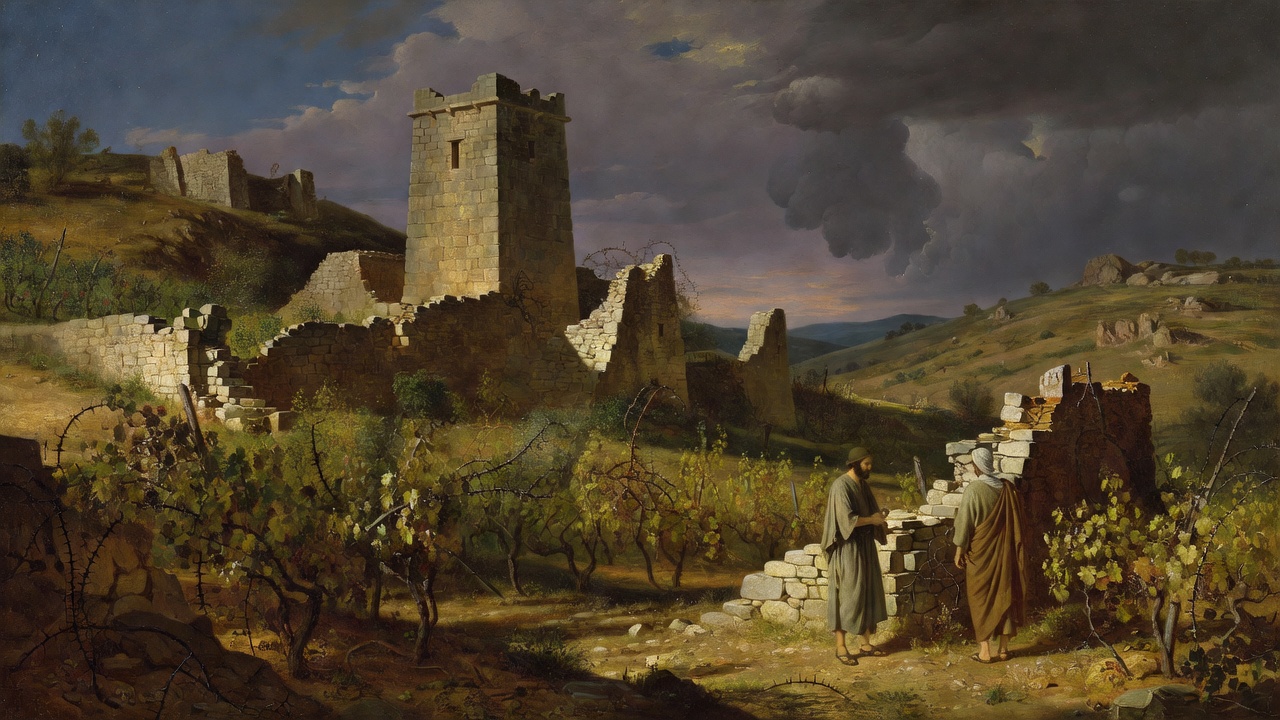
- O cântico de abertura em Isaías 5 descreve o trabalho minucioso da viticultura na antiga Judeia: limpar as pedras de encostas férteis, construir uma torre de vigilância de pedra, cavar um lagar na rocha e plantar videiras nobres protegidas por cerca e muro. O poema transforma-se em uma parábola jurídica na qual a vinha representa a casa de Israel e os homens de Judá, dos quais se esperava justiça em vez de derramamento de sangue.Fontes: o próprio texto bíblico
- O capítulo apresenta uma série de seis ais proféticos que condenam abusos sociais e morais específicos em Judá. Entre eles estão grandes proprietários que acumulavam terras juntando casa a casa e campo a campo, juízes que aceitavam subornos para absolver culpados negando justiça aos inocentes, e líderes que se entregavam a banquetes luxuosos enquanto desprezavam os mandamentos divinos.Fontes: o próprio texto bíblico
- O ministério profético de Isaías em Jerusalém dirigiu-se ao povo de Judá ao longo de um extenso período que começou em meados do século VIII a.C. O capítulo encerra advertindo que o Senhor daria um sinal a exércitos estrangeiros distantes e disciplinados, equipados com carruagens, arcos e cavalos velozes, para executar juízo sobre a terra.Fontes: Jerusalem · Prophecies of Isaiah · o próprio texto bíblico
Notas escritas com auxílio de IA a partir de fontes abertas (Theographic Bible Metadata, CC BY-SA 4.0; Easton’s Bible Dictionary, domínio público) e revisadas antes de publicar.
Lugares deste capítulo
Só aparecem lugares com identificação de alta confiança (90% ou mais segundo as fontes acadêmicas reunidas pelo OpenBible). Mapa da época: DARE (Digital Atlas of the Roman Empire), CC BY 4.0; mapa atual: © colaboradores do OpenStreetMap; lugares: OpenBible.info (CC BY 4.0).
Créditos e licença desta tradução
Biblica® Kiugo Gĩtheru Kĩa Ngai Kĩhingũre Gikuyu: Biblica® Kiugo Gĩtheru Kĩa Ngai Kĩhingũre (Bible) of Kenya copyright © 2013 Biblica, Inc. Language: Kikuyu (Gikuyu) Contributor: Biblica, Inc. Wĩra ũyũ ũheanĩtwo na ũndũ wa rũtha rwa biacara rwa Creative Commons Attribution-ShareAlike 4.0 International License (CC BY-SA). Ũngĩenda kuona kobĩ ya rũtha rũrũ rwa biacara, rora rũrenda-inĩ rwa: http://creativecommons.org/licenses/by-sa/4.0, kana ũtũme marũa kũrĩ: Creative Commons, PO Box 1866, Mountain View, CA 94042, USA. Biblica® nĩ mũhũri wa biacara wandĩkithĩtio nĩ Biblica, Inc., kũhũthĩra mũhũri wa biacara wa Biblica® kũbataraga marũa ma gwĩtĩkĩrio kuuma kũrĩ Biblica, Inc. Kuumana na rũtha rwa biacara rwa CC BY-SA, no ũkobie kana ũtambie wĩra ũyũ ũtarĩ mũgarũre, ĩndĩ ndũkagarũre rũri rwa biacara rwa Biblica®. Ũngĩgarũra kana ũkobie wĩra ũyũ, na tondũ wa ũguo ũtuĩke nĩ wĩra mwerũ uumanĩte na ũcio-rĩ, no nginya weheria mũhũri wa biacara wa Biblica®. Wĩra-inĩ ũcio mwerũ no nginya wonanie nĩ maũndũ marĩkũ ũgarũrĩte, na ũtarĩrie wĩra-inĩ ũcio ta ũũ: “Wĩra wa kĩhumo warĩ wa Biblica, Inc. na ũheanĩtwo tũhũ ng’enda-inĩ cia www.biblica.com na open.bible.” Kĩmenyitha kia Mwene-wĩra no nginya kĩandĩkwo iratathi rĩa kĩongo kĩa wĩra kana rĩa ũhoro wa Mwene-wĩra ta ũũ: Biblica® Kiugo Gĩtheru Kĩa Ngai Kĩhingũre™ Kĩmenyithia kĩa Mwene-wĩra © 2013 nĩ Biblica, Inc. Biblica® Open Kikuyu Holy Word of God™ Copyright © 2013 by Biblica, Inc. “Biblica” nĩ mũhũri wa biacara wandĩkithĩtio wabici-inĩ ya United States Patent and Trademark Office nĩ Biblica, Inc. Ũhũthĩrĩtwo na rũtha. “Biblica” is a trademark registered in the United States Patent and Trademark Office by Biblica, Inc. Used with permission. No nginya wĩtĩkĩrie wĩra ũcio mwerũ ũgarũrĩte ũheanwo na ũndũ wa rũtha rwa biacara rũu rwa CC BY-SA. Ũngĩenda kũmenyithia Biblica, Inc. ũhoro wĩgiĩ ũtaũri waku wa wĩra ũyũ-rĩ, twandĩkĩre rũrenda-inĩ rwa: https://open.bible/contact-us. This work is made available under the Creative Commons Attribution-ShareAlike 4.0 International License (CC BY-SA). To view a copy of this license, visit http://creativecommons.org/licenses/by-sa/4.0 or send a letter to Creative Commons, PO Box 1866, Mountain View, CA 94042, USA. Biblica® is a trademark registered by Biblica, Inc., and use of the Biblica® trademark requires the written permission of Biblica, Inc. Under the terms of the CC BY-SA license, you may copy and redistribute this unmodified work as long as you keep the Biblica® trademark intact. If you modify a copy or translate this work, thereby creating a derivative work, you must remove the Biblica® trademark. On the derivative work, you must indicate what changes you have made and attribute the work as follows: “The original work by Biblica, Inc. is available for free at www.biblica.com and open.bible.” Notice of copyright must appear on the title or copyright page of the work as follows: Biblica® Kiugo Gĩtheru Kĩa Ngai Kĩhingũre™ Kĩmenyithia kĩa Mwene-wĩra © 2013 nĩ Biblica, Inc. Biblica® Open Kikuyu Holy Word of God™ Copyright © 2013 by Biblica, Inc. “Biblica” nĩ mũhũri wa biacara wandĩkithĩtio wabici-inĩ ya United States Patent and Trademark Office nĩ Biblica, Inc. Ũhũthĩrĩtwo na rũtha. “Biblica” is a trademark registered in the United States Patent and Trademark Office by Biblica, Inc. Used with permission. You must also make your derivative work available under the same license (CC BY-SA). If you would like to notify Biblica, Inc. regarding your translation of this work, please contact us at https://open.bible/contact-us. This translation is made available to you under the terms of the Creative Commons Attribution Share-Alike license 4.0. You have permission to share and redistribute this Bible translation in any format and to make reasonable revisions and adaptations of this translation, provided that: You include the above copyright and source information. If you make any changes to the text, you must indicate that you did so in a way that makes it clear that the original licensor is not necessarily endorsing your changes. If you redistribute this text, you must distribute your contributions under the same license as the original. Pictures included with Scriptures and other documents on this site are licensed just for use with those Scriptures and documents. For other uses, please contact the respective copyright owners. Note that in addition to the rules above, revising and adapting God's Word involves a great responsibility to be true to God's Word. See Revelation 22:18-19. 2025-05-07
Fonte: http://ebible.org/kik/ · eBible.org