Apocalipse 7
Nhandejáry Nhe'ẽ · Toque num versículo para ver as referências cruzadas.
Nhandejáry re'ýi ojekwaa hagwã omoĩ va'e isyva kwéry-rehe
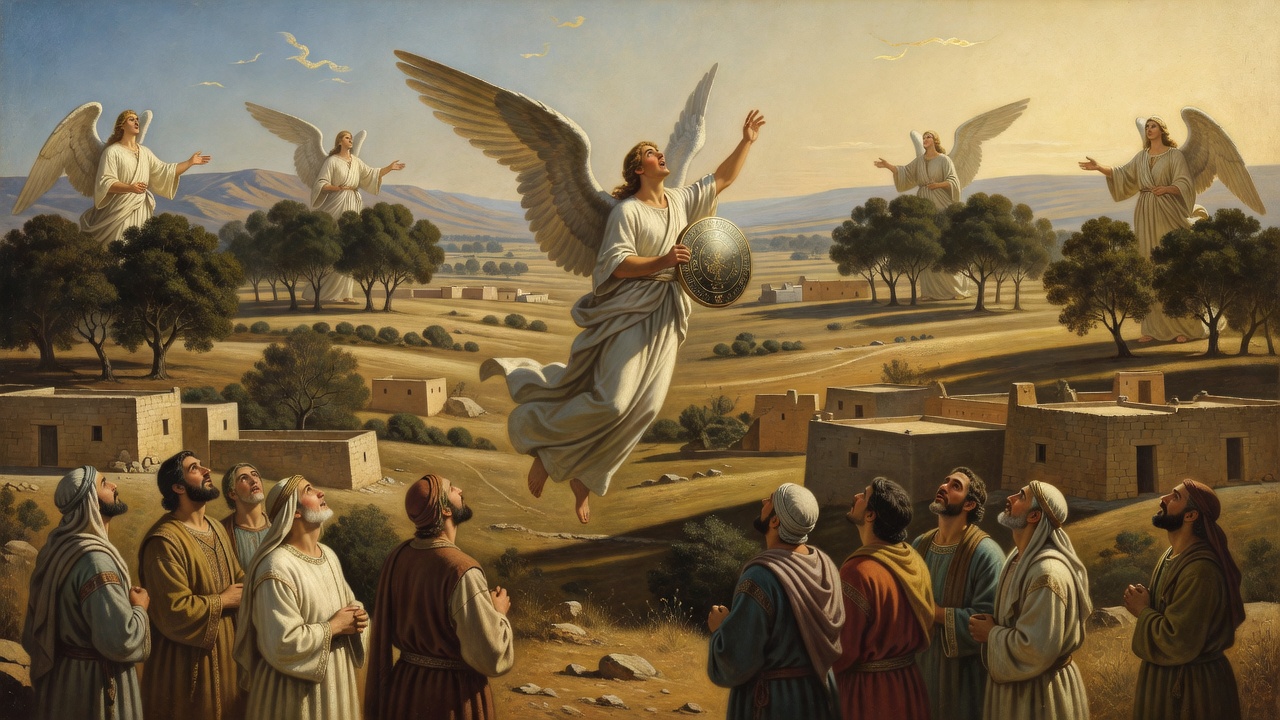
1Upe rire ahexa irundy Nhandejáry rembigwái yváy pygwa va'e. Yvy rapy rugwa-py peteĩ teĩ onhembo'y oĩ-vy ramo. Ha'e kwéry ojoko joko gwĩ irundy yvytu pono oipeju mba'eve-pe. Pono oipeju yvy-pe terã ygwasu-pe terã entéro va'e yvyra-pe ojoko joko yvytu hikwái. Upe irundy oĩ va'e yvytu jokoha.
2Ahexa ave peteĩ jevy Nhandejáry rembigwái yváy pygwa. Kwarahy resẽ ha-gwi ou. Ojekwaa uka hagwã Tupã Nhandejáry opa e'ỹ va'e re'ýi kwéry va'e syva-rehe ohai hagwã ou. Upéa-rehe osapukái hatã gwe'ýi kwéry-pe, upe irundy va'e yvytu jokoha-pe osapukái hatã:
—Eha'arõ ranhe katu, he'i íxupe osapukái-vy.
Nhandejáry omanda íxupe kwéry ponove ojoko yvytu yvy-rehe ygwasu-rehe ojapo vai hagwã ave. Ha upe kwarahy resẽ-gwi ou va'ekwe ojerure íxupe kwéry oha'arõ hagwã.
—Eha'arõ ranhe katu erejapo vai hagwã upe yvy-rehe ygwasu-rehe yvyra kwéry-rehe ave. Eha'arõ ranhe katu. Orohai ranhe-ta oromoĩ-vy Nhandejáry reroviaha kwéry syva-rehe ojekwaa hagwã. Oromoĩmba rire ae kuri ejapo vai, he'i Nhandejáry rembigwái yvytugwasu jokoha kwéry-pe.
4Upe he'i rire ae katu ahendu-ma mbovy pa oĩ upeixagwa isyva-rehe Nhandejáry re'ýi ojekwaa hagwã omoĩ va'e oĩ. Ahendu-ma cento cuarenta e quatro mil-ma oĩ. Entéro Israel ra'y re'ýi kwéry rehegwa va'e gwive omoĩ heta. 5Omoĩ doze mil meme hese kwéry. Omoĩ doze mil Judá re'ýi kwéry rehegwa va'e syva-rehe omoĩ. Doze mil Rúben re'ýi kwéry rehegwa va'e syva-rehe ave omoĩ. Doze mil Gade re'ýi kwéry rehegwa va'e syva-rehe ave omoĩ. 6Doze mil Aser re'ýi kwéry rehegwa va'e syva-rehe ave omoĩ. Doze mil Naftali re'ýi kwéry rehegwa va'e syva-rehe ave omoĩ. Doze mil Manassés re'ýi kwéry rehegwa va'e syva-rehe ave omoĩ. 7Simeão re'ýi kwéry rehegwa va'e syva-rehe ave omoĩ doze mil. Levi re'ýi kwéry rehegwa va'e syva-rehe ave omoĩ doze mil. Issacar re'ýi kwéry rehegwa va'e syva-rehe ave omoĩ doze mil. 8Doze mil Zebulom re'ýi kwéry rehegwa va'e syva-rehe ave omoĩ. Doze mil José re'ýi kwéry rehegwa va'e syva-rehe ave omoĩ. Doze mil Benjamim re'ýi kwéry rehegwa va'e syva-rehe ave omoĩ. Doze mil meme omoĩ. Heta voi Nhandejáry re'ýi ombojekwaa hagwã omoĩ va'ekwe isyva-rehe.
Opy'a potĩha-rami ao morotĩ-my onhemonde va'e oĩ okwa-vy Nhandejáry rovagwy-py
9Upe rire ae ahexa heta eta onhomboaty va'e. Onhemboheta verei okwa-vy ndikatúi hagwã avave oipapa íxupe kwéry. Opa opa rupigwa yvy oho va'e-rupigwi ou va'ekwe hikwái. Gwetã gwetã rupigwa ou va'ekwe hikwái. Gwembypye pye-gwi ou va'ekwe hikwái. Opa opa kente ambue mbue kwéry rehegwa ou va'ekwe hikwái. Nhe'ẽ ambue mbue-py onhe'ẽ va'e kwéry ave ou va'ekwe hikwái. Mburuvixagwasu gwapy haty rovagwy-py, Ovexa Ra'y ramigwa va'e rovagwy-py onhembo'y joa okwa-vy. Oao morotĩ reheve oĩ hikwái upe-py. Ha entérove pindo rakãgwe opo-py ogwereko joa reheve hikwái.
10—Tupã Nhandejáry katu ogwapy oĩ-vy mburuvixagwasu gwapy haty ári.
Ha'e katu Nhane Resendeha voi.
Ovexa Ra'y ramigwa va'e Nhane Resendeha voi,
he'i oporahéi hatã okwa-vy.
11Ha entéro Nhandejáry rembigwái yváy pygwa va'e onhembo'y joa oĩ-vy hikwái Nhandejáry gwapy haty jere-rehe. Upe mburuvixa kwéry va'e gwive ojere joa ave hese hikwái. Upe irundy Nhandejáry apyka jere-rehe oiko va'ety gwive ojere joa ave hese hikwái. Ha onhesũ joa okwa-vy henonde-py ojeayvy-ma Nhandejáry-pe omboete eterei-gwi.
12—A-rami toiko,
ho'e-vy.
—Terenhemomba'egwasu katu ore-vy ore Járy,
he'i joa omboete ete tee-vy íxupe.
—Orombotuvixa ete voi nde-vy.
Nde ne arandu tee va'e voi nde.
Orotima tima meme va'erã voi nde-vy.
Oromoherakwãgwasu va'erã nde réry.
Nde pu'aka tee-ma va'e voi nde,
he'i íxupe.
—Ne mbaraete tee va'e voi nde.
Upéixa oro'e meme va'erã ne mboete tee-vy
erepa e'ỹ reheve oromboete tee-vy oro'e nde-vy.
Nde ore Járy tee va'e.
A-rami toiko meme,
he'i oporahéi joa imboete-vy hikwái íxupe.
13Upéi peteĩ mburuvixa oporandu xe-vy:
—Ereikwaa tipo ki-gwi pa ou ra'e pa ko'ã va'e kwéry ijao morotĩ va'e? he'i xe-vy. —Ereikwaa tipo kiva'e kwéry ko'ã va'e? he'i xe-vy oporandu-vy.
14Ha xe katu ha'e íxupe:
—Ndaikwaái voi xe. Nde ae, ne mburuvixa va'e ereikwaa ra'e, ha'e íxupe.
Upe-ma ramo he'i jevy xe-vy:
—Ko va'e kwéry ohasa asy puku va'ekwe jepe ojerovia joty upe Ovexa Ra'y ramigwa va'e-rehe. Gwugwy apyte-py omano va'ekwe-gwi ha'e omboykepa íxugwi kwéry hembiapo vaikwe gwive. Opy'a potĩha rexa uka-vy omonde-ma hikwái oao morotĩ. 15Upéixa-gwi onhembo'y joa hikwái Tupã Nhandejáry gwapyha rovagwy-py. Áry-rupi, pyhare peve nosẽ mo'ãi hikwái Nhandejáry renda-gwi. Hemimbota ojapo meme hikwái íxupe omboete-vy. Upe mburuvixagwasu gwapy haty ári ogwapy va'e onhangareko porã ete hese kwéry. Indive oĩ-gwi ndojehu mo'ãi mba'eve íxupe kwéry. 16Ndaivare'a mo'ãvéi-ma va'erã. Ndaijy'uhéi mo'ãvéi-ma va'erã. Nonhanduvéi-ma va'erã íxupe kwéry kwarahy haku eterei va'e terã ambue haku va'e. 17Pe Ovexa Ra'y ramigwa va'e mburuvixagwasu gwapy haty mbyte-py oĩ va'e onhangareko va'erã hese kwéry. Herekwa onhangareko porãha-rami gwymba-rehe ogweraha va'erã íxupe kwéry omboy'u hagwã upe yvu nhane moingove va'e-py, nhande py'apy pygwarã. Ha Tupã Nhandejáry oikyty va'erã íxupe kwéry hesay.
Você sabia?
As tribos seladas e a grande multidão
- Apocalipse 7 apresenta o número dos selados como 144.000, doze mil de cada uma das tribos de Israel nomeadas no capítulo. Israel era outro nome de Jacó, o segundo dos filhos gêmeos de Isaque e Rebeca; o Easton's Bible Dictionary (1897) explica o nome de Jacó como alguém que segue os calcanhares de outro, ou um suplantador.Fontes: o próprio texto bíblico · Jacob (Israel)
- Embora Rúben fosse o filho mais velho de Jacó e Lia, a lista dos selados começa com Judá e depois nomeia Rúben. A lista inclui também tanto José como Manassés; Manassés era o filho mais velho de José, e Jacó adotou a ele e a seu irmão Efraim como seus próprios filhos.Fontes: o próprio texto bíblico · Reuben · Manasseh (son of Joseph)
- Depois do selamento, a visão mostra uma multidão grande demais para ser contada, de toda nação, tribo, povo e língua, de pé diante do trono e do Cordeiro, com vestes brancas e ramos de palmeira nas mãos. Um dos anciãos diz que eles saíram da grande tribulação e lavaram as suas vestes, tornando-as brancas no sangue do Cordeiro.Fontes: o próprio texto bíblico
Notas escritas com auxílio de IA a partir de fontes abertas (Theographic Bible Metadata, CC BY-SA 4.0; Easton’s Bible Dictionary, domínio público) e revisadas antes de publicar.
Créditos e licença desta tradução
Nhandejáry Nhe'ẽ
New Testament in Kaiwá (BR:kgk:Kaiwá)
copyright © 2006 Wycliffe Bible Translators, Inc.
Language: Kaiwá
Translation by: Wycliffe Bible Translators, Inc.
Copyright Information
© 2006, Wycliffe Bible Translators, Inc. All rights reserved.
This translation text is made available to you under the
terms of the Creative Commons License: Attribution-Noncommercial-No Derivative Works.
( http://creativecommons.org/licenses/by-nc-nd/3.0/ )
In addition, you have permission to port the text to different file formats, as long as you
do not change any of the text or punctuation of the Bible.
You may share, copy, distribute, transmit, and extract portions
or quotations from this work, provided that you include the above copyright
information:
You must give Attribution to the work.
You do not sell this work for a profit.
You do not make any derivative works that change any of the actual words or punctuation of the Scriptures.
Permissions beyond the scope of this license may be
available if you contact
us with your request.
The New Testament
in Kaiwá
© 2006, Wycliffe Bible Translators, Inc. All rights reserved.
This translation is made available to you under the terms of the
Creative Commons Attribution-Noncommercial-No Derivatives license 4.0.
You may share and redistribute this Bible translation or extracts from it in any format, provided that:
You include the above copyright and source information.
You do not sell this work for a profit.
You do not change any of the words or punctuation of the Scriptures.
Pictures included with Scriptures and other documents on this site are licensed just for use with those Scriptures and documents.
For other uses, please contact the respective copyright owners.
2014-04-27
Fonte: http://ebible.org/kgkNT/ · eBible.org