Apocalipse 11
Nhandejáry Nhe'ẽ · Toque num versículo para ver as referências cruzadas.
Mokõi Nhandejáry nhe'ẽ mombe'uha rehegwa nhe'ẽ
1Upe rire katu ome'ẽ-ma xe-vy peteĩ yvyra ramigwa. Upe yvyra jaikwaahaty óga mbovy pa ipukukwe ha mbovy pa ipekwe ave. Upéa ome'ẽ ramo he'i xe-vy:
—Ekwa katu tereipapa upe Nhandejáry-pe omboete haty pukukwe. Ha nhemboete haty ave. Upe-py kwimba'e omboete va'e ave eipapa kuri. 2Upe Nhandejáry-pe omboete haty-py hoka ani kuri ereipapa. Oĩ ae arã opyrũ va'erã upe-py ojerovia e'ỹ va'e Nhandejáry-rehe. Opyrũ arã imoingoasy-vy tetã marangatu-rehe quarenta e dois jasy peve. 3Amondo-ta mokõi xe nhe'ẽ mombe'uharã yvypóry kwéry oikwaa hagwã gwekojejavykwe. Xe remimondo onhemonde va'erã ovy'are'ỹ va'e ao-py, “Nhandejáry ndovy'ái voi ra'e xe-rehe, xe rembiapo vaikwe-rehe ra'e” he'i hagwã hexaháry. Xe nhe'ẽ-py onhemonhe'ẽ va'erã yvypóry kente kwéry-pe. Mbohapy ro'y seis jasy peve omombe'u va'erã xe rehegwa nhe'ẽ, he'i Nhandejáry-gwi onhe'ẽ va'e.
4Upe mokõi va'e-rehe Nhandejáry he'i, “Mokõi oliveira rakã ramigwa” “Mokõi tataendy'y ramigwa ave” he'i hese. Tupã Nhandejáry yvy Járy tee va'e rovagwy-py onhembo'y-ma oĩ-vy upe mokõi inhe'ẽ mombe'uha. Ha'e kwéry omombe'u-ta inhe'ẽ mbohapy ro'y seis jasy peve. 5Ha ndaikatúiry avave ombohasa asy íxupe kwéry. Ombohasa asyse ramo jepe ha'e kwéry ojehepy va'erã. Ijuru ryepy-gwi osẽ arã tata ramigwa omohundi hagwã hese ija'e'ỹ va'e kwéry-pe. Upéixa voi omano va'erã hese ojapo vaise va'e.
6Nhandejáry oipytygwõ arã íxupe kwéry, omombaraete va'erã íxupe kwéry. Omombe'u mbe'u jave Nhandejáry nhe'ẽ, ipu'aka va'erã ama-rehe. Oipota ramo, ndokýi va'erã. He'i ramo y-gwi oikopa hagwã tugwy ramo oiko ave va'erã tugwy ramo. Ombohasa asyse ramo yvypóry, ombohasa asy ave va'erã opaixagwa mba'e rasy-py.
7Nhe'ẽ mombe'uha omombe'upa-ma ramo katu peteĩ mymba vaigwasu ete rekoporuha ojeupi arã yvykwarusu ijapy e'ỹ va'e-gwi. Ha onhorairõ arã upe mokõi Nhandejáry nhe'ẽ omombe'u va'ekwe ndive. Ipu'aka va'erã hese kwéry. Ojuka va'erã upe mokõi Nhandejáry nhe'ẽ mombe'uhare-pe. 8Ojuka rire hetekwe opyta rei arã tape-rehe, jegwata haty-rupi rei ho'a arã oĩ-vy. Hetekwe opyta ave arã upe tetã-my Nhandejáry Hesu Cristo rete ojehupi hagwe-py. Sodoma tetã mygwa hekoha vai va'e-rami, Egito tetã mygwa hekoha vai va'e-rami ave upe tetã mygwa ave hekoha vai okwa-vy. 9Entéro yvypóry gwive entéro ijypye pye va'e gwive, entéro nhe'ẽ ambue mbue-py onhe'ẽ va'e gwive, opa opa kente ambue mbue kwéry gwive ohexa katu katu arã upe mokõigwa retekwe-pe. Upe-py oĩ arã hetekwe haimete irundy áry peve. Hetekwe katu ndojatýi arã enterove ohexa hagwã. 10Upe va'e, upe mokõi va'e omano rire entéro yvypóry ovy'apagwasu-ma va'erã hikwái. Ovy'a ete rei-gwi gwemime'ẽ me'ẽ ome'ẽ arã okwa-vy ojóupe. “Nanhane mbohasa asyvéi-ma upe mokõigwa nhe'ẽ mombe'uhatykwe. Hi'are eterei voi nhane mbohasa asy asy va'ekwe. Nanhane mbohasa asyvéi-ma va'erã” he'i-gwi hese ovy'a eterei arã hikwái. 11Tupã Nhandejáry ae omoingove jevy íxupe kwéry, mokõigwa-pe. Ohasa rire mbohapy áry larose jevy-ma ramo peteĩ yvytugwasu ou oipeju upe mokõigwa retekwe-pe. Oipeju ramo upe mokõi va'e omano ete-ma va'ekwe opu'ã jevy-ma. Enterove ohexa. Ohexa-ma ramo opu'ã jevy hexaháry onhemondýipa hexa-vy hikwái. 12Upe omano va'ekwe opu'ã rire, ohendu yváy gwigwa onhe'ẽ va'e ojéupe:
—Aipo ramo pejeupi katu, he'i íxupe, mokõigwa-pe.
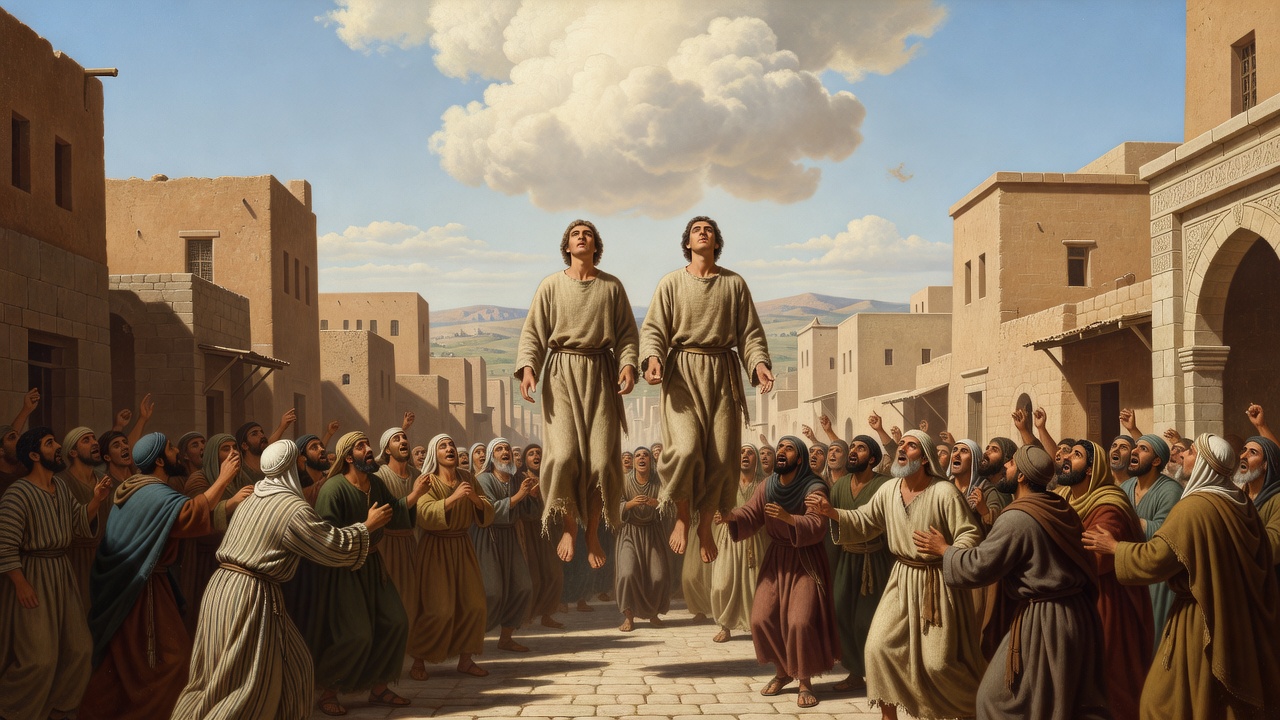
Upe jave oma'ẽ hese okwa-vy. Oma'ẽ jave upe mokõigwa gwete reheve voi ojeupi-ma oho-vy yváy-py. Araigwasu pa'ũ-my ojereroyvate-ma oho-vy upe mokõigwa. Hese ija'e'ỹ va'ekwe jepe ohexa-ma ave iho ramo. 13Upe jave yvy oryrýi-ma. Heta eterei óga okuipa upe tetã-my. Yvy oryrýi-gwi heta óga oity. Omopehẽgwe hẽgwepa voi heity-vy. Décima parte oity. Heta voi omano upe pygwa. Sete mil omano yvy oryrýi eterei-gwi. Omano e'ỹ va'ekwe okyhyje paete-gwi omboete joa Nhandejáry-pe. He'i:
—Nde tuvixa Tupã yváy pygwa, he'i joa hikwái omboete-vy íxupe.
14Mokõi yvypóry momytu'e'ỹha ohasa-ma. Ndopái vyteri joty mba'e rasy yvypóry kwéry-pe. Oĩve joty peteĩ oporomomytu'e'ỹha pya'e ojehu va'erã.
Ombopu gwemimbygwasu Nhandejáry rembigwái yváy pygwa va'e seteha
15Ombopu-ma ramo gwemimbygwasu Nhandejáry rembigwái yváy pygwa va'e seteha, oĩ yváy-py onhe'ẽ hatã atã va'e. Oiko va'erã-rehe omombe'u hikwái:
—Ãy Nhandejáry Tupã oiko-ma yvypóry ruvixa ramo yvy-rehe. Ha'e oiko-ma mburuvixa ramo Cristo ndive. Ha'e oiko-ta mburuvixagwasu opa e'ỹ reheve, he'i Nhandejáry rembigwái onhe'ẽ hatã-vy oiko va'erã-rehe.
16Upe jave upe vinte e quatro mburuvixa Nhandejáry renonde-py ogwapy okwa-vy va'e ojesyva mboja joa yvy-rehe okwa-vy omboete eterei-vy Nhandejáry-pe.
17He'i omboete-vy íxupe:
—Nde Tupã ore Járy voi nde.
Nde pu'aka tee va'e voi nde entéro mba'e-rehe.
Orotima tima nde-vy.
Yma va'ekwe nde.
Ko'ánga ete peve nde ha'e joty.
Ko'ánga katu eremoĩ-ma opamba'e nde pogwy-py.
Eregwahẽ-ma katu ãy enterovéa ruvixarã.
Erenhemomburuvixagwasu ete hagwe-rehe
orotima voi nde-vy,
he'i omboete joa-vy íxupe.
18—Ãy ogwahẽ-ma nde áry erereko asy hagwã
enterovéa-pe hekoha vaikwe-rehe.
Upéa-rehe entéro tetã tetã mygwa kwéry ima'andupa hikwái.
Ãy ogwahẽ-ma nde áry ereme'ẽ hagwã hembiapokwe-rehe
gwĩ omano va'ekwe gwive hekorã.
Ãy ereme'ẽ-ta hembiapokwe repy
Ne rembigwái ramo oiko va'ekwe
Ne nhe'ẽ-py omombe'u va'ety kwéry-pe
Entéro nde re'ýi kwéry-pe gwive,
Nde-rehe ojerovia va'e-pe gwive,
entéro ne mboetehare-pe gwive,
gwĩ mburuvixa va'e-pe gwive,
ha gwĩ heko mirĩve va'e-pe ave
ereme'ẽ-ta hekokwe repy.
Ãy katu eremomba arã katu
gwĩ yvypóry kwéry-pe gweko vai-rupi oity uka va'ekwe-pe,
he'i hikwái Nhandejáry-pe omboete-vy.
19Upéi ojepe'a yváy-py oĩ va'e Nhandejáry-pe omboete haty rokẽ. Ikoty tee-py ojehexa hyru. Nhandejáry nhe'ẽ mokõi ita-rehe oĩ va'e ryru upe va'e. Ymagware nhane moingokwaa Nhandejáry irurã rehegwa nhe'ẽ ryru, “arca do acordo” héry va'e. Ojehexa jave overa vera voi osunu hatã-ma, hyapu atã atã voi oĩ-vy. Yvy katu oryrýi ha amandaugwasu ave ho'a-ma hese.
Você sabia?
As duas testemunhas e a grande cidade
- Apocalipse 11 diz que os corpos das duas testemunhas jazerão na rua da grande cidade, chamada em sentido figurado de Sodoma e Egito, onde o seu Senhor também foi crucificado. Um verbete de dicionário explica Sodoma como ardente, ou a murada, uma cidade destruída por fogo do céu por causa da maldade de seus habitantes, destruição que as Escrituras recordam com frequência. O Egito, terra do Nilo e das pirâmides, é igualmente descrito como um lugar de grande importância nas Escrituras.Fontes: o próprio texto bíblico
- As duas testemunhas recebem poder para profetizar durante mil duzentos e sessenta dias, vestidas de pano de saco. Elas são as duas oliveiras e os dois candelabros que estão diante do Senhor da terra, e têm poder para fechar o céu, de modo que não caia chuva, para transformar as águas em sangue e para ferir a terra com toda espécie de praga.Fontes: o próprio texto bíblico
- Quando as duas testemunhas terminam o seu testemunho, a besta que sobe do Abismo as vence e as mata. Durante três dias e meio, povos, tribos, línguas e nações contemplam os seus corpos e não permitem que sejam colocados num túmulo, enquanto os habitantes da terra zombam deles, comemoram e mandam presentes uns aos outros, porque os dois profetas os tinham atormentado. Depois disso, o sopro de vida da parte de Deus entra nelas; elas se põem em pé e sobem ao céu numa nuvem, enquanto os seus inimigos as observam.Fontes: o próprio texto bíblico
Notas escritas com auxílio de IA a partir de fontes abertas (Theographic Bible Metadata, CC BY-SA 4.0; Easton’s Bible Dictionary, domínio público) e revisadas antes de publicar.
Lugares deste capítulo
Só aparecem lugares com identificação de alta confiança (90% ou mais segundo as fontes acadêmicas reunidas pelo OpenBible). Mapa da época: DARE (Digital Atlas of the Roman Empire), CC BY 4.0; mapa atual: © colaboradores do OpenStreetMap; lugares: OpenBible.info (CC BY 4.0).
Créditos e licença desta tradução
Nhandejáry Nhe'ẽ
New Testament in Kaiwá (BR:kgk:Kaiwá)
copyright © 2006 Wycliffe Bible Translators, Inc.
Language: Kaiwá
Translation by: Wycliffe Bible Translators, Inc.
Copyright Information
© 2006, Wycliffe Bible Translators, Inc. All rights reserved.
This translation text is made available to you under the
terms of the Creative Commons License: Attribution-Noncommercial-No Derivative Works.
( http://creativecommons.org/licenses/by-nc-nd/3.0/ )
In addition, you have permission to port the text to different file formats, as long as you
do not change any of the text or punctuation of the Bible.
You may share, copy, distribute, transmit, and extract portions
or quotations from this work, provided that you include the above copyright
information:
You must give Attribution to the work.
You do not sell this work for a profit.
You do not make any derivative works that change any of the actual words or punctuation of the Scriptures.
Permissions beyond the scope of this license may be
available if you contact
us with your request.
The New Testament
in Kaiwá
© 2006, Wycliffe Bible Translators, Inc. All rights reserved.
This translation is made available to you under the terms of the
Creative Commons Attribution-Noncommercial-No Derivatives license 4.0.
You may share and redistribute this Bible translation or extracts from it in any format, provided that:
You include the above copyright and source information.
You do not sell this work for a profit.
You do not change any of the words or punctuation of the Scriptures.
Pictures included with Scriptures and other documents on this site are licensed just for use with those Scriptures and documents.
For other uses, please contact the respective copyright owners.
2014-04-27
Fonte: http://ebible.org/kgkNT/ · eBible.org