Mateus 3
Nhandejáry Nhe'ẽ · Toque num versículo para ver as referências cruzadas.
Ojekwaa João Batista Nhandejáry nhe'ẽ mombe'u-vy
1Upe ramo ojekwaa-ma ou-vy João Batista. Tekwaty e'ỹ-my Judéia yvy-py ojekwaa-ma Nhandejáry nhe'ẽ mombe'u-vy:
2—Onhemo'agwĩ-ma katu ou-vy Nhandejáry nhande ruvixarã. Pemboasy katu pene rembiapo vaikwe. Perova pende rekoha pemoirũ hagwã íxupe, he'i omombe'u-vy.
3Upearã-rehe yma gware Nhandejáry nhe'ẽ-py omombe'u va'ety Isaías remimoĩgwe kwatia-rehe a-rami:
“Oĩ tekwaty e'ỹ-my onhe'ẽ hatã va'e. Pemopotĩ katu Nhandejáry raperã. Pembohape karẽ e'ỹ katu íxupe. Penhemoatyrõ katu henonde, he'i onhe'ẽ hatã-vy”
he'i João Batista rekorã mombe'u-vy. 4Ha'e camelo mymba ragwekwe-gwi onhemonde oiko-vy. Ha ixumbe katu vaka pire gwigwa. Ho'u tukúry-pe oiko-vy. Ei ka'agwy ho'u ave. 5Upe jave ohopa oje'ói-vy henda-py Jerusalém tetã mygwa, Judéia yvy pygwa ave. Jordão ysyry jere rupigwa ave ohopa iha-py. 6Ogwahẽ ramo henda-py, peteĩ teĩ onhemombe'u João-pe gwembiapo vaikwe-rehe: “Amboasy-ma xe rembiapo vaikwe” peteĩ teĩ onhemombe'u ramo, omongarai-ma íxupe. Jordão ysyry-py oporomongarai oiko-vy.
7Ha upéi katu ogwahẽ ave ou-vy heta fariseu saduceu ndive. Onhemongarai ukase-vy ou íxupe hikwái. Ohexa ramo íxupe kwéry João he'i:
—Mbói-rami peẽ pende reko mbói reko-rami, he'i íxupe João. —Kiva'e po nde-vy he'i erekanhy hagwã? Ndikatúi erekanhy nde rereko asyharã-gwi, he'i íxupe kwéry.
8—Ererova ramo nde rekoha, ehexa uka nde reko porãha. 9“Abraão amyrĩ nhande ru voi. Nhande kwéry hemiarirõre tee voi” ere rei erenhemboete ukase-vy. Ani joty ere upéa. Pehexa katu ko va'e ita. Ha'e-ta peẽ-my. Ko itakwe Nhandejáry omondo kwaa va'erã kente ramo. Hetave omondo kwaa va'erã Abraão remiarirõre ramo. Ndaheko rasýiry arã hemimondo ramo ita. 10Yva máta hi'a e'ỹ va'e oity va'erã. Hapy hagwã-pyma ogweraha va'erã. Oĩ-ma háxa ijypy-py ombogwái hagwã hapo-rupi. Upéixa ete ogwereko asy va'erã hekoha vai va'e-pe.
11—Xe, he'i —y-py mante apomongarai va'e penhemboasy-gwi pende rekoha vaikwe-rehe ojekwaa hagwã peẽ penhemboasyha pende rekoha vaikwe-rehe. Ha oĩ xe rapykwerigwa katu napene mongarai mo'ãi xe oromongaraiha-rami. Ha'e ombogwejy va'erã omoingo-vy pende py'apy-py Nhe'ẽ Marangatu tee va'e, he'i. —Tata-py ae pene mongarai va'erã omokanhy ngatu-vy pende reko tujakwe pendéhegwi. Tata-py imombopyrã jahapyha-rami ave, pende reko tujakwe oipe'a va'erã pendéhegwi. Pende aigwe ohapypa-ma va'erã. Ha'e ipu'akave va'e xéhegwi. Upéa-gwi, xe reko'ive íxugwi-gwi, xe ave atĩ íxugwi. Ni hembigwái ramo jepe ndikatúiry aiko. 12Yrupẽ-my nhamombo yvate-koty imboveve-vy. Upéi inhongatu haty-py nhamoĩ ha'ỹigwe. Ha ha'ỹi e'ỹ va'e pirekwe katu jahapy. Upéixa ete ha'e ogwahẽ-ma ou-vy oipe'a hagwã hekoha vai va'e-gwi hekoha porã va'e. Upe va'e ogweraha va'erã oha-py. Ha hekoha vai va'e katu ogwereko asy va'erã íxupe. Okái voi Nhandejáry rata. Ndoikói voi imbogweharã, he'i judeu ruvixa kwéry-pe João Batista imombe'u-vy.
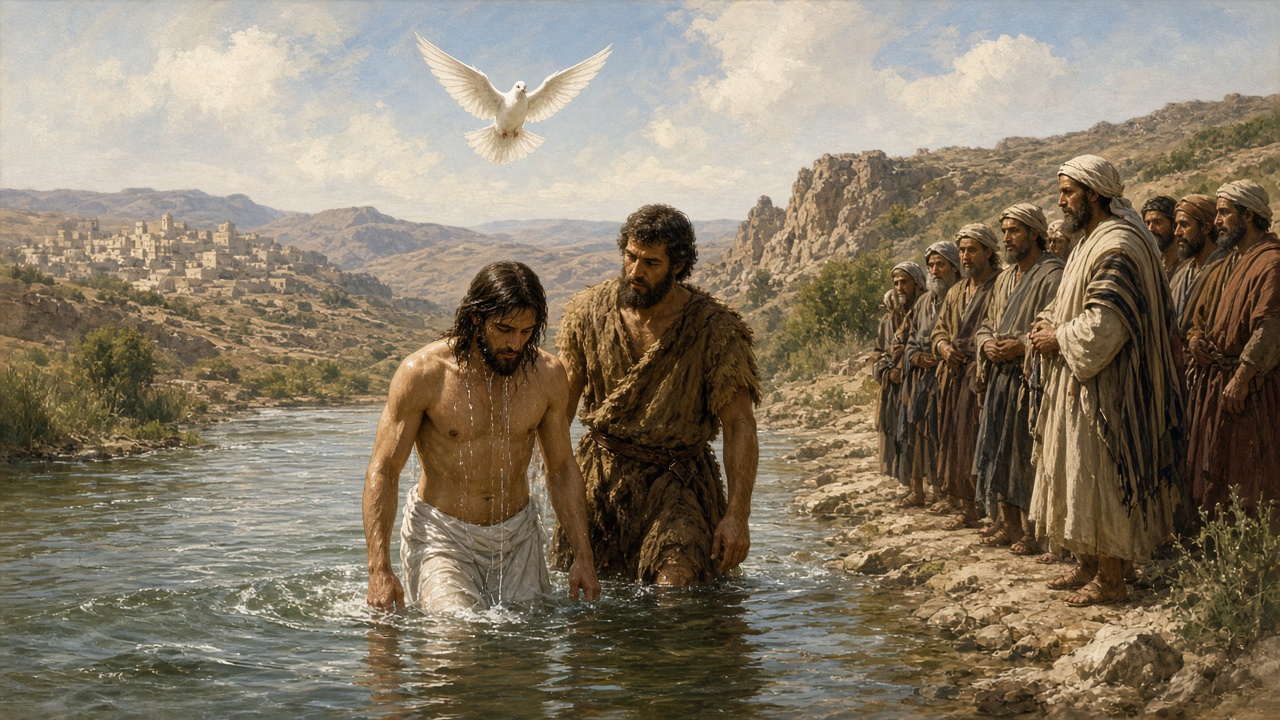
Onhemongarai Hesu
13Upe ramo ogwahẽ ou-vy Hesu Galiléia yvy-gwi. Jordão ysyry-py ou. Ojéupe ave oipota omongarai. 14Ha João katu nomongaraiséi íxupe:
—Iporãve katu xe mongarai nde voi. Nde, nde reko porãve xéhegwi, he'i íxupe João. —Nde reko porãve jepe, ma'erã ereju joty xe renda-py? Ma'erã erenhemongarai ukase joty xe-vy, he'i oporandu-vy.
15—Ãy eheja katu tanhemongarai, he'i Hesu. —Upéixa iporã jajapo entéro Nhandejáry oipota va'e gwive, he'i João-pe.
Ha João he'i:
—Néi. Aipo ramo toromongarai, he'i Hesu-pe.
Ha omongarai íxupe.
16Onhemongarai rire-ma, osẽ y-gwi ou-vy. Upe-ma ramo ojekwaa pya'e yváy-py. Upe-gwi ha'e ohexa ogwejy va'e. Pykasu-rami ogwejy ou-vy Nhe'ẽ Marangatu tee va'e. Ójehe ogwejy ramo ohexa. 17Upéi ohendu yváy-gwi onhe'ẽ va'e. He'i:
—Kóa xe ra'y xe rembiayhu voi. Xe rembierohory porã ete va'e voi ko va'e, he'i yváy-gwi onhe'ẽ va'e Hesu-rehe.
Você sabia?
Arrependimento e batismo no Jordão
- Mateus identifica João Batista como aquele de quem falou o profeta Isaías: uma voz que clama no deserto: “Preparem o caminho do Senhor”. O Dicionário Bíblico de Easton (1897) registra que a missão de João foi objeto de profecia, citando este trecho, Isaías 40:3 e Malaquias 3:1, e que ele era de descendência sacerdotal — o pai, Zacarias, sacerdote da turma de Abias, e a mãe, Isabel, das filhas de Arão. Uma cronologia data tanto o início do ministério de João quanto o batismo de Jesus no ano 26 d.C.Fontes: o próprio texto bíblico · John the Baptist · John the Baptist Begins Ministry · John Baptizes Jesus
- João veio pregando no deserto da Judeia, e pessoas de Jerusalém, de toda a Judeia e de toda a região ao redor do Jordão foram ao seu encontro, confessando os pecados e sendo batizadas no rio Jordão. O Dicionário Bíblico de Easton (1897) observa que, sob os romanos, no tempo de Cristo, Judeia designava a mais meridional das três divisões da Palestina, distinta da Galileia e da Samaria, e incluía os territórios de Judá, Benjamim, Dã, Simeão e parte de Efraim. Jesus veio da Galileia — chamada Galil pelos judeus — ao Jordão para ser batizado por João.Fontes: o próprio texto bíblico · Judea · Galilee
- João advertiu os fariseus e os saduceus a não se fiarem da afirmação “Temos a Abraão por pai”, dizendo que Deus podia suscitar filhos para Abraão a partir das pedras. O Dicionário Bíblico de Easton (1897) explica o nome Abraão como “pai de uma multidão” e o descreve como filho de Terá, nomeado antes dos irmãos mais velhos porque era o herdeiro das promessas.Fontes: o próprio texto bíblico · Abraham
Notas escritas com auxílio de IA a partir de fontes abertas (Theographic Bible Metadata, CC BY-SA 4.0; Easton’s Bible Dictionary, domínio público) e revisadas antes de publicar.
Lugares deste capítulo
- Judea · Hoje: Judea 1 · 31.777, 35.234 · versículos 1, 5
- Jerusalem · 31.777, 35.234 · versículo 5
- Jordan · Hoje: Jordan River · 31.761, 35.558 · versículos 5, 6, 13
- Galilee · 32.760, 35.527 · versículo 13
Só aparecem lugares com identificação de alta confiança (90% ou mais segundo as fontes acadêmicas reunidas pelo OpenBible). Mapa da época: DARE (Digital Atlas of the Roman Empire), CC BY 4.0; mapa atual: © colaboradores do OpenStreetMap; lugares: OpenBible.info (CC BY 4.0).
Créditos e licença desta tradução
Nhandejáry Nhe'ẽ
New Testament in Kaiwá (BR:kgk:Kaiwá)
copyright © 2006 Wycliffe Bible Translators, Inc.
Language: Kaiwá
Translation by: Wycliffe Bible Translators, Inc.
Copyright Information
© 2006, Wycliffe Bible Translators, Inc. All rights reserved.
This translation text is made available to you under the
terms of the Creative Commons License: Attribution-Noncommercial-No Derivative Works.
( http://creativecommons.org/licenses/by-nc-nd/3.0/ )
In addition, you have permission to port the text to different file formats, as long as you
do not change any of the text or punctuation of the Bible.
You may share, copy, distribute, transmit, and extract portions
or quotations from this work, provided that you include the above copyright
information:
You must give Attribution to the work.
You do not sell this work for a profit.
You do not make any derivative works that change any of the actual words or punctuation of the Scriptures.
Permissions beyond the scope of this license may be
available if you contact
us with your request.
The New Testament
in Kaiwá
© 2006, Wycliffe Bible Translators, Inc. All rights reserved.
This translation is made available to you under the terms of the
Creative Commons Attribution-Noncommercial-No Derivatives license 4.0.
You may share and redistribute this Bible translation or extracts from it in any format, provided that:
You include the above copyright and source information.
You do not sell this work for a profit.
You do not change any of the words or punctuation of the Scriptures.
Pictures included with Scriptures and other documents on this site are licensed just for use with those Scriptures and documents.
For other uses, please contact the respective copyright owners.
2014-04-27
Fonte: http://ebible.org/kgkNT/ · eBible.org