João 4
Nhandejáry Nhe'ẽ · Toque num versículo para ver as referências cruzadas.
Hesu onhomongeta kunha Samaria pygwa ndive
1Upe ramo omombe'u fariseu kwéry-pe:
—Are-ma omoirũ heta João-pe. Ha ko'ánga katu hetave Hesu-rehe ojehesa rerovapa. Hesu-pe háma omoirũ heta. Omongarai-ma íxupe kwéry Hesu gwemimbo'erã, he'i omombe'u-vy.
Upéa oikwaa-ma ramo, osẽ oho-vy Hesu Judéia yvy-gwi. Oho jevy Galiléia yvy-koty. Ha Hesu katu oporomongarai e'ỹ va'e. Hemimbo'e kwéry mante ae oporomongarai va'e. 4Ha upéi katu ohasa oho-vy Samaria yvy-rupi. Upe-rupi ndoho reíry.
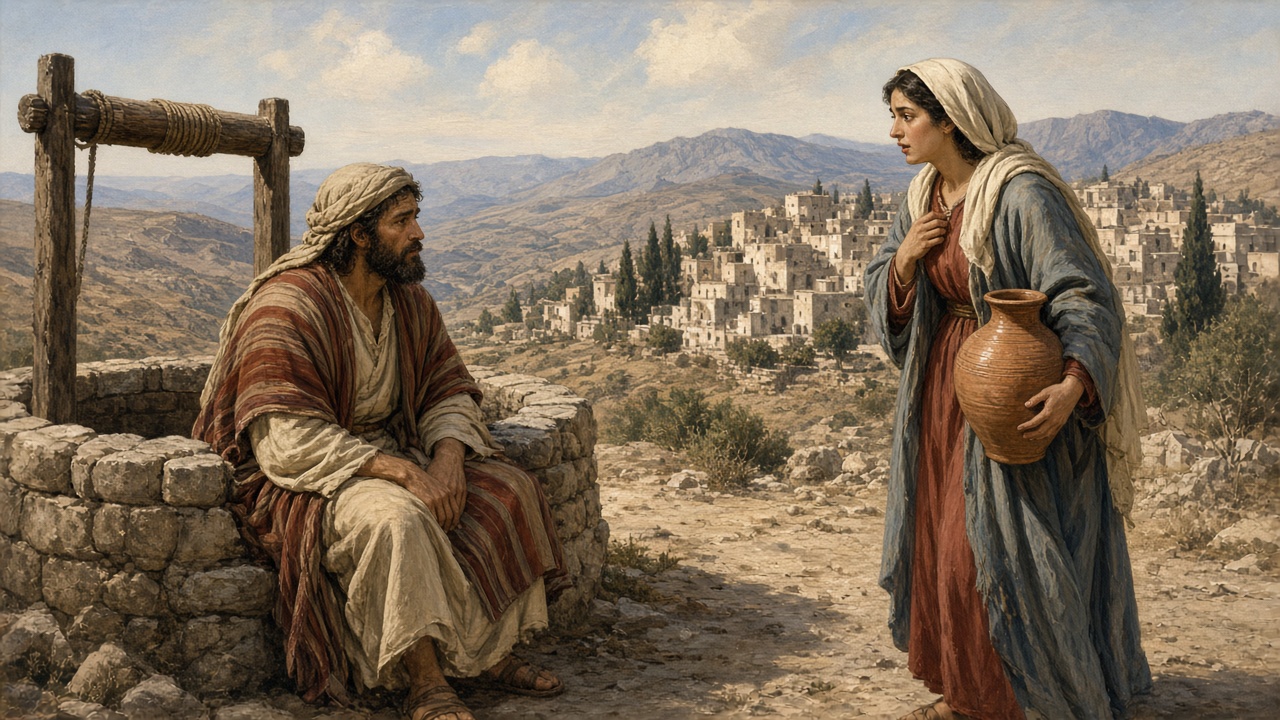
5Upéixa ramo ogwahẽ oho-vy Samaria pygwa tetã héry va'e Sicar-py. Ha Sicar katu hi'agwĩ oĩ myamyrĩ Jacó yvykwe-gwi pe ome'ẽ gwa'ýry José-pe va'ekwe-gwi. 6Upe-py oĩ Jacó ygwa. Ha upéi katu Hesu ogwahẽ rire ogwapy ygwa ypy-py. Ogwata puku ou-vy rire ikane'o. Upéa-gwi okane'o ramo ogwapy otongea-vy. Larose-ma ramo ogwapy oĩ-vy onhemokane'õgwa hagwã.
7Upe-ma ramo ogwahẽ ou-vy kunha Samaria pygwa va'e. Ogwenohẽ hagwã y ou. He'i íxupe Hesu:
—Hay'u-ta, he'i. |src="CN01673B.TIF" size="span" copy="© 1978 David C. Cook Publishing Co." ref="JHN 4.7"
8Ha ndaipóri inhirũ. Hemimbo'e kwéry oje'ói kuri tetã-my oho ojogwa hagwã gwemi'urã kwéry.
9Ha upéi he'i íxupe pe kunha:
—Nde ko judeu kwéry va'e. Xe katu Samaria pygwa va'e. Pende a'e'ỹha ore, he'i. —Aipo ramo ma'erã po erejerure xe-vy y-rehe. Judeu kwéry katu ndore rerohorýi va'e. Ndoiporúi ore mba'e, he'i íxupe.
10Upéi Hesu he'i pe kunha-pe:
—Ndereikwaái voi Nhandejáry remime'ẽrã. “Hay'u-ta” ha'e ramo nde-vy, ndaxe kwaái ave. Ha xe kwaa rire ra'e, erejerure arã xe-vy ra'e. Ame'ẽ arã nde-vy ra'e y. Yvu ramigwa va'e ame'ẽ arã nde-vy nde rekoverã, he'i kunha-pe.
11Upéi he'i íxupe pe kunha:
—Hypy voi ygwa, porombo'eháry, he'i. —Ndererekói henohẽha. Mamo-gwi nipo erenohẽ-ta y yvu ramigwa va'e, he'i íxupe kunha. 12—Ore ramói ypykwe Jacó ome'ẽ va'ekwe ore-vy upéa ygwa. Hoy'u ave íxugwi. Ta'ýry hoy'u ave íxugwi va'ekwe. Omboy'u ave íxugwi va'ekwe gwymba, he'i. —Ha nde nerenhembotuvixa mba'éi tipo íxupe? he'i íxupe kunha.
13Upéi he'i kunha-pe:
—Ko va'e y ja'u ramo, jay'u jevy jevy va'erã, nhande y'uhéi jevy va'erã. 14Ha xe remime'ẽrã ere'u ramo, nande y'uhéi mo'ãvéi-ma va'erã, he'i. —Xe mba'e y ame'ẽ va'erã nde-vy nde py'a-py ndopái va'erã. Yvu-rami opupu va'erã. Yvu-rami oĩ va'erã nde py'a-py nde rekoverã. Ndopái-gwi ereiko va'erã opa e'ỹ reheve Nhandejáry ndive, he'i kunha-pe.
15Upe-ma ramo he'i íxupe kunha:
—Eme'ẽ mani katu xe-vy, porombo'eháry, aipo erereko va'e y. Ndaxe y'uheivéi-ma va'erã. Ndajuvéi-ma va'erã y-rehe ko'a-py, he'i íxupe.
16Upéi he'i kunha-pe:
—Ekwa emombe'u ne ména-pe ou ave hagwã a-py. Upe rire peju katu ko'a-py, he'i.
Ha kunha he'i íxupe:
17—Naxe ménai voi, he'i.
Ha Hesu he'i íxupe:
—“Naxe ménai” ere-ma ramo, anhetegwa voi eremombe'u xe-vy. 18Eremenda menda voi ereiko-vy va'ekwe. Cinco voi oiko ne menakwe. Indive ãy ereiko va'e ndaha'éi ne ména tee. “Naxe ménai” ere ramo, anhetegwa voi eremombe'u xe-vy, he'i kunha-pe Hesu.
19Ohendu ramo inhe'ẽ: “Xe kwaa-ma ra'e” he'i ójehe.
Upéa-gwi he'i íxupe kunha:
—Nde ko, porombo'eháry, Nhandejáry nhe'ẽ-py eremombe'u va'ety nipo ra'e. Ahexa kwaa-ma nde-rehe, he'i oikwaa-gwi íxupe Hesu.
20—Upe va'e yvyaty ári ojeupi meme va'ekwe ore ramói kwéry. Nhandejáry nhamboete haty-py oho meme. Ha peẽ, judeu kwéry va'e katu ndapejohu porãi upe-py oroho ramo. Jerusalém tetã-my mante oipota jaha Nhandejáry mboete-vy. “Upe-py ae tekoha” he'i judeu kwéry, he'i kunha omombe'u-vy.
21Upéi he'i kunha-pe:
—Xe rerovia katu, kunha. Ogwahẽ-tama Nhandejáry óra, nhamboete tee hagwã íxupe óra. Ogwahẽ-ma rire, upe yvyaty ári napemboete mo'ãvéi-ma Nhandejáry Nhande Ru-pe. Napemboete mo'ãvéi-ma ave íxupe Jerusalém-my, upe oromboete haty-py. 22Ha pende kwéry niko peikwaa e'ỹ va'e pemboete va'e. Ha ore kwéry katu oroikwaa va'e oromboete voi. Nhane resendeharã ko judeu kwéry va'e. Upéa-gwi oromboete va'e oroikwaa voi. 23Ogwahẽ-ta hi'óra, he'i. —Ãy ogwahẽ pota-ma voi hi'óra. Ko'ánga katu Nhandejáry-pe omboete tee va'e gwive, omboete va'erã íxupe opy'a gwive. Nomboete ra'anga anga rei mo'ãvéi-ma íxupe. Upéa rehegwa omboete teeharã Nhandejáry oipota, he'i. 24—Ha Nhandejáry katu hete e'ỹ va'e jahexa e'ỹ va'e ha'e. Upéa-gwi jahexa e'ỹ ramo jepe, tanhamboete tee joty íxupe nhande py'a gwive. Ndikatuvéi-ma nhamboete ra'anga anga rei íxupe, he'i kunha-pe.
25Upe ramo he'i íxupe kunha:
—Nhane remiha'arõ ko ou va'erã, he'i.
Nhane remiha'arõ va'e héry va'e Cristo.
Upéi he'i:
—Ogwahẽ rire ou-vy, opamba'e jaikwaa e'ỹ va'e gwive oikwaa uka va'erã nhande-vy, he'i íxupe.
26—Xe voi niko ha'e. Xe Cristo-ma voi. Xe ne ndive anhomongeta va'e ha'e-ma voi, he'i kunha-pe Hesu.
27Upéa he'i-ma ramo, ogwahẽ ou-vy hemimbo'e kwéry. Opondera hese:
—Mbava'e-gwi po onhomongeta kunha ndive oĩ-vy, he'i ojéupe.
Ha Hesu-pe katu nomongetáiry: “Mbava'e tipo ereipota?” nde'íry. “Ma'erã tipo erenhomongeta kunha ndive ereĩ-vy?” nde'íry íxupe. Opondera rei hese. Noporandúiry.
28Upe ramo pe kunha oheja omba'e y ryru oho jevy pe tetã-my:
29—Pekwa mani. Oĩ kwimba'e opamba'e xe rembiapokwe gwive omombe'u-ma va'e xe-vy. Peju katu jaha pehexa hagwã íxupe. Nhane remiha'arõ va'e para'e ha'e, he'i omombe'u-vy pe tetã mygwa-pe.
30Osẽmba-ma upe tetã-gwi hikwái. Oime ou-ma hikwái. Hesu renda-koty ogwa'ẽ. Ne'írã vyteri ogwahẽ Hesu-pe.
31Upe-ma ramo ou jave hikwái:
—Ekaru mani, ekaru mani, porombo'eháry, he'i íxupe hikwái.
Ojapura okaru hagwã mo'ã.
32—Nda'u mo'ãi, he'i. —Xe areko ha'u va'erã peikwaa e'ỹ va'e, he'i gwemimbo'e kwéry-pe.
33Upe-ma ramo he'i ojóupe hikwái:
—Ndogwerúi tipo avave Hesu-pe hemi'urã ra'e? he'i ojóupe.
34Upéi he'i gwemimbo'e kwéry-pe:
—Xe ajapo meme xe mbouhare remimbota ajapopa peve xe rembiaporã. Peẽ pejapura pene remi'urã-rehe. Ha xe ajapurave xe rembiaporã-rehe. Upéa ajapo ramo, ndakarúi ramo jepe, xe rygwyatã vérami joty voi. Akaru-ma va'e-rami xe, he'i ójehe.
35Upéi he'i jevy gwemimbo'e kwéry-pe:
—“Irundy jasy rire ijagwyje-ma” ja'e va'e voi. Ha xe katu ha'e-ma peẽ-my. Pema'ẽ katu pehexa hagwã. Hi'aju-ma nipo ra'e temitỹgwe, he'i Hesu gweroviaharã-rehe temitỹgwe rehegwa-rami.
Upéi he'i:
36—Peteĩ onhemitỹ va'e, outro kwéry oikytĩ va'e. Pe temitỹ omosarambi va'e-rami, peteĩ omombe'u mbe'u Nhandejáry nhe'ẽ. Pe oikytĩ va'e-rami, outro kwéry oporogwerovia uka va'e. Ko'ánga oĩ inhe'ẽ rerovia ukaha oikove opa e'ỹ reheve hagwã Nhandejáry ndive heroviaha. Hembiapo porã-rehe ohekoviarõ va'erã íxupe Nhandejáry. Peteĩ onhemitỹ, outro kwéry oikytĩ. Ovy'a onhondive hikwái. Peteĩxa hembiapo. Upéixa ete inhe'ẽ mombe'uhaty inhe'ẽ rerovia ukaha ndive ovy'a. Peteĩxa hembiapo. 38Oromondo kuri peporogwerovia uka hagwã pemombe'u ranhe e'ỹ reheve. Outro kwéry oho pene renonde va'ekwe omombe'u hagwã Nhandejáry nhe'ẽ. Ha ko'ánga katu outro kwéry rembiapo porã porã-gwi, peporogwerovia uka-ma, he'i gwemimbo'e kwéry-pe Hesu.
39Ha heta oĩ Samaria pygwa va'e ojerovia va'e Hesu-rehe. Pe kunha, “Entéro xe rembiapokwe gwive omombe'u-ma kuri xe-vy” he'i ramo tetã mygwa-pe omombe'u-vy, ojerovia-ma hese hikwái. 40Ha upéi katu ogwahẽ ou-vy Hesu renda-py hikwái:
—Epyta katu ore ndive, epyta katu ore ndive, he'i íxupe.
Upéa-gwi mokõi áry opyta hendive kwéry.
41Inhe'ẽ ohendu ramo hetave-ma ogwerovia va'e oĩ. 42He'i kunha-pe hikwái:
—Eremombe'u ramo kuri ore-vy orogwerovia-ma íxupe. Ha ko'ánga katu ore-vy tee-ma onhe'ẽ. Ore apysa-rupima orohendu inhe'ẽ. Upéa-gwi orogwerovia tee-ma voi íxupe, he'i. —Upe va'e entéro ko yvy ári oiko va'e gwive resendeharã nipo ra'e, he'i hese kunha-pe hikwái.
Hesu ombogwera mburuvixa ra'y-pe
43Mokõi áry rire upe-gwi oho jevy-ma Hesu. Ogwahẽ oho-vy Galiléia yvy-py:
44—Nhandejáry nhe'ẽ-py omombe'u va'ety ko nomboetéi íxupe hetã mygwa, he'i Hesu.
45Ha upéi katu ogwahẽ rire Galiléia yvy-py, ogwerohory íxupe upe pygwa kwéry. Oje'ói va'ekwe upe pygwa Jerusalém-my. Oiko jave aretegwasu héry va'e páscoa, upe-py ohopa. Upe-py ohexa va'ekwe entéro Hesu rembiapo porãgwe. Upéa-gwi ogwerohory voi íxupe hikwái.
46Ha upéi katu Hesu ogwahẽ jevy oho-vy Caná tetã-my, Galiléia yvy pygwa-py ogwahẽ oho-vy. Upe-py ykwe omondo va'ekwe uva rykwere ramo. Ha outro tetã-my héry va'e Cafarnaum mburuvixa ramo oĩ va'e upe-py. Hasy voi ta'ýry.
47—Ou-ma kuri Hesu Judéia yvy-gwi. Ogwahẽ-ma ko'a-py, he'i-ma ramo mburuvixa-pe, oho ogwahẽ Hesu renda-py.
He'i Hesu-pe:
—Jaha mani katu embogwera xe-vy xe ra'y-pe, he'i íxupe. —Omano hagwã rami-ma oĩ. Embogwera mani íxupe, he'i íxupe mburuvixa. 48Upe-ma ramo he'i íxupe Hesu:
—Ndaxe rerovia mo'ãi nde xe rembiapo erehexa e'ỹ reheve. Heroviapyrã-rupi xe rembiapo ramo, jahexa e'ỹ va'e ajapo ramo ae, xe rerovia va'erã, he'i mburuvixa-pe.
49Upe-ma ramo he'i íxupe mburuvixa:
—Eju mani, porombo'eháry. Ani ne ate'ỹ teĩ ereju hagwã pono omano xe ra'y, he'i íxupe.
50—Tereho katu. Oikove jevy-ma nde ra'y, he'i mburuvixa-pe.
Ogwerovia-ma inhe'ẽ oho-ma. 51Oho jave, ohogwaitĩ íxupe hembigwái ou-vy:
—Oikove jevy-ma nde ra'y, he'i íxupe omombe'u.
52Upéi oporandu hembigwái-pe:
—Mbovy óra-py oikove jevy-ma xe ra'y? he'i oporandu-vy gwembigwái-pe.
—Kwehe larose rire nahete rakuvéi-ma, he'i túvy-pe hembigwái.
53“Upéa óra-py ete voi Hesu omombe'u kuri xe-vy nipo ra'e, Oikove jevy-ma nde ra'y, he'i voi xe-vy” he'i ojéupe. Upe-ma ramo ojerovia tee voi hese. Hóga pygwa gwive ave ojerovia tee ave hese.
54Upéixa imokõiha-rehe hembiapo porã heroviapyrã-rupi ogwahẽ rire Galiléia-py Judéia yvy-gwi.
Você sabia?
Água viva na Samaria
- Jesus deixou a Judeia para voltar à Galileia, e o Evangelho diz que ele precisava passar pela Samaria. Sob os romanos, no tempo de Jesus, a Judeia era a mais ao sul das três divisões da Palestina, distinta da Samaria e da Galileia, e a narrativa observa que os judeus não se relacionavam com os samaritanos.Fontes: o próprio texto bíblico · Judea
- Ele chegou a Sicar, perto do terreno que Jacó tinha dado a seu filho José e, cansado da viagem, sentou-se junto ao poço de Jacó. O dicionário bíblico de Easton (1897) registra que, desde o tempo das Cruzadas, Sicar costumava ser identificada com Siquém, mas que explorações a identificaram com 'Askar, um pequeno povoado samaritano na base sul de Ebal, cerca de uma milha ao norte do poço.Fontes: o próprio texto bíblico · Sychar
- A mulher contrastou a adoração neste monte com a afirmação dos judeus de que era preciso adorar em Jerusalém, e falou de um Messias que havia de vir, chamado Cristo. Quando os discípulos voltaram de comprar comida na cidade, ficaram surpresos de que Jesus estivesse falando com uma mulher.Fontes: o próprio texto bíblico
Notas escritas com auxílio de IA a partir de fontes abertas (Theographic Bible Metadata, CC BY-SA 4.0; Easton’s Bible Dictionary, domínio público) e revisadas antes de publicar.
Lugares deste capítulo
- Galilee · 32.760, 35.527 · versículos 3, 43, 45, 46, 47, 54
- Judea · Hoje: Judea 1 · 31.777, 35.234 · versículos 3, 47, 54
- Samaria · Hoje: Samaria 2 · 32.276, 35.195 · versículos 4, 5, 7, 9
- Jerusalem · 31.777, 35.234 · versículos 20, 21, 45
- Mount Gerizim · 32.199, 35.273 · versículo 20
Só aparecem lugares com identificação de alta confiança (90% ou mais segundo as fontes acadêmicas reunidas pelo OpenBible). Mapa da época: DARE (Digital Atlas of the Roman Empire), CC BY 4.0; mapa atual: © colaboradores do OpenStreetMap; lugares: OpenBible.info (CC BY 4.0).
Créditos e licença desta tradução
Nhandejáry Nhe'ẽ
New Testament in Kaiwá (BR:kgk:Kaiwá)
copyright © 2006 Wycliffe Bible Translators, Inc.
Language: Kaiwá
Translation by: Wycliffe Bible Translators, Inc.
Copyright Information
© 2006, Wycliffe Bible Translators, Inc. All rights reserved.
This translation text is made available to you under the
terms of the Creative Commons License: Attribution-Noncommercial-No Derivative Works.
( http://creativecommons.org/licenses/by-nc-nd/3.0/ )
In addition, you have permission to port the text to different file formats, as long as you
do not change any of the text or punctuation of the Bible.
You may share, copy, distribute, transmit, and extract portions
or quotations from this work, provided that you include the above copyright
information:
You must give Attribution to the work.
You do not sell this work for a profit.
You do not make any derivative works that change any of the actual words or punctuation of the Scriptures.
Permissions beyond the scope of this license may be
available if you contact
us with your request.
The New Testament
in Kaiwá
© 2006, Wycliffe Bible Translators, Inc. All rights reserved.
This translation is made available to you under the terms of the
Creative Commons Attribution-Noncommercial-No Derivatives license 4.0.
You may share and redistribute this Bible translation or extracts from it in any format, provided that:
You include the above copyright and source information.
You do not sell this work for a profit.
You do not change any of the words or punctuation of the Scriptures.
Pictures included with Scriptures and other documents on this site are licensed just for use with those Scriptures and documents.
For other uses, please contact the respective copyright owners.
2014-04-27
Fonte: http://ebible.org/kgkNT/ · eBible.org