Levítico 17
Anumzamofo Ruotage Avontafere · Toque num versículo para ver as referências cruzadas.
Koranteti kumi'mofo nona hu'zamofo naneke
1Ra Anumzamo'a Mosesena asamino, 2Aronine, mofavre naga'ane, maka Israeli vahera Ra Anumzamo'a amanage hie hunka zamasamio, 3Mago Israeli vahe'mo'ma bulimakao afupi, sipisipifi afu'ma, meme afu'ma kuma agu'afino, fegu'ama aheno'ma kresramna nevuno, 4ana bulimakao afupi, sipisipi afupi, meme afuma erino atruhu seli mono nomofo kafante'ma Ra Anumzamofo avugama omesiana, e'inahu vahe'mo'a kora eritagino kumi hu'neankino, kuma agu'afintira ahenatitregahie. 5Ama'na agafare ana zana hugahaze, Israeli vahe'mo'za amane megi'a kokampi ofazimia kresramna nevazankiza, menina kresramna vu ofazimia eri'za atruhu seli mono nomofo kafante Ra Anumzamofo avuga pristi vahete esageno, agra erino arimpa fru ofa Ra Anumzamonarega hugahie. 6Hagi atruhu seli mono nomofo kafante'ma kresramna vunte itama Ra Anumzamofo avugama me'nere, pristi vahe'mo ana korana rutri tri hunenteno afova'a tevefi kresigeno Ra Anumzamo'na mna'a nentahina musena hugahue. 7Zamagra meme afu havi anumzante kresramna vunente'za, a'ne'mo'za savari hu'za monko avu'ava nehazankna osugahaze. Hagi ama'i mevava trake me'nena henkama fore hunante anante'ma hanaza Israeli vahe'mo'za amage antegahaze. 8Anantera anage hunka zamasamio, Israeli vahepintiro ru vahe'ma tamagranema emani'nenaza vahe'mo'zama ofama nehu'za, 9atruhu seli mono nomofo kafante Ra Anumzamofonte'ma eme kresramna ovanimofona, Israeli vahepintira ahenatitregahaze.
10Israeli vahepintiro rurega vahe'ma enemanisia vahe'mo'zo korama nesage'na, Nagra anama korama nesia vahera namefi hunemi'na vahe'niafintira ahenatitregahue. 11Na'ankure korampi asimu'ma erino mani'zana me'ne. Ana hu'negu kumite'ma nona huno apasente'zana koranuti Nagritera ofa hugahaze. E'ina hu'neankino koranuti kumimofo nona huno asimura amigahie. 12E'ina hu'negu Israeli vahe'ene ruregati vahe'ma tamagranema emani'naza vahe'motanena korana oneho hu'na nehue. 13Israeli vahe'mo'zo ruregati vahe'ma tamagranema emani'nesaza vahe'mo'zanema zagagafao namama ahe'za nesu'za, korama'a mopafi tagitre'za mopanu refiteho. 14Na'ankure asimu'ma anteno mani'nea zagaramimofona asimura korampi me'ne. E'i ana agafare Israeli vahekura korana oneho hu'noankino, iza'o korama nesimofona Israeli vahepintira ahegasopegahaze. 15Hagi Israeli vahero, ruregati vahe'ma tamagranema emani'nesaza vahe'mo'zama fri'nesia zagagafao, afi zagagafamo aheno traga hu'nesia zagagafama nesimo'a, kukena'a sese nehuno, timpi ti freteno agru osu mani'nenkeno vuno kinagasenkeno agrua hugahie. 16Ana hu'neanagi kukena'ama sese osuno, timpima tima ofresimo'a, agra'a anazamofo knazana erigahie.
Você sabia?
O abate sacrificial e a santidade do sangue
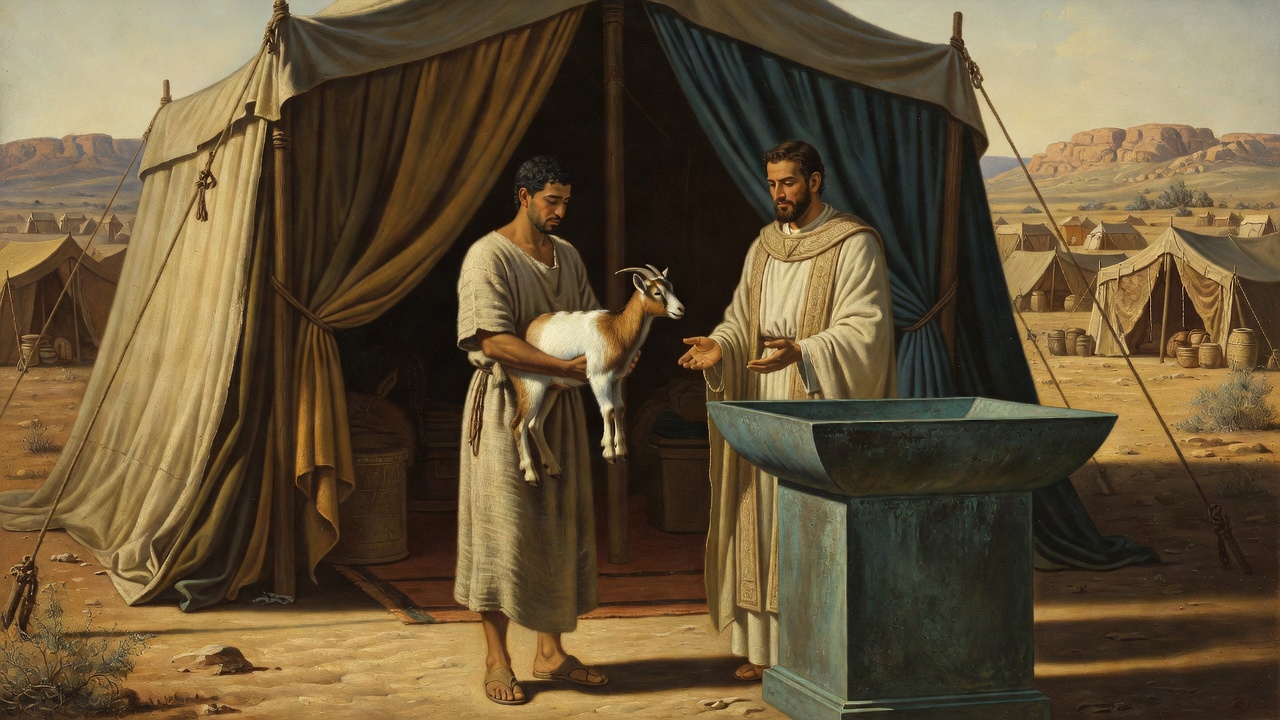
- O Levítico determina que animais domésticos como bois, cordeiros e bodes fossem levados diretamente à entrada da Tenda do Encontro, em vez de serem abatidos em campo aberto. Essa norma garantia que os sacrifícios fossem oferecidos exclusivamente como ofertas de paz ao SENHOR e impedia sacrifícios ilícitos a demônios em forma de bode.Fontes: o próprio texto bíblico
- Tanto os israelitas nativos quanto os estrangeiros residentes eram estritamente proibidos de comer sangue, sob pena de serem eliminados da comunidade. O texto fundamenta essa lei no princípio teológico de que a vida da carne está no sangue, o qual Deus designou especificamente para fazer expiação sobre o altar.Fontes: o próprio texto bíblico
- Quando caçavam animais selvagens ou aves permitidas para alimentação, os israelitas e estrangeiros deviam drenar o sangue na terra e cobri-lo com pó. Essa instrução reforçava que a vida pertence a Deus e preservava a santidade do sangue fora do santuário sacrificial.Fontes: o próprio texto bíblico
Notas escritas com auxílio de IA a partir de fontes abertas (Theographic Bible Metadata, CC BY-SA 4.0; Easton’s Bible Dictionary, domínio público) e revisadas antes de publicar.
Créditos e licença desta tradução
Anumzamofo Ruotage Avontafere
The Holy Bible in the Kamano-Kafe language of Papua New Guinea
Buk Baibel long tokples Kamano-Kafe long Niugini
copyright © 2022 Tyndale Bible Translators
℗ Tyndale Bible Translators
Language: Kamano-Kafe (Kamano)
Translation by: Tyndale Bible Translators
This translation is made available to you under the terms of the
Creative Commons Attribution Share-Alike license 4.0.
You have permission to share and redistribute this Bible translation in any format and to make reasonable revisions and adaptations of this translation, provided that:
You include the above copyright and source information.
If you make any changes to the text, you must indicate that you did so in a way that makes it clear that the original licensor is not necessarily endorsing your changes.
If you redistribute this text, you must distribute your contributions under the same license as the original.
Pictures included with Scriptures and other documents on this site are licensed just for use with those Scriptures and documents.
For other uses, please contact the respective copyright owners.
Note that in addition to the rules above, revising and adapting God's Word involves a great responsibility to be true to God's Word. See Revelation 22:18-19.
2026-08-31
Fonte: http://png.bible/kbq/ · eBible.org