Eclesiastes 3
Anumzamofo Ruotage Avontafere · Toque num versículo para ver as referências cruzadas.
Mika'zama fore'ma hu kna metere hu'ne hu'nea naneke
1Ama mopafina maka'zama fore'ma hu kna metere higeno, maka'zama hu kna metere hu'ne. 2Vahe'ma kasente kna megeno, vahe'ma fri kna me'ne. Hoza hankare kna megeno, hozama hamare kna me'ne. 3Vahe'ma ahefri kna megeno, vahe'ma azeri knamare kna me'ne. Maka'zama tapagema hutre kna megeno, ete kasefa'ma azeri otino ki kna me'ne. 4Zavite kna megeno, kizamare kna me'ne. Asunku'ma hu kna megeno, musema huno avoma hage kna me'ne. 5Havema erino ometre eme atrema hu kna megeno, havema zogi atru hu kna me'ne. Vahe'ma azeri anuki kna megeno, vahe'ma azeri anuoki kna me'ne. 6Keonke zanku'ma hake kna megeno, avresra huno'ma ohake kna me'ne. Mago'a zama erinte kna megeno, ante'nea zama eritre kna me'ne. 7Kukenama tagato hu kna megeno, tagato'ma hu'nea zama rehati kna me'ne. Kema osuno mani kna megeno, keagama hu kna me'ne. 8Vahe'ma avesinte kna megeno, vahe'ma avesrama hunte kna me'ne. Ha'ma hu kna megeno, ha'ma osuno rimpafru huno mani kna me'ne.
9Vahe'mo'ma tusi amuhoma huno eri fore nehia zamo'a, na'a knare'za eri fore nehie? 10Anumzamo'ma knazama tagumpima nentea zana nagra ke'noe. 11Anumzamo'a mika zana kna fatgo'are knare zantfa huno tro hunte'ne. Ana nehuno manivava zana Anumzamo'a vahe'mofo tumopi ante'ne. Ana hu'neanagi Anumzamo'ma tro'ma hunte'nea zana eseteti'ma agafa huno vuno atumpare'ma vu'nea zantamina vahe'mo'a ke vagaore'ne. 12E'ina hu'negu mago'zama ke'na antahinama huana, muse nehuno knare avu'ava'ma hu'zamo maka'zana agatere'ne. 13Maka amuho'ma hu'zama eri fore'ma hanaza ne'zane, tinena nene'za musena hiho. Na'ankure e'i ana zantamina Anumzamo museza neramie. 14Nagra antahi'na ke'na huana, Anumzamo'ma tro'ma hu'nea zantera mago vahe'mo'a kasefa zana tro huntege, eri atregera osugahie. Anumzamo'ma tro'ma hunte'nea zana Agra ko tro hunte'neankino, mevava hugahie. Vahe'mo'zama Agri agoraga'ama mani'ne'za mono'ma huntesagu Anumzamo'a tro hunte'ne. 15Mika zama menima fore nehia zana, ko fore hu'nea zamo ete efore nehiankino, ama ana zamo'a henka fore hugahie. Na'ankure Anumzamo'ma ko'ma eri fore'ma hu'nea zanke eri fore huvava nehie.
Vahe'mofo nomani'zamo'a knarera osu'ne
16Mago zama ama mopafima koana, fatgo avu'ava'zama huga'zana netre'za, fatgo osu avu'ava zanke nehaze. 17E'ina hige'na amanahu antahintahi nagu'afina antahi'noe, Anumzamo'a fatgo vahe'ene kefo avu'ava'ma nehaza vahera keagare refko huzmantegahie. Na'ankure maka zama hu kna metere hu'neankino, miko tavutavara refko hugahie. 18Hagi vahekura amanahu antahintahi nagra antahi'noe, zagagafa kna hu'none hu'zama ke'za antahi'zama hanagu Anumzamo'a vahera rezmaheno nezamage. 19Na'ankure zagagafare'ma fore'ma hania zamo'a, vahetera fore hugahie. Zgagafamo'zama nefri'zaza hu'za vahe'mo'za nefrize. Magore huno vahe'mo'a zagagafa agateore'neanki, zagagafane vahe'enena mago zanke hu'na'e. E'ina hu zamo'a agafa'a omaneno knarera osu'ne. 20Vahe'ene zagagafanema frisa'ana kugusopa segaha'e. Kugusopareti regripeno tro huzanante'negu, ete frisukea kugusopa segaha'e. 21Vahe'mofo avamumo'a anagamu marenerisigeno, zagagafamofo avamumo'a mopafi ufregahie hu'za mago'a vahe'mo'za nehazanagi, tagra tamage kea ontahi'none. 22E'ina hu'negu amuhoma huno'ma mago vahe'mo'ma eri fore'ma hania zana erinteno neneno musenkase hino. Na'ankure e'i amuhoma huno'ma eri'zama eri'nea zamofo mizane. E'ina hu'neankino henkama fore'ma hania zamofona, iza knarera hu'nea averi hugahie?
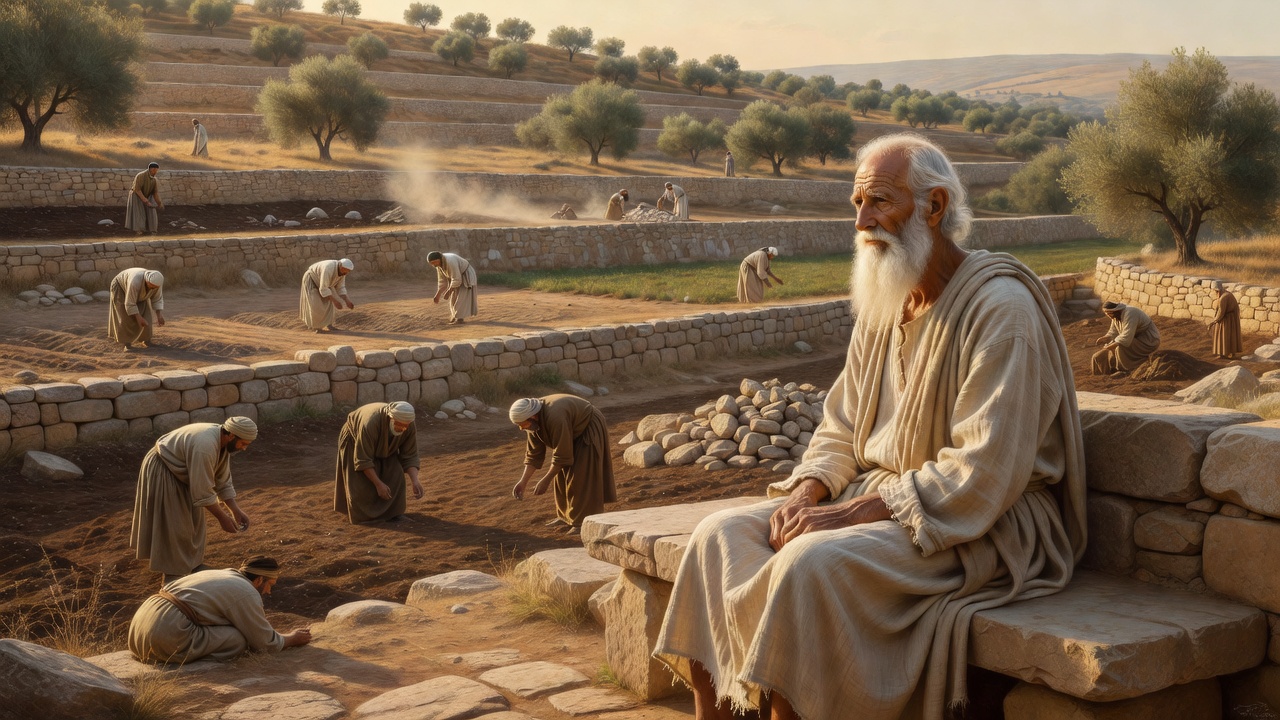
Você sabia?
Um tempo para cada estação
- O capítulo começa com um poema célebre composto por catorze pares de contrastes opostos, abrangendo desde nascer e morrer, plantar e colher, até chorar e dançar, guerrear e viver em paz. Essa estrutura literária ilustra a totalidade das experiências humanas debaixo do céu.Fontes: o próprio texto bíblico
- O autor observa que Deus colocou a eternidade no coração do ser humano, embora os mortais não consigam compreender plenamente a obra de Deus do princípio ao fim.Fontes: o próprio texto bíblico
- Ao refletir sobre a mortalidade, o texto nota que tanto pessoas quanto animais retornam ao pó. Diante desse destino físico comum, o Mestre conclui que desfrutar do trabalho diário, da comida e da bebida é uma dádiva de Deus.Fontes: o próprio texto bíblico
Notas escritas com auxílio de IA a partir de fontes abertas (Theographic Bible Metadata, CC BY-SA 4.0; Easton’s Bible Dictionary, domínio público) e revisadas antes de publicar.
Créditos e licença desta tradução
Anumzamofo Ruotage Avontafere
The Holy Bible in the Kamano-Kafe language of Papua New Guinea
Buk Baibel long tokples Kamano-Kafe long Niugini
copyright © 2022 Tyndale Bible Translators
℗ Tyndale Bible Translators
Language: Kamano-Kafe (Kamano)
Translation by: Tyndale Bible Translators
This translation is made available to you under the terms of the
Creative Commons Attribution Share-Alike license 4.0.
You have permission to share and redistribute this Bible translation in any format and to make reasonable revisions and adaptations of this translation, provided that:
You include the above copyright and source information.
If you make any changes to the text, you must indicate that you did so in a way that makes it clear that the original licensor is not necessarily endorsing your changes.
If you redistribute this text, you must distribute your contributions under the same license as the original.
Pictures included with Scriptures and other documents on this site are licensed just for use with those Scriptures and documents.
For other uses, please contact the respective copyright owners.
Note that in addition to the rules above, revising and adapting God's Word involves a great responsibility to be true to God's Word. See Revelation 22:18-19.
2026-08-31
Fonte: http://png.bible/kbq/ · eBible.org