Mateus 3
Bëngbe Bëtsa Cabëngaftaca Entsoyebuambna · Toque num versículo para ver as referências cruzadas.
Juan chë Ubayaná ents̈anga yojanabuayiyná
1Chë tempo, Juan chë Ubayaná, ents̈anga ndoyena luaroye Judeoca tojánbocna, Bëngbe Bëtsabe soyëngama jábuayenama. 2Mënts̈á cha yojanëtsëtsnaye: “Bëngbe Bëtsabe amë́ndayana ya echanjóshjango. Ngménaca s̈mochtenójuaboye ts̈ëngaftangbe bacna soyëngama y chca amana s̈mochtsajbaná y Bëngbe Bëtsabe benache s̈mochtishache ca.”
3Juan yojamna canÿa ndabiama chë Bëngbe Bëtsabe juabna oyebuambnayá Isaías mënts̈á tojánayana:
Ents̈anga ndoyena luaroca canÿa enduáyebuache:
“Bëngbe Utabná echanjabo ca;
mo nda canÿe benache tojtseprontacá canÿe uámana ents̈á jashjanguama,
ts̈ëngaftángnaca cachcá, Bëngbe Utabná jabama ainaniñe ts̈abe juabnë́ngaca s̈mochtseprontana ca” —cha tojánayana.
4Juanbe ents̈ayá inauapormana camellbe stjënasheca y bobache yojanasnana. Cha inasaye chapulinatémënga y tjoca tjouangbe méloye. 5Jerusalenoca ents̈anga, nÿetsca Judea luarents̈a ents̈anga y chë Jordán ca uabaina béjaye béconana oyenënga imojánbocana Juan joyeunayama. 6Bëngbe Bëtsábioye chëngbe bacna soyëngama jaimpáda chents̈ana, Juan chë Jordán béjayiñe chënga yojanëbáyana.
7Pero Juan tojáninÿe ba fariseunga y saduceunga cha chaubáyama tmojánama. Chënga imojamna chë judië́ngbeñe uánatsanënga Bëngbe Bëtsá ndoñe corente ntseyeunanama; as chora tojanë́yana: “¡Mëts̈cuaye ents̈anga! ¿Nda tcmënjáuyana chë echanjóshjango uabouana castigüents̈ana s̈mochjotsbocá ca? 8Bëngbe Bëtsábeñe ndegombre os̈buáchiyënga s̈mochtsemna, as chca chaotsinÿna chë bacna soyënga amana ts̈ëngaftanga ndegombre s̈mojtsajbanama. 9Y ndoñe s̈mattsejuabnaye cach ts̈ëngaftangbiama jayanama: ‘Abrahámbents̈ana ents̈anga fsëndmëna ca’. Er ats̈e s̈cuayana, Bëngbe Bëtsá quem ndëts̈béngacnaca Abrahámbents̈ana ents̈anga nanjábiama. 10Chë tats̈nía ya entsaprontana chë betiyeshënga tbëtëjëngocana jtseshatë́tsets̈ama. Ndaye betiye ndoñe tontseshajo, jtseshatëts̈ana y iñoye jtsatmets̈ana. Ts̈ëngaftangaftácnaca cachcá, ts̈abe soyënga ndoñe s̈montsamëse, Bëngbe Bëtsá cmochanjácastigaye.
11“Ndegombre, ats̈na béjayeca cbondubáyana Bëngbe Bëtsabe benache chas̈muatishachama. Pero chë ats̈be ústonoye echanjabá, ats̈biama más obenana bomná comna, y ats̈e merecido taitsatobuajoñe ni mo chabe shecochëtjonëshe jtsámbañama. Chë chabe benache aíñe chamojtishachëngbiama Bëngbe Bëtsá echanjama chë echanjabábeyeca, chë Uámana Espíritu chëngbe ainaniñe cháuamashënguama. Pero chë benache ndoñe chamontishachëngbiamna, Bëngbe Bëtsá echanjama chë echanjabábeyeca, corente castigánënga chamotsemnama, mo iñeshequëcá. 12Canÿe ents̈á chabe mëts̈tá cucuats̈iñe jiyëbana, chabe trigo jtsóbobemana y chë ndoservena shácuanënga jtsejashtsëtsana. Chabe trigo chë grano uaquëcjnaye tsañe jtsabuájuana, y chë ndoservena shácuanëngna iñoye jtsatmets̈ana. Cachcá, chë ats̈be ústonoye echanjabana, chë ts̈abe ents̈anga echanjúbuaja, y chë bacna ents̈angna canÿe íñeshiñe echantsacastígaye, y chë iñe ndocna te queochátsfsana ca” —cha tojanë́yana.
Juan, Jesúsbioye tbojanabaye
13As Jesús, Galileocana tojána Jordán béjayoye, Juan yojtsemnoye, cha chabuábayama. 14Pero Juan ndoñe yontsebos̈e Jesús juabáyama, y mënts̈á tbojaniyana: —Ats̈e s̈ontsemna aca chas̈cuabaye, y ¿más ats̈e aca cbochjuabaye ca?
15Chora Jesús tbojanjuá: —Morna chca chaotsemna. Entsemna lempe nts̈amo Bëngbe Bëtsá tojamandacá jobedésana ca.
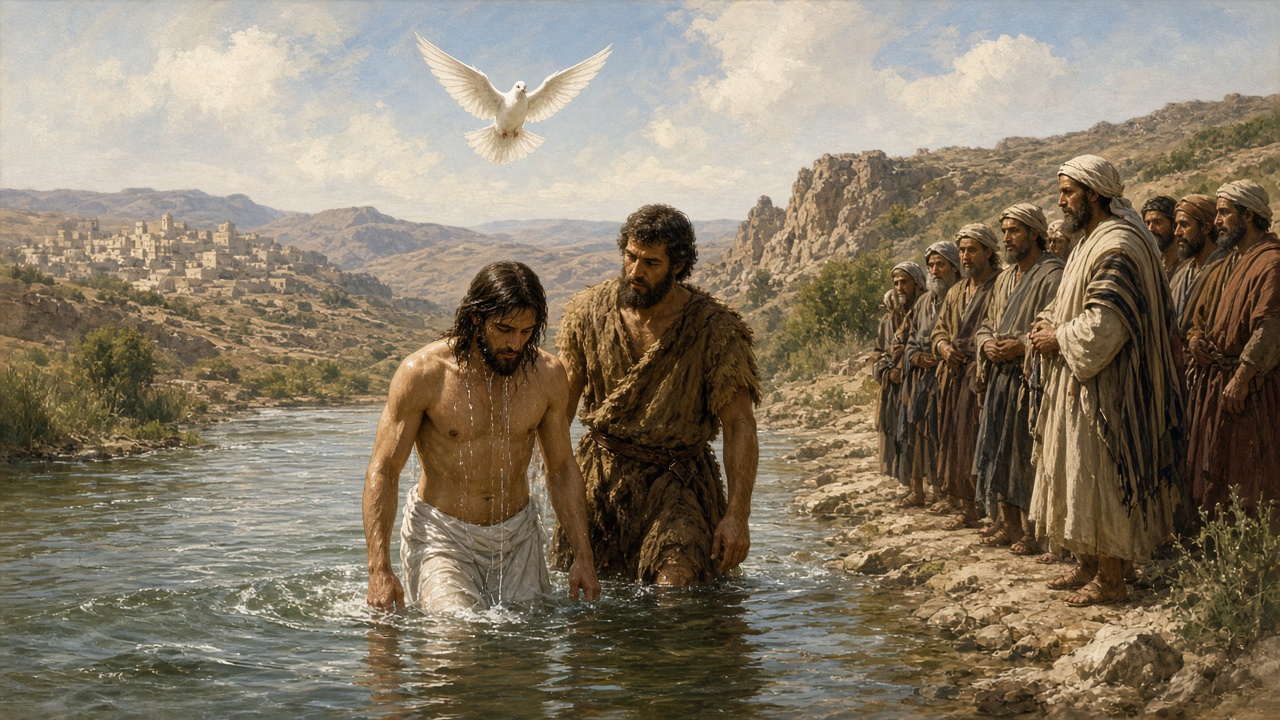
As Juan yojouena Jesús juabáyama. 16Jesús ya uabainá yojtsemna ora, chë buyeshoicana tojtanshë́bëbocna. Chorna Jesús tsbanánoye yojontjes̈iye y tojáninÿe chë celoca atëfjniñe y chë Uámana Espíritu mo canÿe palomatemcá chábioye yojtsastjajuana. 17Chora celocana Bëngbe Bëtsá mënts̈á tojánayana: “Mua ats̈be bonshana uaquiñá endmëna. Chabiama corente sëntsoyejuá ca.”
Você sabia?
Arrependimento e batismo no Jordão
- Mateus identifica João Batista como aquele de quem falou o profeta Isaías: uma voz que clama no deserto: “Preparem o caminho do Senhor”. O Dicionário Bíblico de Easton (1897) registra que a missão de João foi objeto de profecia, citando este trecho, Isaías 40:3 e Malaquias 3:1, e que ele era de descendência sacerdotal — o pai, Zacarias, sacerdote da turma de Abias, e a mãe, Isabel, das filhas de Arão. Uma cronologia data tanto o início do ministério de João quanto o batismo de Jesus no ano 26 d.C.Fontes: o próprio texto bíblico · John the Baptist · John the Baptist Begins Ministry · John Baptizes Jesus
- João veio pregando no deserto da Judeia, e pessoas de Jerusalém, de toda a Judeia e de toda a região ao redor do Jordão foram ao seu encontro, confessando os pecados e sendo batizadas no rio Jordão. O Dicionário Bíblico de Easton (1897) observa que, sob os romanos, no tempo de Cristo, Judeia designava a mais meridional das três divisões da Palestina, distinta da Galileia e da Samaria, e incluía os territórios de Judá, Benjamim, Dã, Simeão e parte de Efraim. Jesus veio da Galileia — chamada Galil pelos judeus — ao Jordão para ser batizado por João.Fontes: o próprio texto bíblico · Judea · Galilee
- João advertiu os fariseus e os saduceus a não se fiarem da afirmação “Temos a Abraão por pai”, dizendo que Deus podia suscitar filhos para Abraão a partir das pedras. O Dicionário Bíblico de Easton (1897) explica o nome Abraão como “pai de uma multidão” e o descreve como filho de Terá, nomeado antes dos irmãos mais velhos porque era o herdeiro das promessas.Fontes: o próprio texto bíblico · Abraham
Notas escritas com auxílio de IA a partir de fontes abertas (Theographic Bible Metadata, CC BY-SA 4.0; Easton’s Bible Dictionary, domínio público) e revisadas antes de publicar.
Lugares deste capítulo
- Judea · Hoje: Judea 1 · 31.777, 35.234 · versículos 1, 5
- Jerusalem · 31.777, 35.234 · versículo 5
- Jordan · Hoje: Jordan River · 31.761, 35.558 · versículos 5, 6, 13
- Galilee · 32.760, 35.527 · versículo 13
Só aparecem lugares com identificação de alta confiança (90% ou mais segundo as fontes acadêmicas reunidas pelo OpenBible). Mapa da época: DARE (Digital Atlas of the Roman Empire), CC BY 4.0; mapa atual: © colaboradores do OpenStreetMap; lugares: OpenBible.info (CC BY 4.0).
Créditos e licença desta tradução
Bëngbe Bëtsa Cabëngaftaca Entsoyebuambna
New Testament in Camsá
copyright © 2009 Wycliffe Bible Translators, Inc.
Language: Camsá
Translation by: Wycliffe Bible Translators, Inc.
Copyright Information
© 2009, Wycliffe Bible Translators, Inc. All rights reserved.
This translation text is made available to you under the
terms of the Creative Commons License: Attribution-Noncommercial-No Derivative Works.
( http://creativecommons.org/licenses/by-nc-nd/3.0/ )
In addition, you have permission to port the text to different file formats, as long as you
do not change any of the text or punctuation of the Bible.
You may share, copy, distribute, transmit, and extract portions
or quotations from this work, provided that you include the above copyright
information:
You must give Attribution to the work.
You do not sell this work for a profit.
You do not make any derivative works that change any of the actual words or punctuation of the Scriptures.
Permissions beyond the scope of this license may be
available if you contact
us with your request.
The New Testament
in Camsá
© 2009, Wycliffe Bible Translators, Inc. All rights reserved.
This translation is made available to you under the terms of the
Creative Commons Attribution-Noncommercial-No Derivatives license 4.0.
You may share and redistribute this Bible translation or extracts from it in any format, provided that:
You include the above copyright and source information.
You do not sell this work for a profit.
You do not change any of the words or punctuation of the Scriptures.
Pictures included with Scriptures and other documents on this site are licensed just for use with those Scriptures and documents.
For other uses, please contact the respective copyright owners.
2016-05-05
Fonte: http://ebible.org/kbh/ · eBible.org