Gênesis 8
Meeŋka Jooŋ · Toque num versículo para ver as referências cruzadas.
Tääl Wüükïn Ïñï
1Aŋ Jooŋ Noo batta agee kä wiirgon ke wakkä luum jïñe, ke ḍigärgä muure yaaka ke ike kuun jï ye, aŋ tuccin jommu ŋommañ wic aŋ piik wüükïn ïñï. 2Aŋ piik waŋgen yaaka yiiŋete ye, yoken üüljï ke kälkä polloŋ jïñe cäänna, aŋ ñaal yore yuutkene kä mäṇṇä polloŋ jï. 3Aŋ piik ḍuukin ïñï kä ḍeewaŋ kä ḍeewaŋ ŋommañ wic nïïnkä 150 ti. 4Aŋ paan ŋaṭükel ti, nïïnnä caay witken kä ŋaṭükel ti, kuun cääjjin waadgä pämkä yaaka battä me ogo Araraat ye witin. 5Aŋ piik ïïñjïdï kä wüükïn ïñï aŋŋa paan caay ti, aŋ nïïnnä ïïjjïn ti yen paan caay pämkä witken üükïn woo.
6Aŋ wääna nïïnkä caykä kä ŋan ḍakkene ye, Noo kääl ṭuule yaana naŋŋe kuun gunne ti ye, kupkene. 7Aŋ tuccin gaaggaak. Aŋ kaaccä woo aŋ päydin ke piik ïwene ŋommañ wic. 8Aŋ tuccin gülküte ogo ato piik ookce naana ḍewcono ïñï ŋommañ wic ye. 9Aŋ gülküte batta a käñon nänṭ'a koojjee ïñï ye, aŋ ḍukcin Noo ti kuun jï, nääŋka ŋommañ wiñe muure mor agee kä küümon kä piik ye. Aŋ läjgi Noo ïṇte aŋ müŋŋe aŋ ḍuukke ike ti kuun jï. 10Aŋ kiiññä ŋuca nïïnkä kä ŋaṭükel, aŋ gülküte ŋocce tucce woo. 11Aŋ gülküte ḍuukin ike ti biigin ti aŋŋi, i ädit jaan yaana battä me ogo jeytüün ye gitke garrä tüke ti, aŋ ŋïjï Noo piik ḍewcin ïñï ŋommañ wic. 12Aŋ kiiññä nïïnkä kä ŋaṭükel yakkalaŋ ŋuca aŋ gülküte tucce, aŋ gülküte batta a ḍüükïdïnï ŋäjäk ike ti.
13Aŋ wääna Noo yuunge wäättene kä 601 ye, ïïjjïn ti nïïnnä yen yun kïcconḍe ti, piik ïwnä ŋommañ wic. Aŋ Noo kuun wiñe kuppe woo aŋ däämjin aŋ ŋommañ wiñe yooṭṭe a ïwon. 14Aŋ paan yew ti, nïïnnä caykä kä yew witken kä ŋaṭükel ti, ŋommañ wiñe ïwnä muure.
15Aŋ Jooŋ Noo kiinne ogo, 16“Kääjä woo kuun jï ikee ke ïïŋü ke merkä yüükü ke määngä yeeken. 17Ke wakkä muure yaaka ke ïkï a üdïn ye, ḍïïrgä ke ḍigärgä, ke wakkä luum jïñe äbä woo. Aŋ dalä gidok ŋommañ wic aŋ pïr aŋ ḍirä.” 18Aŋ Noo kääjin woo kuun jï ke merkä yeeke ke iiŋe ke määngä merkä yeeke. 19Ke wakkä luum jïñe ke ḍigärgä ke wakkä yaaka muulu ïñï ŋommañ wic ye, ke ḍïïrgä muure, kääjin woo kuun jï daa kä biilken.
20Aŋ Pïṭo bätki Noo tambal aŋ kuññu ḍigärgä ti ke ḍïïrgä ti muure yaaka ladaŋ a waak ïïllä wäämmä yok ye ti. 21Aŋ Pïṭo ŋääccä pin yaana gïmgede ye, aŋ jaajjin jone ti ogo, “Ŋommañ wiñe batta ŋuca bi tuumu kä nääŋkä mänbaan, aŋ ike a nääŋkä yaackä ken ḍooje jone ti kä ḍine tinä, aŋ wakkä yaaka a üdïn ye, batta ŋuca bi näga ḍugin bata wääna näŋŋä daa kä ḍugin ye. 22Aŋ naana mor ŋommañ bilti ye, i pïïṇṇä ke errä, aŋ lüüy ke carrä, aŋ yiiwuk ke yiluk, aŋ äŋ jïñe ke wïïrïn jïñe, batta bi yüütï ïñï.”
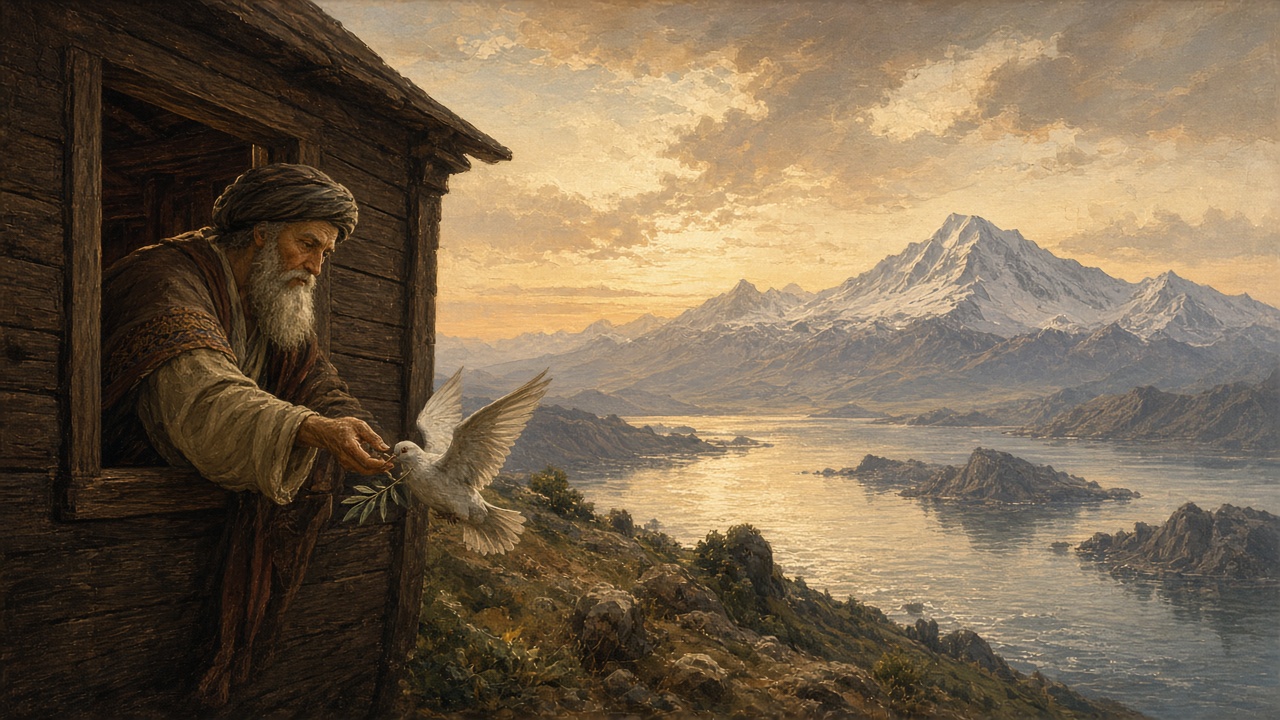
Você sabia?
As águas recuam
- A arca pousou sobre os montes de Ararate, nome que significa “terra sagrada” ou “terra alta” e designa um país em cujas montanhas a arca parou depois do dilúvio. O Easton's Bible Dictionary (1897) sugere que esses montes eram, provavelmente, a cordilheira curda do sul da Armênia, embora o nome também seja comumente aplicado a um pico alto e quase inacessível que se ergue da planície do Araxes. Em 2 Reis 19:37 e Isaías 37:38, a Authorized Version traduz o nome por “Armênia” e a Revised Version por “terra de Ararate”, enquanto Jeremias 51:27 o usa para a Armênia central ou meridional.Fontes: Ararat · o próprio texto bíblico
- O nome hebraico de Noé significa “descanso”, e neste capítulo a própria arca encontra descanso enquanto as águas baixam. Ele era filho de Lameque e neto de Matusalém, e pai de Sem, Cam e Jafé. O Easton's Bible Dictionary o descreve como o elo entre o mundo antigo e o novo, e como um segundo grande progenitor da família humana.Fontes: Noah · o próprio texto bíblico
- Notas cronológicas situam o Grande Dilúvio em 2347 a.C., com duração de um ano; o recuo das águas em 2346 a.C., ao longo de 220 dias; e a saída da arca em 2346 a.C., num único dia. No próprio capítulo, as águas já baixaram depois de 150 dias e a arca pousa no décimo sétimo dia do sétimo mês; no primeiro dia do primeiro mês do ano seiscentos e um de Noé as águas secaram, e no vigésimo sétimo dia do segundo mês a terra está completamente seca.Fontes: The Great Flood · The flood subsides · Leaving the Ark · o próprio texto bíblico
Notas escritas com auxílio de IA a partir de fontes abertas (Theographic Bible Metadata, CC BY-SA 4.0; Easton’s Bible Dictionary, domínio público) e revisadas antes de publicar.
Lugares deste capítulo
- Ararat · Hoje: Urartu · 39.703, 44.300 · versículo 4
Só aparecem lugares com identificação de alta confiança (90% ou mais segundo as fontes acadêmicas reunidas pelo OpenBible). Mapa da época: DARE (Digital Atlas of the Roman Empire), CC BY 4.0; mapa atual: © colaboradores do OpenStreetMap; lugares: OpenBible.info (CC BY 4.0).
Créditos e licença desta tradução
Meeŋka Jooŋ
Jumjum Bible Translation
copyright © 2023 Pioneer Bible Translators
Language: (Jumjum)
Contributor: Pioneer Bible Translators
This translation is made available to you under the terms of the
Creative Commons Attribution Share-Alike license 4.0.
You have permission to share and redistribute this Bible translation in any format and to make reasonable revisions and adaptations of this translation, provided that:
You include the above copyright and source information.
If you make any changes to the text, you must indicate that you did so in a way that makes it clear that the original licensor is not necessarily endorsing your changes.
If you redistribute this text, you must distribute your contributions under the same license as the original.
Pictures included with Scriptures and other documents on this site are licensed just for use with those Scriptures and documents.
For other uses, please contact the respective copyright owners.
Note that in addition to the rules above, revising and adapting God's Word involves a great responsibility to be true to God's Word. See Revelation 22:18-19.
2025-05-06
Fonte: http://ebible.org/jum/ · eBible.org