Gênesis 3
Meeŋka Jooŋ · Toque num versículo para ver as referências cruzadas.
Ḍimmin Mänbaan
1Aŋ ñomuk ku on wakkä luum jïñe muure yaaka naŋi Pïṭo Jooŋ ye ti, a kaaŋ ken wiñe bïtäraŋ meken gïtï. Aŋ iiŋ taaññe ogo, “A jïñe Jooŋ ikee kiinne ogo ŋana ikee ämje jengä ṭulgen yek nänṭä garrä jï muure?”
2Aŋ iiŋ kaaŋ kiinne ogo, “Jengä ṭulgen yaaka nänṭä garrä jï ye, ikoon ämon, 3aŋ Jooŋ ikoon kiinnon ogo jaan yaana ṭeejjük yaanja ṭulge ŋana amjon aŋ ŋana tabdoon yok ikoon bi tüwjon.”
4Aŋ iiŋ kiini kaaŋ ogo, “Ikee batta bi tüwe! 5Ŋäjjänä Jooŋ ääŋkalaŋ naana ikee bi ämje ye, waŋgic bi pätï woo aŋ ikee bi wääte bata Jooŋ aŋan, ikee ŋäjje ŋerrä ke yiñ.”
6Aŋ yoori iiŋ jaan ṭulge ŋeraŋ ammä ti, aŋ ŋeraŋ me waŋgen ti, aŋ me iñde witin waŋ. Aŋ uṭṭu ṭuule aŋ amme, aŋ cäänna oore äckene aŋ ämjin. 7Aŋ waŋgen pättä woo aŋ ḍuuggen ŋïjï yoken ladaŋ. Aŋ jittä jaan beel bata ŋoommu gitke, aŋ ṭuuri aŋ kümjï teygen ti.
8Aŋ Pïṭo Jooŋ tiiŋji kä yääwe äätä nänṭä garrä jï biigin ti aŋŋi, aŋ oon ke iiŋe Pïṭo Jooŋ ṭärki jengä gïtï nänṭä garrä jï. 9Aŋ Pïṭo Jooŋ oon bärkene aŋ taacce ogo, “Ïkï wali?”
10Aŋ luukke ogo, “Ïkï tiiŋjeneni äätä nänṭä garrä jï, aŋ ika booññu, yori ladaŋ aŋ ika ṭarrä.”
11Aŋ Pïṭo Jooŋ jaajjin ogo, “A ŋaani ken ïkï kiinney ogo yorü ladolat? Ïkï ämjini jaan yaana kollenii kä ogo ŋana ïkï ämjey ina?”
12Aŋ oon jaajjin ogo, “Iiŋ yaana äckanaa kä ina ken ika iñña jaan ṭuule aŋ ika ämjänä.”
13Aŋ Pïṭo Jooŋ iiŋ taaññe ogo, “A ŋaaka ina naŋŋi yaanna?”
Aŋ iiŋ jaajjin ogo, “Kaaŋ ika amma ŋïngïn aŋ ika ämjänä.”
Jooññu kä Jooŋ
14Aŋ Pïṭo Jooŋ kaaŋ kiinne ogo,
“Kä nääŋkä yaaka naŋŋi ye, ïkï agä tuumgon,
wakkä luum jïñe waadgen ti, ke ḍigärgä ti muure.
Aŋ ïkï bi muulu ïñï kä jïñü
aŋ ŋomgu ken bi amä yuungu yüükü ti muure.
15Aŋ ika bi ḍuccu yiñ waadgic ti ikee ke iiŋ,
ke kaaynic ti.
Ike ïkï bi jiibey wïñü ti,
aŋ ike bi kääjä ŋubdonḍe ti.”
16Aŋ iiŋ kiinne ogo,
“Aŋ bääŋ pillä yüünü bi ŋucku ti naana ïkï laacci ye,
aŋ kä pillä ïkï bi giidä merkä.
Aŋ ïkï ṭäkä yoku ogo oorü ääto ko jiik yüükü,
aŋ ike ken bi a mügdo yüünü.”
17Aŋ Aadam kiinne ogo,
“Kä yaana tiiŋŋii kä jiik ïïŋü
aŋ ämjinii kä jaan yaana kollenii kä ogo ŋana amjey ye,
ŋommañ wiñe a tuumgon kä nääŋkä yüükü.
Aŋ ïkï bi ämä kä pillä ñuugulani yüükü ti yuungu muure.
18Aŋ paañ ke küügü bi yülü woo baannü,
aŋ ïkï bi ämä wakkä garkä yiil jï.
19Aŋ kä cannä ïkï bi ämä wakkä äämkä yüükü,
ke ḍukci ïñï ŋommañ yaana naŋŋenii kä ye ti.
Ïkï agä ŋomgu,
aŋ ïkï bi ḍukcu ŋommañ jï.”
20Aŋ Aadam iiŋe äkkene ogo Awwa, nääŋka bi wäätee kä a miy yen me muure ye. 21Aŋ Aadam ke iiŋe näŋgi Pïṭo Jooŋ buruŋgu yek gaan aŋ iiŋkeneeda.
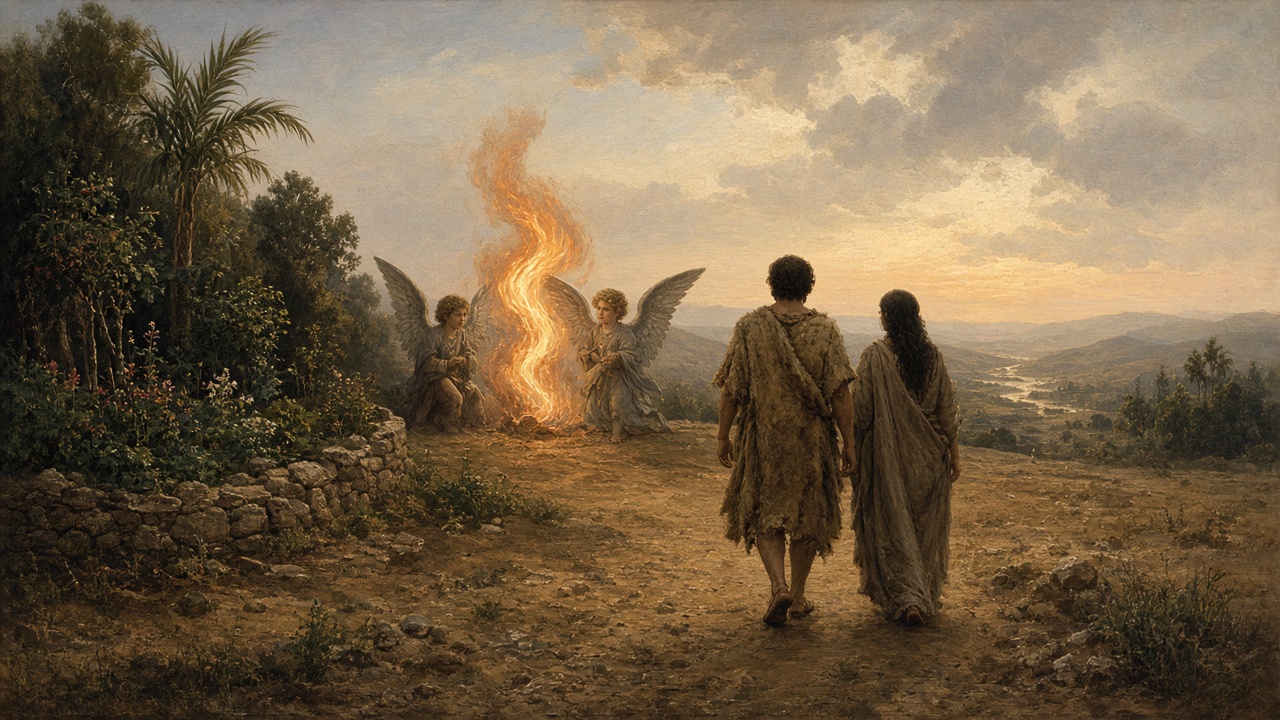
22Aŋ Pïṭo Jooŋ jaajjin ogo, “Mänbaan tiññaŋ inni wäättä bata ïkïïn ŋäjjä ŋerrä ke yiñ yaanni. Aŋ tiññaŋ ŋuca nuŋkodo ïnte lajjede aŋ uṭit jaan cäwdä ṭulge aŋ üdït ke cüle.” 23Aŋ ñuuli woo Pïṭo Jooŋ nänṭä garrä jï nänṭ'a battä me ogo Adan ye, ogo ato ŋommañ yaana naŋŋïïdako me ye ñuugele. 24Aŋ mänbaan ñuuli woo Jooŋ nänṭä garrä jï yaana battä me ogo Adan ye, aŋ malaŋŋi teyken yaaka battä me ogo korbïïm ye, tuci Jooŋ cäyok Adan kä ñomuk, aŋ gaaḍal wiñe wïïrde i lemme käl kä maañ tïïcï päy yen jaan cäwdä.
Você sabia?
A queda e o exílio do Éden
- Uma referência tradicional explica Adão como “vermelho”, palavra babilônica usada como nome genérico do homem, com o mesmo sentido em hebraico e em assírio, e liga o nome ao fato de ele ter sido formado do pó da terra. Neste capítulo essa origem volta na sentença: ele trabalhará pelo alimento até voltar ao solo, pois é pó e ao pó tornará, e é enviado a cultivar a terra de onde foi tomado.Fontes: Adam · o próprio texto bíblico
- Neste capítulo Adão dá à sua mulher o nome Eva, que significa “vida” ou “vivente”, porque ela seria a mãe de todos os viventes.Fontes: Eve · o próprio texto bíblico
- A localização do jardim do Éden, de onde o homem é expulso neste capítulo, tem sido muito discutida: já se propôs a Armênia, a região a oeste do mar Cáspio, a Média, as proximidades de Damasco, a Palestina, o sul da Arábia e a Babilônia. Uma nota geográfica tradicional procura o lugar ao longo do Tigre e do Eufrates, na terra de Sinar, ou Babilônia.Fontes: Eden · o próprio texto bíblico
Notas escritas com auxílio de IA a partir de fontes abertas (Theographic Bible Metadata, CC BY-SA 4.0; Easton’s Bible Dictionary, domínio público) e revisadas antes de publicar.
Créditos e licença desta tradução
Meeŋka Jooŋ
Jumjum Bible Translation
copyright © 2023 Pioneer Bible Translators
Language: (Jumjum)
Contributor: Pioneer Bible Translators
This translation is made available to you under the terms of the
Creative Commons Attribution Share-Alike license 4.0.
You have permission to share and redistribute this Bible translation in any format and to make reasonable revisions and adaptations of this translation, provided that:
You include the above copyright and source information.
If you make any changes to the text, you must indicate that you did so in a way that makes it clear that the original licensor is not necessarily endorsing your changes.
If you redistribute this text, you must distribute your contributions under the same license as the original.
Pictures included with Scriptures and other documents on this site are licensed just for use with those Scriptures and documents.
For other uses, please contact the respective copyright owners.
Note that in addition to the rules above, revising and adapting God's Word involves a great responsibility to be true to God's Word. See Revelation 22:18-19.
2025-05-06
Fonte: http://ebible.org/jum/ · eBible.org